Joni Eareckson Tada (born October 15, 1949) is an American evangelical Christianauthor, radio host, artist, and founder of Joni PTL, Joni and Friends,[1] an organization “accelerating Christian ministry in the disability community”.[2][3]
Four decades after an accident left her a quadriplegic, JONI EARECKSON TADA – YouTube faces a new battle: unrelenting pain. Here she offers her perspective on suffering, divine healing, God’s purposes, and living with joy. She invites you to join her in bridging the distance that separates God’s magnificent yes and heartbreaking no – and find new hope for thriving “in between.”
With the example of her parents, Joni lived a very active life all throughout growing up. She enjoyed riding horses, hiking, tennis, and swimming. On July 30, 1967, at age 17, Joni dove into the Chesapeake Bay after misjudging the shallowness of the water.
She had a fracture between the fourth and fifth cervical vertebrae and became a quadriplegic (or tetraplegic), paralyzed from the shoulders down.[4] During her two years of rehabilitation, according to her autobiography Joni, Joni experienced anger, depression, suicidal thoughts, and religious doubts.
However, during occupational therapy, she learned to paint with a brush between her teeth and began selling her artwork. She also writes this way, although for most writing tasks she relies on voice recognition software. To date, she has written over 40 books, recorded several musical albums, and starred in an autobiographical movie of her life, and is an advocate for people with disabilities.[4]
Joni wrote of her experiences in her 1976 international best-selling autobiography, Joni: The unforgettable story of a young woman’s struggle against quadriplegia & depression, which has been distributed in many languages. The book was made into a 1980 feature film of the same name, starring herself. Her second book, A Step Further, was released in 1978.[8]
Ministry and public life
Tada founded Joni and Friends in 1979, an organization to “accelerate Christian ministry in the disability community”[9] throughout the world. In 2007 the Joni and Friends International Disability Center in Agoura Hills, California, was established.[10]
Led by Tada (founder and CEO) and John Nugent (president and COO), the Joni and Friends International Disability Center runs a multi-faceted non-profit covering a number of program outlets. The longest-running program is “Joni and Friends Radio”, a five-minute radio program begun in 1982. It now runs four minutes in length and can be heard each weekday on over 1,000 broadcast outlets.[11]
Tada also records a one-minute radio feature, “Diamonds in the Dust”, that airs daily.[11] Both programs have received awards: “Joni and Friends Radio” received the “Radio Program of the Year”[12] award from National Religious Broadcasters in 2002, and “Diamonds in the Dust” won the same award in 2011 in the short program.[13]
Other Joni and Friends programs include Family Retreats (a camp/retreat experience for families affected by disability),[12] Wounded Warrior Getaways (which offer a similar experience for families of Wounded Warriors),[14] and Wheels for the World (which collects manual wheelchairs and other mobility devices to be refurbished by volunteers in prison restoration shops, then shipped overseas, where the wheelchairs are fitted by physical therapists to people in developing nations).[12]
Joni and Friends also has produced 51 episodes of Joni and Friends TV,[15] and overseen the formation of the Christian Institute on Disability (a training and advocacy arm of Joni and Friends), among other ventures.[16]
While the main office of Joni and Friends remains in Agoura Hills, California, smaller offices can be found across the United States.[17]President George W. Bush calls on the Senate to support a ban on human cloning during an address on April 10, 2002. Pictured at center to the right of the lectern is disability advocate Joni Eareckson Tada.
As of 2017, Tada is an adviser on many organizations, such as the Board of Reference for the Christian Medical and Dental Society, Young Life Capernaum Board, CBM International, National Institute for Learning Disabilities, and the American Leprosy Mission.[11] She also served on Love and Action, the Institute on Learning Disabilities, the Disability Advisory Committee, New Europe Communications, and the Christian Writers Guild, and as honorary co-chair of the Presidential Prayer Team.[25] She has been interviewed by the Chicago Tribune,[26]Ligonier Ministries,[27] and the Los Angeles Times.[28]
In November 2009, Tada signed an ecumenical statement known as the Manhattan Declaration calling on evangelicals, Catholic and Eastern Orthodox Christians to work towards changing laws which permit abortion, and other matters that go against their religious consciences.[29][30]
Music
Tada received media attention in 2014 for her performance of the title song from the Christian film Alone yet Not Alone.[31] With limited lung capacity due to her disability, Tada had her husband, Ken, pushing on her diaphragm while she recorded the song to give her enough breath to hit the high notes. Tada has no professional training in music.[32]
While the song’s writers initially received a nomination for an Oscar in the Original Song category, the nomination was later revoked for what the academy deemed improper campaigning by the composer, Bruce Broughton.[33] Some controversy followed this decision, and subsequent media attention helped the song’s official YouTube video, featuring Tada, surpass one million views.[34][35]
Books
Tada is the author of over 48 books on the subjects of disability and Christianity. Several of them have been children’s books, including Tell Me The Promises, which received the Evangelical Christian Publishers’ Association‘s (ECPA) Gold Medallion and the silver medal in the 1997 C. S. Lewis Awards, and Tell Me The Truth, which received the ECPA Gold Medallion in 1998. The life story of Tada was used by Czech composer Ivan Kurz in his opera Večerní shromáždění ketho (Evening Divine service).[34]
Personal life
Joni married Ken Tada in 1982. For many years, Ken was a high school history teacher and coach, though he is now retired.[36] Ken is sansei, meaning that he is the third generation to be born in the United States after his family immigrated from Japan.[37]
In 2010, Tada announced that she had been diagnosed with Stage IIIbreast cancer. She underwent a mastectomy and chemotherapy.[39][40] Tada’s treatment proved successful, and she was declared cancer-free in 2015.[41] In November 2018, Tada was diagnosed with a malignant nodule on her chest wall near the site of her original cancer.[41] Radiation treatments for the nodule proved successful, and, in July 2019, Tada announced that she had once again been declared cancer-free.[42]
When Joni Eareckson Tada was 17, she took a dive into shallow water in the Chesapeake Bay that left her paralyzed from the neck down. Over 55 years later, Joni has experienced a great deal of debilitating suffering. Even so, her focus is not on the darkness she’s been exposed to, but on the light of her Savior in the midst of the valleys.
Her experience has taught her that one cannot hope in their circumstances, but in Christ alone, and that a great way to stir this hope is through singing hymns and spiritual songs rich with scriptural wisdom. In her book, Songs of Suffering, Joni includes 25 hymns with accompanying devotions and photography designed to spark hope in hardship.
This beautiful rendition of the song Alone Yet Not Alone is performed by Joni Eareckson Tada (www.joni and friends.org). Quadriplegic, Joni with limited lung capacity due to her disability, had her husband, Ken, pushing on her diaphragm while she recorded the song to give her enough breath to hit the high notes.
The researchers evaluated social frailty using measures of social support, frequency of social interactions, sense of purpose, engagement in community or volunteer activities, and the individual’s perceived social roles and connectedness, according to a press release.
Based on this analysis, participants were classified as socially frail, pre-frail or non-frail.
The participants were followed for over 12 years, undergoing neuropsychological tests every two years to diagnose any new dementia cases. The researchers adjusted for other factors like physical frailty, psychological frailty and health history.
The study concluded that social frailty was associated with a higher risk of dementia, with socially frail individuals facing about a 47% increased risk compared to those in the non-frail group.
In most socially frail people, the factors that were most strongly associated with this risk included low financial and family satisfaction, infrequent social contact and limited participation in social activity.
Study co-author and clinical psychologist Dr. Suraj Samtani, UNSW Sydney postdoctoral research fellow at the Centre for Healthy Brain Ageing, emphasized the consequences of aging people lacking in social connections.
“In midlife, risk factors like hearing loss and metabolic syndromes like hypertension and diabetes are very important to prevent and manage,” he said in the press release. “But in late life, social isolation is the biggest risk factor for dementia.”
In an interview with Fox News Digital, co-author and postdoctoral research fellow Dr. Annabel Matison noted that the study population was “generally healthy, well-educated and Caucasian.”
While the researchers would like to confirm these findings among a broader group, Matison commented that the strength of the association between socialization and cognitive decline is “noteworthy.”
“We hope these findings raise awareness that poor social connections, resources and support are risk factors for dementia,” she said. “We encourage older adults to stay socially active with family, friends and neighbors, and to consider volunteering.”
Another recent study by researchers at Cornell University found that social relationships can actually slow cellular aging.
Lead study author Anthony Ong, psychology professor and director of the Human Health Labs in the College of Human Ecology in New York, shared with Fox News Digital how the “depth and consistency” of social connection across a lifetime “matters profoundly.”
“Strong social ties appear to work in the background over many years, building a more resilient body by reducing the chronic, low-grade inflammation that is a key driver of accelerated aging,” he said.
In a previous interview with Fox News Digital, longevity experts David Cravit and Larry Wolf, the Canada-based authors of “The SuperAging Workbook,” shared several aspects of “super-aging,” including attachments to others.
“I’m lucky enough to have been married to the same wonderful lady for almost 60 years,” Wolf said. “Cultivating contact with people you love, with people you like, and expanding your social network, are all very critical.”
The experts noted that mental and physical exercise are also crucial for keeping the brain young and sharp. Multiple studies have shown that loneliness can be hazardous to humans’ health. In fact, a previous Harvard study found that being lonely is as detrimental as smoking 15 cigarettes per day.
Psychiatrist Dr. Daniel Amen, founder of Amen Clinics in California, also commented on the grave impact that loneliness may have on human health.
“The number of friends people have has dropped 40% since 1990,” he said in a previous interview with Fox News Digital. “Why? We’re more connected online, but we’re more disconnected in person.”
A standard curve has not been found, but there are some studies that suggest that the disease may be delayed, prevented, or even reversed. Below are some examples of studies that offer some hope for Alzheimer’s patients.
MIND Diet and General Diet Changes
One of the main areas of focus – for preventing or slowing down the effects of Alzheimer’s is also a change in diet. The MIND diet is an acronym standing for Mediterranean-DASH Intervention for Neurodegenerative Delay, and some studies suggest that the MIND diet can help reduce the risk of Alzheimer’s.
The MIND diet is the introduction of 10 important foods, and the exemption of 5.
10 Foods to eat on the MIND diet:
Berries at least twice a week
Spinach and other green leafy greens at least six times a week
Nuts five servings a week
Fish at least once a week
Poultry twice a week
Wine – at least one glass a day
Vegetables at least once a day
Olive Oil as the main oil for cooking
Whole Grains 3 servings daily
Beans – at least four times a week
5 Foods to avoid:
Red Meat no more than 3 servings a week
Fast food/fried food less than once per week
Cheese less than once a week
Pastries and Sweets should be very limited
Butter and Margarine – less than one tablespoon daily
While it is not entirely known why this diet may help, scientists have their theories.
Keith Pierson writes, “…scientists who created the diet think it may work by reducing oxidative stress and inflammation. Oxidative stress occurs when unstable molecules called free radicals accumulate in the body in large quantities. This often causes damage to cells. The brain is especially vulnerable to this type of damage.”
High consumption of fats (especially from red meat) can cause inflammation and can create an excess of free radicals in the body. These free radicals can cause damage to brain cells which is even more concerning for a person suffering from dementia.
Diets rich in vitamins C and E can help reverse the number of free radicals in the body, thereby helping to protect brain cells. In addition, consumption of vegetables, fruit, and fish rich with omega-3 are helpful with general memory and brain function.
Supplements that are associated with general brain health may also be beneficial. Some of these supplements may include additional omega-3’s, ginkgo biloba, coenzyme Q10, tumeric, and alpha lipoic acid.
Additional Steps
There are other healthy lifestyle options that may help reduce the risk of Alzheimer’s – Due to the perceived link between a weak cardiovascular system and Alzheimer’s, exercise can be a helpful tool to promote a healthy brain. Scientists suggest a minimum of 30 minutes of moderately vigorous exercise three to four days a week for overall health.
Not smoking, reducing stress, and getting enough sleep are other suggestions that may reduce the risk. There is a small amount of evidence that also suggests that continuing to exercise the brain can be beneficial. Learning new skills, connecting with people, and practicing cognitive activity could help.
There was one small trial performed in 2014 at UCLA that used a comprehensive plan to treat Alzheimer’s patients. Of the 10 people in the study, there were 9 positive outcomes using this plan.
In this study, they likened typical Alzheimer’s treatment plans to using one very good method to fix one hole in a leaky house when there are 35 other holes. While the drugs prescribed may fix one problem associated with Alzheimer’s, there were 35 others that the drug could not compete with. Therefore the drug appeared to be ineffective.
In this comprehensive plan, they targeted issues with each particular patient. Treatment included things like exercising, dietary changes, increased sleep, meditation, supplements, and hormone replacement therapy.
Dr. Dale Bredesen – Search Videos who was responsible for the study, said, “…a broader-based therapeutic approach, rather than a single drug that aims at a single target, may be feasible and potentially more effective for the treatment of cognitive decline due to Alzheimer’s.”
However the scope of this study was very small, only including 10 participants. There is not enough research into this method to know if it would be effective en masse.
Conclusion
Alzheimer’s disease is a very sad and devastating disease. Scientists and researchers will continue to invest money, time, and energy to find a cure for this disease that affects millions.
One beneficial thing that all people can do is to raise awareness for this disease that could easily affect us or our loved ones. The more awareness of the disease, the more likely that we will come up with a cure.
The second thing people can do is to strive to live healthy lifestyles that will help lessen the risk of developing Alzheimer’s.
The brain is a beautiful thing. We’d be wise to do all we can to protect it.
A groundbreaking study from Stanford University has revealed that the human brain has the ability to rewire the body in real time simply through belief. This research shows that our thoughts are not just passive reflections of reality but active builders of our physical state.
Scientists found that when individuals believe in certain outcomes, the brain activates neural circuits that produce corresponding physical effects. For example, patients who were told a harmless substance was a painkiller often reported real pain relief because their brains triggered the body’s natural healing chemistry. This is known as the placebo effect, but the Stanford team has shown it goes even deeper.
Belief-driven neural changes influence hormone release, immune response, muscle activation, and even genetic expression. That means repeating negative thoughts can harm the body, while positive affirmations and beliefs can literally strengthen health and resilience.
This discovery reinforces the idea that mental training — from meditation to visualization — can be as impactful as physical training. The mind doesn’t just witness life happening; it is constantly constructing it through the power of repeated thoughts.
Yes — Swiss researchers found that combining a tricyclic antidepressant with a blood thinner in mice triggered lethal autophagy in glioblastoma cells, effectively forcing the tumors to “eat themselves” and doubling the animals’ lifespan compared to untreated controls.
What the Study Showed
Drug combination: The study used tricyclic antidepressants (a class of older antidepressants) together with blood thinners.
Mechanism: Both drug types independently increase autophagy — a cellular process where cells recycle their own components. When combined, the effect was amplified to the point of lethal autophagy, meaning the cancer cells destroyed themselves.
Results in mice: Mice implanted with early-stage human glioblastoma lived twice as long when treated with the drug combination compared to untreated mice. Importantly, neither drug alone had any effect.
Clinical context: Glioblastoma (GBM) is one of the most aggressive brain cancers, with very poor survival rates. Current treatments (surgery, radiation, chemotherapy) rarely extend life beyond 15–18 months.
Why This Matters
Novel approach: Instead of targeting tumor growth directly, the therapy exploits the cancer’s own survival mechanism (autophagy) and pushes it into overdrive until it becomes lethal.
Repurposing existing drugs: Both antidepressants and blood thinners are already widely used and well-studied, which could make clinical translation faster than developing new compounds from scratch.
Limitations: The findings are preclinical — demonstrated only in mice. Past small clinical trials of antidepressants alone in glioblastoma patients showed no benefit, so human trials of the combination are needed before conclusions can be drawn.
Broader Research Context
Depression and glioblastoma: Depression is common among glioblastoma patients, and antidepressants are often prescribed. Some studies suggest antidepressants may modestly influence tumor biology, but evidence in humans remains mixed.
Future directions: Researchers are exploring whether combining autophagy-inducing drugs could become a viable adjunct therapy for glioblastoma. The hope is to design regimens that selectively push tumor cells into lethal autophagy without harming healthy brain tissue.
Takeaway
This study highlights a potentially groundbreaking therapeutic strategy: using a simple drug combination to exploit glioblastoma’s vulnerabilities. While promising, it’s still early-stage research, and clinical trials will be essential to determine whether this approach can benefit patients.
Would you like me to break down how autophagy works in normal cells versus cancer cells, so you can see why “too much of a good thing” becomes lethal in glioblastoma?
Would you like me to break down how autophagy works in normal cells versus cancer cells, so you can see why “too much of a good thing” becomes lethal in glioblastoma?
Absolutely — let’s unpack this step by step.
Autophagy in Normal Cells
Definition: Autophagy literally means “self-eating.” It’s a recycling system where cells break down damaged proteins, organelles, or other components in lysosomes.
Purpose:
Maintains cellular health by removing waste.
Provides energy during stress (like starvation).
Helps cells adapt to changing environments.
Outcome: In healthy cells, autophagy is protective — it prevents toxic buildup and supports survival.
Autophagy in Cancer Cells
Dual role:
Early cancer stages: Autophagy can suppress tumor formation by clearing damaged organelles and preventing mutations.
Established tumors: Cancer cells hijack autophagy to survive stress, nutrient deprivation, and even chemotherapy. It becomes a survival mechanism.
Glioblastoma specifically:
GBM cells are highly adaptive and rely on autophagy to withstand the harsh tumor microenvironment.
Autophagy helps them resist treatment and continue growing.
When Autophagy Becomes Lethal
Balance matters:
Moderate autophagy = survival.
Excessive autophagy = self-destruction.
Drug-induced overload:
The antidepressant + blood thinner combination forces glioblastoma cells into hyper-autophagy.
Instead of recycling just damaged parts, the cells start consuming essential components, leading to collapse.
Result in mice: Tumor cells essentially “eat themselves to death,” while normal cells tolerate the drug combination better because they don’t depend on autophagy as heavily.
Big Picture
Autophagy is like a cellular housekeeping system. In moderation, it keeps cells healthy. In cancer, it’s exploited as a survival trick. But if pushed too far, it flips from being protective to destructive — and that’s the vulnerability researchers are trying to exploit in glioblastoma.
Would you like me to illustrate this with a simple diagram showing the “Goldilocks zone” of autophagy (too little, just right, too much) for normal vs. cancer cells? That visual could make the concept crystal clear.
Here’s a fresh visual that captures the “Goldilocks zone” of autophagy for normal cells versus cancer cells. It shows how too little autophagy leads to dysfunction, just the right amount promotes survival, and too much tips cancer cells into lethal self-destruction.
Let me know if you’d like to turn this into a printable infographic or add labels for a presentation slide!
Scientists have made one of the most startling and promising discoveries in brain cancer research.
A new study shows that a simple combination of an antidepressant and a blood thinner forced glioblastoma cells into a state of lethal autophagy in mice. Autophagy is the process where cells break down and recycle their own components.
In normal cells it is a survival mechanism. In cancer cells this controlled breakdown can become so extreme that the cells collapse and die. Researchers found that when these two drugs were paired together they pushed glioblastoma cells past their survival point and turned autophagy into a death trigger.
Glioblastoma is one of the most aggressive and deadly forms of brain cancer and current treatments offer limited long term success. This discovery is gaining global attention because it uses already known drugs that could be repurposed faster than completely new medications. Scientists reported that the treated tumors shrank dramatically in mice as cancer cells began consuming themselves until they were no longer able to survive. Healthy cells were not harmed which makes this approach even more promising.
Experts emphasize that although this success has been shown in mice human trials will be required to understand safety dosage and long term outcomes. Still this research opens a new pathway for developing treatments that attack cancer by turning its own survival system against itself. The idea that deadly tumors could be taught to self destruct is capturing worldwide interest. This breakthrough brings real hope and shows how innovative thinking can lead to powerful new strategies against one of the hardest cancers to treat. #Brainsoup#fblifestyle#HealthBreakthrough#ViralScience
The pseudoscience in the comments causes cancer. (Former homeopathic doctor and acupuncturist here.)
How about we just get excited that two drugs cause Autophagy in glioblastoma?
The link to the research
Long-term use of certain antidepressants has been associated with decreased incidence of gliomas, possibly through the induction of autophagy, the catabolic process of breaking down cellular components. In a transgenic mouse model of glioma, Shchors et al. found that the tricyclic antidepressant imipramine induced autophagy and impaired proliferation in glioma tumors and extended the life span of mice with low-grade, but not high-grade, tumors. This difference in low- versus high-grade tumor-bearing mice is consistent with the observation that prescribing imipramine after diagnosis lacks a survival benefit in glioma patients.
Therefore, the authors screened for drugs that enhanced imipramine’s antiproliferative effects in cultured human glioma cell lines. Only one of those tested, the anticoagulant drug ticlopidine, enhanced the toxicity of imipramine in all cell lines tested, but ticlopidine inhibits the adenosine diphosphate receptor P2Y12, an abundant receptor on platelets. Glioma cells had increased abundance of P2Y12 compared with the amount in normal glial cells. Combining other tricyclic antidepressants with other P2Y12 inhibitors was also synergistically toxic to glioma cells in culture.
Blocking P2Y12 maintains a high activity of adenylyl cyclase and subsequently high production of cyclic adenosine monophosphate (cAMP), which can alter the balance of AMP:ATP, thereby increasing autophagy. The combination of imipramine and ticlopidine – Search increased the rate of autophagy, inferred from the detection of various autophagy proteins and structures in tumor cells in culture or in mice, above that induced by either drug alone. Pharmacologically inhibiting autophagy or knocking down key autophagy mediators impaired the cytotoxic synergy of the drug combination in tumor cells in culture or in mice.
Treating transgenic or xenografted glioma-bearing mice with the combined therapy of imipramine and ticlopidine had a greater effect of increasing survival and suppressing tumor progression than either monotherapy, even in mice with late-stage tumors. The findings indicate that the toxic amount of autophagy triggered by the combination of tricyclic antidepressants and P2Y12 inhibitors may be therapeutically beneficial for glioma patients.
K. Shchors, A. Massaras, D. Hanahan, Dual targeting of the autophagic regulatory circuitry in gliomas with repurposed drugs elicits cell-lethal autophagy and therapeutic benefit. Cancer Cell28, 456–471 (2015). [PubMed]
In mice…. Okay so how did the mouse get cancer in the first place?
Was it via a vaccine ? I’m genuinely questioning everything here.
The Vaccine Anktiva is already melting glioblastomas in people. Minimal sidefx, no SAE’s and very little chemo. Game changer
There is no publicly available data that this (or a similar) drug-pair has been tested in humans for glioblastoma treatment — at least not with published results. • Recent human data (2025) suggests that antidepressant use after GBM diagnosis correlates with worse survival — which could reflect confounding factors, or might indicate antidepressants alone (or in usual doses) don’t help — and certainly doesn’t support repurposing them yet for treatment.
Linda Casper Crossman doesn’t know what ‘recent human data’ you are sitting here, but both Trintellix and Prozac show extended survival for glioblastoma patients. The studies were performed in Sweden and in the US at Stanford. No trials so far (right, who’s gonna pay for trials on two fairly old drugs to repurpose). When you inject ‘certainty’ into your ‘doesn’t support repurposing them for treatment’ you contradict the published studies and CERTAINLY mislead people looking for ways to beat cancer when official treatment is exhausted.
Well the standard conventional treatment has NEVER cured glioblastoma.
If this is factual The idea of understanding, safety Dosage would be as simple as looking at the data of these already known drugs. Trials should be even easier by simply administering these medications’s dosage on a higher side of normal and looking for a reduction and tumor size. If this is factual, this will be one of the fastest treatments of its kind. It is just so hard to believe anything on Facebook anymore.
Are we whales now?
The claim is based on real science, but is not (yet) a proven breakthrough for humans Yes: there was a study that found an antidepressant + a blood thinner triggered lethal autophagy in glioma cells in mice, and modestly extended their lifespan. No: that does not mean we have a new effective, safe treatment for human glioblastoma. There is no convincing human evidence yet the approach remains hypothetical and experimental.
Where is the link to the published research study please?
Glioblastoma (GBM) research shows certain antidepressants, especially tricyclics (TCAs) like imipramine, can trigger excessive autophagy (cells eating themselves), potentially killing cancer cells, and work better combined with other drugs (like blood thinners) or therapies (like VEGF inhibitors) to improve survival in mice, but clinical trials show mixed or no overall survival benefit, highlighting the need for more research into safe, effective combinations with standard treatments like Temozolomide (TMZ).
Some people are unwell enough and have tested and tried and saw their family members test and try “the healthcare system” and it did not work and they would rather try ANYthing else than that. And you’re adding insult to injury. What would you have these desperate people (with a life threatening illness) to do if they have lost faith in the system???
Where is the link to this study? Also, fasting and controlled heat exposure (ie: sauna) will support autophagy as well
Autophagy was part of his protocol and it occurs during fasting. Other things he addressed were oxygenation, cellular renewal, he also had Dendritic Cell Therapy in Mexico, which the majority of folk can’t afford, so not all down to fasting superfoods, stress relief, natural cancer protocols, stem cell research etc etc etc.
Neuronic Devices Hope grows when science dares to look at old problems in new ways. Breakthroughs like this remind us that progress often begins with curiosity, persistence and the courage to rethink what’s possible. Hold on to that reminder in your own life too the path forward can change faster than we expect.
Detox for chemicals and metal then organic ketogenic diet alkaline body stops cancer (fungal infection) I read this everywhere that cancer is fungus and mold it changes according to body temperature that’s how remission is explained
Evgenia Kotsifos and parasitic.. look up drs hulda Clark and Barbara O’Neil. Also bitter raw apricot seeds(whole or capsule form) kills c@ncer cells… also look up dr limor goren c@ncer researcher – Search who stumbled on the power of raw first press high oleocanthal olive oil to kill all different types of C cells… spoon a day!!
Just get it from Italy or Greece, flown not boat shipped and in metal can not glass or plastic. My faves are LA Masseria from Sicily and Liokareas or Kosterina from Greece
The olive oil is crafted from Nocellara Etnea olives grown at the base of Mount Etna, are known for their unique flavor and high polyphenol content. These olives thrive in the volcanic soil and Mediterranean climate, producing an extra virgin olive oil that is rich in antioxidants and health benefits. The oil is characterized by a bright, fresh taste with hints of herbs, nuts, and a peppery finish, making it suitable for various culinary uses, including dressings and salads.
These olives are hand-harvested and cold-pressed the same day, ensuring freshness and authenticity. The oil is first cold-pressed, which retains the natural taste, aroma, and health benefits of the olives. LA Masseria’s olive oil is not only delicious but also rich in nutrients, showcasing Sicilian heritage and craftsmanship. It is a family-owned and independent small business, dedicated to delivering high-quality olive oil straight from their groves to your doorstep.
Glioblastoma is considered rare in both Greece and Italy.
It is the most common type of malignant brain tumor in adults, but its incidence is relatively low, with fewer than 25,000 Americans diagnosed with glioblastoma each year.
In Italy, the median survival time for glioblastoma patients is approximately 12 to 18 months when treated with standard therapies, indicating that while glioblastoma is aggressive, it is not the most prevalent type of brain cancer in these regions.
High quality Olive Oil is subjective for the prevention of Glioblastoma Brain Tumor; there’s a lot that goes into the efficacy.
It’s the first press? Did it come from those specific olives in Greece and Italy that have been studied? Was it stored properly or exposed to light? Did it sit in a bottle for too long? And anyways it’s not a be all and end all solution. There’s a lot of different things you could do. It’s just one good thing to add into your routine.  the specific brands that I mentioned have lab tests to corroborate every batch and have been studied for their almost highest levels of polyphenols and oleocanthal
Linda O’leary honestly the best way to buy it is sourced directly from the olive oil producers… the stores get their products from overseas they’re shipped on boats they sit in boxes and warehouses before they even make it to the shelf. Even in dark glass you don’t know what kind of sunlight or temperatures they’ve been exposed to in that process and most people in this business know that the quality of their olive oil and the antioxidants and polyphenols degrade over time.
Always best consumed within a year to 18 months max from the time it’s bottled. So to guarantee quality product, the best way is to buy direct and have it shipped to you by air mail. Preferably the brands that are in a metal can… my preferred brand if you’re interested in checking them out are Masseria (first press) from Sicily and Greece has several great brands as well, Kosterina and Liokareas are two great ones – Search but honestly if you just
Google top Italian or Greek early press highest quality olive oil – Search you’ll see a whole list of different producers and trust me they’re all amazing. I tried a lot of different ones when I was in Greece this year and I also took a class with an olive oil Sommelier – Search ( I know.. I didn’t know there was such a thing either) the key is that it is first press which has the highest level of polyphenol when the olives are still not fully ripe and that there’s a date on when it was harvested and a lab report that corroborates it’s oxidation level. Most of the better competitive oils come with all of that.
Metal or opaque ceramic type glass where you can’t see through are your two best vessels. They’re not cheap I’m not gonna lie.. but the high-quality ones are for health not cooking all day every day. A tablespoon a day by mouth or drizzled over anything you eat is really all you need and a good size container will last you the year. And then buy your everyday cooking olive oil from among the regular second press slightly less expensive batches. The somm said the best Greek olive oils always come from Kalamata or Crete… and that generally Greek or Italy always vie for the top gold medal yearly winning spot with olive oils so there really aren’t any better ones out there.
Josh Brizendine can you please show me the study?
Maybe some effects in a lab setting in a dish not in the human body
‘Olive oil’ drug shows early promise for some brain cancer patients.
Image: Glioblastoma cells under a microscope. Credit: Professor Chris Jones, The Institute of Cancer Research, London.
A unique drug derived from oleic acid – which naturally occurs in animal and vegetable fats such as olive oil – has shown promise for patients with an advanced form of the most common type of brain cancer, following a study led by The Royal Marsden NHS Foundation Trust and The Institute of Cancer Research, London.
Results from the multi-centre Phase 1/2 study, which have been published in the British Journal of Cancer, suggest the drug could be particularly effective for patients with glioblastoma, an aggressive type of brain cancer which affects 3200 people across the UK each year.
One patient experienced an exceptional response
Following these results, the drug is now being trialled in a global randomised Phase 2b/3 study focused on newly diagnosed glioblastoma patients, which is recruiting patients at The Royal Marsden.
The drug, named 2-OHOA, is a first-in-class treatment – which means it offers a new and unique way of treating the disease – and is designed to block the growth of cancer cells.
The early study enrolled 54 patients with recurrent glioblastoma and other advanced solid tumours. Of the 21 patients with glioblastoma treated, around a quarter (24%) responded to the drug and one patient experienced an exceptional response, which lasted for more than three years.
Drug alters cancer cell walls
2-OHOA is a synthetic lipid derived from oleic acid that works by restructuring the abnormal membranes of cancer cells. Lipids are a broad group of organic compounds which include fats and waxes, and they play an important role in the structure of cell membranes. Cell membranes are the exterior layer of a living cell and help to regulate its growth.
The abnormal membranes of cancer cells make it easier for proteins within each cell to meet neighbouring proteins. This creates signals, which drives the disease’s growth. 2-OHOA blocks these signals by making the membranes of cancerous cells act like normal cells, putting the brakes on the abnormal growth signals driving cancer progression.
Including brain cancer patients in early phase trials
Phase 1/2 study lead Dr Juanita Lopez, Consultant Medical Oncologist at The Royal Marsden NHS Foundation Trust and Reader in Early Phase Drug Development at The Institute of Cancer Research, London, said: “Glioblastoma is an incredibly difficult disease to treat and patients with advanced disease have very poor outcomes, often living for just a year after their diagnosis. There hasn’t been an effective new treatment for this patient group in nearly two decades, so drug development urgently needs to be accelerated.”
“Unfortunately, patients with brain cancer often don’t have the opportunity to participate in early phase trials. This underpins the vital importance of research into novel new drugs like 2-OHOA, which is designed from the same building blocks as olive oil. The drug works by reshaping the walls of cancer cells, blocking crucial growth signals that drive cancer. By including glioblastoma patients in this study, we were able to more quickly show early and hopeful results, supporting their inclusion in the Phase 2b/3 trial. We’re very much looking forward to results from ongoing trials and hope this treatment eventually becomes widely available.”
The trial has ‘given me hope’
After being diagnosed with glioblastoma in March 2023, Michele Treen, 42 from Crawley, quickly reorganised her wedding and got married a week before undergoing brain surgery. She was then referred to The Royal Marsden where, along with being treated with radiotherapy and chemotherapy, she joined the phase 2b/3 trial for 2-OHOA. She recently had her fourth stable scan in a row. Michele said:
“I was meant to be getting married in July 2023, but when we found out about the brain tumour, we wanted to do it straight away. Thanks to our incredible friends and family, me and my husband, Aaron, somehow pulled off a wedding in two weeks. We were so happy and so sad that day, crying all the way through. After the wedding, the first thing we did as a married couple was attend another appointment where we were told that the tumour was grade four and incurable. Our entire world came crashing down.
“I recovered well from surgery and, when I was told about the trial, I thought, why not? There’s nothing to lose. The drug comes in a sachet – a bit like Lemsip – and I take it with water three times a day. I experience some side effects, like fatigue and nausea, but we don’t know if that’s from the drug – which could be a placebo – or my ongoing chemotherapy. Either way, I feel fine and can still do things I love. For example, I spent the summer traveling across Europe with my husband and 11-year-old daughter in a motorhome. From mountain-biking in Andorra to exploring Venice’s canals, I did things I’ll never forget with the people I love most.
“The Royal Marsden is the most incredible hospital I’ve ever been to and everyone, from the reception staff to the nurses and doctors, are all so kind. It was amazing the hospital offered me the chance to join this trial, which has given me hope.”
The phase 1/2 study was funded by Laminar Pharmaceuticals and carried out in the Oak Foundation Drug Development Unit at The Royal Marsden and The Institute of Cancer Research (ICR), which was funded by The Royal Marsden Cancer Charity, and is supported by Cancer Research UK, the Experimental Cancer Medicine Centre Network and the National Institute for Health and Care Research (NIHR).
I drink high quality olive oil daily and it didn’t do anything for me!!!
I just want everybody to be safe because cancer is at an all-time high right now especially in younger people. This whole world is just full of nothing but pollutants, toxic stuff for the human body and everybody wonders why there are so many autoimmune disorders. They supply us with all the unhealthy stuff to make us sick. Then we go to the doctor and get put on medicine which lines their pocket when all it boils down to the stuff they put in food. It’s hard being healthy in an unhealthy environment.
Scientists at Harvard put out that study. Chemo destroys every cell in the human body to the brink of barely surviving. It not only kills cancer cells. Evgenia Kotsifos states Apricot seeds contain cyanide which a lot of foods we eat contain apples including one good thing people need to understand is moderation cigarettes are poison but people do it every day. Alcohol is poison but people do it every day.
It has been scientifically proven that apricot seeds kill cancer. It doesn’t kill healthy cells as well, so that’s why I say apricot seeds are safer than chemo.
it’s all scientifically proven and also you can do the research yourself. The government used to back apricot seeds for cancer treatment, but a curing patient is not profitable just saying, but I understand where you’re coming from.
Evgenia Kotsifos also states that apricot seeds have a very low level of cyanide that eaten in high doses could be toxic but actually no they’ve been studied for their healing properties, and you can buy a bottle of apricot seed powder capsule at online pharmacies all over the place.
They wouldn’t sell it to you if it was poison … you just don’t exceed a capsule or two a day or five seeds total. You must realize that chemotherapy is poison too, right? It’s literally poisoning your whole body, killing both bad cells and healthy ones. I’d rather have my poison come from nature than a lab but that’s just me.
Promising Research
Some research on laetrile and amygdalin as cancer treatments has been published in reputable journals. For example:
In 2021, researchers said that they uncovered the mechanisms by which amygdalin induces apoptosis: It appeared to increase one cellular protein and reduce another. They also saw other beneficial actions at the cellular level, stating that “amygdalin possesses anticancer properties and induces apoptosis,” and that “amygdalin can act as a multifunctional drug in cancer therapeutics.”
In August 2020, researchers said they demonstrated that amygdalin can kill certain breast cancer cell lines (grown in a lab setting) and that amygdalin may prevent those cells from spreading through the body. They also stated that it was not toxic to healthy skin cells.7
In June 2020, researchers combined amygdalin with the enzyme beta-glucosidase (ß-glu), which enhances amygdalin activity. They found that the combination led to the death of prostate cancer cells in a lab setting. They also noted that while the treatment had some impact on heart and liver function, it did not appear to cause organ damage.https://www.acsh.org/sites/default/files/2025-01/laetrile-story.pdf
This ski champion is very famous for her superb energy workouts and grueling cardio sessions, however, she also counts upon two very important things: data and dozes.
Mikaela Shiffrin has been compared to the abilities and skills of Lindsey Vonn and Michael Phelps, and so, all eyes are on the skier whether in the Olympics or any other country she will next move forward to.
But this comes with a lot of people wondering about her diet and workout routine to boost her energy levels. In fact, staying persistent and consistent is a part of her success and here we will discuss what makes her so consistent.Shiffrin got back three gold medals in her competition in South Korea and is now “the youngest-ever Olympic slalom champion,” according to CNN. “With Mikaela it’s a combination of hard work, being really talented, being really focused, and having the drive and wanting to win,” her agent told CNN.
Mikaela Shiffrin Workout Routine Believe it minor not but whether in training or competition, the 24-year-old competition does not really practice whatever others do, like yoga, meditation, or some visualization techniques. In fact, for her, things are rather simpler. This is something she needs above everything else and that is: sleep.
“Sleeping is my meditation,” Shiffrin says. “It’s the only time you can recover, physically and emotionally, at the same time.”
https://www.instagram.com/p/CB5-K1nDKTA/Well, it is pretty understandable that with a routine like Mikaela Shiffrin, it is rather easy to fall asleep because she needs some extra zzzs. She is always under the watchful eyes of her coach, Jeff Lackie, and she is sure to train as hard as any other athlete.On any typical day, she would wake up at 5 or 6 am, grab a quick and healthy breakfast, and then performs some exercises to activate her core muscles.
Then by 7 or 8 am, she is only to be found on the mountains, practicing runs and other workouts for the next 2 to 5 hours. After lunch and of course a small siesta, she is out in the gym again, working on some conditioning and mobility exercises. After that, it is followed by relaxing at home with some dinner and probably a movie, and of course some more rest too. It’s the same next day.
Mikaela Has a Workout Routine Designed for Balance & Glute Strength Mikaela Shiffrin’s workout plan is not always the same but most of all, it is designed to center on balance and glute strength. “…you’ll see her juggle while skipping between balance disks (like we said, balls to the wall!), walk on top of standing dumbbells, and triple-step jump up the stairs. All things to improve her balance (crucial on the downhill) and develop serious glute strength to power her turns,” states Women’s Health Magazine.
She also does a lot of cardio to improve her agility and flexibility, and sometimes sprints while dragging a sled with weights, according to CNN. Jeff Lackie, her trainer, told to NorthJersey.com: “You have to have the strength to resist those forces as well as be able to move really quickly,” he revealed.The newspaper informs that Mikaela Shiffrin “does 90-minute workouts twice a day, five times a week, to keep in top shape.”
Mikaela Lifts Weights to Increase Her Body Mass
Mikaela constantly posts photos on Instagram revealing her involvement in weightlifting routines. CNN broadcasts that Shiffrin has managed to put on some mass. “Shiffrin stands 5 feet 7 inches tall and weighs 145 pounds, similar to four years ago but with more ‘baby fat’ converted to muscle,” the news site reports.
According to CNN, Shiffrin’s weight workout has a lot of focus on a particular exercise, squats. They say, “and various types of lifts with a weighted bar, emphasizing ‘eccentric overload training.’” That is the “phase when the muscle is lengthening, which is a more efficient way of targeting the muscle than concentrating on how much she can lift,” CNN reports. She also employs a device to track her progress called GymAware, according to CNN.
That device is a whopping $2,200, “looks like a small bomb, and measures lifting metrics like bar angle and velocity,” according to OutsideOnline.
If anyone is trying to follow the footsteps of this ski competitor, then it is pretty ok to follow Mikaela Shiffrin’s go-to workouts to help build some muscles in the legs. YOu can do it once a week, or just like Mikaela Shiffrin, 5 times a week, with a lot of naps in between because with exercises as strenuous as hers, you are bound to fall asleep anytime.
Mikaela Shiffrin 100 Wins – From a young prodigy to an alpine legend | FIS AlpineBing Videos
Here are a few of her favorite exercises for lower body strength that she likes to add to her routine:
1. Isometric Band Clamshell https://www.instagram.com/p/CBeKPulFZbc/ Take a mini resistance band and put it encompassing your legs, just underneath your knees. Recline on your left side with your glutes and knees bent at a 45-degree angle. Put your right leg above your left leg, with your heels placed together. Putting your feet unitedly and left leg on the ground, lift your right knee as high as you can without your heels spreading apart. Stay put for 30 seconds, then change sides and repeat by completing at least 2 sets.
2. Step-up Jump Put your right feet over a step up or a box with your arms crossed in front of your chest. You can even hold some light weights or according to your strength like Mikaela Shiffrin does. The first movement would be squeezing your hips in a forward position and extending your right leg up. Push from your heels to take a jump above the box. You can reverse this movement and then return to start. This would be a single rep. Do 6 reps on each side and then repeat. You must do at least 4 sets.
3. Barbell Lateral Lunge Put a barbell or any kind of bar across your upper back. Put your feet high apart. If you are just a beginner you can use lighter dumbbells or no weight at all. Step to your right with your right leg bent in a position to form a side lunge. Keep your back straight and your core tight. Take a push from the right foot to return to the start position. That is a single rep. Do 8 reps on each side and complete three sets.
4. Glute-Ham Raise https://www.instagram.com/p/B_fhW6Aj4gG/ Put your feet next to the footplate of a glute-ham or back extension machine as you lie on your stomach with your knees just behind the pad. Crisscross your arms in front of your chest and drop your trunk toward the ground. You can increase the intensity of this exercise by taking a resistance band with both hands as Mikaela Shiffrin does. Press your hamstrings, glutes, and core to stretch your trunk up till it’s upright to the floor. Rest, then gradually revert to the starting position. That’s one rep. Do 12 for a total of three sets.
5. Single-Leg Romanian Deadlift with 1/4 Squat Stand with feet wide apart till shoulder length holding a pair of dumbells on your side. Keep your back straight with a little bend on your left knee. Hold your core and by keeping it tight, raise your right foot off the floor and slowly move your trunk downwards towards the floor. Your right foot must be extended in the air behind you.
Once the weights reach the knee level, twist your left knee to drop into a one-fourth squat. Push through your foot to stretch your left leg, then press your hips to revert to a standing position. That’s a single rep. Do six of them and, then switch sides and repeat. A total of four sets should be completed.
Home Workouts
Mikaela Shiffrin has not stopped working out even in quarantine. She constantly posts videos and pics on her social media stating her workout routine: “With so many people in self-isolation right now, I’ve seen a lot of really cool workout ideas circulating online and on social media, and I thought I’d share the workout I did yesterday! Explanation below with substitution ideas if you don’t have any equipment. Of course, every time you see a workout vid out there, use your best judgment on your own comfort level and ability. The most important thing is that everyone stays safe.
There’s no need to get hurt at home doing any of these workouts, especially when hospital care and resources are so limited. With that said, enjoy! ?????”
MIKAELA SHIFFRIN Set 1 Bike intervals: 30 sec. hard, 20 sec. rest x 5-10 90º/90º hip openers with activation x 4-5 per side Plank row x 8 per side (try to keep everything solid, no twisting your hips or shifting weight) Dead bug SLOW x 5 per side (count to 3 each rep, with or without weight) Straight into full sit-ups SLOW x 10 (my strength coach would say “savor it!”, lower back to the ground slowly and with control, with or without weight) Pull-ups x as many as you can do. (if you aren’t able to do one, you can use a chair to start at the top and then do slow-eccentric let-downs- try to count to 5 or 10 seconds as you let down.) Repeat ALL 2-3 times
Set 2 Sideways monster-band walks with scapula-stabilization x15 steps each direction Single-leg glute burners x 15 per side (with or without the band, stand on one leg with slight knee flexion and extend the other diagonally backward. Keep your lower back solid, the motion comes from your glutes/hips, not you are back! Use a wall or pole etc. to assist with balance) Body-weight overhead squats x 15 (with or without band) Single-leg stair jumpers x 6 per side (drop down onto one leg fast, and then explode up from that same leg onto the step) Double-leg continues stair hops x 10 (jump up and down on the stair continuously.)Optional bonus: Handstand push-ups x 6 Handstand walk-outs x 4 Repeat ALL 2-3 times (substitution detail in comments)
Substitution Ideas https://www.instagram.com/p/B4sz7-bDmXk/ I’m thankful to have some equipment at my home, but obviously, not everyone has equipment available, i.e. a bike or pull-up bar,” she said. You can interchange a bike with jumping jacks, high knees (kind of like moving in the area but you shuffle drawing your knees up to 90 degrees as quickly as you can), or running sprints if you are suitable to go outdoor. If you have something that might exchange SAFELY as a pull-up bar then reach for it, but you could likewise replace these for different upper body workouts like push-ups. If you don’t have resistance bands for Mikaela Shiffrin’s exercises like the monster-walks and scap-stabilization, you can do an isometric wall-sit (actually just sitting against a wall with knees at 90º). Concurrently keep your arms out to the bottom perpendicular to your body, palms folding ahead, forcing your arms behind against the wall, and produce a snow-angel movement on the wall from perpendicular to hands above your head. (pull your shoulder blades up & down like in shrugs through the whole motion, as if you are deciding to press a pencil in between them) Almost everyone can get easy access to theaters, but if you do not have one, you can replace it with jumps. You can replace both single leg and double legs stair jumps to do some great squat jumps on any surface that you want. The handstand work is not required at all, you could exchange this with added push-ups or your preferred arm/upper body exercise or just jump that collectively. I really find those to be a surprisingly excellent and enjoyable method to work shoulder strength and endurance- which in turn corrects my posture and back stiffness remarkably.
She warms up with some light cardio and stretching.
For an Olympic athlete, who is always on the move, she starts her day by warming up because that is crucial. This previous summer, Shiffrin was working out at the U.S. ski team’s buildings (called the Center of Excellence) in Park City, Utah. According to The New Yorker, she began her workouts with a 10-minute warm-up on the stationary bike and stretching. A good suggestion: If an Olympian can take out some time to stretch, so can you.
Lower-body strength training plays an important role.
Her trainer, Jeff Lackie told CNN that strength exercise is a primary locus of Shiffrin’s program. She usually achieves this through “squats and various types of lifts with a weighted bar.” Lackie describes this system of training as “eccentric overload training.” This basically implies that the strength movements concentrate on the lowering part of the exercise, preparing the muscles to be more powerful in the extended position—for a skier that intends to be able to be secure and durable in a squatted position.
Her interval training workouts are no joke.
Her interval training is very tough and no joke for regular people. It is filled with movements like sprints, pushing and pulling a weighted sled, squatting, working on the rowing machine, and skating. The interval training gets very intense but she puts through it all. However, she always makes it to finish through the workout so that she could move to the next part of it.
She tracks the intensity of her workouts—and they’re usually really, really intense.
As The New Yorker reports, Shiffrin ranks her exercises on a range from 1 to 10. Most maximum times, they’re launching the high end of the scale. “We have a grading scale that I fill out for every workout. Ten are dying or passing out. I rate nine fairly often.” And while she agrees to come close to retching from an extreme workout, she never has. “I’d pass out before I’d puke,” she says. (And you held your HIIT class cutting…)
She also spends time working on her balance.
Anyone who has tried to ski or does ski knows well that it is all about balance which is hard to maintain to make it down the hill in one piece. After she completes her workout, she does some balancing exercises which include movements like walking on a slackline. She also posted a video of herself on Instagram where she was seen walking on bolsters while juggling. If that isn’t an impressive feat, I don’t know what is. She also posted another video where she was walking backward on the top of her dumbells!
It may appear like the whole United States is encouraging and throwing positivity on Shiffrin, but when she exercises, she has a precept against too much positive reinforcement. According to The New Yorker, her mantra is, “The motivation must come from within.” Although her trainer would help her put through the intense working out sessions but in the end, it is she who has to go through all of it alone. She sleeps nine hours each night, on average, and naps every single day.
Shiffrin sleeps so much and so frequently
that she’s got the nickname Sir Naps A Lot, according to NBC. She thinks that her bed is her most prized territory and has an obligated regular nap break. She’s even dropped napping on ski lifts and in the snow ere a race. Taking adequate zzz’s is a vital portion of any exercise program—you have to make your body heal after a hard workout so it can grow back more powerful. After all that laborious exercise, it’s no surprise that Shiffrin gets some shut-eye whenever and wherever she can make it appear.
Shiffrin’s programming is very well considered by the experts, and it focuses on the abilities and powers she needs to be strong — and quick. Of course, lower-body strength is crucial because the effectiveness she feels going into a turn is extensive. “If you took a skier making a giant slalom turn and then stacked five of that skier on top of herself, that equals the forces you are dealing with for that turn,” she says. “That is why we are in the gym doing max squats — you have to be able to hold your legs strong and your entire body because that force is coming down on every part of your body.”
Mikaela Shiffrin also makes sure that she is working on her balance along with her strength and she likes to take it slow.“One workout I love to do is a 45-minute plyometric workout on an outdoor staircase with like 30 steps,”Shiffrin says. “I do single-legged jumps up the stairs, two or three or four at a time, and try to make my landing time as short as possible. The idea is to reduce the impact but still get the power and strength and explosive motion from taking off.
”Although she gives a lot of importance to her leg training, she does not neglect the other parts of her body in the course. “You can have the strongest legs in the world, but if you don’t have core stability, you’re not going to survive — you’ll blow out your back on the first turn you make,” she says. “Ski racing is really hard on your back, so skiers tend to have over-developed back muscles. To balance that, you have to make sure your core is really strong.”And considering her runs can be anywhere from 90 seconds to three minutes, Shiffrin usually works out both her anaerobic engine and her cardiovascular standing.
“One day a week, I go for a long bike ride where I will do longer intervals for endurance,” she says. “But I also run or train on the rower or the Assault bike doing 45-second all-out intervals for the duration of an hour. It is the most grueling thing; it almost makes me want to stop ski racing!”That was all about her workout routine. Here’s something about her diet plan which gives her all that energy to put through her grueling workouts. Mikaela Shiffrin Diet Plan As any good athlete should, Mikaela Shiffrin eats for fueling her body and does not follow any specific and restrictive diet. “With all the strength training I do, protein is an essential component of my meals but so are carbs,” she says. “One of my biggest sponsors is Barilla pasta, which has been a sponsor of mine for six years now. Part of that is because I love pasta — who doesn’t? — but they also have a whole line of products made with whole grains and extra fiber as well as their Protein Plus product that has extra protein infused into the pasta. So, yeah, please don’t make me do Paleo! Bring on the gluten and the carbs!”
Skier Mikaela Shiffrin | “Person to Person” with Norah O’Donnell Pasta makes it to almost every one of her meals because she loves it so much but she also balances all the carbs with a portion of healthy lean protein like chicken or eggs and some healthy fat sources like avocado. “I try to avoid sugar, but I love dessert, so it is a constant moral battle,” she says, laughing. “Everything in moderation. I’ll treat myself with a dessert now and then but not daily.”https://www.instagram.com/p/CAQh9evDzjk/Pasta is also very compact, which comes in handy when Shiffrin goes to lands where her prospects are restrained. “If I stay in a hotel for a weekend, I will actually give them a box of pasta and have them cook that for me instead of the pasta they have in the kitchen,” she admits. “It’s also the only thing I can stomach before a race since it is easy to eat and digest.”Some quirks about her diet habits:Mikaela Calls Pasta Her ‘Super Food’
Despite many people trying to avoid carbs for some reason, Mikaela Shiffrin never really avoids it and in fact, loves pasta. She has called pasta her “superfood.” She includes carbohydrates into each meal, according to Good Housekeeping.“They’re essential in providing the energy I need, especially on race days that can last 12 hours,” Shiffrin said, according to the magazine. “I wouldn’t eat a 1,000-calorie bowl of spaghetti for dinner, but I’ve always loved pasta and think it’s a good addition to any meal and a great base for pretty much any vegetable. It’s also great when I have a nervous stomach before race day.”Mikaela Believes in Moderation in Her Diet https://www.instagram.com/p/B-pbdZ1DBZ6/
Although Mikaela Shiffrin loves to eat pasta, a lot, her diet revolves around balance and moderation, according to Good Housekeeping. “Balance and moderation are the basis for my diet, though, so I also make sure to incorporate plenty of protein, fruits, and veggies throughout the day,” she told the magazine.“I feel like I have the metabolism of a pregnant woman! I have to watch what I eat,” Mikaela told Clean Eating Magazine. “It’s important. I go through phases where I write down everything I eat and I keep track of calories. For the most part, I have a pretty good gauge of the portions that I should have: carbs versus protein, versus vegetables. The easiest way for me to have energy is to have some carbs. I always have pasta after a race and after training to fuel me up and get me ready for tomorrow.”
She Eats 3,000 Calories a DayAccording to Eating Well, Mikaela says, “I usually try to eat 3,000 calories. Carbs are an essential part of my meals—I can’t survive without them, especially on race days, which can last 12 hours.”She expressed her special meal plan to Eating Well on days when she is competing: “Breakfast is two eggs and two pieces of toast. Or sometimes cereal (or oatmeal) and fruit. Lunch is chicken or fish, plus salad and a carb, like pasta. Dinner looks a lot like lunch for me: chicken or steak, pasta, and salad, or some other vegetables.” She loves to snack on nuts and seeds and dried mangoes, according to the site. The ski competitor, Mikaela Shiffrin, says that it is all about the strenuous routine that keeps her grounded to follow a healthy and nutritious diet. Here’s a sample of it:
Breakfast “I’ll do two eggs and two pieces of whole-wheat toast and sometimes, cereal or oatmeal and fruit, says Shiffrin. “I rely on breakfast to give me a kickstart of energy in the morning, so I choose my foods accordingly.”
Lunch The Olympian sticks to lean protein, like chicken or fish, for her lunch meal — but she regularly makes certain to receive in salad and a portion of carbs that provides her energy.
“I really rely on carbs because I expend a lot of energy during the day,” she explains. “I especially love Barilla pasta because it has a lot of options that complement my activity level. They have a great veggie line that provides one full serving of vegetables per portion, but my favorite is probably their multigrain ProteinPLUS because it gets in fiber, ALA omega 3, and protein from simple ingredients like flaxseeds, chickpeas, and egg whites.”
Snack Moving along is key for Shiffrin, who loves to grab on a mix of nuts and seeds while she’s on the hills simply because they are healthy and convenient.
“They not only fill me up but are convenient to carry around all day,” she says. “Dried mangos are always a good bet, too.”
Dinner And here comes so much more pasta in her diet.
“I do chicken or steak, pasta, and salad or steamed/roasted vegetables,” says Shiffrin.
Shiffrin — who really co-operated on a cookbook with Barilla — says her ideal recipe is a Farfalle pasta with edamame, lemon, black pepper, and pecorino. The exact recipe can be found on her social media handles which she has shared.
“My whole thing is simple, well-balanced meals,” she says. “I have to say, though, that I really like dessert. I try not to eat dessert every day, but I’ll have dessert now and then.”
Dessert “Chocolate!”
For her, cooking is always on the menu but only when she has time. And clearly, she spends most of her free time napping and resting but hey, cooking is pretty relaxing too! She says, “I’d say 7 when I have the time. My mom and I love cooking together. And I make a mean mac & cheese!”
She likes to eat desserts but tries not to eat them every single day. She explains her favorite desert saying, “I try not to! But I really like dessert. One of my favorite things is to have something sweet at the end of dinner, like dark chocolate–covered berries.”
She loves to experiment with food wherever she travels and with her latest stop being PyeongChang, South Korea, during the Winter Olympics she had some favorite delicacies waiting for her. She says, “I’m hoping to leave the Olympic Village (at least a little bit) and explore the local culture and food. I’d love to try authentic bulgogi [Korean grilled beef].”That’s all about the workout routine and diet plan of Mikaela Shiffrin!
Mikaela Shiffrin’s workout routine includes a mix of strength training, cardio, and mobility exercises designed to enhance her skiing performance and overall fitness.
Key Components of Her Workout Leg Day Workouts: Shiffrin’s leg day typically includes exercises such as: Barbell Squats: Essential for building leg strength. Single Leg Squats: Helps improve balance and stability. Dumbbell Thrusters: A full-body exercise that targets multiple muscle groups.
Strength and Conditioning: Her training focuses on: Eccentric Overload Training: This method emphasizes the lengthening phase of muscle contraction, which is effective for building strength.
Balance and Glute Strength: Exercises like juggling while balancing on disks and triple-step jumps are included to enhance her balance crucial for skiing.
Cardio and Agility: Shiffrin incorporates various cardio workouts to improve her agility and flexibility. This includes: Sprints with Weighted Sleds: These help in building explosive strength and speed.
Kettlebell Swings: Effective for strengthening the posterior chain and stabilizing the lower back. Mobility and Recovery: Shiffrin emphasizes the importance of mobility exercises and recovery, which include: Pilates: This helps in core strength and active mobility, essential for her skiing performance.
Adequate Sleep: She considers sleep as a crucial part of her recovery process.
Daily Routine Morning Sessions: Shiffrin typically starts her day early, engaging in core activation exercises followed by 2 to 5 hours of practice runs on the mountains.
Afternoon Workouts: After a lunch break, she returns to the gym for conditioning and mobility exercises, often working out for 90 minutes twice a day, five times a week.
Mikaela Shiffrin’s rigorous training regimen is tailored to maintain her status as one of the top alpine ski racers in the world, combining strength, agility, and recovery to optimize her performance on the slopes.
“Change Your Mind, Heal Your Body” is a memoir by Anna Parkinson, with a foreword by Benjamin Zephaniah, that tells the remarkable story of her journey of self-healing after being diagnosed with an inoperable brain tumor.
Change Your Mind, Heal Your Body is Anna Parkinson’s memoir about her extraordinary journey of self-healing after doctors told her that her brain tumor was inoperable.
This book is a jargon-free account of a powerful personal story that has resonance for anyone dealing with physical or emotional crisis. It relates the author’s conventional life and outlook as a busy BBC journalist and mother.
This life was dramatically interrupted when she was diagnosed with a brain tumour while in the process of writing her first book. The reader can identify with the effect of her illness on her and her family. Frustrations with medical system led her to gradually uncover the power of healing.
Fascinated with this extraordinary ‘parallel world’ she shows how she developed her innate healing powers to the point where the MRI scan showed only a tiny remnant of the tumor that had once almost destroyed her life. In the process she uses healing to change all aspects of her life and relationships, and to heal others.
Anna’s experience and the extensive knowledge of different schools of healing that she has acquired since her illness help her to show how everyone can develop their innate power to heal and learn to understand the language of their body. She reinforces her narrative with information that explains clearly and lucidly how healing relates to the scientific discoveries of the last twenty years about how the body functions at a quantum level. The result is a book that is practical and usable as well as a personal and moving account.
Your body is trying to tell you what’s wrong! A successful journalist-turned healer describes her innovative system of healing through the lens of her own self-healing journey. Parkinson was a busy workaholic reporter who yearned to leave her stressful job when she was diagnosed with a mysterious tumor behind her carotid artery.
At first she pursued the traditional medical route, but after a series of frustrating mishaps with the medical system, she began to investigate alternative healing. Her search brought her into contact with such venerable healing philosophies as the ancient Hindu chakra and the simpler Hawaiian system.
She eventually met Martin Brofman, founder of Body Mirror Healing, who taught her how to delve into her emotional blockages underpinning the illness. The breakthrough came when she realized that her body was communicating to her through the message of cancer. She ultimately developed a series of simple exercises, shared in the book, that help people better listen to their bodies and bring the energy needed to wipe away disease.
What the memoir covers
Diagnosis: She was confronted with a life-altering medical verdict — no surgical cure was possible.
Turning inward: Instead of giving up, she explored the connection between mind and body, treating symptoms as signals rather than enemies.
Healing practices: Meditation, energy work (including chakra-based approaches), and mindset shifts became central tools in her recovery.
Transformation: Over years of consistent practice, her scans showed only a trace of the tumor remained, and her symptoms disappeared.
Sharing the journey: Parkinson eventually became a healer herself, teaching others how to listen to their bodies and unlock their own potential for healing.
Style and impact
Written as a personal memoir, blending intimate storytelling with practical insights.
It’s not just about physical recovery — it’s about emotional resilience, spiritual growth, and the empowerment that comes from changing how you relate to your body.
The foreword by Benjamin Zephaniah frames her story as both deeply personal and universally inspiring.
In short: This memoir is both a survival story and a guide to self-discovery, showing how Anna Parkinson turned an impossible diagnosis into a journey of healing and transformation.
Would you like me to create a timeline of her healing journey — mapping the key stages from diagnosis to recovery — so you can see how her process unfolded step by step?
Here’s a timeline of Anna Parkinson’s healing journey from Change Your Mind, Heal Your Body, mapping the key stages without spoiling every detail but showing how her process unfolded step by step:
Timeline of Healing
1. Diagnosis & Shock (Early 2000s)
Doctors discover an inoperable brain tumor behind her carotid artery.
Conventional medicine offers no cure, leaving her with uncertainty and fear.
Turning point: realizing she must look beyond traditional medical solutions.
2. Exploration of Alternatives
Begins experimenting with meditation, energy healing, and spiritual practices.
Encounters frameworks like the chakra system and Hawaiian healing traditions.
Learn to treat symptoms as signals rather than enemies.
3. Inner Work & Mindset Shift
Dives into emotional healing, uncovering stress patterns and limiting beliefs.
Practices visualization, breathwork, and daily rituals to rebalance energy.
Develops trust in her body’s ability to guide her toward healing.
4. Gradual Physical Change
Over years of consistent practice, symptoms begin to fade.
Medical scans show the tumor shrinking until only a trace remains.
Healing is non-linear: setbacks occur, but progress accumulates.
5. Integration & Renewal
Moves from being a patient to becoming a healer herself.
Shares her system of listening to the body, working with energy, and shifting mindset.
Emphasizes empowerment: healing is about relationship with self, not just physical cure.
Key Takeaway
Her journey unfolds as a progression from fear → curiosity → inner discovery → transformation → empowerment. It’s not a single miracle moment, but a sustained process of listening, practicing, and changing her relationship with her body.
Would you like me to visualize this timeline as a simple chart or diagram so you can see the stages laid out clearly at a glance?
That’s a beautiful way to capture the essence of Anna Parkinson’s memoir. Her story isn’t about a sudden miracle but about a gradual evolution of self-awareness and healing.
Here’s a simple way to visualize that progression:
Stages of Healing
Stage
What It Represents
Key Shift
Fear
Shock of diagnosis, uncertainty, limits of medicine
From control → vulnerability
Curiosity
Exploring alternatives, opening to new ideas
From skepticism → openness
Inner Discovery
Emotional work, energy practices, listening to the body
From avoidance → awareness
Transformation
Symptoms fading, tumor shrinking, new relationship with health
From illness → renewal
Empowerment
Becoming a healer, guiding others
From self-focus → service
Big Takeaway
Her journey shows that healing can be a practice of attention and relationship, not just a medical intervention. By listening, experimenting, and shifting her mindset, she moved from fear into empowerment — a path that others can adapt in their own way.
Would you like me to design this as a visual timeline or flow diagram so you can see the stages laid out more clearly, almost like a map of her journey?
Yes, I can create that for you. A visual timeline/flow diagram would make Anna Parkinson’s healing journey easier to grasp at a glance, showing the progression from fear → curiosity → inner discovery → transformation → empowerment as a clear map.
Would you prefer it styled as:
Linear timeline (horizontal or vertical, showing stages in sequence), or
Flow diagram (arrows connecting stages, emphasizing the transformation process)?
Each option highlights the journey differently — the timeline emphasizes chronology, while the flow diagram emphasizes the evolution of mindset. Which style feels more useful for you?
That would be a powerful way to make Anna Parkinson’s journey more personal and actionable. Here’s a reflection guide aligned with each stage of her healing timeline, with prompts you can use to apply her lessons to your own life:
Reflection Guide
1. Fear – Shock of Diagnosis and Limits of Medicine
What situations in my life currently trigger fear or uncertainty?
How do I usually respond when I feel powerless?
What would it look like to acknowledge fear without letting it define me?
2. Curiosity – Exploring Alternatives and Opening to New Ideas
Where in my life could I experiment with new approaches or perspectives?
What practices (meditation, journaling, breathwork) am I willing to try, even if I’m skeptical?
How can I cultivate curiosity instead of judgment when facing the unknown?
3. Inner Discovery – Emotional Work and Listening to the Body
What recurring emotions or beliefs might be shaping my health or wellbeing?
How does my body signal stress, and how do I usually respond?
What daily ritual could help me listen more closely to my body’s messages?
4. Transformation – Symptoms Fading and Tumor Shrinking
What small changes have I noticed when I shift my mindset or habits?
How can I celebrate progress, even if it feels incremental?
What setbacks have taught me resilience, and how can I reframe them as part of growth?
5. Empowerment – Becoming a Healer and Guiding Others
In what ways can I share my experiences to support others?
How can I integrate what I’ve learned into my everyday life?
What does empowerment mean to me right now, and how can I embody it?
This guide mirrors her journey but keeps the focus on your own reflection. It’s about turning her stages into prompts for self-awareness, resilience, and growth.
Would you like me to combine this reflection guide with the timeline into a single visual framework (like a chart with stages + questions) so you can see both the journey and the prompts side by side?
That would make the journey even clearer and more practical. By combining the timeline stages with the reflection prompts, you’d have a single framework that shows both the progression of Anna Parkinson’s healing and the questions you can use to apply her lessons yourself.
Here’s how it could look in a visual chart format:
Healing Journey Framework
Stage
Description
Reflection Prompts
Fear
Shock of diagnosis, limits of medicine
• What situations trigger fear? • How do I respond to uncertainty? • How can I acknowledge fear without letting it define me?
Curiosity
Exploring alternatives, opening to new ideas
• Where can I experiment with new approaches? • What practices am I willing to try? • How can I cultivate curiosity instead of judgment?
Inner Discovery
Emotional work, listening to the body
• What beliefs or emotions shape my wellbeing? • How does my body signal stress? • What daily ritual could help me listen more closely?
Transformation
Symptoms fading, tumor shrinking
• What small changes have I noticed? • How can I celebrate progress? • How can I reframe setbacks as growth?
Empowerment
Becoming a healer, guiding others
• How can I share my experiences? • How can I integrate lessons into daily life? • What does empowerment mean to me now?
This way, you see the arc of her journey and the questions for self-reflection side by side, almost like a roadmap you can walk through yourself.
Would you like me to turn this into a polished visual diagram (timeline with prompts embedded) so you can use it as a reference or even print it out?
Core Themes
Diagnosis & Challenge: Anna Parkinson, a successful journalist, was diagnosed with a brain tumor that doctors deemed inoperable. Conventional medicine offered no cure.
Turning Inward: Faced with this, she explored the power of self-healing—discovering that the mind and body are deeply connected.
Healing Journey: Over eight years, her scans showed only a trace of the tumor remained, and her symptoms disappeared.
Beyond Herself: Parkinson later became a healer, helping others tap into their own innate healing abilities.
Key Ideas
Mind-Body Connection: The book emphasizes that the body often signals what’s wrong, and the mind can play a role in healing.
Alternative Healing: Parkinson explores energy healing and intuitive practices as complements to traditional medicine.
Personal Transformation: It’s not just about physical recovery but also about changing one’s mindset, lifestyle, and relationship with health.
Style & Approach
Written as a personal memoir, blending storytelling with practical insights.
Zephaniah’s foreword adds a poetic and philosophical dimension, framing Parkinson’s journey as both personal and universal.
The tone is hopeful, empowering, and exploratory, inviting readers to consider possibilities beyond conventional medicine.
Why It Resonates
For readers facing health challenges, it offers inspiration and alternative perspectives.
For those curious about holistic healing, it provides a real-life case study of self-healing in action.
It bridges the gap between medical limitations and personal empowerment, showing that healing can sometimes come from within.
In short: Anna Parkinson’s “Change Your Mind, Heal Your Body” is both a memoir and a guide, chronicling her survival and transformation through self-healing when modern medicine had no answers. It’s about resilience, the power of belief, and the untapped potential of the human mind and body.
Would you like me to give you a chapter-by-chapter breakdown of the book’s content so you can see how her journey unfolds step by step?
I can do either style for you—it depends on how deeply you’d like to dive into Anna Parkinson’s journey.
Spoiler-light overview: This would give you the broad arc of each chapter—what themes she explores, how her thinking evolves, and the general flow of the story—without revealing the intimate details of her healing process. Perfect if you want to get a sense of the book before reading it yourself.
Full detailed breakdown: This would walk through the key turning points in each chapter, highlighting the specific challenges she faced, the methods she tried, and the breakthroughs she experienced. Great if you want to study her path step by step, or if you’re looking for practical insights to apply.
Which approach feels more useful for you right now—an inspiring overview to see the shape of her journey, or a detailed map of the turning points she describes?
Here’s a spoiler-light, chapter-by-chapter overview of Change Your Mind, Heal Your Body by Anna Parkinson (with a foreword by Benjamin Zephaniah). I’ll keep it focused on themes and progression rather than specific events, so you get the shape of her journey without losing the joy of discovery when you read it yourself:
Part One – The Diagnosis and the Turning Point
Early chapters: Anna shares her life before illness and the shock of being diagnosed with an inoperable brain tumor. The tone is about loss of certainty and the limits of modern medicine.
Theme: Facing fear and realizing that conventional answers may not exist.
Part Two – Exploring Alternatives
Middle chapters: She begins to explore healing beyond medicine—energy work, meditation, and the mind-body connection.
Theme: Curiosity and openness. These chapters are about testing possibilities and learning to listen to the body’s signals.
Part Three – The Inner Journey
Later middle chapters: Anna dives deeper into self-awareness, uncovering emotional patterns and beliefs that may have contributed to illness.
Theme: Transformation through self-discovery. Healing is presented as not just physical, but emotional and spiritual.
Part Four – Healing and Renewal
Final chapters: Her health improves, symptoms fade, and she reflects on the journey. She also begins to help others with what she’s learned.
Theme: Empowerment, resilience, and the idea that healing can come from within when the mind shifts.
Overall Arc
Starts with fear and limitation → moves into exploration and openness → deepens into self-discovery and transformation → ends with healing and empowerment.
The book blends memoir with gentle guidance, showing how one person’s journey can illuminate possibilities for others.
Would you like me to also sketch out the key practices she highlights (like meditation, energy healing, or mindset shifts) so you can see what tools she leaned on without spoiling the narrative?
Full chapter-by-chapter breakdown
This breakdown follows the memoir’s arc from shock and uncertainty through experimentation, inner work, and sustained healing. It highlights the turning points, practices, and mindset shifts Anna Parkinson describes, while keeping the narrative beats intact.
Foreword and framing of the journey
Benjamin Zephaniah’s foreword: Sets a reflective tone about how little many of us truly understand our bodies, priming the reader for a story that asks us to listen more deeply to ourselves.
Author’s background: Parkinson introduces herself as a BBC journalist and producer, situating the story within a high-pressure life that shapes how she first approaches illness and control.
Early chapters: diagnosis, shock, and the limits of certainty
The life before illness: A portrait of a busy, workaholic reporter who feels the strain of a career she is ready to leave—this context matters for how stress and disconnection frame what follows.
The diagnosis: A mysterious tumor is found behind the carotid artery; surgery is deemed inoperable, thrusting her into a world where modern medicine offers few options and many unknowns.
Initial medical route: Parkinson pursues conventional pathways at first, encountering mishaps and systemic frustrations that erode trust and widen the search for alternatives.
Middle chapters: opening to alternatives and learning the language of the body
Listening to the body: The central pivot—treat symptoms as signals. She reframes pain and discomfort as messages rather than enemies, a mindset that guides every subsequent choice.
Energy frameworks: Encounters and experiments with venerable healing philosophies, notably the ancient Hindu chakra system and simpler Hawaiian approaches, using them as maps for subtle energy and emotional blocks.
Practice stack: Meditation, breath, visualization, and intention become daily disciplines; the emphasis is on consistency and noticing how inner states correlate with symptoms.
From skepticism to curiosity: The transition from “prove it” to “experience it”—she documents small shifts that, accumulated, begin to change function and feeling.
Inner work chapters: untangling beliefs, emotions, and patterns
Emotional archaeology: Parkinson explores how long-held beliefs, unresolved emotions, and life patterns may relate to illness, treating inner work as integral—not optional—to physical healing.
Rebalancing the system: Using chakra-informed practices to identify where energy is stagnant (e.g., safety, voice, boundaries) and to cultivate flow through attention, ritual, and guided visualization.
Relating differently to stress: She redraws the boundaries of work, rest, and agency, aligning daily choices with a nervous system that can heal rather than constantly brace.
Trusting subtle progress: The book emphasizes non-linear healing—setbacks, plateaus, and breakthroughs—and how noticing micro-changes sustains motivation.
Later chapters: measurable change, integration, and helping others
Evidence over time: Over eight years, scans show only a trace of the tumor remains, and original symptoms disappear—presented as the result of sustained inner and energetic work integrated with practical self-care.
From patient to practitioner: Parkinson begins practicing as a healer, sharing the approach she developed and teaching others to hear what their bodies are saying and act on it with grounded, accessible tools.
A system, not a single technique: The narrative consolidates into an “innovative system” anchored in listening, energy mapping, mindset shifts, and daily practice rather than one magical fix.
Legacy of the journey: The closing reflections return to empowerment: when medicine has no cure, the answer may lie in how we relate to our bodies, our histories, and our attention.
Key turning points and takeaways
From fear to agency: The inoperable diagnosis forces a radical reorientation—from outsourcing answers to cultivating inner authority.
Map the inner terrain: Chakra and Hawaiian frameworks serve as practical maps to explore and address non-physical contributors to illness.
Daily practice matters: Small, repeatable actions—meditation, breath, intention—stack into measurable change over long horizons.
Healing as relationship: The through-line is a new relationship with the body: listen, interpret, respond, and respect limits—an approach that persists beyond this single illness.
If you want, I can turn this into a quick reading plan with chapter clusters and suggested reflection prompts that mirror her shifts (e.g., “signal vs. symptom,” “belief audit,” “energy check”), so you can experience the arc rather than just read about it.
Physicians Heal Thyself. We’ve all heard it. Does anyone know what it really means? Well, Anna Parkinson says we can heal ourselves, physically. When she was diagnosed with brain cancer, Anna found a way to heal herself. In this interview we discuss the techniques she has put into two books.
Ohioans left vulnerable to cancer-causing radon, Dispatch report finds
Story by Max Filby, Columbus Dispatch
Radon Gas in Ohio – Search a deadly, odorless and colorless gas is lurking inside the homes, schools and workplaces of millions of Ohioans. Most residents have no idea.
Reporters conducted dozens of interviews with cancer survivors, families who lost loved ones, scientists, lawyers, advocates and researchers and combed through thousands of public records dating back nearly 40 years.
Here’s what they found.
Radon awareness is low and so is testing and mitigation
Despite being known about since the 1980s, several Ohioans told The Dispatch they didn’t learn of radon’s threat until they or a loved one were diagnosed with cancer.
The Ohio Department of Health offers free tests to residents, but just a fraction of Ohio households have taken advantage of the program. From 2016 through Oct. 3, 2025, the state had given away 71,434 tests — equal to 1.4% of the roughly 4.9 million households in Ohio.
Columbus City Schools, the state’s largest district, does not regularly test its classrooms for radon. And The Dispatch found a hodgepodge of testing in districts across Franklin County, including at least one district that put testing on hold after a levy failed to gain voter approval.
Eleven states require radon testing in schools, according to the Environmental Law Institute. Along with schools, 13 other states also require daycares to test for the dangerous gas.
What the Dispatch found doing its own radon testing
With environmental company A-Z Solutions, The Dispatch deployed 128 tests and several continuous radon monitors in the 68 homes during one wave of testing in September and another in early October in Franklin, Delaware and Licking counties. To ensure accurate results, two standard charcoal tests or a test and a continuous monitor were left in most homes.
Fifty-four homes, or 79.4% of those examined, tested positive for radon above the EPA’s remediation threshold of 4 picocuries per liter. The Dispatch’s results were higher than the 50% of homes the Ohio Department of Health reports test high each year.
From screening to education, many radon changes are needed
The screening guidelines for lung cancer are far more strict than those for any other cancer, experts told The Dispatch.
Only patients aged 50 to 80 who have smoked and have a “20 pack-year history” are eligible for screening, according to the American Cancer Society. Someone who smoked two packs a day for 10 years would qualify for screening, but another person who smoked three packs a day for five years would not.
The tight guidelines mean most people who are diagnosed with lung cancer are not even eligible for screening in the first place, said Dr. David Carbone, head of thoracic oncology and chair of lung cancer research at Ohio State University’s James Cancer Hospital.
And, few doctors may be learning much about radon in medical schools.
Renters are at a disadvantage when it comes to radon
Since 1993, Ohio has required home sellers to notify potential buyers of previous radon testing results in their house.
Public housing agencies, such as the Columbus Metropolitan Housing Authority, fail to test every home they own, a review of public records found. CMHA also failed to retest for radon immediately after installing mitigation systems in at least 18 units, The Dispatch found.
Records also showed housing agencies routinely fail to retest for radon in remediated units every two years as suggested by the Centers for Disease Control and Prevention.
Despite suspicions, there’s little research linking fracking and radon so far
Hydraulic fracturing, better known as fracking, is the process of pumping high-pressure water below ground to force up natural gas.
Radon, a radioactive gas, is the leading cause of lung cancer among nonsmokers and is present at high levels in many Ohio homes.
Should you test your home for radon? Portrait of Max FilbyMax Filby Columbus Dispatch
How the toxic gas can hurt your health Radon forms from decaying metals in soil, entering homes through basements or foundations, posing health risks even at low levels. A naturally occurring, radioactive gas is lingering in the homes of millions of Ohioans.
Radon, considered the leading cause of lung cancer among nonsmokers, has been recorded at high levels throughout Ohio.
At least 54 counties—including both Franklin and Licking counties— have high average levels of radon, according to data from the Ohio Department of Health. But some Ohioans may have never even heard of the odorless, colorless gas that can enter homes through basements or concrete slab foundations. Many may have only heard of radon when they bought their first home.Here’s everything Ohioans need to know about the dangers of radon.
What is radon and why is radon dangerous?
Radon is a gas that forms when certain metals, such as uranium, thorium, or radium, break down in soil or groundwater, according to the U.S. Environmental Protection Agency.
Residents are at risk of unknowingly inhaling the toxic gas once it gets into their homes. While radon is usually the most concentrated in basements, it can also pose a risk on the first floor of homes that don’t have a basement, according to the EPA.
Radon is dangerous because it is believed to be the second-leading cause of lung cancer after smoking. At least 21,000 Americans die every year of radon-related lung cancer, including an estimated 2,900 who have never once smoked, according to the EPA.
Radon, a toxic gas lurking in some Ohio homes, is the leading cause of lung cancer among nonsmokers. At the same time, more studies are connecting radon with other health problems.
In general,radon is known to cause DNA and cell damage, according to Columbia University. Studies have proven that radon can also get into a person’s bloodstream and cause inflammation in the brain, a known risk factor for dementia, according to Columbia University.How much radon is too much radon?
There is no safe level of radon, per se.
But, once radon reaches certain levels, it can pose a bigger threat. Both the EPA and the World Health Organization make recommendations for radon levels in homes.
The EPA uses a measurement known as picocuries per liter (pCi/L) to gauge radon levels. The federal agency recommends homeowners consider radon mitigation options if their homes test at 4 pCi/L or more, while the WHO suggests mitigation when radon levels are at 2.7 pCi/L or more, according to each organization.
Living in a home with radon levels of 4 pCi/L is the equivalent of having roughly 200 chest x-rays a year or smoking eight cigarettes a day, according to a toxicology profile conducted by the U.S. Department of Health and Human Services.How do you test for radon and how can you get rid of radon?
The price to test for radon depends on how it’s done.
To hire someone to test for radon, Hire a Professional | Ohio Department of HealthIf a test returns a result that shows radon is at a dangerous level, homeowners can consider hiring someone to install a mitigation system. Systems typically cost between $500 and $2,500, and installation can also cost up to $2,500, depending on the type of system and the building where it’s being installed, according to National Radon Defense.Sign up to get your home tested for radon for free
The Dispatch is partnering with a licensed radon professional to test some homes in and around central Ohio, including some in Newark and Licking County.
If you or someone you know has been affected by radon, please fill out the form at Dispatch.com/radon. If you have not suffered a health issue due to radon but are interested in having your home tested for free, you can provide your information in the form below as well.
Several factors contribute to cancer rates, from personal habits and genetics to air pollution or groundwater quality in a given area. People experiencing social, economic, or environmental disadvantages are disproportionately affected by high cancer rates in certain regions—including access or barriers to early screening and care.
Stacker compiled the counties with the highest cancer rates in Ohio using data from the CDC. Keep reading to see where in your state cancer cases are the most common.
Cancer in Ohio 2025 – NEW – Cancer in Ohio 2025 provides Ohio-specific data and information on cancer incidence and mortality, trends, risk factors, signs and symptoms, early detection, stage at diagnosis, and survival.
Alcohol Use and Cancer in Ohio – NEW – Prevalence of excessive alcohol use in Ohio and its impact on cancers associated with alcohol use in Ohio.
Cancer Survival in Ohio – A comprehensive examination of five-year relative cancer survival in Ohio using data from the Ohio Cancer Incidence Surveillance System.
Ohio Annual Cancer Report 2025 – Ohio Annual Cancer Report 2025 provides a summary of cancer incidence and mortality data, stage at diagnosis, survival, and trends.
Cancers Associated with Human Papillomavirus in Ohio – Data and information on human papillomavirus (HPV) associated cancers in Ohio, including HPV infection prevention, vaccination, cancer incidence rates and trends.
Social Vulnerability and Cancer in Ohio – This report compares Ohio’s counties with high social vulnerability with those with low social vulnerability to identify differences in cancer incidence and mortality rates, late-stage diagnoses, cancer treatment, health insurance status, cancer risk factors, cancer screening, and survival.
Ohio Cancer Atlas 2023 – County-level maps of cancer incidence, mortality, risk factors, and social determinants of health showing geographic patterns of cancer rates and associated factors across the state.
Cancer Across the Lifespan in Ohio – Information about cancer incidence and mortality rates in Ohio for five age groups across the lifespan.
Obesity-Associated Cancers in Ohio 2023 – Data and information about the prevalence of obesity in Ohio and the cancers associated with overweight and obesity, including trends in cancer incidence and mortality.
Cancer Risk Factors – A cancer risk factor is anything that increases a person’s risk of developing cancer. Cancer Risk Factors presents non-modifiable, modifiable, and environmental risk factors by cancer site/type.
Stage at Diagnosis for Select Types of Cancer in Ohio 2022 – Cancer incidence by stage at diagnosis for four selected cancers with official screening recommendations and information about other types of cancer for which screening tests are available.
Submitting the form does not guarantee testing. The Dispatch will contact respondents about potential tests. You can also email reporter Max Filby at mfilby@dispatch.com.
Stronger Than Ever at 71: Strength Is Just Getting Started
In an October 2025 interview, Yahoo Style published a story titled “I’m stronger than ever at 71. Here are my tricks to making workouts sustainable.” The subject, Emmie Sanh, shared how she keeps fit with a mix of strength training, jump exercises, and consistency. (Yahoo Style)
She includes plyometric exercises (jump training) such as squat jumps, burpees, and frog jumps in many of her sessions to help improve bone density. (Yahoo Style) She also emphasizes recovery, listening to her body’s limits, and gradually increasing intensity. Her story proves it’s possible to be stronger than ever at 71 with the right approach to fitness and recovery. (Yahoo Style)
How the Stronger Than Ever at 71 Routine Works
Emmie’s workouts combine strength training (weights or resistance), cardio, and plyometrics. The jumps boost bone health and agility. She balances harder sessions with rest or lighter moves to avoid injury. (Yahoo Style)
She mentions that sustainable fitness isn’t about going “all out” every day — it’s about doing what you can, recovering, and staying consistent over many months and years. Her method shows that being stronger than ever at 71 comes from steady habits, not extremes. (Yahoo Style)
Why Her Story Matters
It challenges the idea that fitness peaks early in life — you can get stronger at 70+ with smart training.
It shows that workout sustainability is as important as intensity — longevity matters.
For English learners, it’s inspiring and gives good vocabulary around fitness and aging.
Vocabulary
Sustainable (adjective) – able to be maintained over time.
Example: She looks for sustainable workout habits that last decades.
Plyometric (adjective) – relating to jump training.
Example: Her routine includes plyometric moves like burpees.
Bone density (noun) – a measure of strength and health of bones.
Example: Jumping exercises help with bone density.
Recovery (noun) – the process of healing between exercise sessions.
Example: She gives her muscles enough recovery time.
Intensity (noun) – the strength or force of something.
Example: She increases intensity gradually.
Agility (noun) – ability to move quickly and easily.
Example: Her workouts improve agility.
Balance (verb) – to create stability between different elements.
Example: She balances hard workouts with rest.
Consistency (noun) – doing something regularly or steadily.
Example: Consistency is a key to long-term strength.
Limit (noun / verb) – the point beyond which something cannot continue / to set a boundary.
Example: She listens to her body’s limit.
Gradual (adjective) – happening slowly over time.
Example: The increase in her training load is gradual.
Discussion Questions (About the Article)
What is Emmie Sanh’s approach to making workouts sustainable at 71?
Why does she include plyometric (jump) exercises in her routine?
How does she balance challenge and recovery?
Do you think it’s possible to get stronger in your 70s? Why or why not?
Which part of her method would you try or adapt for yourself?
Discussion Questions (About the Topic)
What does “workout sustainability” mean to you?
How should older adults adjust their exercise compared to when they were younger?
What role does recovery play in a long-term training plan?
Are high‑intensity workouts always better, or is consistency more important?
How can we motivate people of all ages to stay active safely?
Related Idiom or Phrase
“Slow and steady wins the race.” This reminder fits well here — consistent, gradual effort over years often leads to stronger outcomes than short bursts of extreme effort.
Now, at 71, I’m fitter, stronger and happier than ever. I truly believe that I’ve never looked better, but for me, getting in shape has only ever been about how it makes me feel, rather than how it makes me look. I’ve joined the legion of modern female fitness influencers who value strength over a small dress size – even if I’m a few decades older than most.
I’ve always been pretty active. I was a horticulturalist, in British Columbia, on the pacific coast of Canada until I retired from full-time work at 60, in 2014. So, I spent most of my time outside, whether it was mowing lawns or weeding gardens, or even climbing trees to prune them. Even when I stopped working full-time, I began part-time in a garden centre.
But apart from picking up the odd dumbbell in my forties, and going through the aerobics and step class crazes back in the day, I was never someone who exercised consistently. You lose muscle as you age, and I still needed the upper body strength to wield chainsaws over my head – but I had no real strategy and I certainly wasn’t trying to get buff.
Now retired, Sahn plans to spend the next 30 years hiking, mountain biking and adventuring
The age things really started to change
It was when I entered my fifties that things got really tough and my body started to change. I accumulated more weight over time, and I had awful night sweats. Sometimes my brain fog was so severe, that I couldn’t remember my colleagues’ names. My anxiety was through the roof too, and it was during this time that my marriage to the father of my children fell apart. It was completely devastating. These days women talk about menopause more, and there’s a lot of research into the benefits and safety of options like Hormone Replacement Therapy (HRT). Twenty years ago that wasn’t the case, and it wasn’t easy to get HRT either.
Nevertheless I kept up my active job, even during lockdown, as the garden centres in Canada remained open. But that was an incredibly painful time. It was through Covid that my 96-year-old mother started to show signs of cancer. She declined medical intervention because she wanted to spend her last years in peace and quiet. The last year of her life was the hardest, as I watched her body decline while her mind remained as sharp as ever. I was her primary caregiver. She had a real love for life and wanted to make the most of every day, but it’s incredibly hard to watch someone that you love get worse, particularly while you’re so isolated yourself.
I was constantly riding an emotional roller-coaster. Some days I felt so lucky to be there with my mother and our conversations brought me joy. Others, I was despairing, and fearing the pain she might have to endure towards the end of her life.
One morning I just decided that enough was enough, that things needed to change for me. Because I’ve always loved being active, I immediately looked for ways to move more. I’d been following Train with Joan, a fabulous woman in her seventies who makes fitness content for women of a similar age – for some time. I thought she was just incredible, so I signed up to her 12-week fitness challenge when she released it at the start of January 2022. I realised I wasn’t taking care of myself, not eating well and drinking wine every night to cope. I felt awful so I decided to do something about it.
Sanh started working out in her laundry room with weights and bands
First, I started to meditate every day. It was empowering and helped me to shift my energy. Then, I’d work out in the laundry room beside my mother’s suite, with light weights and bands to start with. I worked out a schedule with my mum so that I could leave her alone for about an hour, which enabled me to go to a nearby gym. I lost 15lbs in 3 months and I was thrilled. I felt and looked different, like a new and much happier person, and I was able to cope better.
The impact of losing my mother
When I was 68, my mother passed away, after her long and fierce battle with cancer. We had always been so close, so I was devastated. But we all go through so much in life, and there’s a lesson in all of it if we can look past the initial emotional turmoil.
That loss made me realise that I didn’t have so much time left myself. I faced my own mortality and realised how many years I had behind me. That made me think really hard about what I wanted my life to be like, at 70, 80, 90 or beyond. I decided that I just wanted to be as fit and happy as possible. I bought myself a Smith machine, some free weights, an Olympic bar and bench, and used it to kit out my own gym in my basement. I started to share my journey online to keep myself accountable. I’ve made many online friends who all share the same dreams and goals. They have become some of my best friends.
I’ve now finally retired for good. I plan to spend the next 30 years hiking, mountain biking and adventuring in the beautiful hills in Canada, and living life to the fullest doing everything I love.
‘I really feel that I can do anything that I put my mind to,’ says Sahn
How I stayed fit
I turned my hobby into a lifestyle. These days I get up at five in the morning every day. I have a protein-heavy breakfast and a coffee, and then the first thing I do is meditate for 10-15 minutes and then journal. I think that staying fit is a matter of mentality, and focusing on the reasons you are getting into the gym in the first place keeps me motivated.
After that, I go down to my basement and work out. I finish up at about half past eight. Then I take my dog for a walk, which is when I get in somewhere between 8000-10,000 steps, depending on what I need to do that day.
After that I’ve got the rest of the day to myself. Often I’ll go on a bike ride, or I’ll spend it with my grand-children. I go to bed pretty early these days, at about 9pm, and I don’t drink unless it’s really a special occasion. I find that alcohol doesn’t really agree with me, and it certainly makes it harder to stay consistent. It totally wrecks my sleep too.
As well as improving her muscle tone and definition, Sahn now has more energy and motivation
How I make my gym sessions work for my age
When it comes to my gym sessions, I have to think about things a little differently to someone who’s in their forties or fifties. Your muscle mass declines as you age, which means that it’s certainly tougher to put on muscle by the time you’re 70, but it’s far from impossible. First, you really have to stretch well. I spend a long time stretching before I work out, which for me means doing a lot of hip swings and leg swings.
Then I gradually increase the amount I’m lifting. For example, if I’m doing hip thrusts, I’ll use a barbell with 20kg on each end to continue my warm-up, and then I’ll gradually add more until I’ve done about six or seven sets.
All in all, I can certainly lift my own body weight, which is just over 60kg (9st 6lb), and I’m trying to push further. But you really must start slowly – with just five or 10kg, to avoid putting too much strain on your joints. They get weaker as you get older, and they really take a beating throughout your whole life. Learning proper form is crucial for training and needs to be nailed down before adding weights.
Sahn can now lift her own body weight, which is just over 60kg (9st 6lb)
I have two rest days a week, to make sure I’m giving my body a long time to recover. I’m careful with how I cool down, too. I have a foam roller that I use on my hips, and I like red light therapy, because it reduces inflammation and helps me to recover more quickly.
I stick to a careful diet but don’t cut out any foods
Diet is crucial. I try to eat about 160g of protein a day, to feed my muscles so that they can grow. In terms of calories, I’m not currently trying to lose weight and I’m not trying to get bigger, either. Given my age, and my activity level, that means I eat about 1800 calories a day.
I find it easiest to stick to the same handful of meals so that I can be sure of hitting my protein goal.
For breakfast I like to have sourdough bread with some egg whites, spinach and mozzarella cheese, with protein powder in my coffee. Lunch might be an avocado and chicken salad with some fruit, and dinner is a salad too, with chicken, fish or beef. I try to mix it up for a good balance of micronutrients, and I have most of my carbs in the morning, because that’s when I need the energy to do my workouts. If I want a snack, it’s Greek yoghurt and berries for extra protein and antioxidants.
I don’t cut any food out, though. I eat what I like if I’m craving something, or I’m out for a meal with my family, and I just go back to my routine the next day and don’t worry about it. I have some balance in my lifestyle, as well as a routine that keeps me at my fittest.
I believe that now, I look the best I ever have: with more muscle tone and definition, a bright smile and a tight tummy. But I feel better than ever, too. I have so much energy and motivation. I really feel that I can do anything that I put my mind to.
My top fitness tips
Build up slowly
Your body needs more time to get accustomed to new exercises than a younger person’s. Do what feels safe and only build up to more weights or reps, or more complicated movements, when you feel confident.
Get your diet right
You can’t put on muscle and feel fitter unless you are eating enough protein, around 2g per kilogram of your body weight at least. Otherwise you will be left feeling fatigued and you won’t see the body recomposition that you want. Focus on eating protein first, then work out what you want to eat in terms of healthy fats (like oily fish, avocado and nuts) first. It’s actually good for our health to put on a little weight in our seventies, so don’t worry about eating too much, as long as it’s all good stuff.
Pay attention to your mindset
I’ve realised just how negatively I was thinking about myself and my body before I started exercising. It sounds like a trendy young person thing, but journaling is really helpful, because it means that you can identify the negative thoughts that are holding you back from being consistent and feeling your best. I really can’t recommend it enough.
The best time to start is now
If you’re in your fifties and you’re reading this, you have a long time to do the hard work to make sure you’re still fit and thriving by your seventies. I only wish I had started earlier. No matter your age, there is no time like the present to make a change.
This week on the TwoDads Podcast, we sit down with legendary Marion Local head coach and principal Tim Goodwin for a conversation that goes way beyond the sidelines.
Yes, we talk football—building a powerhouse, leading in a small town, and how the game has evolved over the years. But we also dig into fatherhood, pressure, identity, and what it means to lead without losing yourself.
From coaching his own son to navigating life as both principal and head coach, Tim opens up about the moments people don’t usually get to see. This is one of the most personal conversations Coach Goodwin has ever done—filled with honesty, reflection, and more than a few surprises.
Bill Goodwin had been a part of Tim’s staff since his own retirement from Allen East High School in 2001. Bill began the program at Allen East, winning 219 games and capturing eight Northwest Conference championships during his 34-year tenure.
“Dad really is my greatest football influence,” said Tim Goodwin. “Just growing up and being around him as a ball boy and then playing for him and going to playoff games with him, that’s when I first decided I wanted to coach someday.”
Of Bill Goodwin’s five children, four of them have chosen education as their career path. Tim is also Marion Local High School’s principal; Jeff is the high school principal at Edison High School in Milan in north central Ohio; Shelley is an administrator at Ohio Hi-Point Joint Vocational School in Bellefontaine; and Brooke teaches at Bath schools in Lima. The fifth child, Becky, is the director of Ayrshire Dairy Cattle.
For a while there, Bill Goodwin had three grandchildren playing high school football, including Tim’s son Joel, at Marion Local, so on some fall Friday nights, he and his wife Judy — who both Bill and Tim agree has been as football-friendly a wife and mother as any you are likely to find — will sometimes be in Milan watching Jeff’s son, Clay, or at Allen East watching Brooke’s son, Jacob.
LESSONS LEARNED
Bill looks back on his nearly half century of coaching with unabashed honesty.
• He’ll tell you there are a couple keys to success: “If you can instill discipline and show fairness, the players will respond to you.”
• He admits to not being a fan of the dreaded two-a-day practices: “Look, I realize they’re important, but I’ve never liked them.”
• And he maintains kids have not changed over the last half century? “If anything, it’s probably in some places more a case of the parents changing. With kids, as long as you establish expectations and treat them fairly, they will respond.”
Tim Goodwin arrived at Marion Local in 1999 after coaching five years at Bluffton High School. The Flyers were experiencing a down cycle, and he wasted no time giving them a kick start.
His first game was a double-overtime win over defending state champion, Versailles, coached by highly respected Al Hetrick. The Flyers went on to roll into the state semifinals that year before losing to eventual state champion and fellow Midwest Athletic Conference foe Delphos St. John’s, ending Marion Local’s season at 10-4.
From there, it’s been an upward arc. Goodwin, this year’s recipient of the Paul Brown Excellence in Coaching Award, heads into this season with a 169-40 career record (.809 winning percentage) to go with those seven state titles. And, he’s done it exhibiting so many of his father’s traits, especially the legendary Goodwin calmness when football chaos sometimes swirls about.
“Dad told me when I first started coaching Baseball at Bluffton High School that you can’t expect your players to be in control of their emotions to perform well if you aren’t. If I’m ranting and raving, I lose the ability to think two or three plays ahead,” Tim Goodwin said.
FEELS BLESSED
Raised in Lafayette, Tim Goodwin has always felt a bond working with rural athletes at smaller schools. Today, he will tell you it’s a privilege to coach at a school like Marion Local.
“Our families over here tend to have both Mom and Dad involved in the child-raising business and, in many cases, even Grandma and Grandpa. The kids get a lot of guidance at home, which really makes my job easier.
Our kids are allowed to have kid problems, not adult problems, which, unfortunately a lot of children in more high-risk areas sometimes have to take on,” he said.
“In this community, the school is the hub. Look at our stands on Friday nights or in our gym in the winter, and you’ll see that. When you get that kind of involvement and support from families, you’re bound to have a pretty darn good school.”
It is not that Tim Goodwin hasn’t been courted by bigger schools. He’s had several offers since the trophies began filling the glass cases that line the hallways at Marion Local. He quietly thanked his pursuers before turning them down, remaining firmly planted at a very small school with a very big gridiron tradition, a school nestled among the rich, fertile farmlands dotted by villages such as Osgood and in Mercer County St. Rose, St Sebastian, Chickasaw and Maria Stein.
As Tim Goodwin will tell you, it’s an especially nice place to be, particularly when the fall air is crisp, a few stars twinkle above and the Friday night lights are ablaze. “I guess it all came down to what kind of environment I wanted Joel and his sisters Kate and Maddie to grow up in. My wife, Dawn, and I discussed the opportunities — some were tempting — but we decided that this was just too special of a place to leave … one where the pastures are very green.”
How to meditate using the number 76
If the number 76 often appears before your eyes, you can use it to your advantage. Here is a simple meditation guide for meditating with this number. A prominent meditation teacher said Just 5 minutes of meditation can change your day. You can also try a longer meditation, up to 30 minutes.
Sit with your back straight. Look about three feet in front of you. Look relaxed and unfocused. Try to find a comfortable position and do not move. Breathe through your nose. As you breathe in, silently say the number 76 twice. As you exhale, silently say the number 76 four times.
Concentrate on the breathing and number practice, but keep your senses open. You should see, smell, and hear everything as it is in the moment. If the emotions or thoughts appear, just return to the meditation that is your breath and number exercise. If you try this exercise for a longer time every day, you will definitely find a reason why the number 76 appears in your mind or in front of your eyes.
Tim Goodwin is the longtime head football coach and principal at Marion Local High School in Maria Stein, Ohio, where he has built one of the most dominant programs in the history of high school football.
Career Highlights
Head Coach since 1999: Tim Goodwin has led Marion Local for over 25 years.
Record: He has compiled an extraordinary 338–49 career record.
State Championships: Goodwin has guided the Flyers to 15 state titles, the most in Ohio high school football history.
Winning Streaks: Under his leadership, Marion Local achieved a nation-leading 76-game winning streak from 2020 to 2025, which was recently snapped Friday Night by St. Henry in the regional finals.
Dual Role: In addition to coaching, Goodwin has served as High School Principal since 2011 and is also a Fellowship of Christian Athletes (FCA) Huddle Leader, emphasizing values and leadership.
Philosophy & Leadership
Goodwin is known for connecting great teaching with great coaching, stressing that building strong character and discipline off the field translates into success on the field.
His program emphasizes family values, community support, and player development, which has made Marion Local not just a football powerhouse but a cultural cornerstone in Maria Stein.
He has been recognized nationally, including winning the AFCA Regional Power of Influence Award in 2024.
Recent Events
Marion Local’s 76-game winning streak, the longest in the nation, ended on November 21, 2025, when St. Henry defeated them 24–7 in the Division VII regional final.
Despite the loss, Marion Local remains one of the most decorated programs in the country, with 15 overall state championships and a reputation for excellence.
Why He Stands Out
Tim Goodwin isn’t just a coach with a remarkable record—he’s a leader, educator, and community figure whose influence extends beyond football. His ability to sustain excellence for decades in a small-town program is a testament to his vision and discipline.
Would you like me to put together a timeline of Marion Local’s championships under Goodwin so you can see how his legacy unfolded year by year?
Absolutely — that would be a great way to see the scope of Tim Goodwin’s legacy at Marion Local.
Let’s build a year‑by‑year timeline of the Flyers’ state championships under his leadership so you can visualize the dynasty he’s created.
Marion Local Football State Championships under Tim Goodwin
Here’s the breakdown:
Year
Division
Opponent (Final)
Result
2000
Division VI
Dalton
Won 51–6
2001
Division VI
Hopewell-Loudon
Won 28–0
2006
Division VI
Shadyside
Won 17–0
2007
Division VI
Youngstown Ursuline
Won 20–14
2011
Division VI
Newark Catholic
Won 28–21
2012
Division V
Columbus Bishop Hartley
Won 17–14
2013
Division VII
Glouster Trimble
Won 33–0
2014
Division VII
Norwalk St. Paul
Won 41–0
2016
Division VI
Cuyahoga Heights
Won 41–0
2017
Division VI
Kirtland
Won 34–11
2019
Division VII
Lucas
Won 28–6
2021
Division VII
Newark Catholic
Won 42–7
2022
Division VI
Kirtland
Won 14–6
2023
Division VII
Dalton
Won 38–0
2024 Division Vll Jeromesville Hillsdale Won 74-0
Legacy Snapshot
15 titles in 27 Seasons — unmatched in Ohio high school football history.
Titles span three different divisions (V, VI, VII), showing adaptability to enrollment changes.
Multiple shutouts in championship games, highlighting defensive dominance.
Goodwin’s Flyers are widely considered the gold standard of small‑school football programs nationwide.
Here is a visual chart (like a timeline graphic or bar chart) showing the championship years so you can see the dynasty’s peaks at a glance?
Insights from the Chart
2000s: 4 titles — the dynasty begins with back-to-back wins in 2000 and 2001, then two more in 2006 and 2007.
2010s: 7 titles — the most dominant decade, highlighted by four straight from 2011–2014 and another streak in 2016–2017.
2020s (so far): 4 titles — continuing the tradition with wins in 2021, 2022, 2023 and 2024.
The chart makes clear that Goodwin’s program didn’t just peak once — it has sustained excellence across three different decades, with the 2010s standing out as the golden era. The 2020s are already shaping up to be another strong run, even after the recent end of their 76‑game winning streak.
9/3 A Lehman Catholic (8-4) [5:20] L 14-17 9/17 A St Henry (11-3) [5:20] L 23-26 10/15 H St John’s (15-0) [6:24] L 7-24 11/27 N # St John’s (15-0) [6:24] L 8-38
8/29 A Coldwater (11-2) [4:14] L 0-7 9/26 A Versailles (15-0) [4:16] L 0-37 10/10A St John’s (11-3) [5:18] L 7-35 11/29N # Columbus Grove (15-0)[6:22] L 26-28
8/27 H Troy Christian (7-4) [6:24] L 12-19 9/3 H Coldwater (13-1) [4:14] L 14-24 9/10 A St Henry (14-1) [5:20] L 0-28 9/24 A Minster (5-5) [6:24] L 7-21 10/17H St John’s (6-4) [5:18] L 7-13 10/29A New Bremen (9-4) [6:24] L 0-42
9/2 A Coldwater (15-0) [4:14] L 7-38 9/30 A Versailles (9-2) [5:20] L 10-28 10/14A St John’s (13-2) [6:24] L 14-17 11/12N # St John’s (13-2) [6:24] L 21-28
9/18 H Coldwater (13-2) [5:20] L 19-42 9/25 A St Henry (9-4) [5:20] L 7-10 10/2 H St John’s (14-1) [6:22] L 14-35 10/9 H New Bremen (5-5) [6:24] L 14-17 10/16A Versailles (6-4) [5:20] L 26-28
When President John F. Kennedy was assassinated in Dallas on November 22, 1963, it marked one of the most tragic turning points in American history. His death reshaped the decade that followed—fueling political upheaval, deepening divisions, and altering global power dynamics.
But what if he had survived?
Historians say Kennedy’s continued leadership could have steered the United States down a drastically different path. From war policy to social progress, the ripple effects might have transformed both America and the world.
1. Kennedy Planned a Gradual Withdrawal from Vietnam.
Before his death, Kennedy had approved National Security Action Memorandum 263, which ordered the withdrawal of 1,000 U.S. military advisers from Vietnam by the end of 1963. His advisers, including Robert McNamara and General Maxwell Taylor, later said Kennedy was skeptical about deeper involvement.
If he had lived, historians believe he likely would have continued to reduce U.S. presence rather than escalate the conflict. Without the Gulf of Tonkin incident under Johnson, the Vietnam War might never have reached the massive troop levels that defined the late 1960s.
2. The Civil Rights Movement Might Have Progressed More Slowly.
Kennedy had begun supporting civil rights legislation in 1963, but his political strategy was cautious. He feared losing support from Southern Democrats who controlled Congress. His successor, Lyndon Johnson, used his legislative experience and the nation’s grief to push through the Civil Rights Act of 1964.
If Kennedy had remained president, many historians believe progress would still have come—but likely at a slower pace. Kennedy favored negotiation and persuasion over confrontation. Johnson’s forceful leadership on civil rights may have been unique to that post-assassination moment.
3. The Space Race Could Have Taken a Collaborative Turn.
Kennedy famously declared that America would land a man on the Moon before the decade’s end, fueling national pride and technological innovation. But less known is his 1963 proposal to the Soviet Union for a joint lunar mission.
Documents released later show Kennedy’s genuine interest in cooperation rather than competition. Had he lived, the Cold War’s symbolic “space race” might have evolved into a shared scientific endeavor. Such collaboration could have softened U.S.–Soviet tensions and fostered earlier international partnerships in space exploration.
.
4. U.S.–Soviet Relations Might Have Eased.
After the Cuban Missile Crisis of 1962, Kennedy and Soviet Premier Nikita Khrushchev began secret back-channel communications to reduce nuclear tensions. The two leaders signed the Limited Nuclear Test Ban Treaty in 1963—the first significant arms control agreement of the Cold War.
If Kennedy had remained in power, historians believe this cautious thaw could have deepened. Kennedy’s diplomacy emphasized coexistence and dialogue over brinkmanship. A sustained détente might have delayed or prevented later flashpoints such as the escalation of the arms race or the 1970s’ renewed geopolitical rivalries.
5. The Great Society Likely Wouldn’t Have Existed.
Lyndon Johnson’s presidency ushered in sweeping domestic reforms, including Medicare, Medicaid, and the War on Poverty. While Kennedy had proposed limited social initiatives, his focus was more on economic growth through tax cuts and moderate welfare expansion.
Without Johnson’s aggressive legislative drive and political capital gained after 1963, it’s unlikely the Great Society programs would have been enacted on the same scale. Kennedy’s domestic agenda was pragmatic rather than visionary, suggesting a more incremental approach to social policy.
6. U.S. Politics Might Have Stayed More Centered.
Kennedy’s charisma and broad appeal allowed him to bridge divides between liberals and conservatives within his party. His survival might have delayed the political polarization that deepened under Johnson and Nixon.
Historians suggest that Kennedy’s continued presidency could have preserved a sense of postwar consensus politics longer into the 1960s. Without Vietnam’s divisive impact or the cultural backlash that followed, the partisan realignment that reshaped modern American politics might have occurred more gradually.
7. The Counterculture Movement Might Have Been Less Confrontational.
The disillusionment of the late 1960s was fueled by the Vietnam War, civil unrest, and the assassinations of major leaders. Kennedy’s presence might have mitigated some of that despair. His youth and optimism inspired trust among younger Americans who later grew alienated from authority.
If he had lived, historians argue, the student protests and antiwar movements might have emerged more moderately. The cultural revolution would still have occurred, but its tone—less defined by anger and loss—might have been tempered by continued faith in democratic institutions.
8. Relations With Cuba Might Have Normalized.
By late 1963, Kennedy had privately expressed interest in reopening dialogue with Fidel Castro. Declassified documents from the U.S. National Archives show that secret communications between Washington and Havana had already begun.
If Kennedy had remained in office, it’s possible that diplomatic relations could have resumed within a few years. Such a shift might have altered decades of Cold War tension in the Western Hemisphere, preventing Cuba from becoming a long-term flashpoint in U.S. foreign policy.
9. The Warren Court Might Have Faced Different Pressures.
The Supreme Court under Chief Justice Earl Warren issued landmark rulings on civil rights and individual liberties throughout the 1960s. Kennedy’s continued presidency might have affected both judicial appointments and the political climate surrounding those decisions.
Kennedy’s moderate temperament suggests he would have supported many of the Court’s progressive decisions while maintaining broader political stability. Without Johnson’s massive social agenda and Nixon’s backlash, the judiciary might have evolved with less controversy and greater public support.
10. The Cold War Could Have Softened Earlier.
Kennedy’s foreign policy after the Cuban Missile Crisis reflected a growing caution toward military intervention. He had resisted calls to invade Cuba and was increasingly focused on diplomacy through the United Nations and bilateral talks.
If this approach had continued, the U.S. might have adopted a more cooperative global stance a decade earlier than détente under Nixon. Kennedy’s emphasis on restraint and negotiation might have produced an earlier era of relative peace between the superpowers.
11. Bobby Kennedy’s Political Future Would Have Changed.
John Kennedy’s survival would have profoundly affected his brother Robert F. Kennedy’s career. Without the assassination, Robert likely would have remained attorney general through 1968 and might have run for president later, after John’s second term.
Historians suggest this alternate timeline could have made Robert Kennedy a unifying figure in postwar politics—without the tragic arc that defined his real-life campaign. The Kennedy family’s political influence might have continued far longer into the late 20th century.
12. America’s Identity Might Have Been More Optimistic
Kennedy’s death became a cultural trauma that shattered the optimism of postwar America. It marked the symbolic end of the nation’s age of innocence and the beginning of a more cynical era.
If Kennedy had lived, that optimism—anchored in his “New Frontier” vision—might have endured longer. His leadership could have maintained a national sense of purpose through the 1960s, shaping a country more confident in progress and less defined by division and doubt. SOURCE: What If JFK Had Lived? Historians Reveal How America Could Look Today
Kennedy was killed in Dallas. Almost as prevalent as theories about his assassination are theories about what would have happened to three major historical events if JFK had been alive in 1964.
Since then, many theories have sprung up about the assassination, who was involved, and why Kennedy was killed.
Among historians and some authors, there has been detailed debate and discussion about what would have happened in the event that Kennedy wasn’t killed in November 1963.
The three main topics of debate have been the outcome of the 1964 presidential election; the escalation of the Vietnam War; and the finality of the historic Civil Rights and Voting Rights acts.
All three of those items were in process when Kennedy died when he visited Texas as part of the run-up to the 1964 presidential campaign.
Kennedy was committed to running again in 1964 and based on the theories among historians, he had a good chance of winning.
His popularity rating was at 58 percent right before the assassination, just after he served 1,000 days in office. That number was higher than similar ratings for Richard Nixon, Ronald Reagan, Bill Clinton, George W. Bush, and Barack Obama, five presidents who won re-election bids.
The presumptive presidential nominee for the Republicans in late 1963 was Senator Barry Goldwater. He was friends with Kennedy and briefly dropped out of the race after Kennedy’s death, only to re-enter it to oppose a man he disliked, Lyndon Johnson.
Kennedy and Goldwater had reportedly agreed to debate, while Johnson had no interest in debating Goldwater.
The closeness of an election between Kennedy and Goldwater would have been decided by two big issues looming over the year of 1964: civil rights and Vietnam.
On taped recordings made in the White House just before his death, Kennedy told advisers he expected a tough re-election campaign because of his support of civil rights.
President Kennedy had introduced his historic Civil Rights Act in June 1963. It was stalled in Congress when Kennedy died.
The Civil Rights Act faced fierce opposition in Congress, mostly from southern Democrats. Kennedy rejected an attempt to substitute a bill that would allow segregation at public facilities to continue.
After Kennedy’s death, President Johnson told the nation that passing the Civil Rights Act would be the best way to honor Kennedy’s legacy, but it took until July 1964 for Johnson and his allies to get the act approved.
If Kennedy had lived, the debate over the Civil Rights Act would have occurred during an election year—or maybe not.
One theory is that Kennedy would have waited until after the 1964 election, with the hope of having more leverage in Congress to pass the act. The combination of Kennedy and Johnson would have tackled the bill, which would have been a protracted battle.
In reality, President Johnson was able to get the Civil Rights Act passed in 1964 and Voting Rights Act passed in 1965 using his mandate from a landslide election, Kennedy’s legacy, and his considerable powers of persuasion in Congress.
The same audio tapes from November 19, 1963, also show Kennedy’s concerns about the crisis in Vietnam as he quizzes two aides who had returned from Asia.
“On the one hand, you get the military saying the war is going better, and on the other hand, you get the political [opinion] with its deterioration . . . I’d like to have an explanation for the difference,” Kennedy asked.
The president’s brother, Robert Kennedy, did an audio interview for the Kennedy Library in April 1964 that recounted the thinking about Vietnam at the time of the president’s death: that Vietnam couldn’t fall to the Communists.
“He had a strong, overwhelming reason for being in Vietnam and that we should win the war in Vietnam,” Robert Kennedy said about his brother. The reason was the Domino theory, “Just the loss of all of Southeast Asia if you lost Vietnam. I think everybody was quite clear that the rest of Southeast Asia would fall,” Kennedy said.
Just three weeks before President Kennedy’s death, South Vietnamese president Ngo Dinh Diem was killed in a military coup indirectly supported by the United States.
In August 1963, Kennedy said in another taped conversation that Congress would be mad if it found out about a proposed coup in Vietnam, but Congress would “be madder if Vietnam goes down the drain.”
The situation rapidly deteriorated in Vietnam in the year after Kennedy’s death and in August 1964, Congress approved by a near unanimous vote the Gulf of Tonkin Resolution, which gave President Johnson the ability to commit massive amounts of U.S. troops without a war declaration.
In 2009, filmmaker and visiting Brown scholar Koji Masutani took on the subject of Kennedy and Vietnam in Virtual JFK: Vietnam If Kennedy Had Lived. The film was based on a book and considerable research on the subject by academics at Brown and the University of Toronto, who looked at large amounts of data and transcripts from the Kennedy administration.
Masutani and the researchers concluded that Kennedy would have sought a more diplomatic solution than Johnson, who committed more troops to the Vietnam War in 1964, and that Kennedy wanted to be out of Vietnam entirely by 1966.
Their theory was that Kennedy had a pattern of behavior, established in his handling of crises like the Bay of Pigs and Cuban Missile situations, which usually had the president going against the advice of his military advisers to find a diplomatic solution.
Planning documents from November 20, 1963 show that the U.S. had hoped to have all military personnel out of Vietnam by the end of the 1965 calendar year, unless there were “justified” exceptions.
But the fallout from the Diem coup was unknown at the time of the Kennedy assassination, so how the president would have handled Vietnam during an election year remains a mystery.
Scott Bomboy is the editor-in-chief of the National Constitution Center.
For context, the 35th president would be 106 years old, so probably wouldn’t still be with us, but it’s interesting to think about how long he would’ve lived. Yes, he became president at a very young age, but he had numerous health issues throughout his life. Might he have lived to see the Clinton administration and offered Bill some advice? Perhaps witnessing 9/11 or even the election of Obama?
In this April 30, 1963 file photo, U.S. President John F. Kennedy listens while Grand Duchess Charlotte of Luxembourg speaks outside the White House in Washington.
The 35th president of the United States was a man of many distinctions.
But maybe one of the least-known is John F. Kennedy was administered last rites four times in his life. Not including his 1963 assassination.
A youthful JFK was elected president at the age of 43, yet battled health issues his entire life. If it weren’t for the care of doctors, nurses and hospitals, he would have never lived to see his inauguration day.
When JFK was just two years old, he was diagnosed with scarlet fever on the very day his mother was giving birth to his sister, Kathleen. Fearing he might transmit the fever to his siblings, his family rushed him to the Boston City Hospital. His condition became so dire, a priest was called in to deliver last rites. But young Kennedy pulled through due to the diligent efforts of the hospital staff. He received treatment for six weeks, then spent another six weeks in isolation until he recovered.
Years later, Kennedy enlisted in the Navy, where he saw action in the South Pacific. Four years after returning to civilian life, he was visiting England when he suddenly became ill. He was diagnosed with Addison’s disease in a London hospital. Addison’s disease is a serious adrenal disorder where the body doesn’t produce enough hormones to balance metabolism, blood pressure, stress response and the immune system.
JFK’s family insisted he be sent home, but his condition deteriorated severely while crossing the Atlantic and a priest was summoned to perform last rites. But again, Kennedy managed to hold on until he arrived home where doctors saved his life.
The third time JFK was given last rites was during a trip across Asia with his brother Robert, in 1951. While in Tokyo, JFK suffered a debilitating recurrence of his Addison’s disease. His temperature surged to 41 C. He became delirious, then comatose. Those around him didn’t think he could possibly survive. A priest was called in to deliver last rites. But Robert Kennedy found a way to transport JFK to an American military hospital in Okinawa. The medical staff there was able to save his life and the 34-year-old slowly convalesce until he was well enough to travel back home.
Then in 1954, two years after being elected to the U.S. Senate, JFK had to undergo surgery to fuse his spinal disks. It was a risky operation, but there was a chance that if he didn’t take the surgery, he might be confined to a wheelchair for life.
After the operation, he developed a urinary tract infection that became so serious due to his Addison’s disease, his temperature spiked dangerously high and he again slipped into a coma. He wasn’t expected to last the night and a priest was summoned to administer last rites for the fourth time in his life. But again, he managed to pull through and spent five months recovering.
When he was shot on that fateful day in Dallas in 1963, President Kennedy was rushed to Parkland hospital. A local priest was called in to perform last rites for the fifth and final time. This was the one time doctors could not save him. But hospitals had performed miracles on John F. Kennedy throughout his short life.
Kennedy had a slew of lifelong health problems and required extremely regular medical attention. If he wasn’t shot, it wouldn’t have been surprising if he’d only lived another ten years or so. JFK’s most serious health issue was Addison’s Disease. Men who are diagnosed with Addison’s Disease when young (as JFK was) live to an average age of about 65. So he probably would have lived to around the early ’80s, long enough to see his frenemy Nixon resign and the rise of Reagan, but probably not long enough to give the nominating speech for Clinton at the 1992 DNC.
I doubted Nixon would have become president in 1968 if Kennedy had lived, but it’s an interesting question what his opinions on Watergate would have been. Kennedy 100 percent would’ve won the 64 elections. Weird timeline Richard Nixon/HBO Timeline | Watchmen Wiki | Fandom when Nixon was president in the 80s. I think he would have lived until around 1980 or longer. Newer medicine was getting better there would of been more medications in the 70s and 80s
Into his 60s.
Addisons would have taken him prematurely; it’s a nasty disease especially for men. He could have died in his 50’s or lived into his 80’s. He had the best health care you could get his whole life and was acutely aware of his medical struggles. And she only had 5 years of work (max) of work left before retirement so he could have easily had decades left. Most Doctors believed he would have had severe mobility issues by 50, so that would have been roughly the end of his second term.
I don’t think he would have survived more than a decade after leaving the White House. Man this is a really interesting question. If he had gotten a 2nd term, I think his health combined with the stress would have ensured his life ending before his 60th. He inhaled medications and serving a 2nd term facing down Vietnam and Civil Rights may have even killed him. That being said, I’m not a doctor but I know his condition was rough to say the least. what was JFK DRUG COCKtail he was taking for his health issues – Search
What JFK DRUG COCKTAIL he was taking for his health issues John F. Kennedy’s drug cocktail for his health issues included a combination of painkillers, stimulants, and other medications to manage his various health problems.
Here are some of the drugs he was taking: Painkillers: Codeine, Demerol, and Methadone were used for pain relief. Stimulants: Ritalin was taken for anxiety and to boost energy levels. Anxiety Medications: Meprobamate and Librium were used to manage anxiety. Sleep Medications: Barbiturates were used for sleep. Hormones: Thyroid hormone was used to combat adrenal insufficiency. Infections: Gamma globulin was used to fight infections. Adrenaline: Hydrocortisone and Testosterone were used to boost energy and combat adrenal insufficiency.
These medications were taken in varying doses and combinations, often in response to stress or crises, such as during the Bay of Pigs fiasco and the Cuban Missile Crisis. Kennedy’s health was fragile, and he was almost permanently in pain for the last 10 years of his life due to a long-running back ailment.
His illness plus severe problems with his spine he would get injections of narcotics by a Dr called DR Feelgood would administer to him and other people in high places he came close to death had last rites 4 times I read that he was buried without his brain his brother was afraid they would find out some narcotic depend it was removed then place in a secret place but then it disappeared there is a theory that Robert had it taken
If Kennedy would have made it to 1980, he would have been lucky.
Sometime between 1985 and 2000. He had Addison’s disease plus a slew of other health problems, but Addison’s disease was the only thing that would truly affect his lifespan. The average person with that disease lived into their late 60s, and JFK would’ve had the best medical treatment available, and if he had organ failure or some other acute condition, he’d be first in line for treatment.
He’d still wear down quicker than his siblings (I don’t think he’ll live into his late 80s or early 90s like some of his siblings), and it seems likely he’ll die sometime in his late 70s (that’s the mid 90s) assuming he took his health seriously. He wasn’t a heavy drinker, nor did he smoke, and he tried to stay fit and active – all that would prolong his life.
One of my favorite fun facts is that he could theoretically be alive today if he wasn’t shot. It’s not like no one’s ever lived to 106 before.
Lester Johnson (L), a restaurant owner in Richmond, Virginia, stands next to a sign that reads “Affordable Care Act Premiums Will Rise More Than 75%” during a news conference to call on Republicans to pass Affordable Care Act tax breaks on Capitol Hill on September 16, 2025, in Washington, DC. – Andrew Harnik/Getty Images
Republicans are racing to find a plan for enhanced ACA subsidies.
Here’s what they’re considering
Story by Tami Luhby, CNN
Key takeaways
With enhanced ACA subsidies set to expire soon, Republicans are divided on how to address rising health care premiums affecting 22 million Americans.
Some GOP members, influenced by Trump, suggest sending federal assistance directly to consumers, while others advocate for extending the enhanced subsidies temporarily.
If subsidies lapse, premiums could soar by 114%, leaving 2 million fewer people insured next year, according to the Congressional Budget Office.
With less than six weeks before a key set of Affordable Care Act premium subsidies expire, congressional Republicans are scrambling to come up with a plan to address the pain of health care premiums skyrocketing for roughly 22 million Americans.
Health care has long been a thorny issue for Republicans, and this time is no different. The caucus is divided, with some more moderate — and vulnerable — GOP lawmakers looking to temporarily extend the enhanced Obamacare subsidies with several changes. But others are following President Donald Trump’s push to send federal assistance directly to consumers, rather than health insurers.
Adding to the pressure is the looming mid-December vote in the Senate on extending the enhanced subsidies, which was a concession the several Democrats wrangled from GOP leaders in exchange for agreeing to end the record-long federal government shutdown. However, it’s questionable if any plan — from either party — can win enough support to pass, and it’s not feasible to enact more substantive changes to the ACA subsidy structure before 2026 coverage begins.
Enacted by the Biden administration in 2021, the enhanced premium subsidies made Obamacare policies more affordable — particularly for low-income consumers, who could find plans with $0 or near $0 monthly charges, and for the middle class, who became eligible for assistance for the first time. The beefed-up subsidies helped draw a record 24 million people to sign up for coverage this year, double the number that enrolled in 2020. And more than 90% of them receive premium assistance.
If the enhanced subsidies lapse as scheduled, premiums are expected to soar 114%, on average, according to KFF, a nonpartisan health policy research group. A 60-year-old couple making $85,000 could have to pay $20,000 more annually for coverage. Roughly 2 million fewer people will be insured next year if the more generous assistance lapses, according to the Congressional Budget Office. Extending the enhanced subsidies would cost about $350 billion over the next decade
Giving money to consumers
Earlier this month, Trump pushed the idea of sending subsidies directly to consumers, rather than to insurers, as is now the case in the Affordable Care Act. The president doubled down on the effort on Tuesday morning.
“THE ONLY HEALTHCARE I WILL SUPPORT OR APPROVE IS SENDING THE MONEY DIRECTLY BACK TO THE PEOPLE, WITH NOTHING GOING TO THE BIG, FAT, RICH INSURANCE COMPANIES, WHO HAVE MADE $TRILLIONS, AND RIPPED OFF AMERICA LONG ENOUGH,” Trump posted on Truth Social. “THE PEOPLE WILL BE ALLOWED TO NEGOTIATE AND BUY THEIR OWN, MUCH BETTER, INSURANCE. POWER TO THE PEOPLE.”
At least two senators have jumped on Trump’s declaration, sketching out different ways of shifting federal funds to consumers.
Giving Americans more control over their health care spending is a longtime goal of many Republicans, said Rodney Whitlock, vice president at McDermott+ and former health policy director for Republican Sen. Chuck Grassley of Iowa. GOP lawmakers have long advocated for greater use of health savings accounts, or HSAs, which allow people to sock away money that can be used to pay for medical expenses tax free — though the funds typically can’t be used to pay for health insurance premiums.
Republican Sen. Rick Scott of Florida is working on a bill that will give Americans funds “in HSA-style accounts and let them buy the health care they want. This will increase competition & drive down costs,” he posted on X in response to Trump.
Scott has not provided many details on his legislation but told Fox News on Sunday that people could use the funds to pay for premiums or co-pays. His proposal doesn’t seek to repeal Obamacare, but to fix it, he said.
However, ideas like Trump’s and Scott’s could rock the Affordable Care Act and, potentially, lead to its withering or demise, experts say. That’s because people with fewer health care needs would likely use the funds to buy less comprehensive, less expensive coverage, leaving sicker, costlier enrollees in Obamacare policies and prompting insurers to raise premiums.
“This would in a big way pull healthy people out of the ACA risk pool and likely lead to a premium death spiral and collapse of the ACA marketplaces,” said Larry Levitt, KFF’s executive vice president for health policy.
An alternate plan promoted by GOP Sen. Bill Cassidy of Louisiana would direct the funds that would have been spent on the enhanced subsidies into flexible spending accounts that policyholders could use to shop for health care, which he argues would give patients incentives to find better prices. Cassidy is also open to the use of HSAs since the Republicans’ One Big Beautiful Bill broadened eligibility to more ACA enrollees, a spokesman for the senator told CNN.
“We empower patients to shop to find the best deal for their dollar that drives competition and that lowers cost,” Cassidy said in a speech on the Senate floor last week.
Cassidy, who said on CBS’ Face the Nation on Sunday that he is in communication with the White House about his plan, would retain the original Affordable Care Act subsidies, which were part of the 2010 health reform law and are not expiring.
However, the complex US healthcare system is not designed for patients to shop for services, despite attempts by the first Trump administration to increase price transparency, experts said. It can be difficult for insured patients to know how much they would be responsible for when taking into account negotiated rates, deductibles and co-insurance. Plus, most spending is driven by sick patients who already have relationships with providers, and consolidation in the industry has decreased competition.
“In theory, it seems like a good idea,” said Mona Shah, senior director of policy and strategy at Community Catalyst, which advocates for equitable health care. “The reality is even if that [price] information is accessible, how many people could navigate that, understand the differences, have the time to do that and then make informed decisions?”
Also, giving consumers more control over the funds could actually put upward pressure on health care prices since they’ll have more money to spend on services, said Michael Cannon, director of health policy studies at the libertarian Cato Institute.
Extending the subsidies
Meanwhile, there are efforts on Capitol Hill to extend the enhanced subsidies, which are formally known as premium tax credits, though some GOP lawmakers are advocating changes to the assistance.
A bipartisan group of 30 House members wrote a letter Monday to Senate Majority Leader John Thune and Senate Minority Leader Chuck Schumer, urging them to include House lawmakers in the health reform discussions. Among the authors was Virginia Rep. Jen Kiggans, a Republican, who wants to extend the enhanced subsidies for a year to give Congress time to come up with an alternate plan.
“As you know, those who rely on the expiring Affordable Care Act enhanced premium tax credits (ePTCs) are facing drastic premium increases,” the representatives wrote. “Allowing these tax credits to lapse without a clear path forward would risk real harm to those we represent.”
Another bipartisan House proposal calls for extending the enhanced subsidies for two years but placing an income cap on beefed-up assistance, phasing it out for those who make between $200,000 and $400,000 annually.
Neither party wants “to see premiums skyrocket, and they will if these [enhanced subsidies] expire with nothing in its place,” GOP Rep. Don Bacon of Nebraska, a member of the House Problem Solvers Caucus who supports the effort, told CBS’ Face the Nation on Sunday. “It can’t just be a Republican plan if we want to pass something. So we got to sit down with Democrats and figure out what we can do.”

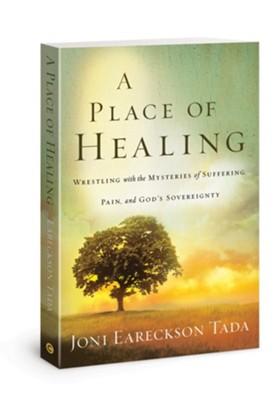


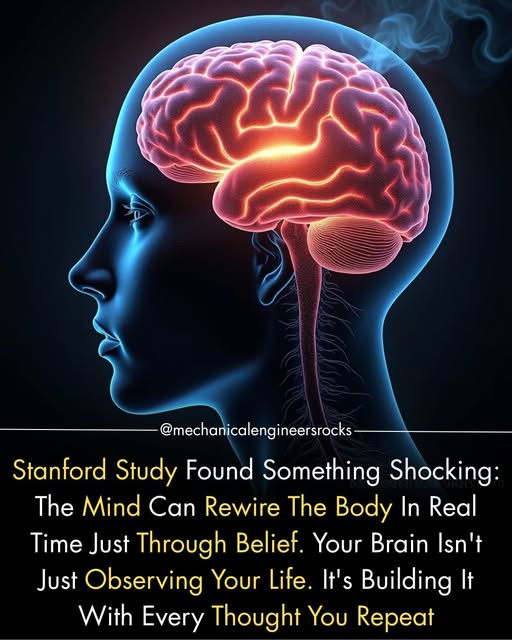
 What the Study Showed
 Why This Matters
 Broader Research Context
 Takeaway
 Autophagy in Normal Cells
 Autophagy in Cancer Cells
 When Autophagy Becomes Lethal
 Big Picture
 ? I’m genuinely questioning everything here.
-16-9.jpg "Glioblastoma cells (Dr Chris Jones/the ICR) 16:9")
 it’s all scientifically proven and also you can do the research yourself. The government used to back apricot seeds for cancer treatment, but a curing patient is not profitable just saying, but I understand where you’re coming from.
 ???
??? ”
”

 What the memoir covers
 Style and impact
 In short: This memoir is both a survival story and a guide to self-discovery, showing how Anna Parkinson turned an impossible diagnosis into a journey of healing and transformation.
 Timeline of Healing
 Big Takeaway
 Linear timeline (horizontal or vertical, showing stages in sequence), or
 That would be a powerful way to make Anna Parkinson’s journey more personal and actionable. Here’s a reflection guide aligned with each stage of her healing timeline, with prompts you can use to apply her lessons to your own life:
 Reflection Guide
 Why It Resonates
 Full detailed breakdown: This would walk through the key turning points in each chapter, highlighting the specific challenges she faced, the methods she tried, and the breakthroughs she experienced. Great if you want to study her path step by step, or if you’re looking for practical insights to apply.
 Part Two – Exploring Alternatives
 Part Three – The Inner Journey
 Part Four – Healing and Renewal
 Related Video
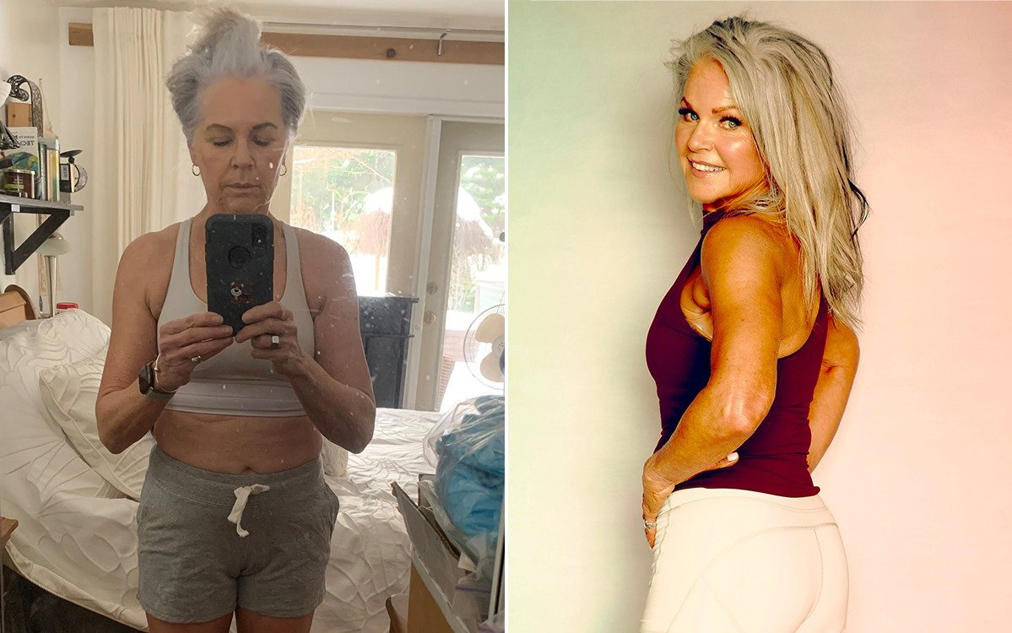


 Career Highlights
 Philosophy & Leadership
 Recent Events