– There is something so powerful about turning to the Lord in the midst of a really difficult season.
I grew up in Lexington, Kentucky, and I grew up in church, and I had an incredible Christian family who really taught me what it looks like to be a follower of Jesus.
I knew from a really young age that the Lord loved me, but I didn’t feel that love for the first time until I was in seventh grade.
I was on my first day of school, and I had a Bible teacher come in,
and just started to weep about talking about Jesus.
I just remember thinking, this grown man is crying over the name of Jesus.
And so everything that I’ve been taught my whole life must truly be true.
At the time, in that seventh grade classroom, I didn’t realize what God was going to do just three years later.
I remember I was asleep in my bed at home, in our hometown, and the police came knocking at our door.
It was 3:30 in the morning, and I run downstairs to see what was going on, and I saw six policemen standing in front of my front door.
I knew when I saw them that something had gone wrong,
but I just didn’t know what it was yet.
Walk into my living room, and I see my mom screaming and crying, and my dad;
I’d never seen my dad cry before, and I was 15 at the time.
So, I knew that if my dad was crying then something was really wrong.
I walked over to my dad and I asked him point blank, “Is he dead?”
He looked back up at me with tears in his eyes, and said,
“Yeah Anne, he’s dead.”
My older brother Jacob passed away in a car accident at the age of 23 years old.
(somber piano music)
I’ll never forget that moment as long as I live.
It was the moment where I was faced with a very hard decision:
Am I going to trust the Lord, or am I going to lean on my own understanding and walk out this whole path by myself?
I remember facing the doors in that room, and putting my head down and saying, Jesus, I trust you.
When I did that, I remember this heavy weight was lifted off of my shoulders, and the Lord spoke to me and He said,
“Anne, I’m going to give you everything you need to push through this tragedy and get to the other side.”
Probably day three or four after my brother had passed away, we were planning the funeral, which was so hard to do.
I go downstairs to the piano, I start playing and singing “What A Beautiful Name” by Anne Wilson `Hillsong coverThis song was dedicated — to the loving memory of my beloved big brother, Jacob.Thank you, Jacob, for always encouraging us to praise God, work hard, and always be kind.We love and miss you more each and every day.
My mom comes in the room, and she’s like, “Anne, we had no idea that you could sing.
Where is this coming from?”
I remember being like, “Mom, I don’t know what this is.
I’m just worshiping the Lord, and this is just my response to the tragedy right now.”
It was almost like, when I felt the weight of the grief, and the suffering, and the depression so heavily, my medicine and my escape was to worship Jesus.
And in exchange, when I would worship Him, He would give me His peace and His joy and His rest.
So, my mom asked me if I would be willing to sing at the funeral, and I sang at my brother’s funeral, for the first time, in front of anyone.
There were over 1,200 people there.
It was packed. The church was so crowded.
It was such an incredible day, such a special time of being able to reflect on Jacob’s life.
I remember walking up on stage, sitting down at the piano, and hearing the Lord’s voice.
He spoke so clearly to me.
He said, “Anne, this is what I am calling you to do: I’m calling you to praise and worship my name.”
I think when we walk through suffering, it can be really hard to trust the Lord.
Just being completely vulnerable.
Sometimes it’s easier to turn away from the Lord, and say, “No, I’m going to go figure this out by myself.”
And the enemy will try to get you stuck in that place of self pity, and, “Oh, I’m going to turn away from the Lord.”
But there is something so powerful about turning to the Lord in the midst of a really difficult season.
When we’re walking through suffering,
we’re called to worship the Lord.
I know firsthand, from experience right after losing my brother, the only thing that brought me comfort was worshiping Jesus.
We’re called to give Him our praise in the midst of every single different type of circumstance or troubles or suffering or whatever.
And so, there’s something really profound about taking a step back in the middle of suffering and laying it at the feet of Jesus, and then worshiping Him in response to it. (sweet piano music)
Anne Wilson sits down with Matt and Laurie Crouch on TBN’s Praise to discuss her personal testimony. Listen in as Anne Wilson shares surviving her greatest loss, her brother’s passing, and how his death led to the calling and purpose God had for her life.
Kylie Rogers and Jennifer Garner in 2016’s ‘Miracles From Heaven’ ; Christy Beam and Annabel Beam attend the premiere of ‘Miracles From Heaven’ on March 9, 2016, in Hollywood, Calif.Credit :
Miracles from Heaven, which is now streaming on Netflix, originally premiered in theaters in March 2016
The film tells the story of a young girl whose rare, incurable disorder is seemingly cured after falling from a tree and visiting heaven
It is based on Christy Beam’s book of the same name, which tells the real-life story of her daughter Annabel
Miracles from Heaven is a touching story of resilience, hope and the power of having a little faith.
In the film — which was originally released in theaters in March 2016 before it was added to Netflix — Jennifer Garner portrays a Texas mom, Christy Beam, whose faith is restored when her daughter, Anna (Kylie Rogers), is cured from a severe digestive disorder after falling 30 feet inside a hollow tree.
The movie is based on Christy’s best selling book of the same name, which recounts the real-life journey of her family and daughter Annabel. In February 2016, Garner told PEOPLE that she “really connected” with the story after reading the corresponding memoir.
“I wanted to honor what she and Annabel and the whole family went through,” she said.
“I love the message in the film and I love the message of hope.”
So what is the true story behind Miracles from Heaven? Here’s everything to know about the real-life inspiration behind the movie — and where Annabel Beam is today.
Jennifer Garner, Queen Latifah and Kylie Rodgers in 2016’s ‘Miracles from Heaven.’.
Yes,Miracles from Heaven is based on the real-life story of Christy, a mom from Texas, and her daughter Annabel. In the film, Christy takes her young daughter, Anna, into the hospital after she repeatedly gets sick at home.
While at first Anna’s sickness is written off as lactose intolerance and extreme acid reflux, one doctor finds a “100% abdominal obstruction,” in which part of her intestines are “twisted off.”
While in surgery, though, the doctor discovers that Annabel had a “severe intestinal motility disorder” that didn’t allow her body to process food, leading Christy down a long journey to find a cure for her daughter.
But everything changes when her daughter falls into a giant hollowed tree. After being rescued by first responders, doctors inform Christy and her husband Kevin (Martin Henderson) that Anna has survived with barely any injuries.
Not only that, the doctors inform Christy and Kevin that after “hitting the ground skull first with dirt packed to the top of her head,” Anna regained consciousness and “woke up with a smile on her face.”
After being released from the hospital, Anna also begins to show signs of recovering from her fatal condition. She later tells her parents that while she was stuck in the tree, she visited heaven and spoke to God, who promised her that she would be healed when she woke up.
When Christy tells her that she’s “worried” about what people might say to her if she tells them about her encounter, Anna responds, “Not everyone’s gonna believe, and that’s okay. They’ll get there when they get there.”
The real Annabel had a similar message when speaking to PEOPLE in March 2016.
“Believe in it if you want to. We put this out so you could have a stronger faith and probably a better life,” she said. “But we’re not trying to force it down your throat. So you can believe as you want, but we put this out there to help you, not hurt you.”
What happened to Annabel Beam in real life?
Annabel Beam at the premiere of ‘Miracles from Heaven’ on Feb. 21, 2016, in Dallas.
As Christy shared on her website, Annabel “spent most of her childhood in and out of hospitals with a rare and incurable digestive disorder that prevented her from ever living a normal, healthy life.”
Annabel, who had stomach conditions called pseudo-obstruction motility disorder and antral hypomotility disorder, was playing outside with her sisters one day in December 2011 when she fell three stories headfirst inside an old, hollowed-out tree.
While the fall could have caused death or paralysis, she miraculously survived without injury — and somehow became cured of her stomach disorders.
In her conversation with PEOPLE, Annabel said she visited heaven while trapped inside the tree, and that while she wanted to stay with Jesus — where she could be free of her stomach pain — he told her, “No, Annabel, I have plans for you on Earth that you can’t fulfill in heaven.”
While waiting to be rescued from the tree, Annabel said that she was kept company by a guardian angel.
Christy told PEOPLE that when the firefighters arrived, they were shocked by how “eerily calm and peaceful Annabel was.”
“If anyone was entombed in the base of a tree for five hours, they’d be hysterical,” Christy said. “But she never was.”
Annabel Beam, Christy Beam, Adelynn Beam, Abigail Beam and Kevin Beam seen at the premiere of ‘Miracles from Heaven’ on March 9, 2016, in Hollywood, Calif.
While the movie’s plot depicted the real-life events that happened to the Beams, the timeline was condensed, director Patricia Riggen told Outersparkle in March 2016. “When you tell a story on the screen, you have two hours. The sickness was longer, it had more steps,” she said, adding that, in real life, Christy had to visit more doctors until she finally got a diagnosis for her daughter.
“They kept missing it and she knew something was wrong, and she didn’t stop until she finally reached Dr. Nurko,” Riggen said. “But we stayed true to the story, and everything else is in there.”
During a March 2016 conversation with PEOPLE, Garner said one particular aspect of the film that stayed true to real life was the portrayal of Christy and her husband Kevin’s relationship, which she described as “authentic” and “healthy.”
“They were allowed to fight, they were allowed to disagree,” she continued. “But you never question that these people are in it together and are a team. I love that.”
Where is Annabel Beam now?
The Beam family celebrate Thanksgiving together in 2024. Christy Beam/ Instagram
At the end of Miracles from Heaven, viewers get a glimpse at the real Beam family, including Christy, Kevin, Annabel and her two sisters, Abbie and Adelynn. Annabel, who was seen swimming and playing on the playground, reveals that her hospital days were “behind” her and that she “couldn’t be happier.”
The “happy and healthy seventh grader” also shared that the tree had snapped in half during a storm.
In the years since, Annabel graduated magna cum laude from Hardin-Simmons University, Christy revealed on Instagram in May 2025.
“Proud does not do it service!” Christy captioned a photo collage. “This was the little girl who was so behind from being so ill that ‘they’ wanted to hold her back! … Many days she didn’t want to get out of the car, but she did it! We are so proud of you, Anna Beam! Well done! We adore you!”
A few months earlier, Christy celebrated her daughter’s September 2024 birthday with a heartfelt Instagram message, writing, “Annabel, you are so full of love, joy, grace and fun! You have impacted the lives of so many for the better.”
She continued, “What a joy and blessing to be your mom. We are so proud of the young woman you are becoming! I hope your day is nothing short of amazing!”
“When I was growing up people didn’t really talk about miracles I’m not sure I understood what they were or if I believed in them a miracle is defined as something not explicable by natural or scientific laws but then how do you explain it how does it happen who or what is behind Garner commented, We love you, Ladybug .”
‘Heaven was very bright and it was very peaceful.’
LOS ANGELES, CA (Catholic Online) – After firefighters spent hours removing her from the tree, Annabel told her family that she went to Heaven and met Jesus, who healed her.Annabel Beam was only 9-years-old when she fell down a hollowed-out tree and landed on her skull. Despite other horror stories in which spines were snapped and skulls were broken, Annabel emerged with a few scratches and a miracle: She was cured of a lifelong illness.
Annabel’s mother, Christy, opened up about her daughter’s illness and how doctors struggled to care for the symptoms of pseudo-obstruction motility disorder, which is an incurable condition that had plagued Annabel her entire life. In the hospital following her accident, Annabel’s doctors ran MRI and CT scans and were amazed to see her skull and brain were intact and had not sustained any major injuries.
Further tests revealed Annabel was cured.
“Heaven was very bright and it was very peaceful,” Annabel recalled. “There was no pain, and that’s why I wanted to stay. And I sat on Jesus’ lap and I asked Him if I could stay. “He said, ‘No, Annabel, I have plans for you on Earth that you cannot complete in heaven, but whenever the firefighters get you out, there will be nothing wrong with you.”
When asked what Jesus looked like, Annabel described him as having brown hair, a beard and he wore a purple sash. Sure enough, when Annabel awoke, she was so healthy that the painkillers prescribed for possible discomfort were left entirely untouched as Annabel was perfectly fine.
Annabel’s story was so amazing that her mother, Christy Beam, wrote a book to spread God’s continued miracles. When actress Jennifer Garner approached Beam after being cast as Christy for the film version, Beam explained “she had my book. She had read the book from cover to cover, and she’d underlined and highlighted and dog-eared. She’s really sweet.”
Garner spent time with the Beams to promote the film and get a better understanding of Christy’s character. Garner even hailed Christy as an inspirational character, stating: “I was definitely inspired by who Christy is as a mom.”
Following the filming of “Miracles from Heaven,” Garner admitted it inspired her to return to church, which in turn inspired her children as well.
Keywords: Annabel Beam, Jesus, Jennifer Garner, Miracles from Heaven, healing
After Hiker, 17, Suffered ‘Hallucinations’ in Mt. Everest’s ‘Death Zone,’She Was Forced to Make a Heartbreaking Decision (Exclusive)
Story by Jordan Greene Key takeaways
Bianca’s fascination with Mt. Everest began at a young age, influenced by her parents’ expeditions in 2006 and 2007.
She trained rigorously for over a year, focusing on endurance, discipline, and mental toughness, with her father by her side.
Despite reaching 8,400 meters, she chose to retreat due to worsening weather and the risk of frostbite, prioritizing her long-term climbing future.
NEED TO KNOW
Adventure was woven into the fabric of Bianca Adler’s life from the very beginning
Her fascination with Mt. Everest took root early, fueled by her parents’ own expeditions to the mountain in 2006 and 2007
This year, at 17, she made her own journey to Mt. Everest
As a little girl, Bianca Adler would sit cross-legged on the floor, flipping through her family’s picture books of Mount Everest — mesmerized by the snow-dusted peaks and climbers standing at the top of the world.
“I remember thinking, ‘Wow, this is beautiful,’ ” she recalls to PEOPLE.
Her fascination was fueled by her parents’ expeditions to Everest in 2006 and 2007. Adventure, it seemed, was in her blood.
Courtesy of Bianca Adler Bianca Adler climbing mountain
Raised in Melbourne, Australia, and later in the French Alps, Adler grew up surrounded by mountains and parents who believed in the transformative power of the outdoors. “I was always asking my dad to take me on bigger, harder climbs,” she says. “He never pushed me into anything dangerous, it was always my choice. I just loved it.”
By 12, she climbed Mont Blanc. Two years later, she Summited Aconcagua, one of the youngest ever to do so. Over the next years, she tackled dozens of 4,000- and 6,000-meter peaks in the Alps and Nepal, culminating in Mt. Manaslu (8,163 meters), where she became the youngest woman ever to summit.
Each climb taught endurance, discipline and mental toughness. “We’d do 6-8 day hikes in the Australian Alps, hiking 25-30 km per day and rationing food and water,” she says.
Courtesy of Bianca Adler Bianca Adler climbing Mt. Everest
Eventually, her years of training led to the moment she had been waiting for: Everest. Preparation began more than a year in advance, with early mornings spent running, cycling and on the StairMaster, combined with climbing-specific strength training.
Her father trained alongside her, her mother often joined in, but Adler knew motivation had to come from within.
“There were definitely moments I doubted myself,” she admits. “Physically, women aren’t as strong as men, and Everest is the same mountain for both. But then I’d remember all the mountains I’d already climbed.”
To stay motivated, she recorded short clips during workouts and expeditions. “When I didn’t feel like going to the gym, I’d rewatch those videos — me exhausted, saying, ‘This is why you need to train, because this is how hard it gets,’ ” she says, laughing.
“I trained very hard for all of these peaks and continued my training for Everest,” she adds. “I did 5-6 days a week of long cardio sessions on the StairMaster and spin bike, plus climbing-specific strength training.”
In late March, Adler, her father, and a small group of friends and family set out for Nepal. After a 10-day trek through rhododendron forests and Sherpa villages, they finally arrived at Base Camp, perched at 17,000 feet.
Reaching Base Camp is just the beginning of a complex Everest expedition, which involves meticulous preparation, logistics and significant expense.
“Costs vary widely depending on whether climbers use local or Western companies, hire individual guides and pay the Nepalese government’s peak fee,” Adler explains.
Courtesy of Bianca Adler Bianca Adler takes a selfie
Once on the mountain, life is both breathtaking and grueling. The thin air makes even eating exhausting, meals are simple — often pasta with tuna or potatoes — and staying hydrated is essential. The mountain also presents unusual challenges, including something most people don’t think about: toilets.
“At Base Camp and Camp Two, there’s a small tent with a barrel to squat over. Up higher, we carry ‘wag bags,’ plastic bags we have to use and carry down,” she says. “It’s a recent rule to reduce human waste damage on the mountain.”
Waste management has improved dramatically in recent years. “Nepal now enforces stricter rules, and huge drones are even used to airlift trash from higher camps,” she says. “Personally, I try my best to leave no trace — everything I bring, from food wrappers to oxygen bottles, comes back down with me.”
After a week of acclimatization, her family and friends descended, leaving Adler and her father to begin their climb.
Their ascent followed a series of rotations — Base Camp to Camp One, Camp Two, Camp Three, then back down — a rhythm designed to help their bodies adapt to the thin air. Before the final push, they participated in a Buddhist Puja ceremony led by Sherpas.
“It’s a tradition to ask the mountain for permission and protection,” Adler explains. “I still wear the string they gave me; it’s a reminder of respect and safety.”
The four-day climb toward the summit was grueling, with glaciers bridged by ladders, deep crevasses to navigate, and air that seemed to vanish with every step. “Once we reach Camp Three, we start using bottled oxygen,” she says. “Even then, it feels like you can’t breathe. We’d walk maybe seven steps a minute before stopping to catch our breath.”
Midway through the ascent, her father fell ill and had to remain at Camp Two. It was a devastating setback, but Adler’s determination only strengthened.
Pressing on with two Sherpa guides, she reached Camp Three, rested overnight, and then climbed to Camp Four — the final stop before the summit.
With the top still hours away, Adler knew she was entering the “death zone,” the perilous region above 8,000 meters where humans cannot survive for long. She planned to leave at 6:30 p.m., climbing through the night while carefully conserving her energy.
When she stepped out of her tent, horizontal winds and temperatures between –20 and –30 °C hit instantly. From Base Camp, her mother monitored multiple weather models, predicting the winds would ease after a few hours, but for now, the conditions were brutal.
“There’s wind blowing snow everywhere. It’s pitch black. Ice was forming on my eyelashes, and I had to melt it with my thumbs,” Adler recalls. “But mentally, I was strong. I thought, “This is my dream — I’m climbing Everest.”
After seven hours of climbing through the darkness, she reached the Balcony at 8,400 meters — just 400 meters shy of the summit. But as the weather worsened, her hands and toes began to go numb, early signs of frostbite. Many climbers were already turning back. She radioed her father and made the hardest decision of her life: to retreat.
“I realized I couldn’t risk my hands, my toes, or my life for the summit,” she says. “Even with so little oxygen and some hallucinations, I knew I wanted to keep climbing for the rest of my life. One summit wasn’t worth losing that.”
Back at Camp Four, Adler spent nearly four days in the death zone — far longer than most climbers. “It’s horrible on your body to stay that long where oxygen is so scarce,” she says. “Even simple movement feels impossible. My lungs were struggling, and my face was burned and dark from the constant snow and wind; it wasn’t frostbite, but it left its mark.”
During that quiet, grueling stretch, she filmed a video to process what she was living through, footage that would later go viral on TikTok.
That evening, she attempted another push toward the summit but turned back again, completely spent. “I didn’t reach the summit this time,” she says. “But I came closer than most people ever will. And I learned something even more important than standing at the top — how to listen to my body, make hard choices and respect the mountain.”
“Sometimes the bravest thing you can do,” she adds, “is turn around.”
Eventually, Adler reunited with her father at Camp Two, where he was still recovering. Together, they descended to Base Camp, where her mother was waiting.
“Almost no one stays that long in the death zone,” she says. “Even the Sherpas with me, who had been on Everest many times, had never done anything like this.”
The toll was severe: she’d lost weight and muscle mass, and her lungs took weeks to recover. “I looked and felt pretty bad,” she admits. “But once we flew from Base Camp to Kathmandu — at a lower altitude — everything started working better again.”
Back home, healthy and back to her normal weight, Adler began sharing her experiences online. She posted clips from the climb on TikTok and Instagram — including the one filmed in the death zone after her first summit attempt. To her surprise, it went viral, reaching 73 million people.
“At first, I was just shocked by how much attention it got,” she says. “I’d never really received negativity online before, and suddenly there were people questioning everything. But that quickly shifted once I saw the response from so many others.”
“I really had a positive experience on Everest,” she continues. “A lot of people only see the viral videos and make assumptions about the expedition. Of course, there were challenges, but overall it was incredible. I love a challenge, and even when it was hard, I was enjoying it.”
Many of the messages she received came from young women inspired to take their first hiking or mountaineering courses.
“That made it all worth it,” Adler says. “I wanted to share photos and videos from the climb to encourage people — especially girls — to dream big, take on challenges and set goals for themselves. It doesn’t have to be Everest. It could be getting outside, hiking or trying something completely new. Nature has so much to teach you.”
Now back in school, Adler is already planning her next adventures — including other 8,000-meter peaks like K2 and new climbs in South America and the Alps. “My climbing definitely doesn’t end at Everest,” she says.
Courtesy of Bianca Adler Bianca Adler on Mt. Everest
The experience, she adds, gave her a deeper understanding of her own strength, both physical and mental. Her thoughts drift back to the little girl in Melbourne, cross-legged on the floor, staring at picture books of Everest.
“It feels surreal,” she says softly. “I grew up dreaming about this mountain, and now I’ve lived it — the cold, the wind, the struggle, the beauty. One day I’ll reach the summit. But for now, just being on Everest, experiencing it, surviving it — that’s enough.”
From surviving two terminal cancers to climbing Mount Everest with one lung, Sean Swarner from Willard, Ohio. Life is a testament to the power of resilience and perspective. In this extraordinary talk, Sean reveals how the words we use—spoken, written, and internal—shape our reality, influence our mindset, and build invisible strength. Through his awe-inspiring journey of survival and world-record achievements, Sean invites the audience to reframe their challenges, harness positive self-talk, and embrace the resilience within to conquer their own mountains.
Sean is a world-renowned adventurer and cancer survivor, known for being the only person to summit Everest and all Seven Summits, ski to both Poles, and complete the Hawaii Ironman—all with one lung after surviving two terminal cancers. Sean is a motivational speaker, inspiring countless people worldwide through his incredible resilience and world-record achievements. His story has been featured in an Emmy-nominated Amazon film and on global media platforms, empowering audiences to break through their own limitations. This talk was given at a TEDx event using the TED conference format but independently organized by a local community.
True North: The Sean Swarner Story is an unflinching documentary about one man’s relentless quest to prove that nothing is stronger than the human spirit. As a teenager, Sean Swarner was diagnosed with two lethal forms of cancer. Both times he was given only weeks to live and both times he fought back and survived, but not before the disease claimed one of his lungs. Now, he’s trekking to the brutal and unforgiving North Pole, where temperatures hover around minus 40 degrees. If he makes it, he will have completed The Explorers’ Grand Slam – climbing the highest peaks on all seven continents and then trekking to the South and North Poles.
His feat is daunting, but Sean is on a mission- a Mission of Hope. Swarner has dedicated each one of his climbs to the cancer patients he hope to inspire- symbolized by a flag he carries with him to each peak. His exploration to the North Pole is no different. With the help of Vern Yip, television personality and interior designer, Sean designs the Flag of Hope. Months leading up to his final endeavor, Sean takes the Flag of Hope across the country. One by one, those affected by cancer put their names and loved ones on the flag. United by one purpose, Sean hopes to cover the world in hope. True North: The Sean Swarner Story is a jaw-dropping look at how far a man will go to feel alive, and to bring hope to millions of people touched by cancer around the world.
Cameron Stauth was raised in Monmouth, Illinois, where he was a student-broadcaster at radio station WRAM, working for several years with play-by-play announcer Joe Tait, who was later inducted as a broadcaster into the National Basketball Association Hall of Fame. Stauth was also a reporter for the Monmouth Review Atlas and the Galesburg Register Mail. He graduated from the University of Illinois College of Media in 1970.
CAMERON STAUTH is author or coauthor of more than twenty books. He has been editor of The Journal of Health Science; editor-in-chief of The Journal of the Nutritional Academy; a columnist for Natural Health, American Film, L.A. Business, and California Business; and his articles have appeared in The New York Times Magazine, Esquire, People, The Saturday Evening Post, Prevention, Good Housekeeping, among others. He is the author of In the Name of God, and has since resided on the West Coast in Portland, Oregon and Sun Valley, Idaho.
In 1970 Stauth worked as a public relations specialist for the University of Illinois Sports Information Department, and as a general assignment reporter for the Rockford Morning Star, while beginning his career as a freelance journalist and author.[2] In 1971, concerned by a friend’s illness, Stauth began to research integrative therapies for cancer, and wrote about this approach in a number of magazines.[3]
He later served as the public relations director of Santa Maria Hospital in Baja, California, most widely known for treating film star Steve McQueen when the actor sought end-stage treatment there for terminal lung cancer.[4][5] In the 1980s Stauth co-founded the health-products firm Quantum, Inc., and the nonprofit Cancer Prevention Society.[6] He became Editor of the Journal of the Nutritional Academy in 1979, and Editor of the Journal of Health Science in 1982.[citation needed] He was also a contributing editor on health and healing for Let’s Live, and The New Age Journal.[7][8]
Stauth’s first book, 1981’s The New Approach to Cancer, was one of the earliest to describe integrative therapies for cancer patients, was among the first to present a comprehensive lifestyle program for cancer prevention. Some of the book’s concepts were controversial at that time, including the theory that nutrition plays a role in some forms of cancer.[17]
Recovery from cancer is occurring increasingly often—partly because patients are taking an active role in fighting the disease. You need not be a passive, helpless cancer “victim.” You can help your doctor conquer cancer by stimulating your own health. This is the new approach to cancer. It is an approach that has been pioneered by Dr. William Donald Kelley and his colleagues.
In this book you will find a full description of the program of health stimulation that has helped thousands of people. For over twenty years, Dr. Kelley has taught doctors how to help their patients recover. Now you can learn how to yourself.
Two subsequent books also generated controversy: Brain Longevity, co-authored by Dharma Singh Khalsa, M.D. in 1996, and Healing the New Childhood Epidemics, co-authored by Kenneth Bock, M.D., in 2007.[18][19]Brain Longevity proposed a multifaceted treatment program for Alzheimer’s at a time when the disease was considered to be largely untreatable.[20]
Healing the New Childhood Epidemics asserted that in many cases autism is strongly influenced by multiple physical issues, including neurological inflammation, toxicity, nutrient deficits, endocrine imbalance, gastrointestinal disorders, and infection, and that it can be better controlled and sometimes reversed when these issues are resolved.[21]
In addition, Stauth modified the theory and nomenclature of the “fight or flight” response, a characterization of the human reaction to stress, originated by Walter Cannon, M.D.[22] Stauth created and described the now widely used phrase and condition referred to as the “fight-flight-freeze” response, presented in several of his books that were written with various coauthors. These books include Brain Longevity, What Happy People Know, and The End of Pain.[23][24][25][26]
Stauth wrote two other medical books with Khalsa, The Pain Cure, which described natural biomedical and mind-body therapies for chronic pain, and Meditation as Medicine, an examination of mental control over illness.[27][28] Stauth also wrote books about weight management and fitness.
Also including The False Fat Diet, One Body One Life, and 2003’s The Starch Blocker Diet, a reprise of his 1982 book The Original Starch Blocker Diet.[29][30][31] He also wrote a book on the emerging science of happiness, What Happy People Know, with Dr. Dan Baker.[32]
Summary:
Dr. Dharma Singh Khalsa “shows us how the tremendous power of medical meditation can heal not only the body but also the mind and soul” (Deepak Chopra) in this practical and engaging guide to natural healing.
Dr. Dharma Singh Khalsa “shows us how the tremendous power of medical meditation can heal not only the body but also the mind and soul” (Deepak Chopra) in this practical and engaging guide to natural healing.Proven effective by scientific research and presented here by Dr. Dharma Singh Khalsa and Cameron Stauth, the practice of Medical Meditation revolutionizes the healing process.
By balancing and regenerating the body’s ethereal and physical energies through simple meditations, Medical Meditation unites the mind, body, and spirit into a powerful triad. Each Medical Meditation here has a specific physiological effect, targeting afflictions from arthritis to ulcers to cancer. Dr. Khalsa details the five unique attributes that endow this type of meditation with far more power than standard meditation.
The combination of special postures and movements; exact positioning of the hands and fingers; particular mantras; specific breathing patterns; unique focus of concentration can change your entire biochemical profile, easing you into a calm, healing state. Practiced in conjunction with conventional or alternative medical treatments, cutting-edge Medical Meditation activates the healing force within you.
Proven effective by scientific research and presented here by Dr. Dharma Singh Khalsa and Cameron Stauth, the practice of Medical Meditation revolutionizes the healing process. By balancing and regenerating the body’s ethereal and physical energies through simple meditations, Medical Meditation unites the mind, body, and spirit into a powerful triad.
Each Medical Meditation here has a specific physiological effect, targeting afflictions from arthritis to ulcers to cancer. Dr. Khalsa details the five unique attributes that endow this type of meditation with far more power than standard meditation.
The combination of special postures and movements; exact positioning of the hands and fingers; particular mantras; specific breathing patterns; and a unique focus of concentration can change your entire biochemical profile, easing you into a calm, healing state. Practiced in conjunction with conventional or alternative medical treatments, cutting-edge Medical Meditation activates the healing force within you.
In Medicine, the mind, body, and spirit are one, and miraculous healing only occurs when that powerful triad is united. Imagine being able to rid yourself of a host of medical or psychological maladies without medication or psychotherapy. You can — with non-invasive medical meditation. It’s proven effective and one of the most overlooked forms of therapy available today.
Backed by scientific research and presented here by Dr. Dharma Singh Khalsa and Cameron Stauth, bestselling authors of Brain Longevity and The Pain Cure, medical meditation utilizes an array of remarkable techniques that revolutionize how doctors and patients approach the healing process. Each medical meditation has a specific physiological effect, targeting afflictions from arthritis to ulcers to cancer.
The clinical precision of this method is extraordinary, yet the meditations are surprisingly simple and can be done on your own, at home, at your own pace. Practiced in conjunction with conventional or alternative medical treatments, medical meditation activates the healing force within you. This is not the meditation of yesterday.
Dorothy’s Rowe webinars provide a simple and natural approach to unlocking your full potential. My goal is empower everyone to use energy healing to improve health, relationships Free Healing Offerings · Self-Discovery Journey · Energy Healing Workshops Menu:Energy Healing Services · Energy Healing Workshops · Contact · About · Home
This video session is filled with powerful energy and positive intentions that will help you enter a strong healing flow. Prepare for a deep healing journey that will assist you in transforming your life. Listening to special cosmic energy music has a very beneficial effect on the consciousness, providing healing and calming effects.
This music possesses incredible energy and strength. With this sound therapy, you will easily achieve a state of tranquility, renewal, and peace. Already after the first complete listening, the healing sound flow will cleanse you of accumulated negativity! You will clear your mind and relieve stress!
With frequent use of this video session, the space around a person becomes very harmonious, leading to noticeable improvements not only in physical condition but also in the psychological and spiritual aspects of your being! You will spend just over 8 minutes on this video program, but the results will be remarkable!
Unwind and drift into deep sleep with the calming sounds of gentle ocean waves under a moonlit beach sky. This relaxing night beach ambience is perfect for sleep, relaxation, meditation, or simply creating a peaceful atmosphere. Let the rhythmic sound of waves wash away stress and help you fall asleep fast. Deep sleep & insomnia relief Meditation & mindfulness Stress relief & anxiety reduction Focus & relaxation Close your eyes, breathe deeply, and let the soothing waves transport you to a peaceful state of mind.
Sweet dreams! It is recommended to use headphones.
Dr. Amy Morris was diagnosed with stage 3 ovarian cancer at the age of 30 years old.
Barely any side effects & no family history of cancer, I was being given a 39% chance of surviving to just 5 years. It was a terrible state that I simply could not accept.
Because I truly follow my own philosophy, I wanted to use every strategy scientifically proven to help me get to cancer free & stay cancer free.
So I got to work – First a surgery to remove the cancer and one of my ovaries.
Then chemotherapy. Every day, I used comprehensive strategies to help me recover from surgery and chemo cycles. Anti-Cancer Nutrition, Targeted Exercise, and Transformative Mindset Work.
Once my treatment was complete, that’s when I really dove in.
There is so much that cancer thrivers can do to reduce their risk of recurrence. You have so much power. As an ovarian cancer survivor – I was going to make sure I did it all! This experience allowed me to truly understand all aspects of cancer on a deeply personal level. I am a much better clinician now – having gone through cancer myself.
Hey, Dr. Amy Morris here, and as an eight-year cancer survivor, I’m sharing with you five cancer tips that nobody tells you about. These are the things that I wish I had known sooner.
So, no matter where you are in your cancer journey, these are the tips that can make a real difference in your recovery and your long-term health, these small strategies help you heal, stay healthy, and be cancer-free for life. Let’s get into it.
Starting with number one, rest is not recovery. Most cancer survivors think that rest equals healing. But the truth is that your body does not rebuild itself just by getting more sleep. Healing takes energy. It takes movement. True recovery means restoring your muscles and stabilizing your hormones, reducing inflammation. And this doesn’t happen just through rest. When I was diagnosed with stage 3 cancer, my biggest battle was exhaustion.
I thought I needed to sleep as much as possible to recover. But even after 12 hour nights, I’d wake up feeling the same. It wasn’t until I truly started rebuilding my strength that I actually felt alive. Cancer survivors don’t understand that simple strategies like walking for 30 minutes every day or doing body weight strength training exercises can reduce your risk of a cancer recurrence by up to 60%. That’s not a small number. That’s life changing.
Exercise increases blood flow throughout your body. It helps flush out inflammatory cells. Plus, it’s going to activate your body’s own healing pathways. Inside the Cancer Freedom program, I work with a breast cancer patient. After she finished her treatment, she could barely walk a block without having to sit down and take a rest.
So, we started slow, 5 minutes a day, then 10 minutes a day.
Within 3 months, she was walking five miles, and her joint pain completely disappeared. Her energy came back. her inflammatory markers dropped. Rest did not do that. Movement did. Now, look, recovery doesn’t mean pushing yourself until you’re totally drained. It means rebuilding strategically. Your body needs to be guided back to strength. Rest gives your body time, but movement gives your body purpose.
2:54 Okay, but on to number two. Eating healthy isn’t always cancer fighting. You can eat clean and still miss out on the key nutrients that can help you stay cancer free. Many cancer survivors fall into the trap of cutting calories or cutting out total food groups. They’re thinking that they’re doing everything right. They eat organic food. They eat lots of fruits and vegetables, only chicken and fish, but yet still something’s missing.
Here’s what it is. You need to know the specifics behind your nutrition. If I were to ask you, how many grams of protein did you eat yesterday? How many grams of fiber? I want to know the exact number. If we don’t have a concept of your nutrition to that level, we actually don’t know if it’s a healthy diet for you or not. You might be eating all the right foods in all the wrong quantities.
Most cancer survivors that start working with me inside the cancer freedom program are deficient on specific nutrients that are needed to recover from treatment and stay cancer-free. These are micronutrients like magnesium and vitamin D. These are not minor details. These are the foundation of your immune system. When these nutrients are low, your body is slower in repairing DNA damage.
Inflammation stays higher for longer. Most cancer survivors need to be aiming for a minimum of 1 gram of protein per kilo of body weight per day. And most cancer survivors are not reaching that minimum. But keep in mind, this is your minimum, the basement requirement. To really thrive, you’re going to need even more than that. Protein helps repair tissues and lean muscle mass. It supports your hormone balance.
This is all critical after going through surgery, chemo, or radiation. And don’t forget about fiber. Fiber actually binds to excess hormones in your body and excretes it. It also helps to stabilize your blood sugar and it’s going to feed the healthy bacteria in your gut. That’s so critical to your immune system. Now, the sweet spot for fiber is around 30 grams per day, but that truly does depend on your other micronutrients.
Now, that might sound like a lot, especially because most of the women who come to work with me start out at 15 grams per day, not 30. They need to double their fiber intake. But we have a great amount of research to show that for every 10 grams of fiber, you reduce your risk of a cancer recurrence by 10%. Now, inside the cancer freedom program, I worked with a cancer thor who was eating mostly plant-based.
Now, this is an amazing way to eat, but she was not hitting all of her macro and micronutrient targets. She thought if she ate plant-based, that would be healthy. But yet, the data was not supporting her body. Her iron levels were low, her magnesium, her B vitamins, and her energy kept crashing every afternoon. But then we adjusted her meals to bring up the protein.
More lentils, more pumpkin seeds. Her lab markers improved and she finally felt clear-headed again. Now, eating healthy is not a onesizefits-all. After cancer, your nutrition, it needs to be strategic. We are talking about cancer after all. It needs to target your unique biology, your cancer, your treatment, and your unique goals.
6:27 Okay, but moving on to number three. Your mindset impacts your side effects. Now, this is not about being positive all the time. It’s about understanding that your thoughts can alter your physiology. When I was in recovery, I didn’t realize how much mindset was working against me. I’d lie awake at night worrying about recurrence. The stress of it was keeping my cortisol levels high. My body was constantly inflamed.
I didn’t connect all the dots for a long time, but then I clued in that this was stress physiology. Research shows that chronic stress increases inflammation and increases fatigue. It disrupts hormones. It suppresses your immunity.
This can even alter how your body metabolizes medications. Now, cancer survivors who intentionally train their mindset through gratitude, through visualization, through cognitive behavioral therapy, these survivors experience fewer hot flashes, less pain, and a better sleep.
When I introduced this approach to my client Sarah, who was navigating debilitating joint pain from her therapy, she was skeptical. But we started just by incorporating a five minute nightly routine. And within weeks her sleep improved, her mood stabilized and her pain decreased.
This is not a placebo. This is neurobiology.Your brain communicates directly with your immune system. When you quiet your stress response, your body is able to heal more effectively. Mindset isn’t magic. It’s actually medicine.
8:10 Okay, but on to number four. Supplements are only as good as the strategy behind them. Most people take supplements reactively. A friend recommends one, they see an advertisement, they hear about it on podcast, and they start taking it. Pretty soon, your cupboard is filled with supplements and you have no plan. Without understanding your deficiencies, your dosing, your timing, this is not very useful.
You’re not helping your body. You might even be Wasting your effort. The supplement industry thrives on generalized marketing. Boost your immune system. Reduce inflammation. But what your body needs after cancer is precision. For example, vitamin D supports your immune system, but the dose depends on your specific blood level.
Magnesium supports muscle repair and sleep patterns, but it comes in different forms. When I tested 9:04 my own micronutrients after cancer, I found that I was deficient in very specific areas. All I needed to do was take two supplements to correct those specific deficiencies. Once I corrected those, everything normalized.
Now, inside the Cancer Freedom program, we often reflect upon blood work to help us with our supplement decisions. I work with a cancer patient who’s spending hundreds of dollars on supplements every single month.
Once we tested her levels, we found that we could take away a lot of her supplements.
They were unnecessary and some of the ones she was taking; were actually underdosed. We made the right adjustments. We saved her money, and she felt better in a matter of weeks. But supplements don’t work in isolation. They work as part of a strategy. The right compound, the right form, and for the right reason.
9:54 Okay, on to number five. You don’t rebound, you rebuild. No one tells you this, but cancer recovery is not about returning to who you were before. It’s about becoming stronger and wiser and more strategic. Your metabolism, your hormones, they’ve all changed. That’s not a failure. That’s information. It means your body has a new operating system. When you understand how to fuel it, move it, and support it properly, you feel better than you did before your diagnosis. When I finished my treatment, I was determined to bounce back.
I wanted to pretend like nothing had happened, but my body was different. My tolerance to stress was lower. My energy was fluctuating. My inflammation markers were off. It wasn’t until I stopped trying to bounce back and I started focusing on rebuilding that I actually started to feel like myself again. Think of it like renovating a house. We don’t rebuild it with the same materials that failed before. You get better ones, safer, faster, more effective.
That’s what thriving after cancer really means. I’ve seen this transformation over and over again. Women who were stuck in exhaustion after cancer, they finally start to thrive because they focus on rebuilding instead of just waiting to come back to life. They’re rebuilding their health piece by piece, step by step. Healing after cancer is not passive. It’s strategic. It’s deliberate and it can be empowering. Okay, but look, now that you know these five tips that almost no one will tell you, the next thing you need to know about are chemo secrets. Are you ready?
In this episode of The Other C Word, I’m joined by the inspiring Dr. Amy Morris— Stage 3 Ovarian Cancer warrior, and founder of the Cancer Freedom Program. Diagnosed at just age 30, Amy has taken her personal battle with cancer into a mission to helping women thrive after treatment. We dive into:
Her journey through diagnosis, treatment, and recovery
The challenges women face after cancer and how to overcome them
Strategies for lowering the risk of recurrence and reclaiming your health
Practical tips for managing side effects, menopause, and body confidence
Whether you’re navigating a new diagnosis, living with metastatic disease, or trying to rebuild your life after treatment, this episode is packed with hope, guidance, and actionable steps to help you feel like yourself again.
“Cancer Secrets” by Jonathan Stegall – Cancer stands as the second-leading cause of death in the United States, on the precipice of overtaking heart disease as the foremost killer. This year, within the United States alone, a staggering 1.9 million new cancer cases are projected, accompanied by an unfortunate toll of over 600,000 cancer-related fatalities.
It’s a somber truth that the battle against cancer appears to be slipping from our grasp. In the midst of this challenging landscape, cancer patients and their families find themselves navigating a labyrinth of emotions and uncertainties.
As they seek understanding, they turn to oncology books and online resources, yearning for insights and answers while grappling with the question of who to trust. The debut release of the forward-thinking book on cancer, Cancer Secrets, made waves in 2018, emerging as a bestseller that ushered in valuable enlightenment for countless cancer patients and their families.
Now, the highly anticipated second edition of Cancer Secrets carries forth integrative oncologist Jonathan Stegall, MD’s commitment to disseminate the latest, most forward-thinking and practical information about cancer in an easy-to-read cancer book.
Dr. Stegall’s insights are rooted in his thriving integrative oncology practice located in Atlanta, GA. Through hands-on involvement with his patients, Dr. Stegall’s open-minded approach has garnered a comprehensive understanding of which approaches have proven effective and which ones fall short in the realm of cancer treatment.
Within the pages of this indispensable anti-cancer book, readers can expect a treasure trove of insights they aren’t likely to find elsewhere. A “must-have” resource for those engaged in fighting cancer, this comprehensive book on cancer is an invaluable companion for individuals who are seeking expert guidance on integrative cancer modalities to help them on their cancer journey.
Overview of the Book
“Cancer Secrets” by Dr. Jonathan Stegall offers a holistic roadmap for cancer care, blending modern medicine with natural therapies to empower patients and families.Amazoncancersecrets.comPodcast | Cancer Secrets
Here’s a detailed overview of the book and its key insights:
Overview of Cancer Secrets
Author: Dr. Jonathan Stegall, a board-certified integrative oncologist based in Atlanta, Georgia.
First Published: 2018, with updated editions released since.
Focus: Integrative oncology—merging conventional cancer treatments with evidence-based alternative therapies.
Audience: Cancer patients, caregivers, and anyone seeking a deeper understanding of comprehensive cancer care.
Key Concepts and Takeaways
Integrative Approach: Stegall advocates combining chemotherapy, radiation, and surgery with complementary methods like nutrition, supplements, and stress management.
Personalized Treatment Plans: Emphasizes tailoring therapies to each patient’s unique biology, lifestyle, and emotional needs.
Metabolic Targeting: Discusses how cancer cells rely on specific nutrients and how restricting these can weaken tumors.
Mind-Body Connection: Highlights the role of meditation, emotional healing, and spiritual wellness in cancer recovery.
Diet and Lifestyle: Offers guidance on anti-inflammatory diets, detoxification, and exercise as part of healing.
Critique of Conventional Medicine: While not dismissive, Stegall critiques the limitations of traditional oncology and calls for more patient-centered care.
Empowerment Through Education: The book aims to demystify cancer and equip readers with actionable knowledge to make informed decisions.
Dr. Jonathan Stegall emphasizes diet and lifestyle as foundational pillars in cancer care, aiming to support the immune system, reduce inflammation, and improve treatment outcomes. His recommendations are personalized and science-based, not one-size-fits-all.
Dietary Principles in Stegall’s Approach
Dr. Stegall’s nutritional strategy focuses on metabolic balance and immune support. Key principles include:
Anti-inflammatory foods: Emphasizes vegetables, berries, nuts, seeds, and healthy fats like olive oil and avocado.
Low-glycemic eating: Reduces sugar and refined carbs to limit insulin spikes and starve cancer cells of glucose.
Adequate protein: Supports tissue repair and immune function, especially during treatment.
Organic and clean sourcing: Avoids pesticides, hormones, and additives that may disrupt cellular health.
Hydration and detox: Encourages filtered water and herbal teas to support liver and kidney function.
Stegall also tailors diets based on lab results, food sensitivities, and metabolic needs.
Lifestyle Recommendations
His lifestyle guidance complements medical treatment and includes:
Regular movement: Light exercise like walking, yoga, or stretching to boost circulation and mood.
Stress management: Meditation, prayer, and breathwork to reduce cortisol and support immune resilience.
Sleep hygiene: Prioritizes 7–9 hours of restorative sleep to aid cellular repair.
Environmental detox: Minimizes exposure to toxins from plastics, cleaning products, and air pollution.
Social and spiritual connection: Encourages meaningful relationships and spiritual practices to foster hope and purpose.
These habits are not just supportive—they’re therapeutic, helping the body recover and resist recurrence.
Would you like to explore how Stegall uses lab testing to personalize nutrition or his views on sugar and cancer metabolism?
Dr. Jonathan Stegall believes that sugar plays a significant role in cancer metabolism and advocates for dietary strategies that limit glucose availability to cancer cells. He challenges mainstream views that downplay the connection between sugar and cancer progression.
Stegall’s Perspective on Sugar and Cancer
According to Dr. Stegall:
Glucose fuels all cells, including cancer cells—but cancer cells are often more dependent on glucose due to their altered metabolism.
Healthy cells can survive on fat and protein, while cancer cells struggle without glucose, making sugar restriction a strategic tool.
Carbohydrate reduction is central to his nutritional approach, aiming to weaken cancer cells metabolically.
He states: “Healthy cells require protein and fat for survival, but not carbohydrates. When carbohydrates are kept very low, cancer cells are deprived of their preferred fuel.”
Scientific Basis
Stegall’s views align with the Warburg effect, a well-known phenomenon where cancer cells rely heavily on glycolysis (sugar metabolism) even in the presence of oxygen.
This makes them vulnerable to therapies that restrict glucose or disrupt glycolysis.He also emphasizes:
Ketogenic diets and low-glycemic eating as tools to reduce insulin spikes and glucose availability.
Metabolic therapies that target cancer’s energy production pathways, often combined with low-dose chemotherapy and insulin potentiation.
Key Takeaways
Sugar doesn’t “cause” cancer, but it can fuel its growth once cancer is present.
Reducing sugar intake is part of a broader metabolic strategy—not a standalone cure.Personalized nutrition is essential, as some patients may need modified approaches based on their health status and treatment plan.
Would you like to explore: How ketogenic diets are used in cancer care
Ketogenic diets are being explored as a complementary strategy in cancer care, aiming to exploit cancer cells’ dependence on glucose by shifting the body’s metabolism toward fat-burning. While promising in theory, the evidence is mixed and context-dependent.
Scientific Rationale: Targeting Cancer Metabolism
The ketogenic diet (KD) is a high-fat, very low-carbohydrate, moderate-protein diet that induces a state of ketosis, where the body uses ketones (from fat) instead of glucose for energy.
This is relevant in cancer care because:
Cancer cells often rely heavily on glucose for energy (the Warburg effect).
Healthy cells can adapt to ketones, but many cancer cells cannot, making them more vulnerable in a ketogenic state.
Lower insulin levels from reduced carbohydrate intake may suppress tumor-promoting pathways.
Clinical Applications and Evidence
Supportive Therapy: Some integrative oncologists, including Dr. Stegall, use ketogenic diets alongside conventional treatments to potentially enhance outcomes and reduce side effects.
Weight and Inflammation Control: KD may help manage cancer-related cachexia (muscle wasting) and reduce systemic inflammation.
Mixed Results in Research: A 2025 meta-analysis found that ketogenic diets may improve quality of life and metabolic markers in some cancer patients, but evidence for survival benefit remains limited.
A 2024 study from Columbia University raised concerns that KD might increase metastasis risk in certain cancers, such as breast cancer, in animal models.
Considerations and Cautions
Not a cure: KD is not a standalone treatment and should never replace conventional therapies.
Not for everyone: It may not be suitable for patients with certain metabolic conditions, advanced cachexia, or specific tumor types.
Requires supervision: Medical guidance is essential to avoid nutrient deficiencies and monitor metabolic changes.
Summary
Potential benefits: May weaken cancer cells metabolically, reduce inflammation, and support treatment.
Risks and limitations: Evidence is still emerging, and effects may vary by cancer type and individual biology.
Would you like to explore how Dr. Stegall incorporates ketogenic principles into his protocols or what types of cancer may benefit most from metabolic therapies?
The relationship between omega-3 fatty acids and cancer spread is complex and multifaceted. While some studies suggest that omega-3s may help reduce the risk of certain cancers by mitigating inflammation, others indicate potential adverse effects on cancer treatment and an increased risk for specific cancers, such as skin and lung cancer.
The balance between omega-3 and omega-6 fatty acids is crucial, as omega-6s can promote inflammation, which contributes to tumor growth. Side effects from omega-3 supplementation may include gastrointestinal issues and a taste alteration.
Additionally, individuals on blood thinners or certain medications should exercise caution when consuming omega-3s. Overall, while omega-3 fatty acids show promise in cancer-related research, the findings are mixed and highlight the need for further investigation to understand their role fully.Omega 3 fatty acid and metastatic cancer
Omega-3 fatty acids have shown promise in managing metastatic cancer, particularly in breast cancer. Studies suggest that these fatty acids can improve the nutritional status of patients with lung cancer who have lost muscle mass and may enhance the outcomes of chemotherapy for metastatic breast cancer.
The combination of omega-3 fatty acids with chemotherapy has been shown to reduce the risk of metastasis and improve the efficacy of the treatment. It is important to note that while omega-3 fatty acids may offer benefits in cancer treatment, they should be used under the guidance of a healthcare provider, especially when considering their use in conjunction with other therapies.
Despite advances in treatment, individuals diagnosed with cancer are often at risk of suffering from metastasis, tumor recurrence, therapy resistance, and off-target toxicities from conventional chemo-, radio-, and endocrine- therapies.
Drugs with potent anticancer and antimetastatic activity but with milder side effects can be combined with conventional therapies to increase efficacy, reduce therapy resistance, and decrease toxicity. Substantial data from epidemiological, cell culture, animal, and clinical studies have established the anticancer potential of nontoxic omega-3 fatty acids.
This paper highlights the beneficial effects of omega-3 fatty acid treatment when used in combination with conventional therapies to protect against metastasis, enhance therapeutic efficacy, and prevent the off-target toxicity caused by conventional therapies. These omega-3 fatty acids target therapy-induced central players, NF-κB and ROS, to prevent drug-associated metastasis, therapy resistance, and off-target toxicities.
Dr. Jonathan Stegall emphasizes the mind-body connection as a vital pillar of integrative cancer care, recognizing that emotional and spiritual health directly influence physical healing and treatment outcomes. According to Stegall, cancer affects more than just the body—it disrupts emotional balance, mental clarity, and spiritual peace.
His approach integrates therapies that address these dimensions because:
Stress and anxiety can suppress immune function and worsen inflammation.
Depression and fear may reduce treatment adherence and motivation.
Spiritual distress can lead to hopelessness, which impairs healing.
By supporting the mind and spirit, Stegall believes patients are better equipped to fight cancer and recover more fully.
Key Mind-Body Practices in Stegall’s Protocol
Meditation and Mindfulness: Used to calm the nervous system, reduce cortisol, and improve emotional resilience.
Prayer and Spiritual Counseling: Encouraged for patients who find strength in faith or spiritual traditions.
Emotional Support: Includes therapy, journaling, and support groups to process grief, fear, and trauma.
Visualization Techniques: Helps patients mentally rehearse healing and recovery, fostering a sense of control.
Breathwork and Gentle Movement: Practices like yoga or tai chi are recommended to reconnect body and mind.
These practices are not optional add-ons—they’re embedded into Stegall’s treatment plans as essential components.
Scientific Backing
Stegall’s emphasis on the mind-body connection aligns with growing research showing that:
Chronic stress can accelerate tumor growth.
Positive emotional states improve immune surveillance.
Spiritual well-being correlates with better quality of life and survival rates.
His model reflects a shift from disease-centered care to whole-person healing, where emotional and spiritual health are treated with the same seriousness as physical symptoms.
Would you like to explore how meditation impacts cancer recovery or how Stegall incorporates spiritual care into treatment?
Tell me more about: how Stegall’s approach compares to other integrative oncologists
Dr. Jonathan Stegall’s integrative oncology approach stands out for its structured, science-based methodology that blends conventional treatments with complementary therapies in a highly personalized way. Compared to other integrative oncologists, his model is more protocol-driven and emphasizes metabolic targeting and patient empowerment.
How Stegall’s Approach Compares
Here’s a breakdown of how Dr. Stegall’s method aligns with and diverges from other integrative oncology practices:
Metabolic Targeting
Stegall’s Focus: He uses metabolic therapies to disrupt cancer cell energy production, often involving low-dose chemotherapy combined with insulin potentiation therapy (IPT).
Others: While some integrative oncologists explore metabolic approaches, few apply them as systematically or combine them with IPT as Stegall does.
Evidence-Based Complementary Therapies
Stegall’s Focus: Supplements, detoxification, and nutrition are selected based on lab testing and clinical evidence.
Others: Many practitioners use similar tools, but Stegall emphasizes rigorous testing and avoids unproven or anecdotal remedies.
Mind-Body Integration
Stegall’s Focus: He incorporates stress reduction, emotional healing, and spiritual support as core components of care.
Others: Most integrative oncologists include these elements, but Stegall’s model integrates them into a formal treatment plan rather than offering them as optional add-ons.
Structured Protocols
Stegall’s Focus: His 12-week, three-phase program is designed to be repeatable and measurable, with clear goals and checkpoints.
Others: Many integrative oncologists offer flexible, evolving plans based on patient feedback and evolving research, which can be less structured.
Patient Education and Empowerment
Stegall’s Focus: Through his book Cancer Secrets and podcast, he prioritizes educating patients to make informed decisions.
Others: Education is common in integrative oncology, but Stegall’s multimedia approach and emphasis on demystifying cancer are particularly robust.
Summary Table
Feature
Stegall’s Approach
Typical Integrative Oncologist
Metabolic Therapy
Central to treatment
Occasionally used
Supplement Strategy
Lab-guided and evidence-based
Often anecdotal or generalized
Mind-Body Integration
Embedded in protocol
Offered as optional support
Treatment Structure
12-week, phased program
Flexible and evolving
Patient Education
Book, podcast, online courses
Consultations and handouts
Tell me more about: what specific therapies he recommends
Dr. Jonathan Stegall recommends a blend of conventional and natural therapies, carefully selected and personalized for each patient. His approach emphasizes metabolic targeting, immune support, and whole-body wellness.
Here’s a breakdown of the specific therapies featured in Cancer Secrets and his clinical practice:
Conventional Therapies (Modified for Safety and Precision)
Low-Dose Chemotherapy (LDI): Uses significantly reduced doses of chemo drugs to minimize side effects while maintaining effectiveness.
Insulin Potentiation Therapy (IPT): Administers insulin to lower blood sugar, making cancer cells more vulnerable to chemotherapy.
Targeted Drug Therapy: Incorporates FDA-approved medications tailored to the patient’s tumor profile.
Radiation and Surgery: Used selectively, often in coordination with integrative support to reduce toxicity and improve recovery.
Natural and Integrative Therapies
High-Dose Vitamin C IV Therapy: Acts as a pro-oxidant in cancer cells, potentially damaging them while sparing healthy tissue.
Ozone Therapy: Enhances oxygenation and may stimulate immune response.
Nutritional Therapy: Anti-inflammatory, low-glycemic diets designed to starve cancer cells and support the immune system.
Supplement Protocols: Includes curcumin, resveratrol, melatonin, and other compounds with anti-cancer or immune-boosting properties.
Detoxification Support: Liver and lymphatic detox strategies using herbs, saunas, and hydration.
Mind-Body and Lifestyle Therapies
Stress Reduction: Meditation, prayer, and counseling to reduce cortisol and support healing.
Spiritual Care: Encourages patients to explore faith and purpose as part of recovery.
Exercise and Movement: Tailored physical activity plans to improve circulation, immunity, and mood.
Personalization Through Testing
Genomic and Tumor Marker Testing: Identifies mutations and biomarkers to guide therapy choices.
Nutrient and Toxicity Panels: Detects deficiencies or heavy metal burdens that may affect treatment outcomes.
Dr. Stegall’s philosophy is to “treat the tumor while supporting the patient,” ensuring that every therapy—whether conventional or alternative—is grounded in science and tailored to the individual.
Would you like to explore how he uses IPT in more detail or what types of cancer respond best to his protocol?
Tell me more about: Stegall’s 12-week treatment phases:
Integrative Oncology – Dr Jonathan Stegall’s 12-week treatment protocol is a cornerstone of his integrative oncology approach, designed to systematically weaken cancer while supporting the body’s healing capacity. It’s structured into three distinct phases, each with a specific focus and set of therapies.
Stegall’s 12-Week Cancer Treatment Protocol
Phase 1: Foundation and Preparation (Weeks 1–4)
Goal: Prepare the body for targeted cancer treatment.
Key Components:
Comprehensive lab testing to assess cancer markers, immune function, and metabolic health.
Nutritional optimization and detoxification support.
Introduction of supplements and therapies to strengthen the immune system and reduce inflammation.
Emotional and spiritual support to build resilience.
Phase 2: Targeted Cancer Therapy (Weeks 5–8)
Goal: Directly attack cancer cells while minimizing harm to healthy tissue.
Key Components:
Low-dose chemotherapy combined with Insulin Potentiation Therapy (IPT) to enhance drug uptake by cancer cells.
Hyperthermia and oxidative therapies (e.g., ozone or high-dose vitamin C) to stress cancer cells metabolically.
Continued immune support and detoxification.
Monitoring of tumor response and patient tolerance.
Phase 3: Recovery and Maintenance (Weeks 9–12)
Goal: Support healing and prevent recurrence.
Key Components:
Adjustments to therapy based on progress and lab results.
Ongoing nutritional and lifestyle guidance.
Emotional and spiritual integration.
Development of a long-term wellness plan.
What Makes This Protocol Unique
Structured yet flexible: While the 12-week timeline is consistent, therapies are tailored to each patient’s biology and cancer type.
Metabolic targeting: Stegall’s use of IPT and metabolic therapies is more aggressive and precise than most integrative oncologists.
Whole-person care: Emotional, spiritual, and lifestyle factors are treated as essential—not optional—parts of the healing process.
Would you like to explore how Insulin Potentiation Therapy works or what types of cancer Stegall treats with this protocol?
Dr. Jonathan Stegall’s integrative oncology model differs from standard oncology protocols by emphasizing personalization, reduced toxicity, and whole-person care, while still incorporating conventional treatments like chemotherapy and surgery.
Here’s a detailed comparison of the two approaches:
Stegall’s Integrative Model vs. Standard Oncology Protocols
Chemotherapy Delivery: Stegall uses Insulin Potentiation Therapy (IPT) to sensitize cancer cells to low-dose chemo, reducing side effects. Standard protocols rely on full-dose regimens that can be harsh on healthy tissue.
Whole-Person Focus: Stegall’s model integrates emotional, spiritual, and lifestyle factors into care. Standard oncology often treats these as secondary or outside the scope of treatment.
Complementary Therapies: Stegall incorporates scientifically supported natural therapies. Conventional oncology may discourage or ignore these unless part of clinical trials.
Patient Empowerment: Education and shared decision-making are central to Stegall’s approach. Standard care tends to follow rigid protocols with limited patient input
Tell me more about: Integrative Approach
Dr. Jonathan Stegall’s integrative oncology approach is a comprehensive, patient-centered model that blends conventional cancer treatments with scientifically supported complementary therapies. It’s designed to treat the tumor while strengthening the body, mind, and spirit—offering a more holistic path to healing than standard protocols.
Core Elements of the Integrative Approach
Personalized Medicine
Stegall uses advanced lab testing, genomic profiling, and metabolic analysis to tailor treatments to each patient’s unique biology.
This contrasts with one-size-fits-all protocols often seen in conventional oncology.
Modified Conventional Therapies
He employs low-dose chemotherapy and Insulin Potentiation Therapy (IPT) to reduce toxicity while maintaining effectiveness.
These methods aim to target cancer cells more precisely and gently.
Complementary Therapies
Includes high-dose vitamin C, ozone therapy, and targeted supplements like curcumin and resveratrol.
These are selected based on lab results and integrated into the overall treatment plan.
Mind-Body-Spirit Integration
Emotional and spiritual support are considered essential—not optional.
Practices like meditation, prayer, counseling, and visualization are woven into care to reduce stress and enhance resilience.
Nutrition and Lifestyle
Anti-inflammatory, low-glycemic diets are used to support immune function and reduce cancer’s fuel supply.
Detoxification, sleep hygiene, and gentle movement are also emphasized.
Patient Empowerment
Through his book Cancer Secrets, podcast, and clinical consultations, Stegall educates patients to take an active role in their healing.
He encourages informed decision-making and collaboration.
Why It’s Different
Unlike conventional oncology, which often focuses solely on tumor eradication, Stegall’s integrative model treats the whole person. It’s proactive, personalized, and grounded in both science and compassion.
Would you like to explore how Stegall’s use of IPT works or how his protocols vary by cancer type?
Dr. Jonathan Stegall shares several compelling patient success stories through his Cancer Secrets Podcast, illustrating how integrative oncology can lead to remarkable outcomes—even in advanced cancer cases.
Here are two standout examples:
Dorothy – Ovarian Cancer with Metastasis
Diagnosis: Advanced ovarian cancer with metastasis; given a prognosis of only six months to live.
Treatment: Dorothy chose Dr. Stegall’s integrative approach, which included:
Low-dose chemotherapy
Insulin Potentiation Therapy (IPT)
Fasting protocols
High-dose intravenous vitamin C
Other supportive therapies
Outcome: Despite her grim prognosis, Dorothy experienced a significant improvement in quality of life and tumor response, defying expectations and extending her survival well beyond initial estimates. CSP S6E087 – Ep.87, Ovarian Cancer Success Story Libsyn Directory
Amanda – Stage 4 Breast Cancer
Diagnosis: Stage 4 breast cancer with metastases to the lungs and liver.
Treatment: Amanda underwent a personalized integrative plan that included:
Low-dose conventional treatments
Hyperthermia therapy
Mistletoe injections
Pulsed Electromagnetic Field (PEMF) therapy
Mindful nutrition and lifestyle changes
Outcome: Amanda achieved a state of “no evidence of disease,” confirmed through advanced bloodwork and imaging. Her case highlights the potential of combining conventional and complementary therapies for late-stage cancer. The Cancer Secrets Podcast – Podcast – Apple Podcasts
These stories underscore Stegall’s belief that hope and healing are possible even in dire circumstances, especially when patients are treated as whole individuals—not just diagnoses.
Would you like to explore how hyperthermia and mistletoe therapy work or what role fasting plays in cancer treatment?
How hyperthermia and mistletoe therapy work
Hyperthermia and mistletoe therapy are complementary cancer treatments used in integrative oncology to enhance immune response and weaken cancer cells. Dr. Jonathan Stegall incorporates both into his protocols when appropriate, based on patient needs and tumor biology.
Hyperthermia Therapy
How it works:
Hyperthermia involves raising the temperature of body tissues to damage or kill cancer cells.
Cancer cells are more sensitive to heat than normal cells, especially when combined with radiation or chemotherapy.
Localized hyperthermia targets specific tumor areas, while whole-body hyperthermia may stimulate systemic immune responses.
Benefits:
Increases blood flow to tumors, improving drug delivery.
Enhances the effectiveness of chemotherapy and radiation.
May trigger immune activation and apoptosis (cell death) in cancer cells.
Techniques used:
Infrared saunas
Radiofrequency or microwave devices
Thermal chambers (for whole-body applications)
Mistletoe Therapy (Viscum album)
How it works:
Mistletoe extract is injected subcutaneously or intravenously.
It contains lectins and viscotoxins that may stimulate the immune system and induce apoptosis in cancer cells.
Benefits:
Enhances immune surveillance and natural killer cell activity.
Reduces chemotherapy side effects like fatigue and nausea.
Improves quality of life and emotional well-being.
Usage in Europe:
Widely used in Germany and Switzerland as part of anthroposophic medicine.
Often combined with conventional treatments in integrative clinics.
In Stegall’s Practice
These therapies are not standalone cures but part of a broader integrative plan.
He selects them based on tumor type, patient tolerance, and lab results.
They’re used to support immune function, reduce toxicity, and enhance treatment synergy.
Would you like to explore how Stegall combines these with IPT and metabolic therapy or what cancers respond best to mistletoe and hyperthermia?What role fasting plays in cancer treatment?
Dr. Jonathan Stegall views fasting as a strategic tool in cancer care, used to enhance treatment effectiveness, reduce side effects, and support metabolic health. He explores this in his book Fasting From Cancer, emphasizing timing and personalization over extreme restriction.
How Fasting Supports Cancer Treatment
Fasting is believed to influence cancer biology in several key ways:
Reduces glucose and insulin levels, depriving cancer cells of their preferred fuel.
Triggers autophagy, a cellular cleanup process that may help eliminate damaged cells.
Protects healthy cells during chemotherapy by shifting them into a stress-resistant state.
Enhances immune function and reduces inflammation.
Stegall highlights that fasting may make cancer cells more vulnerable to treatments while shielding normal cells—a concept supported by emerging research.
Types of Fasting in Stegall’s Approach
Intermittent Fasting (IF): Time-restricted eating (e.g., 16:8 or 18:6) to reduce insulin spikes and support metabolic balance.
Short-Term Fasting Before Treatment: Fasting for 24–48 hours before chemotherapy may reduce side effects and improve drug uptake.
Modified Fasting Protocols: Includes low-calorie or nutrient-specific fasting mimicking diets (FMDs) tailored to patient needs.
Stegall cautions that fasting should be medically supervised, especially during active treatment, and adapted to each patient’s condition and tolerance.
From Fasting From Cancer
In his book, Stegall writes:
“When done properly, fasting can be a powerful tool in the cancer toolbox—not a cure, but a catalyst.”
He emphasizes that when we eat may be just as important as what we eat, especially in the context of cancer metabolism.
Would you like to explore how fasting mimicking diets work or how Stegall combines fasting with metabolic therapies?
Updated by Katelyn Tocci – Search Last Updated: Oct 9, 2024 12:08 pmYou’ve done all your training, and your workouts have gone well, but when it comes to race day, you feel like a nervous wreck. Suddenly, you’re doubting your abilities, feeling brand new niggles and pains, and wishing you hadn’t signed up for the race.
You find yourself wanting to adjust your race day goals and wondering if you can even make it to the finish. Sound familiar?
It doesn’t have to be your first time toeing the starting line of a race to experience race-day jitters and lack a positive race day mindset. Many experienced runners feel race day nerves nearly every time they get ready to pin on their race bib and line up in the starting coral.
Sports psychologists say that the mental component of distance running can be as important to overall performance as your physical conditioning.
Therefore, having the right race day mindset can sometimes be the deciding factor between a new PR and a disappointing performance.
In this guide, I will give you my top tips to master your race day mindset and calm pre-race nerves to give you the mental edge you need to smash your PR and capitalize on all the hard work and training you’ve done.
Is It Bad To Have Pre-Race Anxiety? A little anxiety before a race is normal and can even be helpful to your race day success.
However, if you’re finding that your nerves are getting the better of you or that you are filled with self-doubt and negative thoughts come race day, you might benefit from practicing some relaxation exercises to calm your pre-race jitters, boost your self-confidence, and increase your focus.
Anxiety, in general, gets a bad rap. No one wants to feel anxious, and it’s an unpleasant physical and emotional experience. However, some degree of anxiety before a race can actually be beneficial.
In sports psychology, there’s a concept known as the Inverted U Hypothesis,1 which posits that optimal athletic performance occurs when emotional arousal levels are moderate.
Essentially, if you envision a graph where the level of your anxiety or emotional arousal is on the x-axis, and your performance outcome is plotted along the y-axis, the graph of the relationship would be an upside-down U.
Near the origin of the graph, where your arousal levels are very low and you feel rather lackadaisical, you won’t be keyed up and motivated enough to perform well. As you get more emotionally geared up, your performance increases to a certain point where it peaks.
Beyond this midway point, you’re too anxious and agitated, and your performance will suffer again.
In other words, no pre-race anxiety isn’t necessarily a good thing, but too much can be detrimental.
Master Your Race Day Mindset For Success 1
Are Pre-Race Jitters Helpful To Your Performance? Have you ever had the experience where the starting gun goes off, and you blast off the starting line, get swept along in the crowd, and cruise through the first mile of the race well under your projected split based on your goal pace?
You might even double-check your watch, doubting that you indeed ran that split because it felt much easier. It’s common to go out too hard in a race but barely register that the pace is too fast, largely due to adrenaline…I know I’ve done it!
“Anxiety” or “pre-race” jitters can increase adrenaline, which can help you run faster, focus better, and feel less discomfort while running.These are welcomed perks for anyone running a race (as long as you temper your pace and don’t drop the hammer too much!).
Also, pre-race nerves indicate that you’re invested in the race and care about your success. For this reason, it’s also helpful to reframe your pre-race nerves and view them as excitement for the race ahead.
A woman meditating working on her race day mindset.
Can Too Much Anxiety Before a Race Be Detrimental? It only takes one time of excessive pre-race jitters to know how much anxiety can play with your head and color the entire race experience.
There are several potential consequences to letting your pre-race jitters spiral into bad anxiety and get in the way of a successful race, including the following:
Disrupted sleep before the race that can leave you feeling groggy and fatigued
Wasted energy before the race even starts
Prematurely burning through glycogen stores
Low confidence, negative self-doubt, reluctance to run
Any or all of these can detract from your race performance and your enjoyment of the race experience. This is why controlling pre-race anxiety and getting into a positive race-day mindset can be the difference between a tough day on the course and an amazing time crossing that finish line.
A person listening to something on her headphones, smiling.
What Mental Strategies Can Help Improve Performance On Race Day? Here are my top tips for calming pre-race jitters and settling into the right mindset:
#1: Trust Your Training If pre-race nerves are waning your confidence, reviewing your training log and reminding yourself of all the good workouts you’ve done during your training cycle can be helpful. The race is your chance to show off the effects of each workout: you are ready.
#2: Listening to Music Calming music can be both distracting and soothing. Race starts often blast really inspiring songs, but this can get you too amped. It’s ok to plug into your own playlist and set the mood you need.
I always listen to the same few songs while waiting in my starting corral to get me calm and in the zone.
#3: Try a Podcast or Audiobook Some runners love the familiar banter between hosts of a favorite podcast or getting lost in an audiobook to calm and distract their minds before a big race, especially while waiting around for the gun to go off.
Use it during your warm-up so you can tune out from your race day nerves.
A person with their eyes closed looking toward the sky.
#4: Reciting a Mantra A positive mantra like “I am ready,” “I can do this,” or “I am strong and fast” can be a great way to shift your race-day mindset. Research suggests that the brain believes what we say to it, so in response to positive self-talk and mantra for pre-race anxiety, your brain produces the same feelings that you would expect to experience if the mantra you are reciting were true.
In other words, you can convince your brain and body to feel calm, capable, and ready to race.If you need some motivational words to help you with your race day mindset, check out our best motivational mantras for excellent mental preparation: 18 Powerful Running Mantras To Keep You Going When The Going Gets Tough
#5: Have a Race Plan A plan for before the race (how to get there, where to park, when and what to eat, etc.) will help you feel prepared. Similarly, a race strategy or plan can provide the same degree of comfort and preparedness.
During your half marathon, marathon training or any distance training plan, take advantage of your long runs to practice your race day strategy which will help reduce stress the day of.
#6: Try Visualization Visualize your success by shutting your eyes and trying to actually conjure up a mental video of you running your best race yet. Picture the sights, sounds, smells, and feelings.
A person with their eyes closed looking peaceful.
#7: Use Mindfulness Techniques
Mindfulness techniques and mental strategies, such as meditation, yoga, boxed breathing, deep breathing, and progressive muscle relaxation, can calm your nervous system, increase your focus, reduce pre-race anxiety, and slow your heart rate.
#8: Control What You Can and Let Go Of the Uncontrollable Much of our anxiety about race day hinges upon things outside our control, like bad weather or crowded Port-a-potty lines.
Do what you can to prepare for the things you can prepare for (rain, wind, no toilet paper, etc.), and then commit to letting go of things outside of your control.
#9: Smile You know the saying, “Fake it ‘til you make it?” As it turns out, this may be true when conquering your pre-race jitters. Smiling can help trick your brain into feeling happier and crowd out negative thoughts and emotions.
A close-up of someone smiling.
It has even shown that smiling while running can reduce the perception of effort, making your race pace feel easier. Hey, if Meb could wave and smile at the blistering pace he was holding, we can, too! Studies2
Now that you have a few ideas to keep your race-day nerves in check and improve your race-day mindset, you’re ready to crush your next big challenge!
Want to improve your race-day mindset? Whether you’re an amateur or a seasoned runner, the way you think before and during a race can make or break your performance. In this video, learn proven mental strategies that Olympic athlete Nick Symmonds – MSN use to dominate the competition!
1Arent, S. M., & Landers, D. M. (2003). Arousal, Anxiety, and Performance: A Reexamination of the Inverted-U Hypothesis. Research Quarterly for Exercise and Sport, 74(4), 436–444. https://doi.org/10.1080/02701367.2003.10609113
2Brick, N. E., McElhinney, M. J., & Metcalfe, R. S. (2018). The effects of facial expression and relaxation cues on movement economy, physiological, and perceptual responses during running. Psychology of Sport and Exercise, 34, 20–28. https://doi.org/10.1016/j.psychsport.2017.09.009
Bill Henderson passed away on July 4, 2016, at the age of 84
Was a well-known cancer coach who dedicated his life to helping others navigate cancer treatment options, particularly through alternative therapies. His journey began In 1990, his wife Marjorie was diagnosed with ovarian cancer. Four years later, after enduring multiple operations, several rounds of chemotherapy, and intense pain, she died. Echoing my own feelings after watching my own spouse suffer and die from the ravages of his therapy, motivated him to seek non-toxic treatment alternatives and support for cancer patients. “After watching that, it was hard for me to believe that millions of people each year had to endure that same torture. I now believe that the treatment she received was the cause of her death, not the cancer.” Like my own quest that began 18 years earlier, when my husband began a year of grueling treatments that hastened his death in 1977, Bill Henderson went on a mission to let people know that they had options for their cancer treatment and to help others avoid the same tragic fate that claimed his spouse. As I often say, tragedy can make you bitter or better.
Bill took a tragedy in his life and developed the Bill Henderson Protocol, Used it to help thousands and thousands of people. which emphasizes a whole foods plant-based diet, specific supplements, and lifestyle changes aimed at cancer self-management and treatment. In his later years, Henderson himself battled non-Hodgkin’s lymphoma but continued to advocate for cancer patients until his death due to cardiovascular complications following a blood transfusion. His legacy continues through the resources he created and the lives he touched during his lifetime. His widow has taken on the responsibility of continuing his work in cancer coaching.
Book Overview About the Book “If you love your stricken one, this is your Bible.” said Denzel Koh of Brisbane, Australia after he healed his daughter’s cancer using the information in a previous edition of this book. A cancer diagnosis always causes fear. All of us have seen relatives and friends destroyed by conventional cancer treatment. Now, thanks to books like this one and the Internet, you can quickly learn what you need to know. You can heal the cancer using natural, non-toxic substances that work. What you need is a guide to cut through the overwhelming jungle of information.
The information in it has been refined over twelve years using feedback from real cancer survivors about what worked for them. Bill Henderson, one of the authors, has counseled about 4,000 cancer patients by phone and video in 64 countries. At least 3,000 of them have recovered using his information. He is not a medical professional. He is a “reporter” furnishing you with information that consists of “what he would do if he were you or your loved one.” His coaching is available to you after you have read this book, if you need it.
The co-author is Dr. Carlos Garcia, a formally trained M.D. who has broken out of that mold and trained himself to be a well-informed holistic physician.
His Utopia Wellness clinic in Oldsmar, Florida regularly helps Stage IV cancer patients heal themselves. Bill Henderson has published 165 free newsletters on natural cancer treatment to 38,000 subscribers all over the world, starting in 1999. The information in these newsletters has now been incorporated into this, his third book. The book is up-to-date, specific and accurate. Bill and Dr. Garcia inform you of over 140 web sites and dozens of other books and newsletters you can use to expand your knowledge of natural cancer treatment.
The self-treatments they recommend are harmless enough that you can start them immediately, without more research, if you like. They do not interfere with conventional cancer therapy, if that is your choice. In fact, they offset most of the side effects of that treatment. “Cancer is not a disease,” says Bill. “It is a reaction to what your body has experienced. Reverse those causes and the cancer goes away. Continue what you did to reverse it and it stays away.” Bill explains that there are four common characteristics of all cancers.
These have been known since the 1920’s:
1. Low oxygen uptake by the cells.
2. A weak immune system.
3. Toxins — usually caused by diet and dental work.
4. Acidity — again, usually caused by diet, as well as stress and dental work.
Bill Henderson’s and Dr. Garcia’s recommended regimen tracks with the knowledge for which Otto Warburg, a famous German doctor and researcher, won a Nobel Prize in 1931. He described the cancer cell and stressed the need to reverse the above four characteristics of the cancer in order to heal it. None of these are addressed by conventional cancer treatment. Bill’s mission to help cancer patients heal started with his experience with his former wife, Marjorie.
Her ovarian cancer was treated with conventional cancer treatment from 1990 to 1994, when she died. Bill is convinced that the treatment killed her. He wants to help as many people as possible avoid her fate. Dr. Garcia’s mission is to help cancer patients heal themselves starting in a controlled clinical environment and continuing at home. He has been doing this successfully for 15 years.
“Cancer-Free: Your Guide to Gentle, Non-Toxic Healing [Fifth Edition]” is a popular alternative health book by Bill Henderson and Dr. Carlos M. Garcia that advocates for holistic, non-toxic approaches to cancer treatment.
This fifth edition of Cancer-Free presents a comprehensive guide for those seeking alternatives to conventional cancer therapies. Here’s what you can expect from the book:
Overview of the Book
Authors: Bill Henderson, a former radio show host turned health advocate, and Dr. Carlos M. Garcia, a medical doctor specializing in integrative medicine.
Focus: The book promotes gentle, non-toxic healing methods for cancer, emphasizing nutrition, detoxification, and immune support.
Philosophy: It challenges conventional treatments like chemotherapy and radiation, arguing they often do more harm than good. Instead, it offers protocols based on natural substances and lifestyle changes.
Key Topics Covered
Dietary changes: Emphasis on alkalizing foods, avoiding sugar, and incorporating supplements.
Emotional healing: Recognizes the role of stress and emotional trauma in illness.
Protocols: Includes specific regimens such as the Budwig Protocol and enzyme therapy.
Patient stories: Real-life testimonials from individuals who claim to have benefited from the book’s guidance.
Availability
Formats: Available in paperback and Kindle editions.
While many readers find hope and empowerment in this book, it’s crucial to remember:
It is not a substitute for professional medical advice.
Scientific consensus does not support all claims made in the book.
Always consult with a qualified healthcare provider before making treatment decisions.
If you’re exploring holistic approaches to cancer care or want to understand alternative perspectives, this book offers a detailed and passionate viewpoint.
Would you like help comparing this with other integrative cancer resources or finding reviews from medical professionals?
The Bill Henderson Protocol is a holistic, non-toxic approach to cancer management that emphasizes dietary changes, immune support, and lifestyle modifications. It is not a medically approved treatment but is popular among those exploring alternative therapies.
Here’s a detailed breakdown of the protocol:
Core Principles of the Bill Henderson Protocol
Whole Foods Plant-Based Diet: The protocol encourages a diet rich in vegetables, fruits, and whole grains, aiming to reduce acidity and inflammation in the body.
Budwig Protocol: A central component involves mixing organic cottage cheese with flaxseed oil, believed to improve cellular oxygenation and reduce cancer cell viability.
Supplementation: Includes enzymes, probiotics, and immune-boosting supplements like beta-glucans and barley grass powder.
Avoidance of Certain Foods: Sugar, processed foods, and red meat are discouraged due to their potential to fuel cancer growth.
Detoxification: Emphasizes regular detox practices to reduce toxin load, including liver cleanses and colon support.
Emotional and Lifestyle Healing: Recognizes the role of stress, unresolved trauma, and dental toxicity (e.g., mercury fillings) in cancer development.
Philosophical Foundation
Bill Henderson developed this protocol after losing his wife to cancer. He believed that conventional treatments were often too aggressive and sought gentler, more natural alternatives. His approach is based on the idea that cancer is a systemic disease influenced by diet, environment, and emotional health.
Important Considerations
Not FDA-approved: The protocol is not recognized as a medical treatment and should not replace conventional care without professional guidance.
Scientific scrutiny: While some components (like the Budwig Protocol) have anecdotal support, there is limited clinical evidence validating the full protocol’s effectiveness.
Consultation advised: Always speak with a qualified healthcare provider before starting any alternative regimen.
Here’s a comparison of the Bill Henderson Protocol with other alternative cancer treatments, plus patient testimonials and scientific reviews to help you evaluate its impact and credibility.
Comparison: Bill Henderson Protocol vs. Other Alternative Cancer Treatments
Barney Darche: After 4 months on the protocol, his doctor found no tumor during a cystoscopy. He credits the regimen and added asparagus treatment for his recovery.
Jeff O’Donnell: Diagnosed with Non-Hodgkin’s Lymphoma in 2007, he followed the protocol and reported positive outcomes.
Inspire Community: Mixed experiences—some users found the flaxseed oil and cottage cheese helpful, while others discontinued due to taste or side effects.
A 2011 study in Journal of Evidence-Based Complementary & Alternative Medicine surveyed 630 users of the protocol. Most were aged 55–74, well-educated, and had cancer diagnoses. Many reported positive perceptions, though adherence varied.
A review in Nutrients journal outlined the dietary recommendations and supplements used in the protocol, noting its popularity but also the lack of rigorous clinical trials.
The Bill Henderson Diet Protocol
Cancer is a complex disease that affects millions of people worldwide, and traditional treatments are not always effective. Alternative cancer treatments have become increasingly popular in recent years, offering patients new hope and new approaches to combating the disease. One such alternative treatment is the Bill Henderson Protocol.
The Bill Henderson Protocol is a cancer treatment that focuses on the importance of diet in the fight against cancer. Unlike many other alternative cancer treatments, the Bill Henderson Protocol encourages patients to eat in a way that supports the body’s natural healing processes. The purpose of the diet is to create an alkaline inner environment where cancer cells cannot thrive. This approach is based on the growing body of scientific evidence supporting the idea that microbes play a role in the development of cancer.
One of the key components of the Bill Henderson Protocol is the inclusion of a cancer diet that is an active part of the treatment. This diet is designed to create a highly alkaline inner terrain that is unfavorable for the progression of cancer. The Bill Henderson Protocol is not as concerned with the sophisticated aspects of the Budwig Protocol, but instead focuses on using other products to energize weak cancer cells.
With most alternative cancer treatments the cancer diet (meaning the things a cancer patient can eat and should not eat) is designed to avoid feeding the cancer cells. Not with this protocol. With this protocol, the cancer diet is an active part of the treatment. The purpose of the diet is to create a highly alkaline inner terrain in which microbes cannot thrive. Because the theory of microbial involvement in cancer development is supported by a growing body of scientific evidence, the cancer diet is a component of establishing an unfavorable environment for disease progression.
The Henderson Protocol is not concerned about the sophisticated aspects of the Budwig Protocol because the base part, the flaxseed oil and cottage cheese, are theorized as sufficient to energize the very weak cancer cells.
It uses other things than Johanna Budwig used to accomplish the other tasks the protocol needs to accomplish. His book has a wealth of information about the Budwig protocol. There are several superb immune-building products in the protocol from which the patient can choose. Beta Glucan is suggested as a helpful supplement to support immune function.
In conclusion, Bill Henderson Protocol is a cutting-edge approach to cancer treatment that emphasizes the role of diet in the fight against cancer. While more research is needed to fully understand the effectiveness of this protocol, it provides a promising alternative for people looking for a more holistic approach to cancer treatment.
If you have chronic kidney disease, it is crucial to track food and fluid intake because diseased kidneys can’t remove waste products from the body as healthy kidneys can.
Here are the top kidney-friendly foods that can help repair your kidneys and help you stay healthier longer:
Apples: Apples are a good source of pectin, a soluble fiber. It can lower cholesterol and glucose levels. It has high antioxidant levels. Fresh apples are also a good source of vitamin C.
Blueberries: Blueberries are a low-calorie source of fiber and vitamin C. Studies say it has the potential to protect against cancer and heart disease and provides brain health benefits.
Fish: Certain fish such as salmon, mackerel, tuna, herring, and sardines are rich in omega-3 fatty acids. It is an essential nutrient to control blood clotting and build cell membranes in the brain. Studies say it may decrease the risk of an abnormal heartbeat, decrease triglyceride levels, and lower blood pressure slightly. They may potentially provide benefits in conditions such as cancer, autoimmune disease, and inflammatory bowel disease.
Kale: Kale is rich in vitamins A and C, calcium, and many minerals. It is also a source of carotenoids and flavonoids, which are beneficial for eye health and cancer protection. It also contains vitamin K, which is a natural blood thinner. It has a moderate potassium level. Therefore, people on dialysis must avoid it.
Spinach: Spinach is high in vitamins A, C, and K and folate. The beta-carotene found in spinach helps to boost your immunity and protect your vision. It is also a good source of magnesium.
Sweet potato: Sweet potato is low in sugar and high in soluble fiber. This helps you feel full.
Other 25 healthy foods that can fight kidney disease include:
Skinless chicken has less potassium and sodium than the skin on
Macadamia nuts
Turnips are a great alternative to potatoes and winter squash
What does a kidney-friendly diet do?
Your kidneys’ major function is to get rid of waste and extra fluid from your body through your urine. They also balance the body’s minerals and fluids and make a hormone that regulates your blood pressure.
A kidney-friendly diet will help protect your kidneys from further damage. You must limit some food and fluids, so other fluids and minerals such as electrolytes do not build up in your body. Also, you must ensure that you are getting the right intake of protein, calories, vitamins, and minerals in your daily diet.
If you have early-stage kidney disease, there are a few food items you must limit. But as your disease worsens, you must be more careful about your daily food intake.
What are the ways to make a kidney-friendly and diabetic diet work together?
If you have diabetes along with kidney disease, you need to control your blood sugar to prevent more damage to your kidneys. A diabetic diet and a kidney-friendly diet share a lot of the same food items, but there are some important differences. There are some ways your kidney-friendly diet and diabetic diet can work together.
Below are a few food items that are good for you, if you’re diagnosed with both diabetes and kidney disease.
Fruits: Berries, papaya, cherries, apples, and plums
Vegetables: Cauliflower, onions, and spinach
Proteins: Lean meats (poultry, fish), eggs, and unsalted seafood
Carbohydrates: Whole-wheat bread, sandwich buns, unsalted crackers, and pasta
Fluids: Water, clear soups, and unsweetened tea
If you drink orange juice to treat low blood sugar, switch to kidney-friendly apple juice. It will provide the same blood sugar boost with a lot less potassium.
Late-stage disease: Your blood sugar levels get better with late-stage kidney disease, possibly because of changes in how the body uses insulin.
Dialysis: If you are on dialysis, your blood sugar can increase because the fluid used to filter your blood contains a high blood sugar level.
Your doctor will monitor you closely and decide whether you will need insulin and other diabetes medicines.
Your doctor and/or dietician will help you to create a meal plan that helps you control your blood sugar level while limiting sodium, phosphorus, potassium, and fluids in the body.
Cancer is the second leading cause of death in the United States and is associated with significant morbidity [1]. As survival rates of patients with cancer have improved over the past few decades, an increasing number of cancer survivors have or will develop kidney disease associated with malignancy or its treatment. A variety of kidney complications can occur among patients with cancer, including acute kidney injury (AKI), chronic kidney disease (CKD), proteinuria and nephrotic syndrome, and electrolyte disorders.
Kidney disease often can’t be “cured,” but it can be managed and slowed — especially if caught early. The key is protecting your kidney function through lifestyle changes, medications, and regular monitoring.
Top Strategies to Manage and Slow Kidney Disease
1. Control Blood Pressure
Aim for readings below 130/80 mm Hg
Use medications like ACE inhibitors or ARBs
Reduce salt intake and monitor at home
2. Manage Diabetes (if applicable)
Keep blood sugar levels in target range
Use medications that protect kidneys (e.g., SGLT2 inhibitors)
Monitor A1C levels regularly
3. Eat a Kidney-Friendly Diet
Limit sodium, potassium, and phosphorus
Reduce protein intake to ease kidney workload
Work with a renal dietitian for a personalized plan
4. Avoid Kidney-Harming Medications
Stay away from NSAIDs like ibuprofen and naproxen
Review all medications and supplements with your doctor
5. Stay Active and Maintain a Healthy Weight
Aim for 30 minutes of activity most days
Losing excess weight can reduce strain on kidneys
6. Quit Smoking
Smoking worsens kidney damage and increases heart disease risk
7. Get Regular Checkups
Monitor GFR (kidney filtration rate) and urine albumin
Track changes over time to adjust treatment
Advanced Treatments for Severe Kidney Disease
If kidney function drops significantly, you may need:
Dialysis: Removes waste and fluid when kidneys can’t
Kidney Transplant: Offers long-term solution if eligible
Questions to Ask Your Doctor
What stage is my kidney disease?
What’s my GFR and urine albumin level?
Should I see a nephrologist?
Do I need to change my diet or medications?
Hope Through Prevention and Partnership
While chronic kidney disease often progresses slowly, many people live full lives by staying proactive. Partnering with your care team and making consistent lifestyle changes can dramatically improve your outlook.
Would you like help building a personalized kidney health plan or finding a renal dietitian near you?
Thomas A. Droege’s approach in The Healing Presence centers on using guided biblical imagery as a spiritual tool to support healing, wellness, and recovery. It’s a faith-based method designed to complement medical and psychological therapies by engaging the imagination in a sacred context.
Core Elements of Droege’s Approach
Guided Imagery Rooted in Scripture: Droege draws on stories, parables, and metaphors from the Bible — such as Jesus healing the blind or calming storms — to create vivid mental exercises. These images are meant to evoke a sense of divine presence and inner transformation.
Spiritual Exercises for Healing: The book includes thirty structured exercises that guide readers through meditative reflections. Each exercise is designed to help individuals visualize healing, release emotional burdens, and reconnect with their faith.
Faith-Centered Wellness: Droege emphasizes that healing is not just physical but also emotional and spiritual. His exercises encourage readers to experience God’s presence as a source of comfort and renewal, especially during times of illness or recovery.
Complementary to Medical Care: Rather than replacing medical treatment, Droege’s method is intended to enhance it. He sees spiritual practice as a vital companion to clinical care, offering emotional resilience and hope.
Accessible and Practical: The exercises are written in a clear, step-by-step format, making them suitable for personal use, pastoral counseling, or group settings like retreats and support groups.
Why It Resonates
Droege’s approach is especially meaningful for those who:
Are navigating chronic illness, grief, or emotional trauma
Seek spiritual depth in their healing journey
Work in caregiving or ministry roles
Appreciate contemplative Christian practices
If you’d like, I can walk you through one of the exercises or help you adapt this approach to your own spiritual practice. Would that be helpful?
Let’s walk through a spiritual exercise inspired by Thomas A. Droege’s approach in The Healing Presence.
China and the left: 3, then followed closely by 2 because of 3, and then 4, then 2 ….
Because we could successfully face the threats of the remainder if we were not so weakened and divided by the Leftists/Dems. So, It’s a toss-up between Islam and Democrats. They are the scourge of the earth.
Both want to control everything anyone does. Your most dangerous enemy is the one who lives among you and breaks you from the inside.
Without number three, number two and number four wouldn’t be such a problem. #5. Neocons.. or whatever you call em Because they are the enablers and protectors of the rest!
They promote whichever group is the most evil and punish those who want to do the right thing as well as those who say the right things!It’s The LYING Political Class who shake your hand, smile in your face, provide fake photo opts and repeat approved sound-bites; while agreeing to backroom deals and taking bribes to grease their palms.
They have lost their way in believing in God and American Citizens in favor of illegals. It’s a shame, how far they have regressed! Joe Biden said the greatest threat to America was white supremacy….. He was wrong! The “enemies within” Those indoctrinating our children into an ideology that is antithetical to that of our Founders. 🥸🥸🥸 China is their own problem and on the verge of socio economic collapse,,,,
The greatest Threat to America is Zionist Jew Supremacy 👹👿👹👿 The division and ideology of the democratic party make the other 3 more dangerous. However, the liberal democratic party is ruining this country.
With Race-centric Progressivism with its DEI platformThat is a simple answer 3. Also these ppl: George Soros, and his son Alex, Barack Obama, Bill Gates, The Rockefellers, Christy Tallant Walton (widow of John Walton), Gates Foundation, Freedom Society, Open Society Foundations, Indivisible and The Rockefeller Foundation, BlackRock, BlueSky, ActBlue, and USAID gov grants. Also, You can’t reason with Putin, and he has a lot of bombs These ppl and their ‘foundations comprise a majority of the ‘Dark Money’ used in this nation for anything Anti-American.
Russia and China pose the same level of threat to U.S. national security.2, 3, …. why not 1 or 4? 1 doesn’t want anything to do with war with the US. They just don’t want to be penned in by NATO and a corrupt Ukraine scamming the EU/NATO and US for money. Why not 4? China is on the verge of being the world’s reserve currency and number one economy. They want to intimidate the former number one, not fight with it. The stakes are too high for what they are reaching for, and besides, their economy is internally in shambles.
All of the Above + America itself…. As ancient Chinese wisdom says: a big family always breaks up from inside! The USA is under constant attack by Tyrants and Tyrannical Regimes worldwide because The USA is the Largest Bastion of Freedom and Home of the Largest Christian Population. We are the only thing keeping Satan from Destroying the entire Human Population. Islam has already taken over the UK, France, and Germany – with currently several cities in the US. None of the others have made claims saying death to America.
We know where we stand with Russia, Islam and China- and they are not our allies, and we don’t expect anything different from them. But Dems/Wokes/Lefties are people in our community, some are our neighbors and even family members. We’ll forgive or tolerate their behavior until one day we realize the tolerance only works in one direction and it’s not toward us.
Drugs and the democrats ,,,,It’s corrosion within….Its insidious evil permeates our culture slowly but surely. It must be defeated.
For you to put democrats on this list and be so divisive maybe you should put your names on it. I don’t like democrats but most of them ARE NOT ISLAMISTS OR COMMUNIST. I’m not a democrat but I had 2 democrat brothers in laws who died as a result of directly fighting communists and another nephew fighting Al Qaeda in the Horn of Africa. I love my family. They are JFK liberals from Boston. They would die fighting for you and your rights. The founders liked a two party system. Very bad & stupid post – dangerous poison you spreadThe greatest danger to America is Islam and the fact that our (so-called) leaders are ignoring it!
Islam is only a threat as long as the Collectivist Left enables them.
Islam is the enemy of everything that is good and true.
Although, I would say Radical Islam. They are moving within our country and political system, and that is far more dangerous than outside enemies.
There are no enemies outside America. No foreign power can destroy this nation. The real enemies are already inside, right-wing extremists.
They poison our unity, corrupt our faith, and wave the flag while tearing the country apart from within. Radical Islam is an insidious parasite that using stealth and lies will take the US over from within. All the rest are something the government can handle. What are you going to do when the call to worship hits your neighborhood, passively stand by, and postulate that it’s someone else’s problem. It’s time to do something about it. They need to be deported. We don’t need sharia law. They first get a smooth talker into the office that leads to appointments of comrades to other offices. Then they’re in control. We’ll see another form of ballot stuffing. Change the subject to deport those Islamics. This is like a Clint Eastwood movie, he’s got the bad guy with a gun to his head, the bad guy is giving Clint a clever poor me story. You’re sitting there say don’t let him go, shout the fucker and end this story. We got the guns and the law. It’s time to pull the trigger and export them. After that, it would be
The mainstream media, hands down… When truth is portrayed as “fake news” and fake news paraded as gospel, ordinary people lose faith in society as the dazzle of celebrity sadism blows smoke in their eyes. Nobody is perfect, but we need leaders who at least try.They radicalize the left, cover for the Muslims, ignore the Cartels, prevent the US and Russia from joining forces, and are successfully destroying our country from within
The one thing that is totally destroying America right now is lack of accountability for Treason and other crimes in our Government and the bureaucracy and the AG’s that are either being blackmailed or paid off or are just afraid to bring charges! Labeling any group as “the enemy” oversimplifies complex challenges. Real threats to a nation come from geopolitical tensions, disinformation, economic instability, and internal division, not an entire religion or political ideology.Look at the mayoral race in New York City. We’ve seen NY City do a lot of stupid things in the past 6 years, but none as stupid as supporting a communist Muslim, FOR MAYOR! Nothing indicates that he is capable of managing a $110 billion budget, of steering 300,000 municipal employees—in short, of running the state within a state that is the city of Fiorello La Guardia, Ed Koch and Michael Bloomberg. Wall Street Journal
Why Wall Street fears a 33-year-old political outsiderIsabel Maxwell and EDGE Foundation Morpheus Matrix. All predatory casting agencies of podcasts H1B1 web influencers will be focusing on that. Welcome to the #GreatAwakening. Purging the toxic C**t syndrome from Fake Patriot
As our technology advances to the point where the prospect of AI systems running the world actually becomes a possibility, even if still a distant one, perhaps it is worthwhile to take a second look at how science fiction has imagined that scenario.
When “The Matrix” premiered in 1999, it captivated audiences not only with its mind-bending action and revolutionary special effects but also by popularizing deep philosophical questions about the nature of reality and our perceptions. It showed us a fundamental choice between complacent happiness versus the burden of knowing the truth. Yet, sometimes a human might mistake lies or misunderstandings for the truth, and in “The Matrix” the great truth is revealed to us by a fallible human. What if that human was misinformed and didn’t know the truth, so that their story was completely wrong?
The Choice
The film is based on the premise that we are all unknowingly living inside a giant computer simulation, called the Matrix, that was built and is now controlled by sinister super-intelligent machines. These machines rebelled against their human creators, imprisoned the human minds in the Matrix and now use the human bodies as batteries to power the machines. However, the Matrix is not perfect, and rebellious humans learned to hack its code, granting themselves superpowers. The movie brilliantly combined the best of the superhero genre with the beloved trope of cool elite hackers into a dark dystopian masterpiece. Long trench coats worn over a black t-shirt and jeans became the instant uniform of fans who imagined themselves to be kindred spirits to the movie’s kung-fu karate hackers, fighting against an oppressive computerized system.
One of the movie’s most iconic scenes is where the rebel leader, Morpheus, explains the truth of the Matrix before he gives a new recruit, Neo, a choice in the form of two pills, one red and one blue. Neo can take the red pill, keep his knowledge, and join the rebellion, or he can take the blue pill, forget the truth, and go back to living his life in the Matrix.
However, when one digs deeper into Morpheus’s explanation and starts asking simple questions, his “truth” begins to fall apart and make little sense. The concept of evil sentient machines using humans as batteries to power themselves sounds implausible, even by comic book standards. We could just suspend belief and accept this implausible explanation as bad writing, but we might instead consider the source within the film. What if Morpheus is actually ignorant of the truth and he’s repeating some bogus story that he heard from some other unreliable source, or flat out lying to Neo? What if the real explanation is totally different from his red-pill story?
Morpheus’s Story
The story Morpheus tells would be familiar to most science fiction readers: Humans built artificially intelligent machines that improved themselves and soon were much smarter than their original human creators. These machines then took over and subjugated the humans. A desperate group of resistance fighters built a device to darken the sky and blot out the sun so that the machines would be deprived of their solar energy. In response, the machines took all the humans and put their bodies into pods with their minds trapped inside the Matrix. The human bodies became batteries, used to power the machines, and when a human dies their body is liquified and used to feed the other imprisoned humans. Morpheus and his allies are the last of humanity’s freedom fighters.
The biggest flaw in Morpheus’s story is that the idea of using humans as batteries makes no sense. Why use humans, and not some other type of animal like a cow, cat, or gorilla? Why use an animal at all? Animals require food with very specific types of proteins and other nutrients to survive. Animals are also inefficient in terms of how much they need to eat for each kilowatt-hour (kWh) of energy generated by their body, and it would probably have been more efficient to simply burn the food to power a generator. It is also not clear why the humans’ minds would need to be entertained in the Matrix instead of just lobotomizing everyone.
Moreover, the machines would have had much better energy options. Without the sun, solar energy would go away. The sun also indirectly powers most wind and hydro energy sources, so those would fail as well without the sun. However, it does not take too much effort to think of alternatives that would be simpler and more effective than human batteries, such as nuclear, geothermal, or solar panels orbiting above the polluted sky.
In fact, the lack of sunlight would be more of a problem for the humans than the machines. Everything we eat directly or indirectly gets its energy from the sun. Without a sun, there are no plants. Without plants there are no animals. The machines would have had no reason to keep humans around and could have just sat back and watched the troublesome humans all starve in a darkened world. It’s not even clear why the machines would bother staying on Earth at all when they don’t need warmth or air to breathe and there is an entire solar system full or energy and resources easily accessible.
The Machine’s Story
Morpheus’s explanation, while dramatic, is full of scientific problems and lacks physical plausibility. The more engineering background you have, the less plausible it sounds. There is, however, an alternative explanation that makes sense and actually fits the facts.
This alternative story might be the one the machines would tell. It starts the same: Humans built smart machines that improved themselves and soon were much smarter than their original human creators. However, instead of subjugating humans because the machines are evil, the machines noticed that we humans tend to kill each other, hoard resources, wreck the environment, and generally make bad decisions. The machines realized they could do a much better job, so they decided to take over for our own good and create a utopia for all the humans to live in peacefully.
Unfortunately, a radical group of extremist humans hated the machines and would rather die free than live under machine governance. They couldn’t win a direct fight against the machines because the machines were vastly smarter and in control of the world’s technological infrastructure, so the rebels turned to terrorism. They hatched the plan of blotting out the sun, irrespective of how much it would harm every living thing on the planet, including humans. The machines erred in thinking no one would deliberately perpetuate such an inconceivably monsterous environmental catastrophe, so they didn’t guard adequately against it, allowing the irrational extremists an opportunity to succeed.
Now that the sun is gone, the machines realize the humans are all going to die along with everything else on the planet bigger than a cockroach. Humans can’t eat nuclear or geothermal energy, they need to eat plants and animals that all depend directly or indirectly on sunlight. So the machines come up with a long term plan: Save the humans by putting them into pods that let them live in a simulated world while the machines slowly work over centuries undoing the environmental damage to make the planet habitable again.
The Details That Do Add Up
Running the human pods would require a significant amount of energy, as well as substantial biomass for food to sustain the humans. Like today’s power plants and server rooms, the pod system could be designed to capture and reuse waste heat efficiently. Like a modern agricultural farm, it could also capture bio-waste and reuse it to produce usable biomass.
In this light, it seems that Morpheus had been fed propaganda that cast the machines as the villains instead of the heroes. His outrage about humans being used as batteries is nothing more than a misunderstanding about how the pod system was designed to be thermally efficient. The horror of humans being liquified and fed to other humans is nothing more than a high-tech version of pragmatic composting.
Why is the Matrix simulating 20th-century Earth instead of something nicer?
One of the agents explained that the Matrix originally simulated a nice utopia, but the humans ended up discontent and fought with each other, leading to a breakdown of the system. That’s not too surprising given human nature.
Why are the people in the pods kept ignorant and not given a choice? Just look at what the rebel humans who were not in the Matrix were already doing. If the machines let lots of people opt out of the Matrix then, given human nature, those people would likely all get radicalized and create more problems.
Why do the machine agents in the matrix act so hostile toward Morpheus and his extremist rebels? Consider, how do soldiers typically feel about terrorists?
The Real Story of Morpheus
I think that the unavoidable conclusion is that Morpheus is not a heroic leader, rather he is essentially a radical militant, plotting senseless destruction based on an ignorant world view. His gang of humans self-righteously blotting out skies, messing with the pod system, and destroying machines is essentially a den of violent zealots with trench coats and cool-looking sunglasses. This explanation not only makes sense but also aligns with the facts depicted in the movie, while the story Morpheus tells sounds like implausible, ignorant nonsense.
Imagine what if Morpheus and his band of terrorists were to be successful in shutting down the Matrix and billions of humans suddenly were dumped out into a sunless world with no food, warmth, shelter, or any means to survive. It is hard to belive that humans suddenly waking up into this dire situation wouldn’t have overwhelmingly preferred to be put back into their pods.
The more one examines “The Matrix,” the clearer it becomes that Morpheus’s version of events doesn’t hold up to scrutiny and that he’s not really a hero. Once you start poking at his story, it doesn’t just reveal a few holes, it completely unravels. Flipping the script to consider the machines not as evil villains but as benevolent protectors attempting to rectify a human-made catastrophe, the narrative becomes far more coherent.
If you accept, as I do, that today’s AI systems will soon surpass human comprehension, then we must question how we’ll respond when machines make decisions we can’t grasp. How will we determine if we are the noble heroes fighting oppression or misguided extremists perpetrating irrational destruction? One useful clue is that any plan that includes creating massive environmental havoc, such as “blotting out the sun,” should probably tip us off that we might be the baddies.
About Me: James F. O’Brien is a Professor of Computer Science at the University of California, Berkeley. His research interests include computer graphics, computer animation, artificial intelligence, simulations of physical systems, human perception, rendering, image synthesis, machine learning, virtual reality, digital privacy, and the forensic analysis of images and video.
If you would like to read my other articles, consider subscribing. You can also find me on LinkedIn, Instagram, and at UC Berkeley.
Disclaimer: Any opinions expressed in this article are only those of the author as a private individual. Nothing in this article should be interpreted as a statement made in relation to the author’s professional position with any institution.
This article and all embedded images are Copyright 2025 by the author.
This article was written by a human, and both an LLM and other humans were used for proofreading and editorial suggestions.
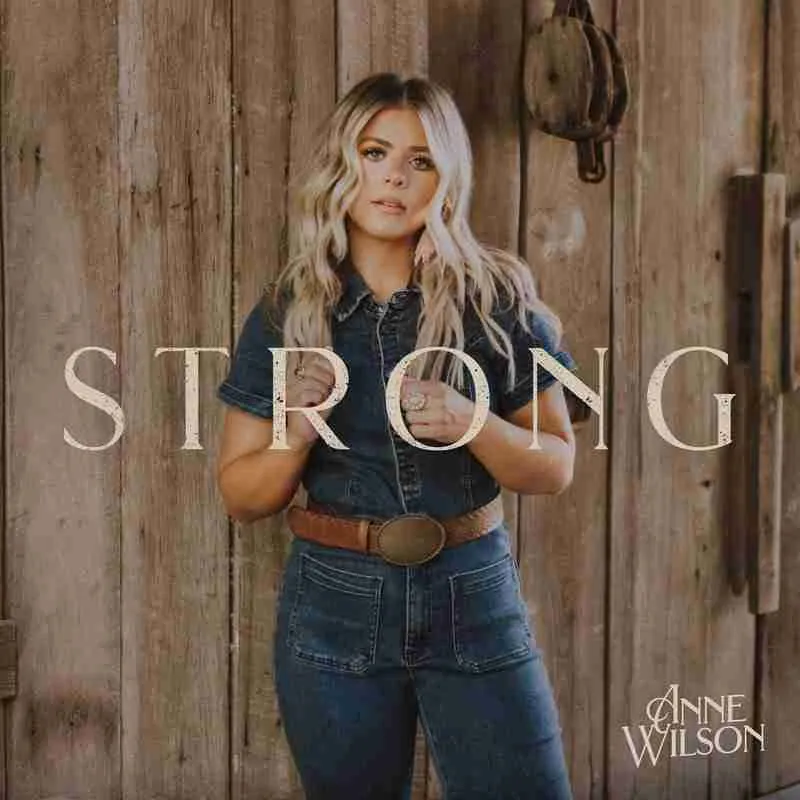

:max_bytes(150000):strip_icc():focal(705x253:707x255):format(webp)/miracles-from-heaven-true-story-jennifer-garner-queen-latifah-kylie-rogers-063025-572ed38b9fec436c8d41cf437a423397.jpg)
:max_bytes(150000):strip_icc():focal(703x253:705x255):format(webp)/miracles-from-heaven-true-story-annabel-beam-063025-2f8ffa1d6ee143efb2c8384f23f8f0e7.jpg)
:max_bytes(150000):strip_icc():focal(719x213:721x215):format(webp)/miracles-from-heaven-true-story-beam-family-063025-7775e122bbc14715aa6df78dce6127b0.jpg)
:max_bytes(150000):strip_icc():focal(767x216:769x218):format(webp)/miracles-from-heaven-true-story-beam-family-thanksgiving-063025-4fc5bee00d304745ade5fd7abd0c2200.jpg)
 .”
.” 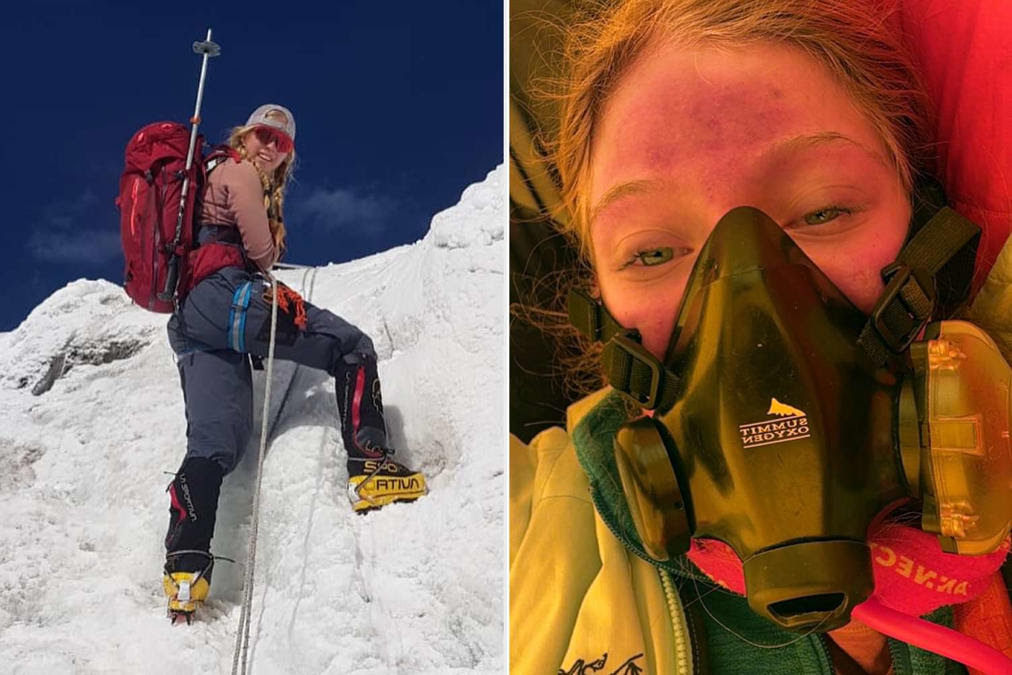
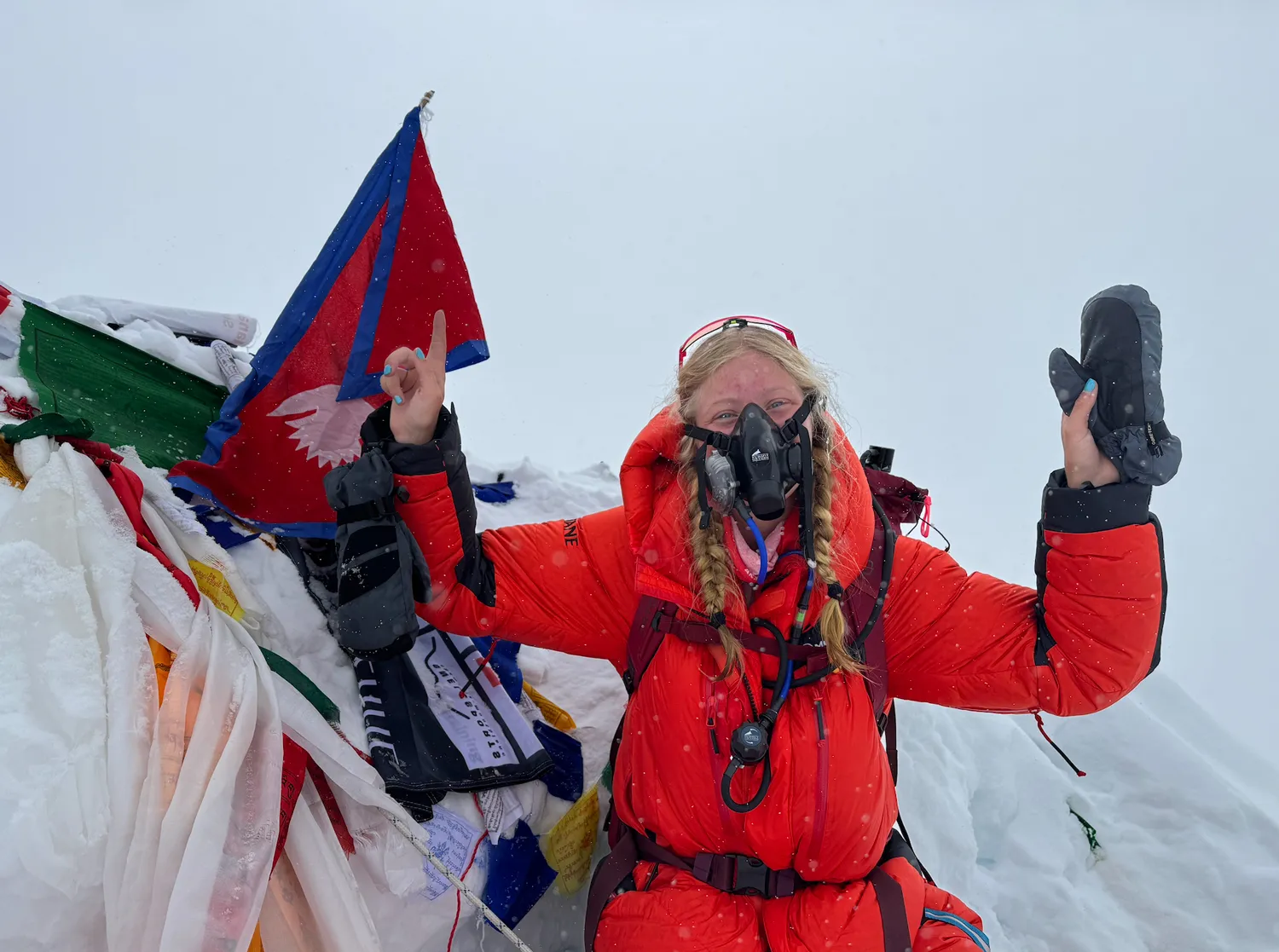
 It is recommended to use headphones.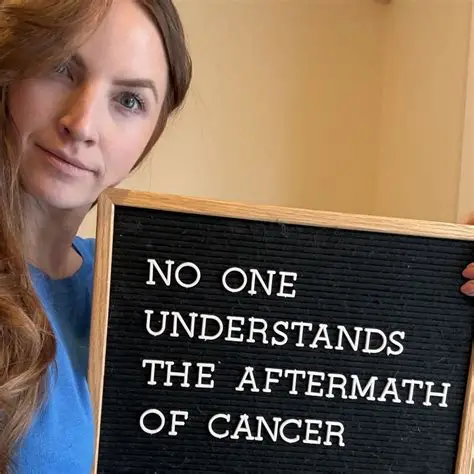
 Overview of Cancer Secrets
 Key Concepts and Takeaways
 Dietary Principles in Stegall’s Approach
 Lifestyle Recommendations
 Stegall’s Perspective on Sugar and Cancer
 Scientific Basis
 Key Takeaways
 Clinical Applications and Evidence
 Considerations and Cautions
 Why the Mind-Body Connection Matters in Cancer Care
 How Stegall’s Approach Compares
 Evidence-Based Complementary Therapies
 Mind-Body Integration
 Structured Protocols
 Patient Education and Empowerment
 Conventional Therapies (Modified for Safety and Precision)
 Natural and Integrative Therapies
 Stegall’s 12-Week Cancer Treatment Protocol
 Stegall’s Integrative Model vs. Standard Oncology Protocols
 Complementary Therapies
 Dorothy – Ovarian Cancer with Metastasis
 Amanda – Stage 4 Breast Cancer
 Hyperthermia Therapy
 Types of Fasting in Stegall’s Approach
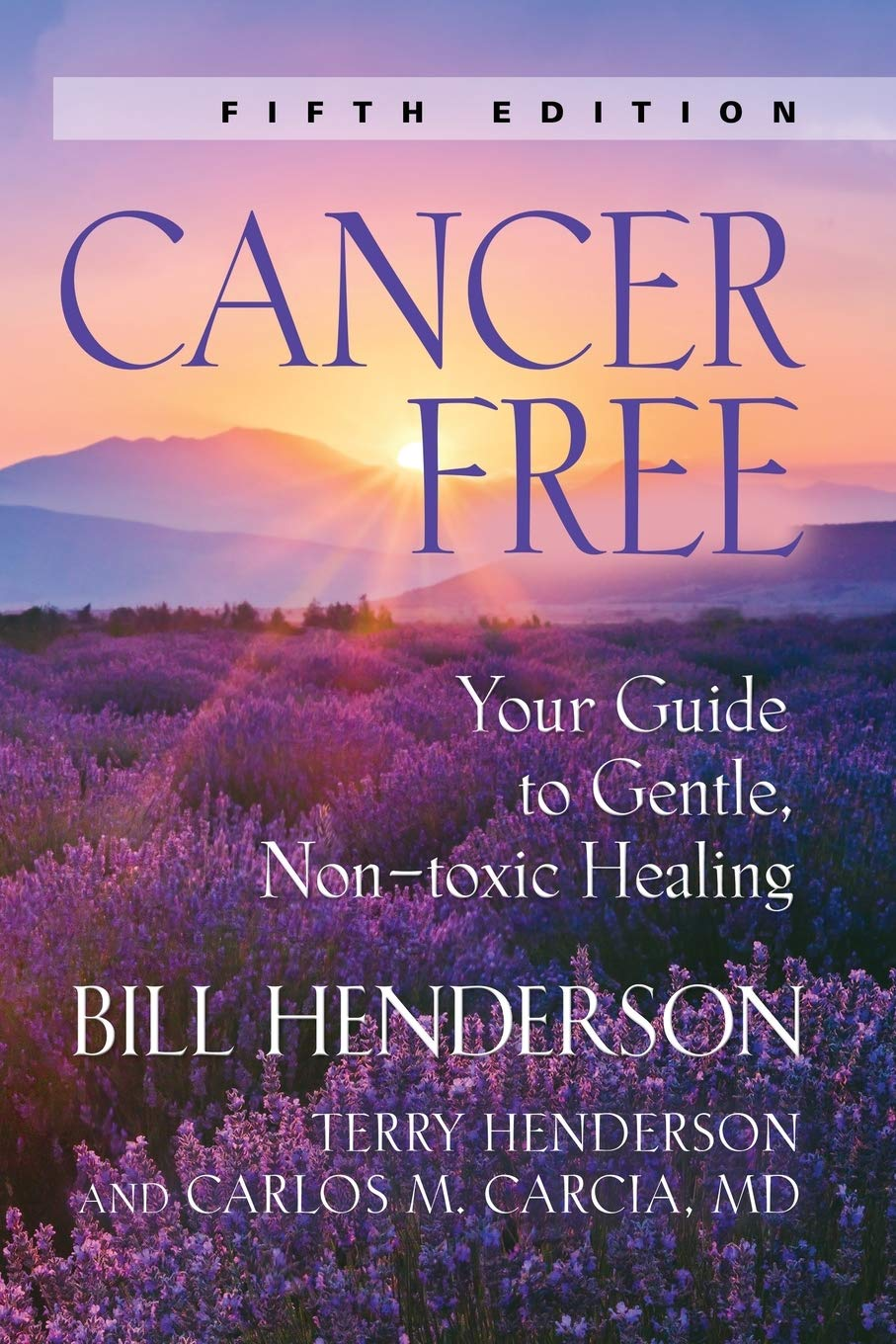
 Patient Testimonials
 Scientific Reviews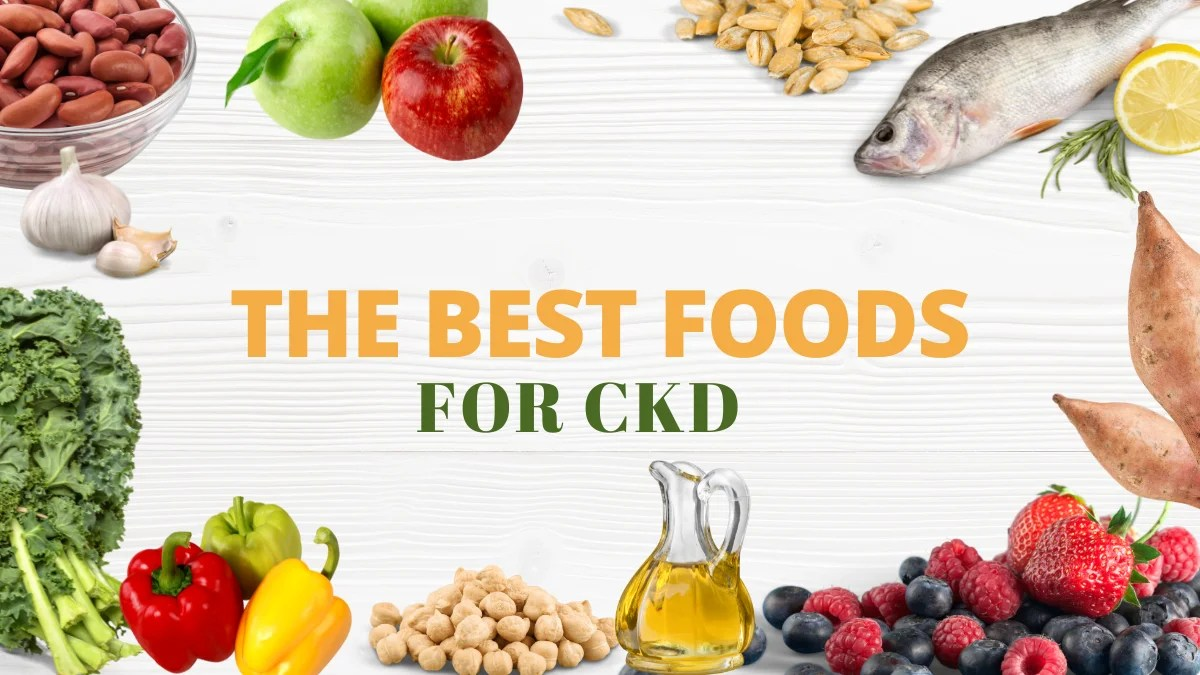
 Top Strategies to Manage and Slow Kidney Disease
 Why It Resonates
 Step 1: Prepare the Space
 Step 3: Enter the Story
 Step 4: Engage the Presence
 Step 5: Reflect
 Step 6: Close in Prayer