This, too, shall/will pass

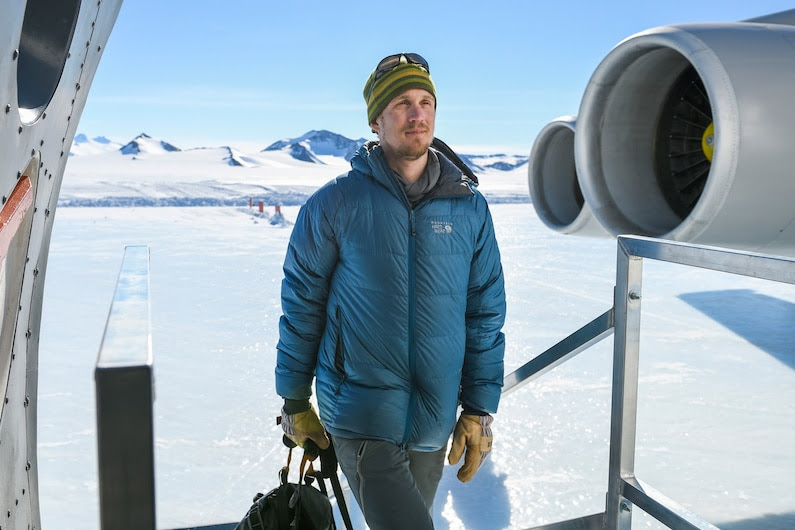
Colin O’Brady prepares to fly back north after his Antarctic expedition, Jan. 3, 2019.

The media embraced his accomplishment as “historic,” but questions about
the legitimacy of his claims from the adventure community soon arose.

TAMARA MERINO, THE NEW YORK TIMES, REDUX

This, too, shall/will pass: These troubles are temporary; be patient and things will work out. 
This term originally was used in a very serious way about the fleeting nature of human life, 
words, and endeavors. 

It was so used in the biblical Apocrypha (ca. 100 b.c.), as well as later philosophical writings. 
The current cliché is a more lighthearted expression of forbearance.

Colin O’Brady was traveling through Thailand in 2008 when he was severely burned while attempting to fire jump rope at a beach party. With third-degree burns covering 25 percent of his body, the competitive swimmer was told he may never walk again. 

He returned home to Portland, Oregon, where his mother’s positivity inspired him to set lofty goals. Eighteen months later, he competed in the 2009 Chicago Triathlon—and won the amateur division. 

“That was the beginning of the path I’m on now,” says O’Brady, 34. “I realized that with the right mindset, you can access the reservoir of untapped potential inside of you.”

He went on to finish more than 50 triathlons before taking on even bigger challenges: summiting the tallest mountain on each of the seven continents and climbing to the highest point in every U.S. state.
In December 2018, he became the first person to complete an unsupported, solo
crossing of Antarctica. O’Brady recounts the 932-mile, 54-day expedition in his memoir, “The Impossible First.” 
Even after that, he felt there was more to accomplish. His next feat, he decided, would involve rowing, something he’d never done. “I was curious to see if I could take what I’d learned from other expeditions and bring it to a new discipline,” he says. 
O’Brady and five other men set their sights on rowing themselves across the Drake Passage between South America and Antarctica, a 700-mile journey that includes some of the roughest, coldest, and iciest waters on earth. The group left Chile on December 13, 2019, completed the first human-powered crossing on the 25th. (Discovery TV chronicled the quest for the documentary The Impossible Row.) 

Furthermore, caught up with O’Brady after he returned to shore to find out what it took
to survive almost two weeks on a 29-foot boat, rowing in 90-minute stints with nothing but protein bars for fuel.
While skiing across Antarctica, American Colin O’Brady, the self-proclaimed first person to ski alone and unassisted across the frozen continent, came to what he describes in his new book, The Impossible First, as “a hellish stretch…one of the hardest places on the continent to get across.”
A polar wind he estimates at “fifty or even sixty miles an hour” lashed him as he entered
a precarious area that was “off the map—unreachable and inaccessible.” Potential rescue aircraft cannot land here, he explains, because the terrain’s jagged, wind-whipped ice formations “made landing impossible.”

Before he began his journey,
O’Brady writes, safety managers for the company that would rescue him in an emergency, Antarctica Logistics and Expeditions (ALE), ominously told him of this area, “If you call for help in here, you won’t get it.” This perilous reach of Antarctica was one of many reasons no one had achieved this crossing before, he writes.

“With my next steps,” O’Brady states, “I’d be on my own in a way I’d never been before.”
It’s a riveting description, but like other critical elements in his book and promotion of
his Antarctica expedition, key details do not withstand scrutiny. Safety managers for ALE, which has helped organize and plan expeditions to many remote areas of the continent for 35 years, deny saying he couldn’t be rescued.
None of the polar experts O’Brady mentions consulting before his trip and considered his journey impossible. And in the “off the map” location he describes above, O’Brady was in fact on a graded and flagged vehicle route used frequently by wealthy tourists where a call from his satellite phone could summon rescue by ski-equipped Twin Otter airplanes within hours.

A Controversy Is Born:

In the final months of 2018, people around the world were captivated as the 33-year-old O’Brady raced the 49-year-old Briton Louis Rudd to complete what they both called the “first-ever solo, unsupported, unassisted” crossing of Antarctica.
Through 54 days and 932 marrow-freezing miles, the men pulled 300-pound sleds alone and with no outside assistance—even accepting a cup of coffee at the South Pole research station would disqualify them from claiming the feat. A newcomer to polar expeditions, O’Brady finished two days ahead of the more experienced Rudd.
 Global media coverage was rapturous, with the young adventurer gracing magazine covers, speaking at the Smithsonian Institution, and seeing his hometown of Portland, Oregon declare Colin O’Brady Day. His appearance on CNN was typical, whereas he declared “No human has ever done this before…. [accomplishing it] was extraordinary after so many people had failed trying.”

Read More: The problem with Colin O’Brady (nationalgeographic.com)

image.png

IMPOSSIBLE FIRST – THE INSPIRING STORY OF COLIN O’BRADY – BING VIDEO

Colin O’Brady is a ten-time world record breaking explorer, New York Times bestselling author, entrepreneur, speaker, and an expert on mindset. He is focused on sharing his hard-won wisdom to encourage others to step outside of their comfort zone and unlock their best lives. Colin’s highly publicized expeditions have been seen by millions and his work has been featured by The New York Times, The Tonight Show, BBC, The Joe Rogan Experience, Forbes, and Today.  

Colin O’Brady’s awe-inspiring, New York Times bestselling memoir recounting
his recovery from a tragic accident and his record-setting 932-mile solo crossing of
Antarctica is a “jaw-dropping tale of passion and perseverance” (Angela Duckworth, New York Times bestselling author of Grit).

“Colin O’Brady may be physically and mentally superhuman. He holds speed records for astonishing feats—climbing the highest peaks in all 50 U.S. states and completing the Explorers Grand Slam of climbing the highest mountain on each continent, plus reaching the North and South Pole.
In this memoir, he recounts being the first to traverse Antarctica alone and unsupported. . . O’Brady’s sincerity is never in doubt, and the image of him dancing on the ice to Paul Simon’s ‘Graceland’ is sure to generate a smile.”

His world-renowned feats include the world’s first solo, unsupported, and fully human-powered crossing of Antarctica, speed records for the Explorers Grand Slam & the Seven Summits, as well as the first human-powered row across Drake Passage. He is a regular speaker at Fortune 100 companies like Nike, Google, and Amazon and top Universities including UPenn, Georgetown, and Johns Hopkins. Native to the Pacific Northwest,
he now lives in Jackson Hole, Wyoming, with his wife, Jenna Besaw, and dog, Jack.
Engage with Colin on social media @ColinOBrady or at ColinOBrady.com. 

Prior to December 2018,
No individual had ever crossed the landmass of Antarctica alone, without support and completely human powered. Yet, Colin O’Brady was determined to do just that, even if,
ten years earlier, there was doubt that he’d ever walk again normally.
From the depths of a tragic accident, he fought his way back. In a quest to unlock his potential and discover what was possible, he went on to set three mountaineering world records before turning to this historic Antarctic challenge.

O’Brady’s pursuit of a goal that had eluded many others was made even more intense
by a head-to-head battle that emerged with British polar explorer Captain Louis Rudd—also striving to be “the first.” Enduring Antarctica’s sub-zero temperatures and pulling a sled that initially weighed 375 pounds—in complete isolation and through a succession of whiteouts, storms, and a series of near disasters—O’Brady persevered.

Alone with his thoughts for nearly two months in the vastness of the frozen continent—gripped by fear and doubt—he reflected on his past, seeking courage and inspiration in
the relationships and experiences that had shaped his life.

“Incredibly engaging and well-written” (The Wall Street Journal)—and set against
the backdrop of some of the most extreme environments on earth, from Mt. Everest to Antarctica—this is “an unforgettable memoir of perseverance, survival, daring to dream big, and showing the world how to make the impossible possible” (Booklist, starred review).

Related Articles
7 Continents in 7 Books: Tour the World With these Vibrant Reads
– Off the Shelf
Armchair Explorers: 9 Atmospheric Reads Where the Setting Comes Alive
– Get Literary
7 Memoirs By Inspiring Wanderers Who Made Us Feel Less Lost
– Off the Shelf

Sean Swarner was the recipient of the Don’t Ever Give Up Award presented by the
Jimmy V Foundation and ESPN in 2007. He is a two-time cancer survivor who was first diagnosed at age 13 with Hodgkin’s Disease and later with Askin’s sarcoma. He was given just two weeks to live in 1990 and is believed to be the only person in the world to ever have been diagnosed with both these deadly cancers. Sean told ESPN Radio’s Bob Valvano, brother of Jimmy, that he would have been more likely to win the lottery four or five times than to have survived both these cancers. 
However, he did survive, although he has only one fully functioning lung due to the removal of a golf ball-sized tumor found with the Askin’s diagnoses.
He graduated from Willard High School in Willard, Ohio, in 1993, and Westminster College in 1997. Sean was recently featured on ESPN with a 10-minute segment on his life story and struggle. He established his own foundation which promotes cancer awareness and helps raise money for cancer research.

True North: The Sean Swarner Story (truenorthdocfilm.com) is an unflinching documentary about one man’s relentless quest to prove that nothing is stronger than the human spirit! As a teenager, Sean Swarner was diagnosed with two lethal forms of cancer. Both times he was given only weeks to live and both times he fought back and survived, but not before the disease claimed one of his lungs. 
Now, he’s trekking to the brutal and unforgiving North Pole, where temperatures hover around minus 40 degrees. If he makes it, he will have completed The Explorers’ Grand Slam – climbing the highest peaks on all seven continents and then trekking to the South and North Poles.
 
His feat is daunting, but Sean is on a mission– a Mission of Hope.
Swarner has dedicated each one of his climbs to the cancer patients he hopes to inspire– symbolized by a flag he carries with him to each peak. His exploration to the North Pole
is no different. With the help of Vern Yip, television personality and interior designer,
Sean designs the Flag of Hope.
Months leading up to his final endeavor, Sean takes the Flag of Hope across the country. One by one, those affected by cancer put their names and loved ones on the flag.
United by one purpose, Sean hopes to cover the world in hope. 
True North, The Sean Swarner Story is a jaw-dropping look at how far a man will go to
feel alive, and to bring hope to millions of people touched by cancer around the world. 

♫ E47 Sean Swarner on Climbing Mount Everest and Blowing up Cancer with Lasers (iheart.com)
February 23, 2021, • 50 min
Sean joins Aalia to talk about his cancer diagnoses (7:58), climbing Mount Everest
with one lung (10:55), and the Amazon Prime documentary based on him, True North:
The Sean Swarner Story. Sean talks about falling to his knees at the top of the highest mountains in the world, being unable to stop climbing lest his sweat freeze to his body
and fostering the mind-body connection to make it possible. 
Sean recounts a vivid vision of himself entering his own bloodstream in a miniscule red blood cell spaceship, traveling through his heart and to his cancer, and demolishing the growth with his ship’s lasers (35:22). Consistency, good habits, & positive visualizations are important to Sean, who was named as one of the topmost inspirational people in history. Inspire your own resilience with Episode 47 of Unsugar coated with Aalia. 

Still peaking: Ohio ‘cancer climber’ finds new ways to inspire (mansfieldnewsjournal.com)

Virus Expert Just Predicted How This All Ends (msn.com)

The terror that was the Gulag (msn.com)
Posted in Uncategorized | Leave a comment

US life expectancy is falling – here’s why.

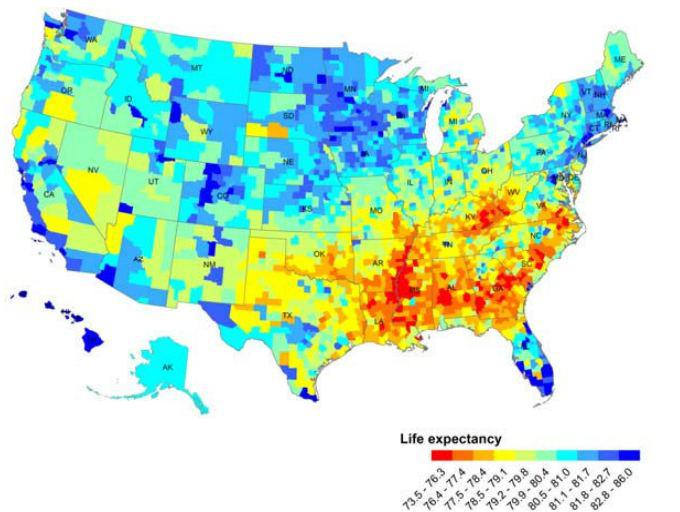
Here’s a map of American counties whose residents enjoy
a life expectancy of more than eighty years. 

It was drafted by Spooderman89 on Reddit using mapchart.com.

I believe the only states with not a single long-lived county are Mississippi and Delaware.

Why do Americans have shorter life expectancy and worse health than people in other high-income countries? (nih.gov)

Falling behind: life expectancy in US counties from 2000 to 2007 in an international context (nih.gov)

Life Expectancy by Country and in the World (2021) – Worldometer
USA LIFE EXPECTANCY BY COUNTY (worldlifeexpectancy.com)
List of U.S. states and territories by life expectancy – Wikipedia
US Counties With The Longest Life Expectancy – World Atlas
List of U.S. counties with longest life expectancy – Wikipedia
Life expectancy at birth – The World Factbook (cia.gov)
Why is life expectancy in the US so low? – Big Think
Life Expectancy in U.S. Cities | Cheapism.com
U.S. Life Expectancy 1950-2021 | Macrotrends

[PDF]Mortality and Life Expectancy in Rural America: Connecting …

American Counties with the Shortest Life Expectancy 
By Samuel Stebbins

List of U.S. counties with shortest life expectancy – Wikipedia

Life expectancy is one of the most important and commonly cited indicators of
population health — and in the United States, life expectancy is falling at a historic rate. According to the Centers for Disease Control and Prevention, life expectancy at birth declined by 1.5 years in 2020, the largest one-year drop since World War II.
The CDC attributes the decline to the COVID-19 pandemic and 93,000 drug overdose deaths — an all-time one-year high. Homicide, diabetes, and liver disease were also contributing factors.

 Here is a look at the states with the most drug overdose deaths in 2020.
Even before the pandemic, there were parts of the country were life expectancy
at birth was far lower than the national average (in some cases by 10 years or more.)

Using data from County Health Rankings & Roadmaps, a Robert Wood Johnson Foundation and University of Wisconsin Population Health Institute joint program, 24/7 Wall St. identified the 50 U.S. counties with the shortest average life expectancy at birth. Life expectancy figures are averages for the years 2017 through 2019, the most recent period for which county-level data is available.

Among the counties and county equivalents on this list, average life expectancy at birth ranges from 70.9 years to less than 65 years — compared to the national average of 79.2 years. The majority of the counties on this list are located in the South, including 10 in Mississippi alone.

Variations in life expectancy are tied to a number of both economic and behavioral factors. For example, tobacco use is the leading cause of preventable death in the U.S., and in every county on this list, the share of adults who smoke is above the 16.6% national average. 

Here is a look at the American cities where the most people smoke.

Income levels are linked to life expectancy. Poverty, for example, presents challenges and stressors that can take a cumulative toll on both physical and mental health. Additionally, lower-income Americans are less able to afford adequate healthcare or a range of healthy options related to diet and lifestyle. Recent studies have shown that life expectancy among the wealthiest 1% of Americans exceeds that of the poorest 1% by well over a decade. In all but a few counties on this list, the poverty rate exceeds the 13.4% national average.

Having This Many Drinks a Week Slashes Your Heart Attack Risk, New Study Finds.

Life expectancy in the US is falling, but why? | World Economic Forum (weforum.org)

List of countries by life expectancy – Wikipedia
    

image.png WORLD LIFE EXPECTANCY MAP

The Longest-Lived Empires in History (msn.com)
What exercise burns the most calories? (msn.com)

The Most Sleep Deprived Cities in America (msn.com)

Question: Are inequalities in life expectancy among counties in the United States
growing or diminishing, and what factors can explain differences in life expectancy
among counties?

This state has the highest cancer rate in America, according to data (msn.com)

Life expectancy at birth for the population as a whole has been increasing for over a century.  Life expectancy in most US counties falls behind world’s healthiest nations Publication date: June 15, 2011The most current county-level analysis finds large disparities nationwide. Women fare worse than men, and people in Appalachia,
the Deep South, and Northern Texas live the shortest lives.

June 15, 2011 – While people in Japan, Canada, and other nations are enjoying significant gains in life expectancy every year, most counties within the United States are falling behind, according to a new study by the Institute for Health Metrics and Evaluation (IHME) at the University of Washington.

IHME researchers, in collaboration with researchers at Imperial College London,
found that between 2000 and 2007, more than 80% of counties fell in standing against
the average of the 10 nations with the best life expectancies in the world, known as the international frontier. “We are finally able to answer the question of how the US fares in comparison to its peers globally,” said Dr. Christopher Murray, IHME Director and one
of the paper’s co-authors. “Despite the fact that the US spends more per capita than any other nation on health, eight out of every 10 counties are not keeping pace in terms of health outcomes. That’s a staggering statistic.” 

The study, falling behind: life expectancy in US counties from 2000 to 2007
in an international context, was published June 15, 2011, in BioMed Central’s open-access journal Population Health Metrics. In conjunction with the study, IHME is releasing a complete time series for life expectancy from 1987 to 2007 for all counties, the most up-to-date analysis available.  When compared to the international frontier for life expectancy, US counties range from being 16 calendar years ahead to more than 50 behind for women. For men, the range is from 15 calendar years ahead to more than 50 calendar years behind. This means that some counties have a life expectancy today that nations with the best health outcomes had in 1957. The researchers suggest that the relatively low life expectancies in the US cannot be explained by the size of the nation, racial diversity, or economics. Instead, the authors point to high rates of obesity, tobacco use, and other preventable risk factors for an early death as the leading drivers of the gap between the US and other nations.  

Five counties in Mississippi have the lowest life expectancies for women, all below
74.5 years, putting them behind nations such as Honduras, El Salvador, and Peru.

Four of those counties, along with Humphreys County, MS, have the lowest life expectancies for men, all below 67 years, meaning they are behind Brazil, Latvia, and the Philippines. Women live the longest in Collier, FL, at 86 years on average, better than France, Switzerland, and Spain. Men live the longest in Fairfax County, VA, at 81.1 years, which is higher than life expectancies in Japan and Australia. Women are also living long lives in Teton, Wyoming; San Mateo and Marin, California; and Montgomery, Maryland. For men, long life spans also can be found in Marin, California; Montgomery, Maryland; Santa Clara, California; and Douglas, Colorado. 

Nationwide, women fare more poorly than men. The researchers found that women in 1,373 counties – about 40% of US counties – fell more than five years behind the nations with the best life expectancies. Men in about half as many counties – 661 total – fell that far.  Black men and women have lower life expectancies than white men and women in all counties. Life expectancy for black women ranges from 69.6 to 82.6 years, and for black men, from 59.4 to 77.2 years. In both cases, no counties are ahead of the international frontier, and some are more than 50 years behind. The researchers were not able to analyze other race categories because of low population levels in many counties. 

Change in life expectancy is so uneven that within some states there is now a decade difference between the counties with the longest lives and those with the shortest. States such as Arizona, Florida, Virginia, and Georgia have seen counties leap forward more than five years from 1987 to 2007 while nearby counties stagnate or even lose years of life expectancy. In Arizona, Yuma County’s average life expectancy for men increased 8.5 years, nearly twice the national average, while neighboring La Paz County lost a full year of life expectancy, the steepest drop nationwide. Nationally, life expectancy increased 4.3 years for men and 2.4 years for women between 1987 and 2007. “By creating this time series, which has never been available at the county level, we hope states and counties will be able to take targeted action,” Dr. Sandeep Kulkarni, an IHME research fellow and the paper’s lead author, said. “Counties in one part of the state should not be benefiting from big increases in life expectancy while other counties are actually seeing life spans shrink.” 

The authors propose that state and local policymakers use the life expectancy data and the county comparisons to tailor strategies that will fit the dynamics of their communities. This resonates with local policymakers, such as Dr. David Fleming, Director of Public Health – Seattle & King County. “It’s not the healthcare system that’s having the biggest impact on health; it’s the community,” Dr. Fleming said. “The average person in the US spends one hour annually in a physician’s office unless they are really sick. So, until we start moving our interventions out into the communities where people live, we are not going to get ahead of these problems.” 

The Seattle & King County health department is collaborating with IHME
on an ambitious analysis of health in King County, one of the largest studies of its kind. Called the Monitoring Disparities in Chronic Conditions (MDCC) Study researchers are integrating data from emergency medical services, hospital discharge databases, pharmacy records, and other sources to identify the biggest health challenges in King County. They are surveying 9,000 people and taking blood samples to analyze for a range of risk factors and diseases.  “We are building the evidence for focused interventions that will make an impact locally,” said Dr. Ali Mokdad, Professor of Global Health at IHME, who is leading the MDCC Study. “If we as a society are going to fund programs to improve health, we must ensure that we are measuring the impact, because these life expectancy numbers show that what we have been doing up until now clearly is not working.” 

The Institute for Health Metrics and Evaluation (IHME) is an independent global research center at the University of Washington providing sound measurement of population health and the factors that determine health, as well as rigorous evaluation of health system and health program performance. The Institute’s goal is to improve population health by providing the best evidence possible to guide health policy – and by making that evidence easily accessible to decision-makers as they strategically fund, design, and implement programs to improve health outcomes worldwide. IHME was created in 2007 through funding from the Bill & Melinda Gates Foundation and the state of Washington. 

CDC changes COVID-19 guidelines for isolation, quarantine; Texas runs out of monoclonal antibody treatment: Updates (msn.com)

US coronavirus: January will be ‘a really, really hard month’ as Omicron variant fuels new infections, expert says (msn.com)

image.png

Posted in Uncategorized | Leave a comment

Loneliness and Memory Lapses

But the reasons for your cognitive slump might not be the ones you worry about.

Suspect your memory isn’t what it used to be?

You could be right
“Slow cognitive decline is expected as we get older,” says Joel Salinas, a neurologist at the Massachusetts General Hospital Department of Neurology Henry and Allison McCance Center for Brain Health. What’s not considered a normal or expected part of aging, he says, is dementia — a disease signaled by “more rapid decline in cognitive abilities.”
Many older adults worry about big causes, such as Alzheimer’s, without realizing that “in fact, many cognitive issues signal more general health problems such as thyroid issues, dehydration or lifestyle issues that can be reversed,” Salinas notes.
Low thyroid functioning, he says, can be experienced as ongoing fatigue and slowed thinking. Too much alcohol can impair memory, and dehydration — often simply not drinking enough water throughout the day — causes too little blood flow to the brain.
Getting at the bottom of what’s affecting your ability to reason, remember or articulate your thoughts is important.
To that end, Donna de Levante Raphael, director of the Alzheimer’s Foundation of America National Memory Screening Program, says a memory screening, covered by Medicare, should be part of your annual wellness visit. You might find out that your cognitive issues are caused by one of the below factors — and can often be reversed.

Medications
As we age, we tend to add a variety of medications to our daily intake — along with risks
of adverse health effects from both individual drugs and the overall mix. One of the most common Rx side effects: cognitive impairment.
Tatyana Gurvich, an assistant professor of clinical pharmacy at the University of Southern California School of Pharmacy, says that when older adults mention memory problems, the first thing she does is look at the medications they’re taking. Some over-the-counter medications such as diphenhydramine (Benadryl), which can create confusion, can be purchased under brand names consumers don’t recognize or hidden in combination products like Advil PM. Medications for overactive bladder or incontinence and those for depression or sleep can, in various combinations, also cause cognitive impairment. Combining any with opioids can make an older adult more confused. “Unfortunately, older adults often take a cocktail of medicines — both over-the-counter and prescription — that can cause major changes in cognition,” says Gurvich, who encourages older adults to talk to their doctor or pharmacist about all the drugs they’re taking before making any changes.
Lack of exercise
Numerous studies show that exercise protects memory and thinking skills. One from the University of British Columbia found that regular aerobic exercise such as running or brisk walking boosts the size of the hippocampus, which stimulates the release of chemicals in the brain that affect the health and supply of brain cells. There’s a negative effect, too, for those who aren’t active: “Not walking or doing other aerobic exercise on a regular basis can cause brain shrinkage and lead to an increase of white matter changes or small injuries to the parts of brain cells that connect with other brain cells,” says Mary Ellen Quiceno, a neurologist and researcher in Dallas.

Boost your brain health with Staying Sharp

In good news, the positive effects of exercise on the brain appear to be immediate. A University of Maryland study of brain health in older adults shows that just one session of exercise increases activation in the brain circuits associated with memory. In people diagnosed with mild cognitive impairment as well as in cognitively healthy older adults, verbal fluency and measures of brain function improve after just 12 weeks of exercise, says J. Carson Smith, associate professor of kinesiology at Maryland’s School of Public Health. “Being physically active helps protect the brain from cognitive decline and atrophy. Those who are at increased risk through their genetics and don’t exercise tend to have the most problems,” he says, adding that everyone should walk or do other moderately intensive exercise for 30 minutes at least four days a week.

Sleep issues
“Too much sleep or too little high-quality sleep can cause a problem with memory, reasoning and particularly executive function,” Salinas says. As he explains it, during deeper stages of sleep, the hippocampus, the area of the brain responsible for the formation and retrieval of memories, transfers newly made memories to the prefrontal cortex, a brain area responsible for long-term storage. Without enough shut-eye, this process is disrupted — with sometimes noticeable results.
A University of California Berkeley study found that older people who sleep poorly experience memory loss and brain disorientation. Researchers at Michigan State University’s Sleep and Learning Lab recently found that sleep deprivation doubles your odds of being unable to complete a series of steps without losing your place and triples the number of lapses in attention. “Our findings debunk a common theory suggesting that attention is the only cognitive function affected by sleep deprivation,” says Michelle Stepan, one of the study’s researchers.

Anxiety and depression:
If you’re feeling mentally fuzzy, depression or anxiety could be playing a major role. Depression, which the National Institute on Aging says is common in older adults, who tend to be more isolated, can also mimic the signs of memory loss. “When you’re depressed, the serotonin levels in your brain decrease and this can affect attention, processing speed and memory consolidation, causing a ‘pseudodementia’ of depression,” says neurologist Richard Isaacson, director of the Alzheimer’s Prevention Clinic at Weill Cornell Medicine and New York-Presbyterian Hospital.
Research shows that depression and anxiety can also alter our brain physically. A study from Brigham Young University, for instance, shows that subjects with anxiety and depression showed less brain cell growth in key areas compared with those not dealing with such mood disorders.
Loneliness and Memory Lapses

Loneliness affects up to 40 % of middle-aged and older adults and is closely associated with major depressive disorder (MDD). However, the relationship between loneliness and neural network functioning during executive cognitive processes, such as working memory, in MDD is still unclear. To address this gap, our study recruited 21 medicated MDD patients (mean age = 52.0 ± 5 years) and 24 matched healthy controls (HC) (mean age = 48.7 ± 6 years) who completed an n-back fMRI task. 

For behavioral performance, we observed no significant moderating effect of MDD or loneliness on the task condition effect. However, loneliness was positively associated, and MDD was negatively associated, with the functional connectivity between the inferior parietal cortex and the rostral dorsomedial prefrontal cortex (DMPFC) during task performance. Furthermore, an interactive effect of loneliness and MDD was observed on the functional connectivity between the supplementary motor area and the caudal DMPFC during the n-back task, with loneliness showing a positive relationship in the HC group but a negative relationship in the MDD group with the connectivity. 
Our results indicated that loneliness may be associated with altered neural regulatory functioning on self-referential processing and action control, which may further depend on the individual’s depressive state. These findings can form the theoretical basis for devising intervention programmed and aimed at improving the mental wellness of the healthy and depressed lonely individuals.

image.png
Does Chronic Pain Affect Memory?

By Ann Marie Gaudon, PNN Columnist


One Is the Loneliest Number — Pain News Network

Pain is a complex experience.

Does it affect our memory?
It not only affects us biologically, but we also experience it cognitively and emotionally. You bet it does.
Chronic pain patients often complain of memory problems and there are numerous studies which confirm these challenges are indeed a reality. Twenty-four studies evaluating working memory (WM) and/or long-term memory (LTM) in chronic pain groups and control groups were reviewed last year by French researchers. WM was defined as the processing and manipulation of information within a short period of time (a few seconds), while LTM involved the “storage” of knowledge and memories over a long period of time.

Concentration and memory deficits on a daily basis were the most frequently reported cognitive difficulties. Memory complaints included forgetfulness and problems performing everyday tasks and conversations. Emotional distress common to pain patients, such as depression, anxiety and rumination (the inability to divert attention away from pain), was also found to play an important role in memory difficulties.

One study compared two groups of pain patients who had minor or major memory complaints. Between the two, no significant differences were found with regard to age, gender, education level, marital status, medication use, long-term pain or pain intensity. However, patients in the major memory complaint group suffered from emotional distress to a significantly greater degree. They also reported a lack of family support and discontent with their social and sexual lives.

These were noted as additional daily sources of suffering for this group. Adding to potential negative effects on memory were comorbidities which many pain syndromes share. Conditions such as depression, anxiety, sleep disturbances, and chronic fatigue could alone or combined affect memory. A major concern expressed was the need to disentangle pain-related cognitive effects from those resulting from these comorbidities.

Medications and Memory.
The review really became interesting when it came to medication, because researchers found contradictory results. One European study reported that opioids exerted a negative effect on working memory — finding a clear association between higher levels of analgesics and perceived memory dysfunction in chronic back pain patients. Some studies confirmed that medication can have a negative effect on memory, but others showed improvements in memory following analgesic treatment.

That suggests that effective pain relief may also reverse pain-induced memory impairment. The researchers concluded it was unclear whether analgesic medications are beneficial or detrimental, because both scenarios were reported. Age was also identified as an important factor in the relationship between chronic pain and memory, but not in the way you may think. Surprisingly, it was shown that an increase in age did not additionally affect memory performance.

One study reported that gender and age significantly affected memory decline in those suffering from chronic migraine headaches. Cognitive decline in migraineurs was greater among younger individuals, and females showed greater decline during headache intervals than males. It was acknowledged that gender as a factor in pain-related experience is poorly investigated.

Like all reviews, this one has its limitations. There was a “large heterogeneity” of tests within the 24 studies. This diversity of tests did not allow for a suggestion of which memory processes were altered by chronic pain itself. The study populations were also heterogeneous regarding pain etiologies and an assessment of the intensity of pain was not performed.

Can We Forget About Chronic Pain? — Pain News Network
Studies which included a mix of chronic pain disorders did not provide data on whether specific memory impairments were more frequently observed in specific disorders. The authors suggest there is a need for comparative studies across pain-related disorders in order to determine whether impairments are pain-related or a consequence of other pathophysiological features.

These numerous studies confirmed the memory decline that is often reported by chronic pain patients. Even if these effects are mild, the impact on quality of life could be substantial as they may indeed worsen suffering including depression, anxiety, and limitations on activity. Researchers suggested that examining memory function should be part of the clinical assessment of chronic pain patients. The spectrum of cognitive difficulties must become acknowledged and understood in order to find ways to overcome them.

image.png

Ann Marie Gaudon is a registered social worker and psychotherapist in the Waterloo region of Ontario, Canada with a specialty in chronic pain management. Suffering pain herself for more than 30 years, Ann Marie knows how chronic pain can shrink lives physically, psychologically, and socially, and has dedicated her career to those afflicted, misunderstood, and unnecessarily hurt because of it.  A mental health therapist specializing in managing chronic pain, she counsels adults of all ages, in all conditions, and with many different diagnoses.  

She also volunteers on behalf of the vulnerable and the voiceless.  That work has become a moral imperative for her, now that people with pain—increasingly scapegoated as “problem users” and blamed for overdoses—have become political pawns and are suffering devastating consequences.  For more information about Ann Marie’s counseling services, visit her website.

The information in this column should not be considered as professional medical advice, diagnosis or treatment. It is for informational purposes only and represents the author’s opinions alone. It does not inherently express or reflect the views, opinions and/or positions of Pain News Network.

Posted in Uncategorized | Leave a comment

Other Nations Do Better

Middle-aged Americans in US are stressed & struggle with physical and mental health – other nations do better

Conservatives and Liberals Are Wrong About Each Other

Column: Farewell to 2021, the stupidest year in American history

By Michael Hiltzik

One year ago, we were looking forward to a safer and sounder 2021. The Food and
Drug Administration had granted emergency authorization to the Pfizer-BioNTech and Moderna vaccines against COVID-19. A new presidential administration was poised to take office in the next month, armed with a commitment to bring together a nation
cleaved by four years of divisive policymaking.

It was not to be:
For the unvaccinated, you’re looking at a winter of severe illness and death for yourselves, your families, and the hospitals you may soon overwhelm. White House Chief of Staff Ron Klain stated, instead of unity and immunity, this year has brought us stupidity and insanity on an unimaginable scale.
In categories of public health, education policy, fiscal policy and investment options,
we appear to have taken leave of our collective senses. Certainly, there are other years
or periods in which stupidity or heedlessness brought civilization in general close to eradication. Column: Farewell to 2021, the stupidest year in American history

Stupidest year since 1914

This has been stupidest year in American History since 1914
Consider 1914, when most of Europe divided hellbent to war for no discernible reason. (Read Barbara Tuchman’s book “The Guns of August” for the full horrific picture.) The Dark Ages were a period benighted by scientific ignorance. Some individual countries and national leaders stand out for tempting fate, to their and their citizens’ misfortune. Britain in 1938 under Neville Chamberlain. Russia’s warmongering with Japan in 1904-1905. Louis Napoleon poking a stick into the Prussian bear’s cage in 1870-1871. 

Saddam Hussein invaded Kuwait in 1990.
The perpetrators of some of these errors might assert in their defense that they were brought low by circumstances they didn’t know at the time. But America in 2021 can’t plead that it didn’t know. Didn’t know that vaccines representing stupendous scientific achievements were the solution to the COVID-19 pandemic?
Didn’t know that Donald Trump wasn’t joking when he demanded that government officials overturn a fair presidential election? 
Didn’t know that bitcoin, NFTs, SPACs and meme stocks were destined, even designed, to take unwary investors to the cleaners?

Of course, we knew, and know. We don’t seem to care.
In reviewing the most intellectually demoralizing events of 2021, I’ll leave aside a few discrete outbursts of asininity. So I won’t go into detail about the conservative movement’s lionizing of Kyle Rittenhouse, the self-confessed but acquitted killer of two unarmed men at a protest rally in Kenosha, Wis. Or the openly antisemitic ravings by former President Trump. Or the ugly, dishonest attacks that forced the withdrawal of Saule Omarova, one of the most qualified nominees for a federal banking regulators job in memory.
Or the shameful behavior of congressional Republicans, who cowered in safety during the Jan. 6 insurrection, pleading with Trump to help quell the riot, only to claim ever since that the violence of the crowd was no big deal. Or the posting of Christmas cards by politicians showing their families hoisting assault weapons, as Rep. Thomas Massie
(R-Ky.) did just four days after a gunman killed four students at a Michigan high school.
He was followed by Rep. Lauren Boebert (R-Colo.).

COVID-19

Instead, we’ll focus on a few of the bigger pictures. So, as Virgil said to Dante before guiding him into the Inferno, “Let us descend now into the blind world.”  The pandemic is surely the focus of the most obtuse and ignorant public reactions and state and local policy responses to any crisis in American history. It’s as if the grown-ups have all been beamed up, and we are left in the hands of people like Florida Gov. Ron DeSantis. (I am paraphrasing a line from the great pandemic movie “Together.”)
In any rational world, the refusal or failure by some 50 million adult Americans to take a vaccine of known efficacy against a deadly disease would be inexplicable. But this is not a rational world, and the situation is even worse. Vaccine refusal is seen in many benighted corners of the United States not merely as the exercise of personal choice for personal reasons but as a means of showing moral superiority over the vaccinated.
A conservative critic of anti-epidemic measures writing from rural southwest Michigan 
for the Atlantic bragged absurdly and selfishly, “I am now closer to most of my fellow Americans than the people, almost absurdly overrepresented in media and elite institutions, who are still genuinely concerned about this virus.” The author may think he’s remote from virus concerns, but that’s not the case at a hospital visited by CNN in Lansing, Mich., which can’t be much more than 100 miles from his location and where “the latest COVID-19 surge is as bad as healthcare workers there have seen.”
How did it come to pass that Americans, who almost uniformly are inoculated against at least a half-dozen serious diseases in childhood, chose this moment to refuse a spectacularly effective shot against one of the most dangerous diseases to arise in their lifetimes, out of pure ignorance?
Its effectiveness is scarcely disputable: The Commonwealth Fund estimates that the vaccine averted about 1.1 million American deaths from COVID-19 and more than 10.3 million hospitalizations this year. © (Commonwealth Fund)

The Commonwealth Fund estimates that the U.S. would have experienced more than 1.1 million additional deaths from COVID-19 if not for the vaccines. (Commonwealth Fund)

The answer lies in politics.
Trump drew the line first, dismissing social distancing steps and refusing to speak up for vaccination. 
He established these steps as partisan choices, and his political acolytes followed him over the cliff. DeSantis has been a leader in this descent into the Inferno. He’s chosen to make Dr. Anthony Fauci, head of the National Institute of Allergy and Infectious Diseases and America’s most respected authority on the pandemic, a target of partisan calumny. He’s appointed a vaccine doubter as his state’s top public health official.

What is the outcome?
Florida currently ranks eighth-worst among states in its COVID-19 death rate, with more than 62,000 Floridians having perished from the virus. Of the seven states with worse records, six are red states like Florida. Corporate America has not showered itself in glory. On Dec. 18, Boeing announced that it was dropping its requirement that all U.S. employees be vaccinated. Its explanation was that a federal judge had blocked the enforcement of a federal executive order that employees of government contractors be vaccinated.

This is absurd.
Nothing in the ruling required Boeing to drop its requirement. The company announced its step back just as the Omicron variant was about to produce a surge in infections. The pusillanimity of American corporations on this subject continues to astound. (The Times, which is owned by a physician and biomedical entrepreneur, is requiring all employees to be fully vaccinated by Jan. 31.)
To its credit, on Dec. 17 the Biden White House issued an uncompromising warning about the dangers of remaining unvaccinated. “For the unvaccinated, you’re looking at a winter of severe illness and death for yourselves, your families and the hospitals you may soon overwhelm,” White House Chief of Staff Ron Klain said. “So, our message to every American is clear…. Wear a mask in public indoor settings. Get vaccinated, get your kids vaccinated, and get a booster shot when you’re eligible.” 

Investment follies
In May, I asked whether we were experiencing a peak in investment absurdity. The examples then were bitcoin, dogecoin and non-fungible tokens (NFTs), as well as meme stocks, the prices of which were not tied to sober reflections about their issuers’ business prospects but to internet-fueled speculation. sets like these, which are priced in accordance with the “greater fool” theory (they have no intrinsic value beyond what you can get from a bigger fool than yourself), have only proliferated since then. 

Or perhaps it’s only the absurdity that has ballooned.
NFTs, for instance, are tradable digital files that confer no ownership to anything but the digital file, which may be an image of an object that is actually owned by someone else. Someone has parodied the NFT market by purporting to sell NFTs of images of individual Olive Garden restaurants, but it’s the kind of parody that gets at the essential truth of the target. You don’t get to own the restaurant or the photo. You don’t get a discount on menu items or a guarantee that the photo is even accurate. 
You supposedly get to own something on the Non-fungible Olive Garden Metaverse, whatever that is, and you can try to find a greater fool to sell it to. NFTs generally don’t confer ownership of the underlying asset or even the digital representation of the asset. The market doesn’t exist for any reason except to produce activity to suck in greater fools. The best clue that there’s something hinky about these markets is that the Trump family is going all in. 
A purported media company started by Donald Trump, for instance, is merging with a special purpose acquisition company, or SPAC. As I reported, the deal promptly came under the scrutiny of financial regulators. In any case, no discernible business plan of any substance has emerged for the Trump company. People appear to have invested because of his name. Now Melania Trump has gotten into the act, hawking NFTs of paintings of her eyes—”an amulet to inspire,” the pitch says, though obviously you don’t get to own the eyes or even the original watercolor.
Software developer Stephen Diehl, an established skeptic of these things, writes that we are entering upon “a hustler’s paradise … where the market now provides a financial token game for every meme, every celebrity, every political movement, and every bit of art and culture.” The old saw applies about how if you’re looking around the poker table and can’t identify the mark, it’s you. 

Inflation and Build Back Better
Republicans and conservatives have never cottoned to spending on programs that assist the middle and working class. President Biden’s Build Back Better program was destined to get their backs up. How could they attack a program that provides for universal prekindergarten education, assistance with child care, caps on the price of drugs such as insulin and better access to healthcare? Simple: Raise the old bugaboo of inflation.
That’s been the approach of Sen. Joe Manchin III (D-W.Va.), who recently announced — via Fox News, of course — that he couldn’t support the plan in any way. He’s since backed off a bit from his adamantine opposition, but the core of his position was concern that the measure would add to inflation. As we’ve reported, that’s just wrong. Not even former Treasury Secretary Lawrence Summers, who sounded an inflation alarm about the pandemic relief package enacted this year, thinks it applies to this measure. 

The provisions of Build Back Better are paid for and represent investments in the economy, so they’re anything but inflationary. Indeed, Wall Street views Manchin’s resistance as an economic negative. According to MarketWatch, Goldman Sachs cut its growth forecast for the first quarter of next year to 2% from 3%, for the second quarter to 3% from 3.5% and for the third quarter to 2.75% from 3%.

That’s not counting the direct impact of Build Back Better on Manchin’s own state, which is among the poorest in the nation and one in which government programs are crucial. That’s well understood on the ground: The United Mine Workers union publicly urged Manchin to reconsider his opposition to a program that would have “a meaningful impact on our members, their families, and their communities.”

Much more happened in 2021 that prompted one to hold head in hands. To be fair, however, there were also glimmers of hope. Biden on Dec. 21 announced steps to strengthen the country’s response to the Omicron variant, including mobilizing troops to help staff overwhelmed hospitals, opening thousands of vaccine sites and sending 500 million free testing kits to households. The Build Back Better plan is not entirely dead, and a revival effort will start in January.
Whether 2022 will be as stupid and insane as 2021 won’t be known until we can view it in a rearview mirror 12 months from now. We can only hope.  COVID Cases Should No Longer Be Key Metric of Pandemic, Says Health Expert (msn.com)

This story originally appeared in Los Angeles Times.

Stupidest year since 1914 – Bing

Posted in Uncategorized | Leave a comment

Asymptomatic People

Asymptomatic people are not spreading COVID-19, says NFL chief medical officer Allen Sills. By The Athletic Staff

Data collected by the league indicates that COVID-19 is not spreading from asymptomatic players.

COVID-19: A look at the most startling pandemic numbers from 2021.
NFL chief medical officer Allen Sills said in an interview on NFL Network, which is why the new protocols have been put in place. That contradicts what doctors and scientists have been saying since the beginning of the pandemic. “We’ve really not seen this phenomenon that people have discussed, which is asymptomatic people in the facility spreading the virus to others,” Sills said. “As we’ve gone back and looked throughout the entire season, what we’ve seen consistently is when people have symptoms, that’s when they seem to be contagious to others.

And that’s what we’re asking people to come forward and acknowledge those symptoms, because that’s the point at which they’re vulnerable and a point at which they expose themselves to others.”

In response to an explosion of COVID-19 cases last week that forced the
NFL to postpone three games, the league and the NFL Players Association agreed to new protocols, which included putting an end to weekly testing of vaccinated players and beginning random testing. Unvaccinated players continue to be tested daily, but vaccinated players, unless they’re chosen randomly, only get tested when reporting symptoms.
Sills defended the idea of testing less and said the idea that asymptomatic people are not shedding the virus is not something new with the Omicron variant, according to league data.

“Our data has been consistent throughout the season,” he said. “It’s all about symptom recognition and prompt testing. If you think about it, someone might have gotten tested on Monday, had no symptoms, maybe Tuesday or Wednesday they develop symptoms and they thought ‘Well, I must be OK because I just tested negative one or two days ago’ and they wouldn’t get tested for a number of days. Now, under the new systems, they’re coming forward and getting tested right away and getting tested the first time they have symptoms, which again, makes everyone around them safer.

According to league figures, more than 94 percent of the players are
vaccinated and close to 100 percent of the coaches are.
Per the NFL Network’s Tom Pelissero, there were 46 players who tested positive on Thursday, bringing the total since the start of last week to 320.

Across the United States cases of COVID-19 are on the rise due to
the Omicron variant. By Elizabeth Karpen

According to the NFL’s chief medical officer Dr. Allen Sills, the spread
of the virus in the league is due to symptomatic players, not those who are asymptomatic. In an interview with the NFL Network, Sills claimed the
league has not witnessed any verifiable asymptomatic spread this season.

“I think all of our concern about [asymptomatic spread] has been going
down based on what we’ve been seeing throughout the past several months,” Sills told ESPN in a subsequent interview. “We’ve got our hands full with symptomatic people. Can I tell you tonight that there has never been a case when someone without symptoms passed it on to someone else?
No, of course I can’t say that. But what I can say to you is that I think it’s a very, very tiny fraction of the overall problem, if it exists at all.

“Clearly if you want to look at the overall pattern and concern about transmission, it is not being driven by people who have no idea that they are infected, and they are infecting scores of others. This is being driven by people with symptoms and the exposures during that symptomatic period.” This strategy departs from the belief that most public health organizations have shared throughout the pandemic, which emphasized that the asymptomatic should take precautions as well since they could spread the virus, or even not know that they are COVID-19 positive.

Sills claimed that it was because of the testing schedule that some players were spreading the virus and not attributing symptoms to COVID-19 since they had received a negative test in the days prior. “We were seeing people walk around for two or three days and expose others because they didn’t speak up about their symptoms because they had gotten that negative test,” Sills said.
“So, we’re at our best when we’re testing at the onset of symptoms.”
He added the league was able to trace, using genomic sequencing, that 87 percent of positive cases in the NFL came from outside of team facilities. “Asymptomatic transmission inside our facilities just didn’t fit with what we were seeing,” he added.

Despite the surge in positive cases across the US, the NFL and the NFL Players Association finalized an agreement last week that would pause weekly testing for vaccinated players and instead implement a random sampling system across teams and positions. Unvaccinated players will still be tested daily and vaccinated players who experience symptoms are expected to report them and be tested.
Players who test positive are required to isolate for 10 days, but under these new protocols, players who are vaccinated are able to test out of quarantine
as early as the day after their initial positive test based on negative tests and control threshold readings.

image.png
Most People Catch COVID This Way, Science Says!!!

We’re two years into the pandemic and COVID isn’t done with us just yet.
Omicron is now spreading rapidly and although cases in some areas are dropping, in some state’s cases are spiking and hospitals are being pushed to the limits again. While experts are still learning about the virus and the variants, doctors know for sure how contagious COVID is and how people can catch it. Dr. Luke Palmisano MD, FACEP, CFL1 Associate Medical Director: Emergency Department Dignity Health California Hospital explains,
“COVID is a virus which is transmitted in little saliva droplets.

It can survive outside of someone’s throat for a few hours. The idea is to not
let one of these little saliva droplets (that you can’t see) get in contact with any mucous membranes (eyes, nose, mouth/throat/lungs though to a lesser extent anus and vagina can receive infective droplets as well.) ” Eat This, Not That! Health talked to top-ranking doctors who told us how most people get COVID and what we can do to protect ourselves. Read on—and to ensure your health and the health of others, don’t miss these Sure Signs You’ve Already Had COVID.

1. Not Being Vaccinated
According to Infectious disease expert and pioneering scientific researcher 
Dr. Serhat Gumrukcu, “With the constant spike in the number of Omicron positive cases, it’s evident that a lot of factors have contributed to the most recent mutation. Some of the top ways people are contracting the virus
are low vaccination rates, and lack of social distancing.  Large social gatherings held in confined spaces with individuals who are not 100% fully vaccinated have also led to an increase in COVID-19 cases.” 

2. Crowds
LetsGetChecked Executive Director of Epidemiology, Dr. Gwen Murphy, Ph.D., MPH explains, “Coronavirus is very easy to transmit. While the highest risk of you picking up the infection is from contact with someone who is sick, we all know now that you can pick up the infection from people who are not showing any symptoms, or not yet showing symptoms.
In fact, people are MOST infectious in the days before they develop symptoms. The virus will spread in the small liquid droplets (some visible, some not) from an infected person’s mouth or nose when they cough or sneeze, speak, sing or even breathe. You will become infected when you inhale these droplets or aerosols or when they make contact with your eyes, nose or mouth.”

3. Conversations
Dr. Murphy says, “If you are close enough to someone else to be able to have a conversation and hear them easily you can also assume that if they are infected, those droplets are landing on you, whether or not you can see it. Wearing a mask when talking to someone like this greatly reduces the chance that you will pass on the infection, but it does not fully protect you from picking up the virus from someone else. Next time you find yourself talking to someone just take a step back to put some distance between each other which makes it harder for the droplets to transfer from one person to the other.” 

4. Confined Spaces
“If you think of a cold morning in winter when we can see our breath
as we exhale — imagine those clouds now, imagine clouds of breath around everyone,” Dr. Murphy states. “Now imagine all of these people together in an indoor space with no open windows — the clouds of exhalation would just hang in the air with nowhere to go.
If you imagine one person in this room who is unknowingly infected, you can see how easily those virus droplets landing on someone else or being inhaled by someone else. Meeting outdoors or keeping doors and windows open means the droplets are less likely to hang in the air and hopefully less likely to land on other people.”

5. Get Vaccinated
Dr. Palmisano says, “Getting a vaccine is a more sophisticated protection.
The idea of a vaccine is to expose the body’s immune system to a small non-infectious part of the virus so it can generate an immune response (antibodies) against the virus. When you then are exposed to the virus after a vaccine you have antibodies ready to neutralize the virus. Here lies the controversy: it is a non-perfect science but works very well. The vaccine can help you not get infected with the virus, but it also extends the benefit if you are exposed enough to get infected where the immune system is primed and ready to fight the virus. The infections of those vaccinated (when they occur) tend to be less severe and milder. This is further complicated by the mutation of the COVID virus, whereas as the small virus changes, the vaccine antibodies might not detect it as well. This is the promise of mRNA vaccines though – they can be changed on a micro-protein level quickly. Look for future boosters to be a touch different molecularly. “

WE ARE ALL ENTITLED to Our Opinion.
My opinion about the vaccine if we went an entire year without contracting
the virus or if we did contract the virus. Why in heaven do we need the vaccine for the Omicron variant. (Mail In 2022 Midterm Ballots)??
Which I heard that 1 in 700 has a reaction to the jab (that’s compounding the problem.) More teens are dying of illegal drug use than of the virus and this POTUS has no problem leaving drugs come through the Southern Border via China. 19 Ways You’re Ruining Your Body, Say Health Experts 🙁

6. Stay Healthy
“By far the most beneficial protection against COVID is to be fit. Eat a natural non-processed, chemical-free diet that has zero refined sugar along with having a good work capacity – meaning to be able to exercise intensely for an extended period of time will give you the best protection against COVID. If you do both of these, your protection is the best,” Dr. Palmisano states. 

RELATED: Warning Signs You Have “Too Much Fat,” Say Experts

Here’s When COVID Will End, Predict Experts
By now most of us have pandemic fatigue and just want COVID to stop mutating and go away. “The country’s over with us with this pandemic,” says Dr. Michael Osterholm, Director of the Center for Infectious Disease Research and Policy at the University of Minnesota. “The problem is the virus isn’t over with us. It will find you, you can’t on the game clock out on this one.
And even those who are partially vaccinated, with what one time would’ve been at least some protection against the virus will likely yield very little protection against this one, unless you have your full three doses. And so, I think we just have to continue to keep hitting that home. And again, if you don’t get vaccinated, this virus we’ll find you.” While experts are working towards an endemic, how quickly it can happen depends on various factors. Eat This, Not That! Health talked to doctors who reveal their thoughts on when the pandemic will end. Read on—and to ensure your health and the health of others, don’t miss these Sure Signs You’ve Already Had COVID.

1. It Depends on How You Define “End”
Infectious disease expert and pioneering scientific researcher Dr. Serhat Gumrukcu says, “All viruses evolve through several mutations that occur when they travel from host to host. The COVID-19 virus has already been through several mutations, however not all variants have been able to break through the human immune barrier. With an increase in the rate of fully vaccinated individuals — combined with COVID-19 drugs newly approved by the FDA, we might be able to reach an endemic stage with this virus while we also learn to live with it. Hence, there are too many factors at play to guesstimate an exact end date—very similar to the Influenza that appears each year. However, with all the advances we are making with COVID-19 vaccines and drug treatments, COVID might end up being less of a threat in the coming years.”
Want an actual date? Keep reading for the prediction.

2. Variants Will Prolong the Pandemic
LetsGetChecked’s Executive Director of Epidemiology, Dr. Gwen Murphy, Ph.D., MPH states, “A threat anywhere is a threat everywhere and this is what we are seeing now with the omicron variant. As long as coronavirus is circulating somewhere in the world there is a threat of a variant developing which evades the vaccines. So, getting full vaccination cover across the globe has to be a priority. In addition to this we know that vaccinated people can still pick up and transmit the virus, so we need to get used to masking, social distancing and regular testing being part of life for now. There is a way out of the pandemic, but it is not coming soon and, in the meantime, we need to look after ourselves and our communities.” 

3. What Can People Do to Help End the Pandemic?
Dr. Robert G. Lahita MD, Ph.D. (aka “Dr. Bob”), Director of the Institute for Autoimmune and Rheumatic Disease at Saint Joseph Health and author of IMMUNITY STRONG (January 5, 2022) says, “Other than getting vaccinated, there’s nothing people can do to help end the pandemic. They should become a vaccine advocate for themselves and others. My prediction is that if you’re not vaccinated, you’re going to get Covid at some point, whether you like it or not.” 

image.png

4. 2023 Could Be the Year
“I think it will become endemic by 2023, which should be enough time
for us to get more people vaccinated and build our immunity,” Dr. Bob states. “I hope that by 2023, enough people will be vaccinated and build immunity that the pandemic will be able to transition being endemic, like the flu, with yearly shots for everyone and no more masking / other restrictions. I also hope people will continue to learn how their immune systems work and what will / will not make them stronger. As I keep saying, diet, exercise, sex, and stress relief all contribute to a stronger immune system.” 

5. What Does the ‘End of the Pandemic’ Really Mean?
According to Dr. Bob, “It means the pandemic will become “endemic” just like the flu. It will still be around with us in some form, but we won’t have to do all of the current precautions like masking and restricting travel.” 

6. What Living with COVID Could Look Like
“When Covid is gone, there will be no masks or restrictions,” Dr. Bob explains. “We will have to get a booster shot every year, most likely, just like the flu.
I expect there will be more home tests and a variety of ways to test for Covid ourselves if we come down with symptoms. I think in 2023 they will lift requirements to show vaccine cards in order to enter businesses or travel.” 

 7. How Omicron and Other Variants Factor into the Timeline
Dr. Bob says, “Omicron spreads 70x more easily than the Delta variant. Symptoms will likely be mild with Omicron, and in general, if you are vaccinated you will experience less severe symptoms with any of the
Covid variants. If you are not vaccinated, you may end up in the hospital
or die – if you catch the more severe variants like Delta.”

8. How to Stay Safe Out There
Follow the public health fundamentals and help end this pandemic, no matter where you live—get vaccinated or boosted ASAP; if you live in an area with low vaccination rates, wear an N95 face mask, don’t travel, social distance, avoid large crowds, don’t go indoors with people you’re not sheltering with (especially in bars), practice good hand hygiene, and to protect your life and the lives of others, don’t visit any of these 35 Places You’re Most Likely to Catch COVID.

RELATED: 5 Benefits of Marijuana, Dr. Sanjay Gupta
Dr Sanjay Gupta: Weed 1 – CNN Special Documentary!
Dr Sanjay Gupta: Weed 2 – CNN Special Documentary!
Full CNN Documentary Weed 3 with Dr. Sanjay Gupta!
Full CNN Documentary Weed 4 with Dr. Sanjay Gupta!
Full CNN Documentary Weed 5 with Dr. Sanjay Gupta!
Full CNN Documentary Weed Full 1-3 (2013-2015)
Cannabis and Coronavirus study – Bing Search

PREVIEW:  https://vimeo.com/648691043/5332841d5d
Nearly ten years ago, CNN chief medical correspondent Dr. Sanjay Gupta set out on a journey and traveled the globe to investigate the medical benefits of medical marijuana. WEED, the original award-winning documentary in the series that premiered in 2015, highlighted the remarkable benefits of CBD
in treating seizure disorders in kids. The documentary led to dozens of state legislatures changing laws granting parents and doctors the ability to use
CBD in treating children.
In Weed 6_Marijuana and Autism which aired on Sunday, November 28th
at 9 pm ET, Dr. Gupta takes viewers on a similar journey. Medical marijuana is known to treat dozens of disorders. In this documentary, Gupta follows several families who have seen the miraculous benefits of the plant on their children struggling with autism. Autism, ASD for Autism Spectrum Disorder, is by definition a wide array of behaviors.
Whether mild or severe, two core symptoms are social communication challenges and restrictive or repetitive behaviors.
In WEED 6: Cannabis and Autism, viewers will meet researchers, doctors,
and families, some of whom are coming out publicly for the first time and
will see in real-time how life-changing the plant can be for them.   
 
35-Year-Old Army Veteran Dies from COVID Complications After Placed on Treatment Waitlist

Your Body on Cannabis (Documentary) – Bing video
 Search Results for Cannabis Oil | Cancer Quick Facts (solitarius.org)

BONUS: Best shots from Charlie Woods, John Daly II and more at PNC Championship | 2021
Posted in Uncategorized | Leave a comment

The Human Spirit

PEOPLE ARE AWESOME 2012 HD Awolnation Sail – Bing video

Welcome to the ‘Devil’s House’:  
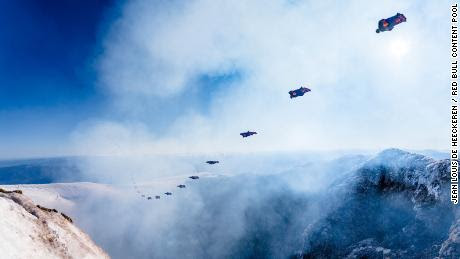
Wingsuit pilot becomes first person to fly in and out of an active volcano.
 In a challenge that redefines the limits of wingsuit flying, see Sebastián Álvarez fly in and out of Villarrica, one of Chile’s most famous volcanos.

Sebastián ‘Ardilla’ Álvarez: Volcano – wingsuit flying (redbull.com) 
(CNN)There are some people out there for whom even the word ‘daredevil’ doesn’t quite do justice to the mind-boggling feats they perform. 

A GO DEVIL…Sebastián Álvarez is one of those people.
Last month, the former Chilean Air Force pilot completed what he describes
as “by far the most extreme” flight of his career: flying in and out of the crater of an active volcano. Only Álvarez wasn’t in a plane or a helicopter, he was wearing only a wingsuit. Unsurprisingly, he is the first person in history
to have even attempted such a feat and says the accomplishment has taken a lifetime of preparation. Read More “Everything started because I had the dream of flying,” Álvarez says.

 “Since I was a kid, I just wanted to fly — and somehow, I made it happen.”
Álvarez’s first exposure to the adrenaline rush that would largely shape his career came when he joined the Chilean Air Force, first as a pilot and then when he was taught how to skydive.

He was immediately hooked and continued skydiving away from the air force whenever he could find the spare time and is now widely recognized as one of the world’s top skydivers. Over time, however, that desire to feel an increased rush only grew, leading Álvarez get into BASE jumping and, eventually, wingsuit flying’

image.png
Alvarez prepares to take flight in Pucon, Chile.

For most of his career, Álvarez struggled to put his finger on exactly what it was that drove him to attempt these increasingly dangerous feats. Until recently.
“I guess I figured it out a few years ago,” he says. “What was happening in my life that really gives me that happiness and — actually it’s still hard to explain — it was that feeling of being totally focused and at the same time having an amount of adrenaline.”[It] also happened to me when I was flying the planes because I was really focused on some things, but at the same time an air force pilot is not just sitting down, they’re doing tons of missions. 
So that mix in between totally focused and a little bit of adrenaline, it blows my mind away.”It’s like, that was what I was really looking for, and I just knew that I liked it, but I didn’t know the explanation. I guess a few years ago, I realized: ‘Oh, this is it. This is why.’ It’s because I focus on those minutes or seconds where my mind is totally on this and also feel that adrenaline that I love.” 

‘The Devil’s House’ For his latest feat, Álvarez knew he wanted to push the wingsuit technology as far as he could. Hailing from Chile, a country with a vast array of breathtaking landscapes, the 36-year-old wanted his most daring flight yet to show off the natural wonders of his home nation. Given his thrill-seeking nature, he naturally ended up deciding that Villarrica — one of Chile’s most active and dangerous volcanoes and aptly named “the Devil’s House” by the Mapuche — would be incorporated into his jump. Leaping from a helicopter at more than 3,500 meters (almost 2.2 miles) in altitude, Álvarez would attempt to use the wingsuit to reach speeds of more than 280 km/h (about 176.5 mph) and then fly into and out of the 200-meter (656 feet) wide crater of the volcano.
” This is by far the most extreme project I’ve ever done,” he says. “That’s for sure. Especially because of all of the factors, it was an active volcano, it was at high altitude, cold, windy and so there were a lot of things that I needed to take care of. “Mentally, it was really hard for me because, again, my mind doesn’t want to be there, but you need to kind of force it to make it happen. I really enjoy doing these projects because I really like to push the sport a little bit more.”

Alvarez soars over 'the Devil's House'. 
Alvarez soars over ‘the Devil’s House’.

The feat would largely be achieved by Álvarez perfecting a technique called ‘flaring,’ gathering enough speed vertically, opening the wingsuit and transferring it into horizontal speed. Preparation for the jump took more than a year. Not only did Álvarez complete around 500 practice jumps, but he also had to make complex calculations using speed, distance and air pressure to decide whether or not it would even be possible.
However, Álvarez says the real preparation for the jump began much earlier. “The preparation for this was all my life, pretty much, it’s been all my life,” he says. “You need to be a skydiver, a base jumper and if you are a pilot, even better. All the paths [I’ve taken] came together.”

Even if you train for two years but you’ve not been skydiving before, it’s never going to be possible. So, it was a lifetime of preparation.”

‘Being afraid is really positive.’
’Weather in the south of Chile can be harsh, meaning Álvarez often had very small windows in which he could attempt the jump. He says the attempts were often canceled due to high winds, rain or snow, as well as fierce storms that sometimes lasted for up to a week.” ‘I was really afraid that we were not going to find a beautiful and nice gap to make this happen,’ Álvarez recalls. “But I guess me and the volcano, we really get along,” he adds with a smile. “Or at least he let me do this. So, we got good weather and the volcano was not that active during that week, and if you ask me, yes, I asked the volcano [permission], I had my conversation with this place.”

But let’s talk seriously, this is a volcano and it’s active and if I fail, you know the result.
If the volcano doesn’t want me there, he can do whatever he wants, you know, so I asked for permission and then I went there [afterward] and said thank you.” Sitting on the edge of a helicopter hovering 3,500 meters above the ground, the biting wind hitting his face, Álvarez says nothing else gives him a thrill quite like attempting a pioneering jump.”

I cannot express how happy this makes me feel,” he explains.
“But it does, you know, and I think that’s what life is about.
I mean, you need to do what makes you happy.”
Álvarez certainly seems to be living by that philosophy. 

211216100832-03-sebastian-alvarez-wingsuit-volcano-jump-spt-intl-cmd-large-169.jpg
Alvarez described his stunt as “by far the most extreme” of his career.

The man known as “Ardilla” — “Squirrel” in English — spends much of the interview with a broad grin across his face and begins gesticulating excitedly when he starts talking about the daredevil feats he has accomplished. He did describe the recent jump as a “roller coaster of emotions” and says it’s “exactly like a volcano,” his excitement erupting before he’s hit with a wave of calm. Álvarez is known as a meticulous planner. While these feats may seem absurd — and often impossible — from the outside, he approaches them with a calm, rational mind, confident that his skill and detailed calculations will keep him safe.
However, that never leads to the absence of fear. “I do feel nervous, and I like it,” Álvarez says. “I think feeling nervous is definitely positive or being afraid is really positive and you need to manage this and turn it into something positive. “I think if you are extremely afraid, then it turns into panic and then you cannot react. So that’s the little borderline where it’s like: ‘Okay, I’m afraid,’
but it keeps me active, so I’m aware of everything. “Now, if I go into panic then this is not going to work and you need to realize: ‘Okay, I’m in panic. 
Maybe I need to do this or this other step, Plan B or Plan C.’” If you thought flying in and out of an active volcano with just some material between his arms and legs to keep him airborne was as dangerous as it could get for Álvarez, think again.”
I do have a really nice stunt … or maybe more than one. My mind sometimes runs really like, ‘Ahh!’” he says, shaking his hands around his head. “I don’t know if they’re going to work. You never know because I’m playing, again, with nature. I need to organize this because I have a lot of ideas … but I just love   DYiNG to LiVE.” 

 Wingsuit pilot becomes the first person to fly in and out of an active volcano in Chile [Video] | Daily Mail Online
Sebastián Álvarez (@sebastianalvarez._) • Instagram

Sebastian Alvarez and Roberta Mancino Wingsuit Freestyle

image.png
FILE – In this Oct. 14, 2012, file photo Felix Baumgartner of Austria

Also, Felix Baumgartner reached speeds of 843mph in historic jump from space. By ASSOCIATED PRESS

Felix Gestures prior to speaking with the media after successfully jumping from a space capsule lifted by a helium balloon at a height of just over 128,000 feet above the Earth’s surface in Roswell, N.M. Scientists say they’ve figured out why an Austrian who became the first skydiver to break the speed of sound
fell faster than the drag of his body should have allowed. In a paper published Thursday, Dec. 14, 2017, by the journal PLOS One, researchers from Munich’s Technical University said irregular shapes appear to reduce the aerodynamic drag that increases as objects near the sound barrier. (AP Photo/Ross D. Franklin, file)

Felix Baumgartner jump time – Bing video
Scientists say they’ve figured out why an Austrian who became the first skydiver to break the speed of sound fell faster than the drag of his body should have allowed. Baumgartner reached speeds far higher than scientists had expected, Protective suit and backpack gave him a very irregular shape, which researchers say reduce the aerodynamic drag near the sound barrier

Felix Baumgartner jumped from the stratosphere 39 kilometers (24 miles) above Earth on Oct. 14, 2012, and landed safely on the ground near Roswell, New Mexico, nine minutes later.
Baumgartner, whose protective suit and backpack gave him a very irregular shape, reached speeds of up to 1,357.6 kph (843.6 mph) – higher than scientists had expected even for smooth objects in freefall.

image.png
A helmet mounted camera looking down from the capsule.

‘Fearless Felix’ reached speeds of up to 834 mph before his parachute opened and he landed back on solid ground five minutes later to have completed the highest and fastest skydive in history. Baumgartner became the first human to break the speed of sound during the jump, reaching a total speed of 833.9 mph. He also set records for the highest balloon ascent, highest parachute jumps, and the fastest speed achieved by a human through the atmosphere after jumping from 128,100 feet above the Earth for the Red Bull Stratos mission.

Felix Baumgartner broke the speed of sound after 34 seconds of free fall, ultimately accelerating to as high as 833.9 mph, or Mach 1.24.
Mr. Baumgartner made his death-defying jump from a tiny capsule that took him up to the edge of space, which took him two-and-a-half hours to travel 128,177ft above the New Mexico desert – and less than ten minutes to land.
He landed on his feet despite moments during the descent that had silenced
his mission control as he appeared to lose control and plunge into a head-
over-heels spin.

image.png
A chest-mounted camera capture’s Baumgartner’s helmet and the edge of space.

People who watched footage of the jump will remember how the daredevil fell to his knees and punched the air in triumph as the control room, packed with scientific experts and family including his teary-eyed mother, Eva, erupted into roars of applause.
Speaking afterwards he said: ‘Trust me, when you stand up there on top of the world, you become so humble. ‘It’s not about breaking records anymore. It’s not about getting scientific data. The only thing you want is to come back alive.’

image.png
Five cameras were attached to Baumgartner during his descent

During the first part of Mr. Baumgartner’s free fall, anxious onlookers at the command centre held their breath as he appeared to spin uncontrollably. ‘When I was spinning the first 10, 20 seconds, I never thought I was going to lose my life, but I was disappointed because I’m going to lose my record.

I put seven years of my life into this,’ he said.
Speaking after the jump Mr. Baumgartner said: ‘Trust me, when you stand up there on top of the world, you become so humble. ‘It’s not about breaking records anymore.

‘It’s not about getting scientific data.
The only thing you want is to come back alive’.

Mr. Baumgartner said his Stratos jump has proved that a human can survive accelerating though the sound barrier in freefall and scientists gathered a lot of information, including the first-ever physiologic data from a person freefalling at supersonic speeds that could be used to inform future projects. He added: ‘In that situation, when you spin around, it’s like hell and you don’t know if you can get out of that spin or not. Of course, it was terrifying. I was fighting all the way down because I knew that there must be a moment where I can handle it.’
Posted in Uncategorized | Leave a comment

Spiritual Healing

The Historic Clifton Mill is located at 75 Water St., Clifton, OH 45316…visit  their website. .. This Ohio Christmas light display is in the running for best in the nation video.

How do we restore ourselves, heal our spirit and revitalize the earth too?

Spiritual self healing – Bing
Healing the spiritual self – Bing
Healing the spiritual body – Bing
Healing the spiritual heart – Bing
Healing collective spiritual reset.
Healing the spirit LifeNet – Bing video
Glow spiritual healing and wellness,

What is true healing, anyway, and can it be affected?
By Lama Surya Das, Contributor

Three key numbers that explain America’s labor shortage.
The American middle class used to signify economic security.
That’s now quickly becoming a luxury only the wealthiest can afford.

Last week someone told me that in his eighty-odd years he had never seen such pervasive levels of fear and anger. This observation gave me pause to wonder: how do we restore ourselves, heal our spirit and revitalize the earth too?

What is true healing, anyway, and can it be affected?

Healing the Spirit When we are unwell, it’s mostly due to imbalances.
Clogging our lives and limiting our innate capacity for joy and well-being. These internal imbalances and energy blockages often express themselves as disturbing emotions–anger, frustration, anxiety and alienation, to name a few, and also manifest through the physical body as ulcers and allergies, migraines, back pain and other forms of dis-ease great and small.
The root cause of these and other imbalances of mind-body-spirit are very much in line with the Buddhist notion that our own obscurations and illusions cause all of our afflictions and suffering, of all kinds– at the outer, inner and at the subtlest levels as well.
Conflicting emotions and delusion results in unwholesome acts which bring us low, mentally, physically, energetically, spiritually and physically. In fact, longevity as well as vitality is also negatively impacted by these karmic imbalances.

The following Five Secrets illustrate how we can bring our body, speech, energy and heart-mind into harmony with awareness-wisdom, the vital wholeness of genuine well-being and ethical reality. Don’t tell anyone: these are just for you.

AN ESSENTIAL DAILY GUIDE TO ACHIEVING THE GOOD LIFE
let’s consider our connection: Is it really broken or wounded?

5 Secrets for Healing the Spirit!!!
This is the first secret, which requires you to question and clarify this for yourself. What is it that can be hurt, wounded, or injured? Only the impermanent construct of the separate, bubble-like individual self can be subject to loss and suffering. Pain is inevitable in life, suffering is more optional; it depends more on what you make of things than on what happens around and to you. Introspect deeply and continuously, and see if you can’t, recognize the unbreakable and untouchable original nature of beingness that exists within, beyond false endurance or even resilience. To know this is to bring the mind into balance by dissolving the numberless distracting doubts, questions, and superficial anxieties that usually affect it. You heal and restore the spirit whenever, wherever, and however you contact your adamantine original goodness, thus achieving inner peace and contentment.

The second secret to healing spirit — asking for help — echoes in all the timeless world traditions. One example is found in the Bible’s shortest prayer from Moses, who, when his elderly wife was very ill, prayed simply: “Lord, please heal her.” We ourselves could learn a lot from the simplicity and humility, honesty, vulnerability and earnestness in the old master’s sincere prayer. Even if you’re not a particularly Higher Power-oriented or prayerful person; who among us hasn’t instinctively turned our thoughts upward amidst a dire crisis, perhaps when a child was involved?
Asking for help is a good thing to do, when needed, even if it’s just to human sources. No one can do it all alone.
Recent research by Drs. Larry Dossey, Herbert Benson, and Richard Davidson among others reveals that prayer, mental resolve, mindfulness cultivation and altruism can all help make a significant difference in healing as well as raising our happiness quotient. Even the placebo effect can work in our favor! Finding words to ask for help is a way we can heal the spirit and find peace. This is not just simple faith healing; it includes intentional mental cultivation through repeated practice, including powerful and profound, contemplative techniques and spiritual exercises such as meditation, chanting, creative visualization, yoga, breath & energy work, and the like.

The third secret to healing the spirit recognizes that the Holy Spirit or inner light can be understood as the Breath–the universal language that opens every tongue and every ear to every language. It is no accident that the word breath in many ancient languages also refers to spirit: “Ruach” in Hebrew; “prana”
in Sanskrit; “pneuma” in Greek; “spiritus” in Latin. No wonder that to be with breath is to be in the spirit and heal the spirit. God and Buddha are closer to us than our own breath, our own heartbeat.
The practice of being fully with one’s breath is to get embodied and in the present moment. In this way, there’s no pushing away from what is unwanted in your body, there’s no rejection of where you’re at. Let yourself find a natural rhythm of breath. Imagine the in-breath bringing with it infinite healing capacities, letting it fill all the cells of the body with purity and well-being.
Let go of all expectations as you do this, just letting yourself be present with each breath. Breathe, relax, focus, center and smile.

The fourth secret for healing the spirit is to try to take advantage of
The Pearl Principle: no inner irritation, no pearl gets produced.
Crisis implies opportunity and can be a great catalyst for meaningful reflection and transformative change. In truth, there are not unequivocally good or bad things or experiences, only the wanted and the unwanted; everything is subjective. Rather than instinctively pushing pain and woundedness away, as usual, we can choose to transmute them into helpful healing gifts we embrace and eventually share, like turning broken heartedness into heart-opening experience.
Thus, increasing our empathy, compassion and sensitivity to those who likewise suffer.
A former addict becomes the best drug counselor; the cancer survivor who told me he’d never have found himself and his true vocation without the disease he received (he was thirty when I met him). Turning the leaden base metal of suffering and angst into the golden treasure of generous service, finding one’s purpose and deep connection with others are important tools. Each time you utilize the Pearl Principle, you heal your spirit and touch the spirit of others like a Medicinal Midas.

The fifth key to healing ourselves is not what happens to us as much as reshaping and reframing the story we tell ourselves about it. Woundedness, like victimhood, is mostly a narrative or story we tell ourselves; how much we suffer from our pains and difficulties depends very much on our attitude towards it, our frame of reference. When you get locked into the impermanent yet powerful I-centered view of how you are a victim and place your attention too much upon what others are thinking, saying and doing, you will suffer emotionally. Loving kindness — wishing well for others — and heartfelt empathy compassion are great protections from the pernicious disease and restlessness of anger, fear, resentment, jealousy and bitterness. We can’t truly heal the spirit unless we find ways to make love of ourselves complete and unconditional. Love is a total attention that can deepen and become the fullness of loving presence, in which we’ve embraced, forgiven, and accepted ourselves completely. Here is true healing, not far from what theists call divine love.

Why are we so often afraid to genuinely embrace and totally accept ourselves?
This is where inner healing begins and radiates outward. These Five Secrets reveal that the mind is mightier than the sword. Here we’re not just talking about your personal egocentric mind and intellect, but deeper consciousness and spiritual awareness.
This soulful vehicle can be a vessel for ultimate healing as well as relative lifestyle improvements when we can learn how to step out of our own way and let our higher selves and true connection to the All come into play. Whether you are using prayer, breath practice, self-inquiry, the Pearl Principle, relational mindfulness with a partner, or crafting a new narrative story, you can recognize that there are many ways and skillful means to achieving peace and harmony. Most importantly, trust yourself to find the appropriate path to healing the imbalances in your life, and let’s undertake together this necessary journey — so uplifting both now and later.

No matter what, an oppressed spirit can and will rise again given the right support and guidance from Source who help show the way to heal all wounds and get the energy flowing again. Hate and resentment is a breeding ground
for disease. Anger is the fuel for the fire that burns oneself, and close-minded ignorance hides the truth that saves. Let’s strive to learn how to free the spirit, set a new course and intention for our life, let go and surrender, and learn simple daily ways to renew the self, re-ignite your passionate inner fire and fan it into flame, and soar on high.

image.png
Healing the Wounded Spirit: God’s Remedy for Persistent Hurts.

The Broken Condition Described.


Jesus has come to heal the inside as well as the outside!
In my walk with the Lord since childhood and being in full time vocational ministry for over 45 years, I found that one of the most common needs among believers and non-believers alike, is the need for inner healing.  I have needed Jesus to heal my wounded spirit and heal my broken heart in different seasons of my life. I am sure that you can relate.
Scripture uses the terms heart and spirit often interchangeably.  One thing for sure, we each need to tend to the condition of our heart because out of it flows the issues of life.  Let’s get healed up on the inside now so that we will not blow up later when pressures of life increase. So go on a journey with me into this sensitive and greatly needed subject of Healing the Wounded Spirit.

Primary Scriptures to Consider:
Proverbs 18:14 “The spirit of a man will sustain his infirmity; but a wounded spirit who can bear?
Proverbs 15:13 “A joyful heart makes a cheerful face, but when the heart is sad, the spirit is broken.”
Proverbs 14:10 “The heart knows its own bitterness and a stranger does not share its joy.”
Hurt, Wounded, Rejected
In the realm of your emotions, you may feel stepped on, overlooked, crushed, bruised, and your life has gone out of you. Quote from John Wimber of the Vineyard Movement!

guy-depressed

“While sickness of the spirit is caused by what we do.
Sickness of the emotions is generally caused by what is done to us.
It grows out of the hurts done to us by other persons or some experience we have been exposed to in the past. These hurts affect us in the present, in the form of bad memories and weak or wounded emotions. This in turn leads us into various forms of sin, depression, a sense of worthlessness and inferiority, unreasoning fears and anxieties, psychosomatic illnesses, etc. Included in this are the present-day effects of the sins of the parents in the bloodline of a person. Thus, healing of past hurts touches the emotions, the memories, and the person’s bloodline.”

Quote from John and Paula Sandford of the Elijah House.
“Christian healing comes then not by making a broken thing good enough to work, but by delivering us from the power of that broken thing so that it can
no longer rule us, and by teaching us to trust His righteousness to shine in and through that very thing.  Those who are healing by restoring the self-image are causing people to trust in something repaired in the flesh, a practice reshaped in their old carnal nature, doomed sooner or later to failure. Whereas the Lord heals by leaving the broken part right in place, overcoming it by its nature. Our trust as Christians can only always be solely in His righteousness in us, as us, for us!”

Experts Tend to Agree on Certain Things:
People have problems that sometimes remain untouched by conversion, the baptism of the Holy Spirit, Bible study, and personal prayer and devotional life.
Hidden in the recesses of the subconscious mind are hurts and wounds that are surrounded by feelings that still adversely affect people in the present.
The focus of healing of past hurts is to release those hurtful memories in such
a way that they no longer have a negative effect on a person’s present or future experience.

This is primarily done through the act of forgiveness.

From Luke 4:18
Receiving and Releasing Forgiveness
,Jesus came to “heal the brokenhearted and set at liberty those who are bruised.” You must acknowledge that Jesus took your pain and carried your sorrows. “See Me,” says the Lord, Turn on the Search Light of God’s Spirit.
Jesus called the Holy Spirit the finger of God.
Let the Lord specifically point out the bitterness, hurts, wounds, and rejections.
Don’t conjure things up. Let Him who sees and knows all, bring hurts to your remembrance. Pray something like: “Father, in Jesus’ name, by the power of the Holy Spirit, please place into my mind the names of people from my life (from childhood to the present) that I need to forgive.”

Forgive, Forgive, Forgive

“Father, in Jesus’ name I forgive ______.”

The Effects of Unforgiveness (Matthew 18).


The servant asked for an extension of time, but the master had mercy and forgave the whole debt. That servant did not understand, but instead left the master and began to extract from fellow a servant the debts he owed in order
to pay back the debt he thought he still owed. The master became aware of the servant’s behavior and put him in prison to be tormented.

The result of unforgiveness is, in essence, torment.

Choose Forgiveness

What Is Involved in Forgiving Someone?
Forgiveness is a decision based on an act of the will.

It involves: Recognizing that I’ve been totally forgiven.

Releasing the person who wounded me from the debt they owe me for the offense. “Lord, I forgive (name of person) for (specifics).
Accepting the person who wounded me as they are and releasing them from the responsibility of having to meet my needs. I take authority over the enemy, and in the name of Jesus Christ and by the power of His resurrection life, I take back the ground I have allowed Satan to gain in my life because of my attitude with (name). I now choose to give this ground back to my Lord Jesus Christ.”

Exercising Authority in Jesus’ Name.

Breaking the Power of Inherited Family Spiritual Conditions.

“On numerous occasions, we have found people who are the victims of their parents’ sin and excesses. We have encountered families that have had a history of alcoholism, sexual perversion, child molestation, and other types of social and emotional abuse. After breaking the power of inherited family and spiritual conditions, we have seen these social behaviors altered, and in a large majority of cases, entirely eliminated. This is true when we are able to minister to the victim as well as the perpetrator of the abuse. I might add it is almost always in conjunction with other types of therapy.”

(For reference, see Numbers 14:18; Exodus 20:3-5; 34:7; Jeremiah 32:18; Lamentations 5:7; Leviticus 26:39-40; Nehemiah 9:2, 16; Deuteronomy 5:9; 2 Chronicles 29:3-9.)

The Place of Personal Repentance:
You must turn from any anger or bitterness toward the person who has wounded you and receive forgiveness from God (John 20:23).
You must recognize your own responsibility and choice in responding and reacting to the hurt by choosing any self-image that is non-biblical and destructive. By repenting from the sin of faulty self-perception, you will open the way for a new image to be formed according to God’s Word (Romans 12:1-2).

You must forgive yourself. Pray a simple prayer such as:
“Dear Lord, you have forgiven me and forgotten my sin. I am not higher than You. Therefore, I choose to forgive and release myself and to forget my sin.
With Your blood, wash away my guilt and shame and even the remembrance of my sin, in Jesus’ name. Amen.” You must forgive and release God Himself.
Pray a simple prayer such as: “God, I know that You are holy and cannot sin.
You do all things well. My attitude toward You has been one of questioning and bitterness. This is sin. I repent of it. Wash it out of me with Your blood.
I realize evil comes from Satan, not from You. Forgive me for blaming You for any of the works of the enemy. I can and do trust you with my life. I trust that You will cause all things to work together for good in my life. Thank you for your abounding love and mercy. In Jesus’ name. Amen.”

Wisdom Reminders

You Are a Product of Your Decisions.

The power of a free will and free choice is a great gift from God! “Choose this day whom you will serve.” What happens to you in life is not as important as how you respond to your circumstances. Victims blame others. Victors take personal responsibility for their decisions and reactions and get back to winning in life! You cannot change your past, but you can change its impact on your present and future. Renew Your Mind!
You must renew your mind on a regular basis through worship,
Bible study, meditation, and praying in the Spirit (Romans 12:1-2).

Walk Together

Walk with Caring Members of the Body of Christ.
It is important to walk with other committed members of the body of Christ to experience ongoing growth. This will help in bringing continued healing to past hurts and restore your faith, hope and love. Love steps out on a limb and is vulnerable.

Major on Your New Nature in Christ.
To keep a healthy, biblical balance (and avoid a negative and introverted attitude caused by an overemphasis on inner healing) focus on your new nature in Christ. The Biblical depiction of your new nature will always give you a truer, more real and trustworthy evaluation that’s provided by your own weaknesses, fears, anger, memories, etc.—not to mention the accuser of the brethren! (Refer to Romans 8:1-2; 28:35; Eph. 4:20-24; Revelation 12:11; Galatians 2:20).

Praise the Lord!
Restore the gate of praise. Give an offering of thanksgiving. Jesus has healed your broken heart!

Prayer of Blessing and Thanksgiving.
“Father God, thank You for sending Jesus to heal the broken hearted and set at liberty those who are bruised. I am so grateful for the power of the blood of Jesus to forgive and cleanse me. Thank You for the gift of free choice and that every day can be the first day of a new life. Bless the Lord, oh my soul, and all that is within me. Thank You for all Your amazing benefits!
Yes, I will praise Your holy name from this time forth and forever more!
Amen and Amen.”

In the Compassion of Jesus!
“Offer up every joy,


Be awake at all moments to the news
That is always arriving
Out of silence.”

-Rainer Maria Rilke
Posted in Uncategorized | Leave a comment

Meet Realism 101

View Post

NEW YORK CITY (WABC) — COVID-19 Data: Neighborhood Profiles – NYC Health

Biden’s COVID Christmas disaster concludes craptastic year for the president.
7 On Your Side Investigates has been tracking the areas with the most COVID-19 cases for nearly two years. The data usually takes us to places like Corona, Queens, and the Bronx. But for the first time, we’re seeing surges not in the outer boroughs, but in Manhattan. “This new variant is just ripping through Manhattan,” said Councilmember Keith Powers, who is a member of the Health Committee and represents some of the hardest-hit areas. 

More 7 On Your Side Investigates | NYC transitioning homeless from hotels to traditional shelters.

Search: COVID positivity rates by neighborhood:
The current zip codes with the highest infection rates tend to be younger,
more affluent areas of Manhattan, along with Brooklyn and Long Island City. Search this interactive map to find the positivity rate in each New York City neighborhood. While portions of Staten Island and Breezy Point have double-digit positivity, it’s Lower Manhattan, the areas in dark purple, with the highest rates — from the West Village with 16%, to Greenwich with 15%, to Murray Hill with a 14% positivity rate as of Thursday afternoon.

They’re areas with some of the highest vaccination rates.
“I think there are a lot of breakthrough cases that are happening, of course, they’re not all breakthroughs, some people are unvaccinated,” Powers said. “These are young areas where people are congregating together at bars or holiday parties or just getting together, and so it’s not a surprise that It would move so fast through these areas.” They’re also people who are living in areas with access to more COVID-19 testing sites. 
“This reflects a combination of actual activity of COVID 19, particularly of omicron, as well as the fact that there are more people seeking and getting to test in those places,” New York City Health Commissioner Dr. Dave Chokshi said. The city’s working this week to expand capacity and testing sites into more neighborhoods. They also started handing out tests people can take
from home.

The Liberal Mind: The Psychological Causes of Political Madness, by Lyle Rossiter, Jr., M.D. The official website of The Liberal Mind:
The Psychological Causes of Political Madness. Please take a few minutes to read about a book that will change forever the way you look at politics.

Why do people hold liberal-left positions? (Liberal and left were once very different, but not anymore.)

This question has plagued me because I have long believed that most people, liberal or conservative, mean well. Very few people wake up in the morning planning to harm society. Yet, many liberal positions — I emphasize liberal positions rather than liberals because most people who call themselves liberal do not hold most contemporary liberal positions — have been wreaking havoc on America and the world.
How, then, can decent and often very smart people hold liberal positions?
There are many reasons, but the two greatest may be naivete and narcissism. Each alone causes problems, but when combined in the same person, they are particularly destructive.
At the heart of liberalism is the naive belief that people are basically good.
As a result of this belief, liberals rarely blame people for the evil they do.
Instead, they blame economics, parents, capitalism, racism, and anything
else that can let the individual off the hook.

A second naive liberal belief is that because people are basically good, talking with people who do evil is always better than fighting, let alone killing, them. “Negotiate with Saddam,” “Negotiate with the Soviets,” “War never solves anything,” “Think peace,” “Visualize peace” — the liberal mind is filled with naive cliches about how to deal with evil.
Indeed, the very use of the word “evil” greatly disturbs liberals. It shakes up their child-like views of the world, that everybody is at heart a decent person who is either misunderstood or led to do unfortunate things by outside forces.
“Child-like” is operative. The further left you go, the less you like growing up. That is one reason so many professors are on the left. Never leaving school from kindergarten through adulthood enables one to avoid becoming a mature adult. It is no wonder a liberal professor has recently argued that children should have the vote. He knows in his heart that he is not really an adult, so why should he and not a chronological child be allowed to vote?
The second major source of modern liberalism is narcissism, the unhealthy preoccupation with oneself and one’s feelings. We live in the Age of Narcissism. As a result of unprecedented affluence and luxury, preoccupation with one’s psychological state, and a hedonistic culture, much of the West, America included, has become almost entirely feelings directed.

That is one reason “feelings” and “compassion” are two of the most often
used liberal terms. “Character” is no longer a liberal word because it implies self-restraint. “Good and evil” are not liberal words either as they imply a moral standard beyond one’s feelings. In assessing what position to take on moral or social questions, the liberal asks him or herself, “How do I feel about it?” or “How do I show the most compassion?” not “What is right?” or “What
is wrong?” For the liberal, right and wrong are dismissed as unknowable, and every person chooses his or her own morality.
A good example of liberal narcissism is the liberal position on abortion.
For the liberal, the worth of a human fetus, whether it is allowed to live or to
be extinguished, is entirely based on the feelings of the mother. If the mother wants to give birth, the fetus is of incomparable worth; if the mother doesn’t, the fetus has the value of a decayed tooth.
There are not many antidotes to this lethal combination of naivete and narcissism. Both are very comfortable states compared to growing up and confronting evil, compared to making one’s feelings subservient to a higher standard. And comfortable people don’t like to be made uncomfortable.
Hence the liberal attempt to either erase the Judeo-Christian code or at
least remove its influence from public life.
Nothing could provide a better example of contemporary liberalism than
the liberal battle to remove the Ten Commandments from all public places. Liberals want suggestions, not commandments. BOMBSHELL!!! Dr. Zelenko Exposes Medical Tyranny Plan to Enslave Humanity Ahead of Depopulation (rumble.com)

If you truly want to learn how liberals think:
Watch PBS NewsHour | Season 2021 | December 22, 2021 | full episode | PBS

This is from 1980


The L.A. Times below is 2016
How Donald Trump really won the White House


In Florida, as you would expect, the panhandle, bordering Alabama and Georgia (Tallahassee and Jacksonville, for example), are where you’re going
to hear country music blaring and see confederate flags waving. As you move down state, it becomes more liberal so, for example, Tampa and Orlando and even Palm Beach skew blue. Miami is an interesting mix.
There’s a large Hispanic community that traditionally has voted red because Republicans oppose Castro so that appeals to the older generation. But Cuba
is not that relevant to the younger folks so it’s something of a wash, and the Miami area skews bluer in elections by far.
Considering that Florida has 4.8 million registered Dems and only 4.6 registered Reps, it’s confounding to the Dems that we keep getting governors who should be in jail. (Scott, who this idiotic state has now voted into the Senate, was an absolute criminal when he ran Columbia/HCA and oversaw
the largest Medicare fraud in history. From the Sun Sentinel, 10/2/18: “In its settlement with the government, the company admitted to 14 felonies related to fraudulent billing and practices. Most happened under Scott’s leadership.” But Florida made him governor twice, and now Senator. Politics is tribal, no matter how bad your candidate is.
But the state also has 3.6 million unregistered or “other party” voters, so getting out the vote and convincing enough independents to vote is where it’s at. Also, overcoming rampant Republican voter suppression (reducing hours and polling places, reducing acceptable ID, making it harder to get ID, not to mention overturning the will of the people and making it harder for felons to get their voting rights back after serving their time, etc.), and gerrymandering. Republicans can’t win on their policies – not enough people support white supremacy and turning America into The Handmaid’s Tale, as sound policy. So, they have to cheat.

Since 1995 when W. Bush took office as governor from Democrat Ann Richards, Texas has been conservative red. All, ALL of the statewide offices are in republican hands. The Lege is so red it could pass an ultra-conservative bill in both houses, the senate and the house, without any democrats voting for it. That’s called a supermajority. Nevertheless, Texas follows the national pattern of big cities, blue, rural, red.
Dallas, Houston, San Antonio, Austin, and El Paso are all liberal and my hometown of Fort Worth, consistently the reddest of the big counties, Tarrant, went for Beto O’Rourke last November in his defeat to Ted Cruz. But the current Mayor “a good friend of Dirty mouthed Donnie” just won re-election earlier this month (May 2019.) The south border is also blue and that’s not illegal voting, that’s the citizens of Brownsville up to the streets of Laredo.
The rest, mostly rural Texas, is red.

Still liberals get outvoted. There are 25 million Texans, 13 million are red, 12 million are blue. Liberals have no say in how our statewide government is run. However, the conservatives wouldn’t have a clue on how to run a big city, In Massachusetts, the more conservative areas tend to be the richer towns, and the towns south of Boston where all the people settled after moving out of South Boston when the city desegregated the school system.
There seems to be a correlation between that racist migration and their politics, and you’d like to believe it’s coincidence, but probably not. While in Louisiana Except for New Orleans, and Orleans Parish, Louisiana is a Conservative state. In the 2016 Presidential election, Louisiana’s electoral votes went to Trump, while New Orleans & Orleans Parish support the Democratic Party candidate. Other metropolitan areas like Shreveport, Baton Rouge and those with large black populations, voted Democrat, but the suburbs and the country areas are overwhelmingly Republican.

The simple answer is if you live in the city you tend to be more progressive
and socialist, because most things involve your neighbor and government is
an integral part of your daily life. The Government runs sewer, water, trash, parks, cops etc. etc. etc., in the rural areas we have septic and a well.
I don’t/can’t even see my neighbor from my house, I never see a cop or govt person and don’t want to. I don’t need or want government interference/Help.
So, I vote for people who at least say they want to downsize the government.
Cities are progressive and rural areas are conservative in general. Most states that is true. TRUMP Had 88 million Twitter Followers | Biden has 16.2 million (Many Bots & Trolls.)

People didn’t vote for Trump because of race.
It is a different thought on life either government help/intrusion or freedom from that. In Washington state we call the area of Liberal overlords live in Pugetopolis (the area surrounding Puget Sound) – essentially the hard-core leftist/progressive areas of Seattle, Tacoma and Olympia for the core cities and primarily King, Pierce and Thurston counties with the rest of the state being the actual productive portions (agriculture/logging/fishing/manufacturing) and very conservative. We are the exact example of why a pure democracy would be the death knell of the country. 
The high-density population of those 3 counties is enough to override the rest of the state so the powers in Olympia can rape the rest of the state and spend taxpayer dollars on foolish and corrupt programs that only seem to benefit the Democratic elite. The history of Seattle is one of political corruption almost from its inception and that has been the model for state government ever since. The last time the rest of the state rallied, and we tried to elect a Republican governor, we were subjected to multiple “recounts” of ballots until enough
“Lost or misplaced” ballots had been “found” to overturn the election and put the incumbent Democrat back in place… even though the voter turnout in some counties exceeded the number of registered voters… and then the Democrat State Attorney General declined to investigate for voter fraud…

Once again, the cautionary tale to all those who truly don’t understand the genius of the Electoral College – lose that and the country goes the way of Washington state… forever….

Also. The Denver Metro area, Boulder, and Aspen have been traditionally liberal. The Front Range north of Denver has become more liberal.
South central part of the state, south of Pueblo, has been more solidly liberal
in recent years. Central mountains are now purple, used to be solid red.
The eastern plains solid red as is the western part of the state boarding Utah. There are a couple of counties in the southwest that have become more liberal in the last few years. Colorado Springs, home of the state’s religious right is solid red of course as are the counties immediately northwest and south.
Larger cities tend toward liberalism, smaller towns and rural areas conservatism.
The more you are exposed to others, the more liberal you tend to become
as you realize we all worry about our jobs, our kids, whether the country
(or world) is going in the right direction.

What parts of your state are most conservative and liberal? – Quora
red and blue political map of Colorado:
Map: Colorado Voter Party Affiliation by County
Doug Schwartz – Quora

FENTANYL OVERDOSES SURPASS COVID AS NUMBER ONE CAUSE OF DEATH IN AMERICA. By Joshua Perry December 23, 2021

Fentanyl, a synthetic opioid, is now the leading cause of death for Americans between the ages of 18 and 45, according to an analysis covering overdose cases in America.
Families Against Fentanyl, the research organization, revealed that the drug has claimed more lives since 2020 than Covid-19, suicide, and car accidents.
In 2020, the nation recorded 37,208 fentanyl deaths and 41,587 in 2021 between the studied age ranges, according to the organization.

Fentanyl is not a pure drug made of monolithic ingredients. In fact, the narcotic is often laced in a mixture of cocaine, heroin, ecstasy, Xanax, oxycontin, and marijuana.
One person dies from fentanyl overdose every 8.57 minutes, contributing to
a 64 percent responsibility rate for total drug fatalities. Fentanyl is primarily produced in China, transported in large quantities to Mexico, and then smuggled across our southern border.

While Joe Biden has done nothing to curtail the deadly substance, the state of Texas has taken matters into its own hands. In effort to combat the infiltration, the Texas National Guard and Texas Dept. of Public Safety are cracking down on drug runners. In November, Texas authorities intercepted enough fentanyl to “kill everyone in Texas, California, and New York,” tweeted Gov. Greg Abbott, R-Texas.

Illegal Immigrants are taking advantage of U.S. and the Biden administration’s open border policy, the Mexican cartels have been incentivized without fear of consequence for bringing the drugs into the United States. More than 11,000 pounds of fentanyl has been seized by Customs and Border Protection, making the fentanyl the number one trafficked drug of 2021. Without any help from the Oval Office to mitigate the flood of death producing substances pouring across the border, Texas has begun adding to the border wall that was constructed under President Trump.

In December, Gov. Abbott held a press conference to celebrate the new border wall construction in Rio Grande City, Texas. “Texas is taking what truly is unprecedented action by any state ever,” said Abbot. Fentanyl’s destruction across the country adds only more justification for why we need strict border policies, and proves that every town, no matter the location, is a border town.

12 States with the Highest Taxes in America.
Americans’ state and local taxes vary, sometimes significantly, depending on where they live.
WalletHub, the personal finance website, sought to find out how aggressively states tax their citizens by measuring the proportion of total personal income that residents pay toward state and local taxes to arrive at an overall tax burden for each state.

Researchers compared the 50 states across the three tax types of state tax burdens — property taxes, individual income taxes, and sales and excise taxes — as a share of total personal income in the state.
They found that the highest and lowest state tax burdens differ by more than seven percentage points.

WalletHub released the results Wednesday along with a list of facts about this year’s tax landscape.

WITH 11 of these 12 states with the biggest tax burdens being LIBERAL STATES.

1. New York
Total tax burden: 12.79%
Property tax burden: 4.4%
Individual income tax burden: 4.96%
Total sales and excise tax: 3.43%

2. Hawaii
Total tax burden: 12.19%
Property tax burden: 2.45%
Individual income tax burden: 3.09%
Total sales and excise tax: 6.65%

3. Vermont
Total tax burden: 10.75%
Property tax burden: 5.04%
Individual income tax burden: 2.41%
Total sales and excise tax: 3.3%

4. Maine
Total tax burden: 10.5%
Property tax burden: 4.6%
Individual income tax burden: 2.45%
Total sales and excise tax: 3.45%

5. Connecticut
Total tax burden: 10.44%
Property tax burden: 4.06%
Individual income tax burden: 3.56%
Total sales and excise tax: 2.82%

6. Minnesota
Total tax burden: 9.99%
Property tax burden: 2.86%
Individual income tax burden: 3.68%
Total sales and excise tax: 3.45%

7. New Jersey
Total tax burden: 9.98%
Property tax burden: 4.94%
Individual income tax burden: 2.47%
Total sales and excise tax: 2.57%

8. Rhode Island
Total tax burden: 9.69%
Property tax burden: 4.44%
Individual income tax burden: 2.29%
Total sales and excise tax: 2.96%

9. Illinois
Total tax burden: 9.52%
Property tax burden: 4%
Individual income tax burden: 2.11%
Total sales and excise tax: 3.41%

10. California
Total tax burden: 9.48%
Property tax burden: 2.64%
Individual income tax burden: 3.78%
Total sales and excise tax: 3.06%

11. Kansas
Total tax burden: 9.36%
Property tax burden: 3.12%
Individual income tax burden: 2.28%
Total sales and excise tax: 3.96%

12. Maryland
Total tax burden: 9.32%
Property tax burden: 2.67%
Individual income tax burden: 3.89%
Total sales and excise tax: 2.76%

Is it safe to eat at restaurants amid Omicron surges?
Here’s what the experts say (msn.com)

Podcast: Larry Summers Predicts the Economic Future,
and It Doesn’t Look Good – Bloomberg

LIBERALS HAVE THIS TURNED AROUND IN THEIR HEADS!!!
Virus Expert Warns These Six States Will Have Next Surge (msn.com)
Joe Biden’s Winter of Discontent—Failed Bills, Terrible Polls & Omicron
Why Biden Is Winning Big, Even with A Bad Hand | AMSNBC.com
These Are the 25 Richest Families in the U.S. (moneywise.com)
Biden Won Big Despite Slim Majorities in Congress – The Atlantic
Why Biden Is Winning Big, Even with A Bad Hand – YouTube
Is everyone going to get COVID-19 at some point? (msn.com)
Dr. Fauci Just Said “Stay Away” From Here Now (msn.com)
The Most Magnificent Train Rides in America (msn.com) 
America’s Heartland tv show dairy farms – Bing video
Growing a Greener World – The Spark in Sparta
Sparta Georgia Mushrooms – Bing video
 What makes a liberal democracy?
 What makes a liberal arts college?
What makes a liberal…liberal? 
What makes a liberal mind? 
What makes a liberal tick?

If Your Soul is in the Right Place, You’re Giving Back!!!

Posted in Uncategorized | Leave a comment

Simple and Complex Facts About Carbohydrates

By Barbara Quinn-Intermill – Monterey Herald

Are carbohydrates good or bad? This is a trick question.
That’s because there are many types of carbs, and they all have
differing effects on our health.
So, what is a carbohydrate? Many clients think “bread” when I ask this question. They are often surprised that fruit and milk also contain natural carbohydrates. Vegetables are also a source of carbs, both in the form of natural starches as well as dietary fiber.
Carbohydrates can be simple or complex. They can be in the form of sugar, starch or fiber. And their fibers can be soluble or insoluble.
I was drawn, then, to a review on this topic by medical experts that recently appeared in the journal Atherosclerosis. Besides that, carbohydrates are the cleanest, most efficient fuel for our brains, muscles and nerves, here are some other truths about this group of foods.

• Carbs such as whole grains and dietary fiber are good for keeping blood sugar, cholesterol, blood pressure and weight in healthy ranges.
• More refined carbs such as sugar and low fiber snacks have the opposite
effect on our health when we overindulge. We therefore need to eat smaller
amounts of sugar cookies and candy canes. Darn.
• More healthful carbs supply dietary fiber — a type of carb that the body does not digest (so no calories!) and has other benefits. Foods that contain dietary fiber include whole fruits, vegetables, whole grains, nuts and legumes. High consumers of high-fiber foods show consistently lower incidents of heart disease, diabetes and colon cancer, to name a few.

Quinn on Nutrition: Tips for Finding the Best Breakfast – Good Health Medicine

Barbara Quinn, On Nutrition: Thoughts on doughnuts (msn.com)

Some dietary fibers called “probiotics” are fermented by good bacteria in our guts. Is this good? You bet.
Beneficial effects of this process include better blood sugar control, reduced appetite to keep us from overindulging on Christmas cookies and protection from disease-producing inflammation.
Does a high-carb diet make you fat? That’s still up for debate and again, the type of carbs we eat makes a difference. Studies do show, however, that, given unlimited access to sugary foods or sweetened beverages, many of us will put on extra pounds. What does this mean in the real world?

Check your plate. Each meal deserves a serving or two of vegetables, fruit or legume. Slice tomatoes or add salsa to your morning eggs. Open that bag of baby carrots to crunch along with your sandwich.
Add a festive dose of green/red/orange veggies to your meat and potatoes. Nibble on nuts or popcorn at the next party. Along with celebratory sips of eggnog and champagne, enjoy a myriad of flavors of sugar-free waters. Bake candy cane cookies with your grandkids without feeling obligated to eat a dozen. And savor every bite of this holiday season!

Peppermint 101
I like traditions. So, I admit being somewhat bothered when I hear Christmas carols on the radio before my turkey dinner is digested. And why do they call the day after Thanksgiving “Black Friday” when I’m still giving thanks for leftovers?
That said, I do love the holiday season. And as soon as the turkey soup is made and we’ve gobbled up the last of the dressing and cranberry sauce, I’m ready to transition from everything orange and pumpkin to all things red, green … and peppermint.

Why peppermint? Some say we started our Christmas obsession with this flavor in 1670, when a choirmaster handed out a peppermint-flavored treat to children who participated in a living Nativity scene. Peppermint candy canes came a couple of centuries later.
Besides getting us in the holiday spirit, are there any health benefits to consuming peppermint? According to the National Center for Complementary and Integrative Health (www.nccih.nih.gov), peppermint is a cross between two types of herbs — spearmint and water mint. Health properties have been attributed to its leaves and oil that is extracted from the leaves and flowering parts of the plant.

Like many herbal products, however, research on peppermint’s medicinal effects is scant. A few small studies suggest peppermint oil capsules may help relieve tummy pain and possibly some symptoms of irritable bowel syndrome (IBS). Caution though: These capsules were specially coated so they would not break down until they reached the small intestines. Straight peppermint oil, say researchers, is likely to make digestive issues worse.
Peppermint tea has historically been used to treat indigestion and menstrual cramps. Its leaves also give us a healthful dose of antioxidant substances that may protect us from certain diseases and premature aging. And one of the oils extracted from peppermint leaves is menthol, which may help relieve cold and allergy symptoms like stuffy noses and sore throats.

Peppermint is not for everyone, however. People with acid reflux disease
(Aka GERD) need to avoid peppermint, as it can worsen symptoms. Organ transplant patients who take a medication called cyclosporine should stay
clear of peppermint.
And if you’re prone to kidney stones or have severe allergies, be cautious with peppermint products. As much I love the peppermint flavors of this season,
I need to remember that many are attached to foods with extra sugar and fat. Peppermint ice cream, anyone?

Let’s not be Scrooges, though.
Add a little peppermint to your life this season and remember the simple rule of moderation.
Quinn on Nutrition: Holiday nourishment | Nutrition | ArcaMax Publishing

On Nutrition: Fructose: The simple sugar with a bad reputation – Everett Daily Herald News (newsmemory.com)

“Fructose is a simple sugar with a bad reputation,” says registered dietitian Carrie Dennett, MPH, in a recent review of this sometimes-confusing topic.

Here are some facts:
Fructose is a component of table sugar (aka sucrose). In fact, the sugar we use in most sweetened foods — including those labeled “pure cane sugar” — is half fructose and half glucose. Fructose is also the main sugar that occurs naturally in fruit. And it is especially concentrated in agave syrup and honey — which contain even more fructose than high fructose corn syrup.
Fructose is used in the body somewhat differently than other sugars which some say is a plus and others say is a minus. For example, it does not increase blood sugars as readily as other sugars which is good news for people with diabetes. However, because (unlike other sugars) fructose is broken down in the liver, some consider it to be a bigger detriment to our health.
Scientific research is all over the map as far as the health effects of fructose. Several studies over the past few years have reported that replacing regular sugar (which is half fructose) with pure fructose resulted in lower blood sugars in people with diabetes. On the other hand, a more recent analysis found that consuming too much fructose from sugar-sweetened beverages increases one’s risk for metabolic syndrome, a condition that can lead to diabetes and heart disease. On yet another hand, researchers report that eating whole fruit or drinking not more than 8 ounces of 100 percent fruit juice a day may actually protect against this same metabolic syndrome. 

Sooooo … Here is some advice. “While fructose in moderation appears to be fine for most people, there are two groups who do need to shun this particular sweetener,” says Dennett. Some people with irritable bowel syndrome (IBS) can have unpleasant digestive disturbances after they eat foods high in fructose (honey, agave syrup and many types of fruit). Another rare group of people are born with a genetic intolerance to fructose. These folks must completely avoid all fructose — including that contained in regular table sugar — to prevent liver damage. Dennett concludes that we need not fear fructose nor demonize high fructose corn syrup while embracing “pure cane sugar” (which is 50% fructose). At the same time, we don’t need to put a health halo on “natural” sweeteners like honey and agave which both contain more fructose than high fructose corn syrup.
Bottom line: We can eat small amounts of sweetened foods and still be healthy. Excessive amounts of any added sugar are not good for us, however. Experts say we need to reduce or limit all added sugars, including fructose. Most of us could do a better job at that. 

 More on fructose and sodium – Monterey Herald – swift headline
[PDF] Quinn on Nutrition: An apple a day?
https://medicalxpress.com/pdf553511869.pdf
Quinn on Nutrition: An apple a day? (newstribune.com)

Hi Barb, being a retired home economics teacher, I always enjoy reading your column.
I have always peeled the skin off of apples due to my concern about the chemicals used to spray the apples. Should I be concerned about this
or am I overly cautious?
You might be overly cautious and miss out on some great health benefits.
As I mentioned in a previous column, most of the healthful ingredients in fresh apples including dietary fiber and antioxidant compounds reside in or close to the skin of an apple.
According to experts who recently attended the “Facts, Not Fear” farm tour in the apple-producing region of the Pacific Northwest, all apples —those grown both organically and conventionally — are safe to eat with the peels. That’s because improved farming methods over the past decades have greatly reduced the use of many pesticides.

According to the pesticide calculator at Alliance for Food and Farming (safefruitsandveggies.com), a woman could eat 850 apples in one day with
no effect of pesticide residue on her health, even if the apple had the highest pesticide residue ever recorded on apples by the United States Department
of Agriculture (USDA).
Again, just make sure you wash your hands with soap and water and your apples with plain water before crunching into this good-for-you food.

Barbara Quinn, On Nutrition: Is dietary fiber really that important?

On Nutrition: Is dietary fiber really all that important? | HeraldNet.com

On another topic: I tend to go bonkers for anything pumpkin this time of year. So I was intrigued to receive a sample of a plant-based, vegan and pumpkin version of marshmallows. This product is also non-GMO, certified Kosher, has no artificial flavors or colors, no corn syrup, no gelatin, no gluten, and free of the common protein allergen’s wheat, dairy, eggs, corn, peanuts, and tree nuts.

Which made me wonder … What IS in vegan marshmallows?
I took a look at the label: tapioca syrup, cane sugar, filtered water, tapioca starch, carrageenan (a seaweed extract), soy protein, natural flavors and annatto (a food coloring from the seeds of the achiote tree).
Typical marshmallows are made with four basic ingredients, say food scientists — sugar, corn syrup and gelatin plus some air. Some makers add natural and artificial flavors and color plus tetrasodium pyrophosphate (TSPP) , a food additive used in other products such as meat substitutes and toothpaste.

It’s the gelatin that makes most marshmallows not vegan i.e., free of animal products. Gelatin is made with the protein collagen, an animal by-product.
Interesting, there’s not much difference nutritionally between vegan and regular varieties of marshmallows.
They both are primarily sugar (about 6 teaspoons) and contain 100 calories per serving of 18 miniature marshmallows.
What do I think? Marshmallows are not really a healthy food but strict vegans who love marshmallows may enjoy this special variety. (It does cost twice as much as regular marshmallows.) I think my grandkids would love either type in their hot chocolate.

How a healthy diet may help us get through the pandemic.
I’m seeing more reports about how nutrition may help us fight against covid-19. No one is saying we can totally avoid the disease or cure it if we eat right. But the case for improving our diets to get through this pandemic is certainly strong.
Our immune system, after all, is made from the components we find in food. And like a well-tuned football team, a strong immune system needs the right balance of individual nutrients working together. Those include protein plus vitamins (such as A, C, E, B6 and B12) and minerals such as iron and zinc.
And we get these substances when we eat a balanced diet that includes foods such as eggs, meat, fish, poultry, soy, a variety of fruits and vegetables, whole grains, nuts and dairy foods. Without a doubt, say experts, the foods we choose to eat (or not eat) have a profound effect on our immune system and susceptibility to disease.

Here are some ideas: Take a look at your plate. Does it contain
a good source of protein? Is there a variety of green, red, orange and yellow (M&Ms don’t count) fruits and vegetables? Does it include whole grains?
If not, a lack of key nutrients may lower your resiliency to infectious disease.
Don’t put too many men on the field. Supplements can help if our diets lack certain nutrients, but don’t overdo it. Zinc, for example, is needed to enhance our immune system and is found primarily in oysters, shellfish, meat, pork, poultry, beans and fortified cereals. Excessively high doses of zinc supplements, however, can actually reduce the body’s ability to fight disease.
Eat your veggies and other plant-based foods. Last year, before vaccines were available and before the highly contagious delta variant had raised its ugly head, researchers in the United States and Britain conducted a phone survey on people who had tested positive to covid-19. People who reported eating more plant-based foods (fruits, vegetables, whole grains, legumes and vegetable oils) had a slightly lower (9%) risk of developing covid-19 than the folks with lower intakes. And among the people who did contract covid-19, those who ate more plant-based foods had a 41% lower risk for developing severe symptoms.
Get your omega-3s. Also known as fish oils, these fats (DHA and EPA) fight against chronic inflammation. Some studies suggest the presence of omega-3s in our blood may help lessen the severity of covid-19. Besides fatty fish — like salmon, sardines, tuna and mackerel, other forms of these good fats are found in flaxseed, walnuts and in some fortified foods.
Consider vitamin D. A deficiency of this vitamin can increase our risk for getting an infectious disease, say researchers. Until we know more, it’s a good idea to make sure we get the recommended daily dose of 400 to 800 IU vitamin D a day.
Deal with stress. Yes, this does have to do with nutrition. Fear and distress can trigger hormones that drive us to the comfort of foods that feed us little more than sugar, fat and extra calories. Stress busters include exercise, prayer and meditation.

And don’t skimp on sleep! Sleep fortifies the body’s immune function.
Now more than ever, say experts, we need to make healthful food a top priority to reduce our susceptibility and lingering complications from covid-19. Let’s do that.

Reader Kari B from Lincoln, Nebraska, writes:
“Would you be able to review Vitamin K2 sometime in your nutrition column? I was researching bone health online and came upon an article that discusses how important this vitamin is in bone health. It states that Vitamin K2 is part of the bone health package that includes magnesium, calcium, weight-bearing exercise, minimizing inflammation in the body, and having a healthy gut (microbiome). It appears that some docs might take the easy way out and only tell their patients to take calcium supplements, possibly along with Vitamin D. If you could shed some light on this, it could be very helpful to know how much Vitamin K2 to ingest each day. Thank you for any consideration!
Hi, Kari, Happy to comment on this interesting topic! Vitamin K is the term given to a family of compounds that are similar but somewhat different. Thus, Vitamin K1 (phylloquinone) and several types of Vitamin K2 (menaquinones) are collectively called “Vitamin K.” You might also read about MK-4, MK-7 or MK-9 which are various forms of Vitamin K2.

And that’s all the chemistry we need for now.
Vitamin K has historically been known as the “coagulation vitamin” because
of its important role in helping our blood to clot. In fact, a classic symptom of a Vitamin K deficiency is abnormal bleeding.
More recently, Vitamin K has been studied for its role in bone health. Both Vitamin K1 and K2 are involved in processes that help build bone strength,
but it appears that vitamin K2 is the most protective in this particular job. A deficiency of the K2 form of Vitamin K has been linked to osteoporosis (fragile bones) as well as calcium deposits in the arteries (commonly called hardening of the arteries).
The current recommendation for an adequate intake of Vitamin K for people
19 years of age and older is 90 micrograms (mcg) for women and 120 mcg for men.

This includes both forms … K1 and K2.
Barbara Quinn, On Nutrition: Fortifying weak bones – Articles for a Healthy Lifestyle (herhealthonly.com)

Because of its emerging role in bone and heart health, some researchers now believe Vitamin K needs its own recommended daily requirement. And whether or not to take a supplement of K2 is not yet clear.
In 2020, a randomized controlled study (the best kind) tested various doses of Vitamin K2 on 311 older men and postmenopausal women. After one year, they found that the most effective dose to reduce bone loss in the femoral neck (hip) for postmenopausal women was 90 micrograms (mcg) a day, with or without additional calcium or Vitamin D3. Interestingly, no change in bone health was found in the men of this study.
For now, the best recommendation is to include food sources of vitamin K1 and K2 in our diets. And those sources differ. Vitamin K1 is more abundant in leafy greens such as broccoli and spinach. Vitamin K2 is found in fermented foods (especially natto, fermented soybeans), cheese, egg yolk and meats (especially liver).
Why animal foods? Experts say animals have a unique ability to synthesize Vitamin K2 from the Vitamin K1 they obtain from grass.

[PDF]HEALTH MATTERS | HEARING, VISION AND BACK TO …
pageturnpro2.com.s3-website-us-east-1.amazonaws.com/...
Barbara Quinn-Intermill Tom Leyde Sales Team Mike O’Bleness Rachel Martinez Alyson Stockton Danielle Landaker Advertising Services Manager Lorraine Roque To contact Health Matters, please email: mh.healthmatters@gmail.com Health Matters is a monthly magazine
[PDF]HEALTH MATTERS | DIABETES & HEART HEALTH FEBRUARY …
pageturnpro2.com.s3-website-us-east-1.amazonaws.com/...

Barbara Quinn-Intermill Tom Leyde Sales Team Mike O’Bleness Rachel Martinez Alyson Stockton Danielle Landaker Advertising Services Manager Lorraine Roque To contact Health Matters, please email: mh.healthmatters@gmail.com Health Matters is a monthly magazine
Best Box Cereal For Diabetics – 07/2021
https://bestproductlists.com/review/best-box-cereal-for-diabetics

Barbara Quinn-Intermill is a registered dietitian, certified diabetes educator and the author of “Quinn-Essential Nutrition.” Herald Net.

Read more › … Best Cereal Brands for Diabetics – 08/2021
https://bestproductlists.com/review/best-cereal-brands-for-diabetics

See the source image
Thanks for writing!

Barbara Quinn-Intermill is a registered dietitian nutritionist and diabetes care specialist affiliated with the Community Hospital of the Monterey Peninsula. Email her at barbara@quinessentialnutrition.com

She is the author of “Quinn-Essential Nutrition:
The Uncomplicated Science of Eating.”


Articles (thorn communications.org)
Quinn on Vitamin: What’s true about cows and world warming | Way of life (homeandfitnessnews.com)

Barbara Quinn, On Nutrition: What’s true about cows and global warming – Monterey Herald

Barbara Quinn, On Nutrition: Intermittent fasting, fad or fact? – Monterey Herald Health

Barbara Quinn, On Nutrition: Dehydration or heat stroke? – Monterey Herald Health
Quinn on Nutrition: Supplements for high blood pressure (newstribune.com) 

A primer on the health advantages of eating whole grains | HeraldNet.com

Barbara Quinn, On Nutrition: The perfect brew – Santa Cruz Sentinel

Barbara Quinn, On Nutrition: What about lectins? – Monterey Herald

Best Cereal Brands for Diabetics – 12/2021 (bestproductlists.com)

Beetroot Diet and Wellness Added benefits – Biondi Santi Spa

Barbara Quinn, On Nutrition: Good for your heart (msn.com)

Barbara Quinn, On Nutrition: Food from the fair (msn.com)

New Year, new ideas – Monterey Herald – Fit Fast Today

Enjoy fair food without tipping the Ferris wheel | Food

Posted in Uncategorized | Leave a comment

Omicron Variant Research

The News is Fake, but the War is Real.

W.H.O. Director Says Covid Boosters Being ‘Used to Kill Children’ FREUDIAN SLIP AT 2:39mark, listen:  https://www.youtube.com/watch?v=NHgoeIdti-A  … YOU DECIDE… My opinion is the vaccine compounds the problem.

🗣️ Children 5 and older now have a coronavirus vaccine.
But many parents of younger kids are still anxiously waiting.

Dr. Fauci Says This Is How the Pandemic Will End Now.
As we head into 2022, the U.S. will be entering its third year of COVID.
Many virus experts had previously said they expected the new year would bring about the end of the pandemic, as they predicted Delta would be the last wave and hit its peak around Thanksgiving. But that same week, a new variant of the virus was detected. Omicron has spread so quickly, it’s now the dominant variant in the U.S., accounting for more than 73 percent of infections in the country, according to the latest data from the Centers for Disease Control and Prevention (CDC). So what do virus experts expect to happen now that the Omicron variant is causing cases to surge once more? Read on to find out the latest prediction from top White House COVID adviser Anthony Fauci, MD.

This Makes You “Most Likely” to Die of COVID, Say Experts!
Death panels in Obamacare page 428 – Bing

RELATED: 70 Percent of Hospitalized Omicron Patients Have This in Common

Dr. Fauci says people in the U.S. will likely have to learn to live with COVID. A true end to the COVID pandemic might no longer be in the cards, at least in the traditional sense. During a Dec. 21 interview with CBS Mornings, Fauci discussed the future of the pandemic amid the fast-spreading Omicron variant. According to the infectious disease expert, people in the U.S. will “likely” have to learn to live with the coronavirus, much like they already do with the common cold and flu.
But Fauci said this doesn’t mean that the pandemic will continue to be as much of a problem as it is now. Eventually, the U.S. will reach a point where the level of infection is low, and the virus won’t dominate everyday life. “We hope we get there soon,” he said.

Fauci also warns that unvaccinated people still need to get vaccinated. Unvaccinated people can’t just wait out the virus, however,
Fauci said that it’s “critical” for those not yet vaccinated in the U.S. to get their shots in order to help curb the spread of the virus. Only a little more than 61%  of the eligible U.S. population is fully vaccinated as of Dec. 22, 2021.
According to the latest data from the CDC. But in order to get to a level where COVID is no longer dominating the country, Fauci said that this number must go up.
“We first have to get to the 50 million or so people who are eligible to be vaccinated who are not vaccinated,” he explained. “If you want to keep the level of spread as low as possible, which will get us back to that level of normality, you have to get those people vaccinated.” 

He said Omicron doesn’t affect vaccinated and unvaccinated people the same. Omicron has created a rise of breakthrough cases,
which can be attributed to its “really spectacular capability of spreading from person to person,” Fauci said. With more breakthrough cases, some people might be questioning the need to get vaccinated. But these infections should not discourage people in the U.S. from getting their first shots or a booster dose, according to Fauci.
“They shouldn’t throw up their hands and say, ‘Well, if you can get infected even if you’re vaccinated, why get vaccinated?'” he said. “There is a very big difference between a vaccinated and unvaccinated person when they get infected with regard to the consequences of that infection.”

According to Fauci, both vaccinated and boosted people are significantly less likely to experience severe illness, even if they get infected with the Omicron variant. “The likelihood of a vaccinated and boosted person getting seriously
ill from the infection is very, very low. It’s the unvaccinated people who are the most vulnerable not only to getting infected, but to getting a serious outcome,” he explained.

RELATED: Dr. Fauci Warns Vaccinated People Not to Do This as Omicron Spreads.
Omicron variant helps fuel surge to record number of COVID-19 infections in Ohio since pandemic began
After hitting daily COVID-19 case record, Ohio lays out more details on helping hospitals
Hospitals delay elective surgeries with COVID on the rise again
‘So many patients die.’ A look inside a COVID unit where beds are full, staff is exhausted
Gov. DeWine sends 1,050 National Guard members to ease Ohio hospital staffing shortages.

The number of patients with COVID in Ohio hospitals are down 10% in Northwest Ohio in the last week, data from the Ohio Hospital Association shows.
It comes as several new studies indicate the omicron variant may be less likely to result in hospitalizations, through it also spreads faster than Delta and other variants and can better evade vaccines.
Health officials maintain that getting vaccinated is the most effective way to protect yourself and others against the virus and recommend vaccinated people get a booster dose as well

Here is the latest on the coronavirus pandemic in Ohio.
This list will be updated after 2 p.m. each day.
Ohio reports Up – to -Date new COVID-19 cases!!
Ohio sets pandemic record for cases in 24 hours for second straight day’

If You Have Omicron, This Is When You’ll Begin to Feel Symptoms
Even though it only emerged a month ago, the Omicron variant has drastically altered the pandemic’s trajectory. Data is also beginning to paint a clearer picture of how the latest version of the virus is different, including being more transmissible than Delta and evading the defenses provided by currently available vaccines. But similar to previous variants, Omicron also appears to differ in what symptoms it causes and how soon they tend to develop after infection. Read on to see how the latest viral offshoot’s timeline could change the way we handle COVID-19. 
Preliminary research shows that symptoms from infection with Omicron usually develop within three days.
Part of what has made COVID-19 such a difficult virus to tackle is its cycle within the people it affects. Infamously, some remain completely asymptomatic while still being contagious, unknowingly spreading the virus without realizing it. In those that show signs of illness, previous variants such as Alpha and Delta typically take five or four days before those infected have symptoms, respectively.
But according to Dr. Ryan Noach, CEO of South Africa’s largest private health insurer, Discovery Health, anecdotal evidence suggests that Omicron may have an even shorter window, with symptoms from the variant typically showing up three days after exposure
The Washington Post reports. 

A shorter incubation period could make Omicron harder to stop than previous variants.
While the difference of one day between exposure and the appearance of symptoms may not feel like a huge change, some experts warn that it could have major consequences. They explain that a shorter incubation period likely means someone infected with the Omicron would also become contagious faster than before. This can make it easier for the virus to spread while also making it “much, much, much harder to control,” Dr. Jennifer Nuzzo, an epidemiologist at the Johns Hopkins Center for Health Security, told The Atlantic.
The shortened window also means that a quick turnaround on checking
for the virus could be more essential than ever. “If Omicron has a shorter incubation period, that’s going to wreak havoc on how we test for it and deal with it,” Dr. Omai Garner, PhD, a clinical microbiologist in the UCLA Health system, told The Atlantic

It may be difficult to detect the virus before symptoms develop using testing.
Unfortunately, even the existing tests we’ll rely upon to get ahead of Omicron may be more difficult to use than before. A shorter incubation period also means that low levels of a virus in the body can quickly jump, making a negative test received in the morning irrelevant by the evening. This means that the positive test results many used within one-to-three-day windows previously would no longer be feasible and make the grace period awarded
by a negative test result quite short-lived, Dr. Melissa Miller, PhD, a clinical microbiologist at the University of North Carolina, told The Atlantic

Omicron may have tell-tale symptoms that are slightly different from other variants.
For now, experts recommend testing before any indoor gatherings, if you’ve been exposed to someone who’s infected, or if you become sick. But what kind of symptoms should you be looking for as signs of an infection with Omicron?
Preliminary data from a South African study conducted by Discovery Health analyzed more than 211,000 patients who tested positive for COVID—including roughly 78,000 who were confirmed to have been infected with the Omicron variant—and found that having a scratchy throat as opposed to a sore throat was among the most commonly reported symptoms, Noach explained during
a news briefing.

He added that nasal congestion, a dry cough, and muscle pain or aches
in the lower back were also regularly reported as early signs of the variant, 
The Washington Post reports.
But as Omicron continues to surge in new areas around the globe,
doctors are getting more information about the variant and its symptoms.
In London, where officials confirmed the viral offshoot became the dominant variant on Dec. 14, experts said there were reports of certain similar symptoms in patients.

“Things like fever, cough & loss of smell are now in the minority of symptoms we are seeing,” Tim Spector, MB, a professor of genetic epidemiology at King’s College London who runs Zoe, the world’s largest COVID symptom study, told BBC Radio 4’s Today on Dec. 15. “Most people don’t have classic symptoms,” he said, adding that most were reporting similar signs to a common cold, including headaches, sore throat, runny nose, fatigue, and sneezing.

image.png

The dizzying speed of omicron’s spread has left Americans questioning
much of what they know about Covid-19, especially on the cusp of holiday travel. “This is hitting us at a very inopportune time,” said Dr. Katherine Poehling, an infectious disease specialist and vaccinologist at Atrium Health Wake Forest Baptist in North Carolina.

RELATED: For full coverage of the coronavirus pandemic

Though much remains unknown about omicron, experts are beginning
to understand more about the variant and how it affects people who are vaccinated, unvaccinated or who have had a previous Covid infection.
For example, people who are exposed to omicron appear to get sick faster
and may have symptoms that are different than those of other variants. 

What are the symptoms of omicron?
Early evidence suggests that for most people, at least for those who are up to date on their Covid vaccines, omicron appears to result in mild illness that can resemble the common cold, another form of the coronavirus. Poehling, who is also a member of the Advisory Committee on Immunization Practices, which helps guide the Centers for Disease Control and Prevention’s decisions on vaccines, said there appear to be prominent symptoms from omicron:

– Cough
– Fatigue or tiredness
– Congestion and runny nose

Unlike in previous variants, the loss of taste and smell seems to be uncommon, she said. But Poehling and other experts say those symptoms are based on early reports of omicron cases, not scientific studies. “Anecdotal reports represent just one person,” said Dr. Bruce Y. Lee, a professor of health policy and management at the City University of New York School of Public Health. “We have to take them with a grain of salt.”

What’s more, they may only reflect certain segments of the population: young and otherwise healthy, as well as those who are fully vaccinated. “It is clear that if you’re vaccinated, particularly if you’ve had a booster, omicron tends to produce milder infections,” said Dr. William Schaffner, an infectious disease expert at the Vanderbilt University Medical Center in Nashville, Tennessee.
“What we haven’t seen yet is a substantial body of information about what omicrons will do in unvaccinated people,” he added. Indeed, at least one person who was not vaccinated is reported to have died of omicron. Officials in Houston announced Monday that the unvaccinated man in his 50s succumbed to the virus. There is also emerging evidence that omicron tends not to burrow deep into the lungs as much as previous variants. 

A study, which was posted online by the University of Hong Kong and not
yet peer-reviewed, found that while omicron is less severe in the lungs, it can replicate faster higher up in the respiratory tract. In this way, omicron may act more like bronchitis than pneumonia, said Dr. Hugh Cassiere, director of critical care services for Sandra Atlas Bass Heart Hospital at the North Shore University Hospital, on Long Island, New York.
“Usually patients with acute bronchitis tend not to be short of breath. They tend to cough and produce sputum,” he said. “Patients with pneumonia tend to be short of breath and feel more fatigued than bronchitis in general.” Still, it’s virtually impossible for people to rely on symptoms to self-diagnose an illness. In addition to omicron, the delta variant continues to circulate, along with increasing cases of the flu. For these reasons, doctors urge people who have any cold symptoms or flu-like symptoms to get tested. 

How long is omicron’s incubation period?
According to early data, the time it takes for an infected person to develop symptoms after an exposure may be shorter for omicron than for previous variants — from a full week down to as little as three days or fewer.
While much more research is needed, it makes scientific sense that a highly contagious virus like the omicron variant would have a shorter incubation period. Its goal, after all, is to infect as many people as possible, as quickly
as possible.
“That’s why the spread is occurring at a much faster pace,” said Dr. Anita Gupta, an anesthesiologist and critical care physician at the Johns Hopkins School of Medicine. She added that it’s possible the incubation period could
be shorter or longer depending on a number of variables, including age, underlying health problems and vaccination status.
“There is no hard and fast rule here.” 

When should I get tested for Covid?
Given the potential for a shorter incubation period, Vanderbilt’s Schaffner advised that anyone who has been in contact with an infected individual get tested about 72 hours following the exposure. “If you’ve been exposed and now, you’re asking yourself, ‘When should I get tested?’ 
I think you would best wait at least three days to see if you’ve turned positive,” he said. For the millions of people without any known Covid exposure, but who are getting together with friends and family over the Christmas holiday, Schaffner said, it would be prudent to get a rapid test the day of the gathering. Dr. Anthony Fauci, chief medical adviser to President Joe Biden, agreed.
“By all means, go the extra step, go the extra mile to get tested” to alleviate any concerns about gatherings, he said on NBC’s “TODAY” show Tuesday.
“But if you don’t have the availability of the test and you are fully vaccinated and boosted, you should feel comfortable having a holiday meal or gathering with family members who are also vaccinated and boosted,” Fauci said. 

Could omicron lead to long Covid?
Though much remains unknown about omicron, experts say the variant could lead to long Covid, even with a mild case. Patients with long-term symptoms can experience crushing fatigue, irregular heart rhythms and other issues months after their initial Covid infection. This occurred during the first wave of the pandemic and has continued to lead to long Covid issues through the delta wave. “We should assume that this variant can do the same thing that previous variants have until proven otherwise,” Lee, of CUNY, said. Previous research, however, suggests that vaccination can greatly reduce the risk for long Covid. 

How worried should I be about omicron?
Cases of omicron are doubling about every two days. In the past week, the percentage of omicron cases in the United States rose from 13 percent to 73 percent. “The major question for everyone right now isn’t whether omicron is going to hit their area. It will,” said Dr. Michael Saag, an infectious disease expert and associate dean for global health at the University of Alabama at Birmingham. “The question,” he said, “is how much disease will it cause?”
Experts continue to urge people to get vaccinated and get a booster shot to reduce the risk for severe illness. As of Tuesday, about 61 percent of the population had been fully vaccinated. Just under 30 percent had the booster shot. “This is going to hit us hard,” Poehling, of Wake Forest Baptist, said. But she added that the sheer speed of omicron’s spread could mean that the variant will run its course quickly. “If you look at South Africa, they seem to be doing much better now. I don’t anticipate this as long lasting.”

4 charts show the current state of the Covid pandemic heading into 2022.

Dr. Fauci Says This is Why to Worry About COVID Now (msn.com)
Joe Biden Coughing During Speech Raises Questions, Concerns (msn.com)  image.png   image.png

Health officials warn of no room in hospitals, staff shortages as new COVID-19 record set (msn.com)

Biden’s new COVID response is not what the American people hoped for. We need leadership. (msn.com)

With omicron, many vaccinated Americans will at some point test positive.

Here’s what to do. By Derek Hawkins, Lindsey Bever 
With the omicron variant spreading rapidly, the United States is all but certain to see a sharp rise in breakthrough coronavirus infections among vaccinated people. These cases were relatively rare in the pre-omicron days, but the new variant has shown an ability to slip past the body’s first line of immune defenses. That means many Americans who have gotten the shots will at some point test positive.
Coronavirus vaccines act like a shield against disease, not an impenetrable barrier, and they offer protection against the omicron variant. Health authorities say booster shots of the Moderna or Pfizer-BioNTech vaccine are the best defense against serious illness, providing robust protection against severe disease. Your likelihood of developing a breakthrough infection is lowest if you’ve gotten the additional shot. The initial two-shot vaccine regimen still offers protection, but it’s not as effective against the omicron variant without boosters.

RELATED: What to know about the omicron variant of the coronavirus 

What should I do if I test positive for the coronavirus?
While some breakthrough cases are asymptomatic, experts say most tend to bring mild to moderate symptoms. A cough, a sore throat, muscle aches and a low fever are common, but keep in mind that breakthrough symptoms don’t always resemble the version of covid-19 unvaccinated people get. Some patients report headaches, nasal congestion and sneezing — signs of illness more typically associated with colds or allergies.
When you’re feeling sick, or when you think, you’ve been exposed to the coronavirus, the most important thing you can do from the get-go is to get tested. Laboratory-based polymerase chain reaction tests, or PCR tests, are most accurate, but at-home tests do a good job detecting symptomatic cases, too.
“Even if you think it’s just allergies, it would be best for you to go ahead and get a covid test and make sure you don’t have it before you go to work or school or church, because those symptoms can be very mild,” said S. Wesley Long, medical director of diagnostic microbiology at Houston Methodist hospital.

A positive test, whether done at home, in a doctor’s office or at a testing center, should be taken seriously, said Rob Murphy, an infectious-disease expert at Northwestern University.
Whether you have symptoms or not, you should first contact your health-care provider to determine the next steps. If you tested positive with a rapid test at home, a doctor may order a lab-based test for confirmation. Depending on your medical history, the doctor may recommend at-home care or clinical treatment.
You should also contact family members, friends, colleagues and anyone else you’ve had close contact with and tell them you have the coronavirus.
From there, follow the isolation recommendations from health officials (more on that below).
At-home coronavirus tests: When to take them, how to get them and more  

How long should I isolate or quarantine with a breakthrough infection?
If you don’t have any symptoms but have tested positive for the coronavirus, you should isolate yourself from others for 10 full days, beginning the day after you took the test. If you develop symptoms during that time, you must start the clock over, according to guidance from the Centers for Disease Control and Prevention.
If you are symptomatic, start the 10-day period after first developing symptoms, the CDC said.
There’s no doubt it can be tough for some people to isolate, particularly when there are multiple people under one roof. Murphy recommended using a separate bedroom and bathroom if possible and sanitizing high-touch surfaces if you have to share. He also advised wearing a mask and encouraging others in the house to do the same, staying at least six feet from other people and pets and, when weather permits, opening windows for ventilation.
The CDC also recommends avoiding sharing personal items such as dishes, utensils and towels.
While isolation is for people who have been infected, quarantine is for those who have been only exposed and possibly infected. People who have come into close contact with an infected person may need to quarantine. The CDC defines close contact as being within six feet for 15 minutes or more over a 24-hour period.

COVID: UCSF Expert On Breakthrough Infections, Holiday Gatherings.
Those who have not been fully vaccinated should quarantine for a full 14 days after their last exposure to the person with the coronavirus, according to the CDC. Those who are fully vaccinated do not need to quarantine unless they develop symptoms, but they should get tested five to seven days after exposure and wear a mask indoors in public places for two weeks after exposure or until receiving a negative test result, the CDC said.
 
If others in my household are sick, too, can we be together?
Yes, assuming everyone in the household has contracted the virus, there’s no longer a need to separate from them, experts said. 

How can I treat breakthrough covid-19 at home? 

What supplies should I have on hand?
Many people with breakthrough infections may not need any special care. There’s a good chance your symptoms will clear in a few days. But if you are uncomfortable, some at-home and over-the-counter remedies might help take the edge off.
Dr. Sterling N. Ransone, a family physician in Deltaville, Va., and president of the American Academy of Family Physicians, recommends getting a thermometer and a pulse oximeter, the fingertip device that measures oxygen in your blood. These can help you send valuable information to your doctor if your symptoms worsen. “If they can get me those kinds of numbers, I can give them much better advice on what we can do,” Ransone said.
Acetaminophen can help relieve aches and pains, and cold medications with expectorant can loosen up chest congestion. But it’s important to note that these will alleviate symptoms only temporarily — they will not get rid of the virus faster. Consult your doctor before taking them, follow the dosage recommendations on the label, and make sure they don’t interfere with any other medications you might be taking.

Electrolyte fluids such as Gatorade and Pedialyte can ease symptoms and prevent you from becoming dehydrated. It is good to have a few of these in your fridge.
It is also worth keeping extra masks handy. N95s, KN95s and surgical masks are now easy to order online.
Putting together a kit with these items can save you a trip to the store if you do end up getting sick. “We have everything ready, so if we were to start feeling ill, we could go home and we’ve already preplanned,” Ransone said. “We don’t risk exposing our friends and neighbors.”
Masks and covid-19: Explaining the latest guidance 

How long will I be contagious?
You are considered contagious during the entire 10-day isolation period. Although it’s unlikely, if symptoms such as a cough or fever persist past that point you may still be contagious, said Murphy, executive director of Northwestern’s Robert J. Havey MD Institute for Global Health.
“With these breakthroughs, the whole clinical course is so mild that many of them pretty much recover in a day or two and they’re just waiting to get out of isolation,” he said.
Murphy said it may take a while for a loss of taste and smell to return, but that does not mean you can still spread the virus. 

Do I need to test negative before rejoining the community?
No. Once you hit the 10-day mark, you should be fine to commingle again,
as long as your symptoms are improving, and you’ve gone 24 hours without
a fever without using fever-reducing medication. You may still test positive
after this point, but health officials say you are not contagious. 


Should I ask my doctor about coronavirus therapies?
Yes. If you are vaccinated, you’re probably going to bounce back from a case of covid-19 without medical intervention. But it can’t hurt to ask, especially if you have any conditions that put you at higher risk for severe illness.
That said, our armory of tools for combating covid-19 is changing.
The omicron variant has hobbled the use of monoclonal antibodies, laboratory-made molecules that excelled against the other variants. Only one monoclonal antibody treatment,  Sotrovimab, is expected to work against the omicron variant, and it’s not easy to get.
Other new treatments will become available soon. Federal regulators Wednesday authorized an antiviral drug from Pfizer that appears to reduce
the risk of severe illness in high-risk patients when it is administered in the first few days of symptoms. Merck has developed a similar drug that has not yet been authorized.
Overall, experts emphasize that vaccines and booster shots are still the best defense. “If you’re counting on monoclonals instead of getting vaccinated,”
said Long, of Houston Methodist, “it’s time to get vaccinated so your body can go and make its own, more effective antibodies.” 

What should I do if my symptoms become more serious?
If your symptoms get noticeably worse after a few days, call your doctor.
You may need clinical treatment. Trouble breathing is an immediate cause for concern, said Ransone, the family physician. “If they cough so much, they can’t catch their breath, or they’re so short-winded they can’t get a whole sentence out, that’s something that needs to be evaluated in person,” he said. Other signs of an infection becoming more severe include a temperature moving above 102 degrees, confusion and blue coloration in the face.
If you feel seriously ill and you can’t reach your doctor quickly, head to the nearest emergency room, experts said. Ask a friend or family member to drive you, if possible, but note that everyone in the vehicle should be wearing a mask. If nobody is available, don’t take public transportation, which could expose more people — just call 911.
“If you need medical care, you shouldn’t delay,” said Amesh Adalja of
the Johns Hopkins Center for Health Security. “Call an ambulance.”

This was the U.S. life expectancy the year you were born – Bing
As the U.S. mourns more than 833,000 dead from the coronavirus pandemic, the CDC recently announced another sobering milestone: Life expectancy at birth has dropped to 77 years, a decline from 78.8 in 2019. Though a little shy of two years might not seem like a lot, it marks the steepest drop since World War II. Wondering what life expectancy was the year you were born and how it’s changed since? Here are the numbers going back to 1940.

Related: Can You Guess the Minimum Wage the Year You Were Born?

New Data on Omicron Variant Prompt Cautious Optimism – Bing

WATCH: Dr. Anthony Fauci Demands Fox News FIRE Jesse Watters ‘On the Spot’ for ‘Kill Shot’ Metaphor (msn.com)

COVID-19 List Tracker for Players & NFL Policies | Sharp Football (sharpfootballanalysis.com)

COVID Live – Coronavirus Statistics – Worldometer (worldometers.info)
Posted in Uncategorized | Leave a comment