The Birth of Jesus

Was Jesus actually born in September?

The time of year that Jesus was born is a matter of some debate, but the exact timing of Jesus’ birth is nothing to be dogmatic about, given the Bible’s lack of detail on the subject. Of course, the traditional date of celebrating Jesus’ birth is December 25, but the Bible nowhere points to His being born in mid-winter. One alternative theory is that Jesus was born sometime in September.
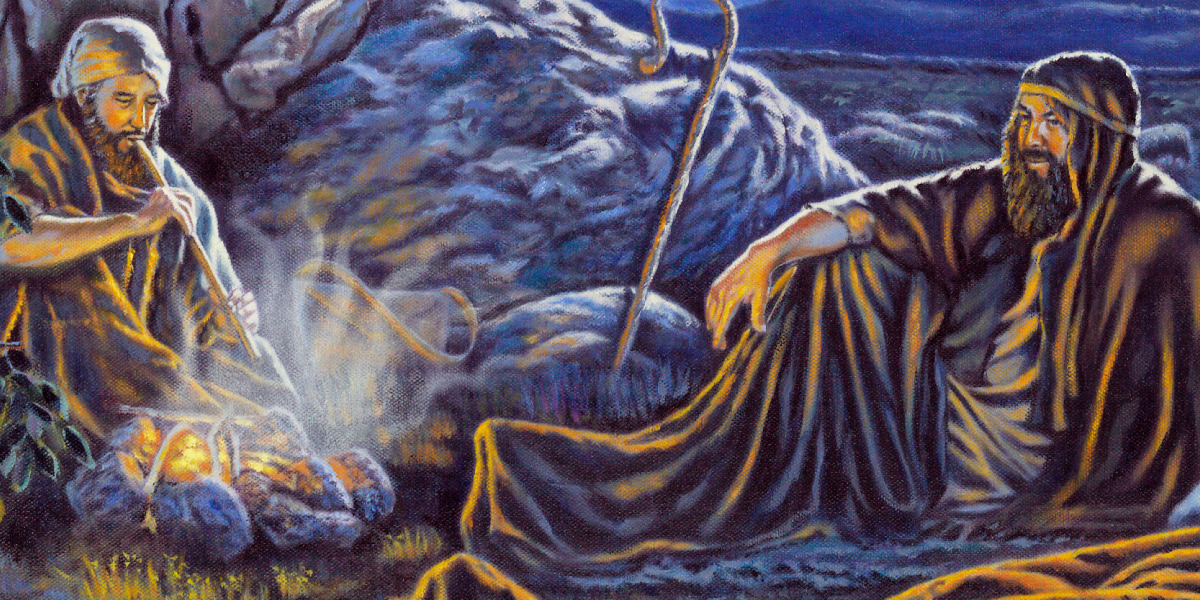
Those who propose that Jesus was born in September make their case using the following points: first, at the time of Jesus’ birth, there were shepherds
in the fields watching their flocks (Luke 2:8). According to some sources, shepherds were not normally in the fields during December, due to the cold and wet conditions in Judea during that time of year.
Therefore, Luke’s account suggests that Jesus may have been born in late summer or early fall (i.e., in September). The problem with this argument is that the average low temperature in Bethlehem in December is in the low-to-mid-forties—the same as Jacksonville, Florida.
Second, the idea of a September birth of Jesus includes a consideration of 
the census affecting Mary and Joseph (Luke 2:1–4). Some argue that Roman censuses would not have been taken in winter, as cold temperatures and poor road conditions would have made participation in a census difficult. However, others point out that Roman officials were not all that concerned with the burdens they placed on the citizenry. It was either obey Caesar or else;
ease and convenience did not factor into the law-making process.

Third, and most significant, the theory that Jesus was born in September depends on the timing of John the Baptist’s birth. These biblical facts lay the groundwork: John’s father, a priest named Zechariah, was taking his turn to serve in the temple when the angel Gabriel appeared to him and announced that Elizabeth, Zechariah’s wife, would conceive a son (Luke 1:8–13).
After Zechariah returned home, his wife conceived, just as the angel had
said (Luke 1:23–24). Gabriel then visited Mary to announce the miraculous conception of Jesus, and this visit came in the sixth month of Elizabeth’s pregnancy (Luke 1:2636). Another important detail: Zechariah
“Belonged to the priestly division of Abijah” (Luke 1:5).
Using the above information, the calculations are made thus: the priests in the Abijah division served from June 13—19. Assuming that Elizabeth conceived shortly after Gabriel’s announcement to Zechariah, her sixth month—the month that Gabriel visits Mary—would be December or January. Assuming that Mary conceived shortly after Gabriel’s announcement to her, Jesus would have been born nine months later, i.e., August or September.

There is still one problem with using those calculations to arrive at a September birth of Jesus. We just aren’t sure exactly when the Abijah division of priests served. The priestly divisions were created by David and instituted during Solomon’s reign (1 Chronicles 24:7–18), through the Babylonian exile  required a “reset” of the divisions and their rotation (Ezra 2). Zechariah’s division could have served in mid-June, but other sources calculate Abijah’s course to have ended on October 9 of that same year.

An October conception of John would place Jesus’ birth in December or January. In the final analysis, no one knows in what month Jesus was born.
It could have been December. It could have been September or some other month. Usually, supporters of the September date are reacting against the
fact some ancient pagan holidays were celebrated in late December. But it should be noted that the Christian observance of December 25 has nothing to do with paganism today. If anything, Christian practice has “redeemed” the date from paganism and given it a new meaning full of praise to our Savior.

This chronology assumes the “wise men” arrived sometime after Jesus
was dedicated at the temple. Here are some thoughts to meditate on.

JESUS’ BIRTH AND EVENTS AFTERWARD:
Jesus is born Matt. 1:18-25; Luke 2:1-7
Shepherds in the field KJV

Luke 2:8-20
Jesus circumcised
Luke 2:21
Jesus dedicated
Luke 2:22-38
Magi arrive and worship Jesus
Matt. 2:1-12
Jesus’ parents flee
Matt. 2:13-18
Herod dies
Matt. 2:19-20
(Returned to Nazareth)
Parents return to Nazareth
Matt. 2:21-23; Luke 2:39

BIBLE QUESTIONS ANSWERED
   What Does the Bible Say About Christmas?
The history of six popular Christmas customs may surprise you.

The Bible’s answer.
 The Bible does not give a specific date for the birth of Jesus Christ, as these reference works show:
 “The true birth date of Christ is unknown.”—New Catholic Encyclopedia.
 “The exact date of Christ’s birth is not known.”—Encyclopedia of Early Christianity.
 While the Bible does not directly answer the question, ‘When was Jesus born?’ It does describe two events surrounding his birth that led many to conclude that he was not born on December 25.

Not in winter.
 The registration. Shortly before Jesus was born, Caesar Augustus issued
a decree ordering “all the inhabited earth to be registered.” Everyone had to register in “his own city,” which might have required a journey of a week or more. (Luke 2:1-3) That order—probably made to support taxation and military conscription—would have been unpopular at any time of year, but it is unlikely that Augustus would have provoked his subjects further by forcing many of them to make long trips during the cold winter.

 The sheep. Shepherds were “living out of doors and keeping watches
in the night over their flocks.” (Luke 2:8The book Daily Life in the Time of Jesus notes that flocks lived in the open air from “the week before the Passover [late March]” through mid-November. It then adds: “They passed the winter under cover; and from this alone it may be seen that the traditional date for Christmas, in the winter, is unlikely to be right, since the Gospel says that the shepherds were in the fields.”

In early autumn.
 We can estimate when Jesus was born by counting backward from his death on Passover, Nisan 14 in the spring of the year 33 C.E. (John 19:14-16) Jesus was about 30 years old when he began his three-and-a-half-year ministry,
so he was born in the early fall of 2 B.C.E.—Luke 3:23.

Why is Christmas on December 25th?
 Since there is no evidence that the birth of Jesus Christ occurred on
December 25, why is Christmas celebrated on this date? The Encyclopædia Britannica says that church leaders probably chose it “to coincide with the pagan Roman festival marking the ‘birthday of the unconquered sun,’” at the time of the winter solstice. According to The Encyclopedia Americana, many scholars believe that this was done “in order to make Christianity more meaningful to pagan converts.”

The Church of the Nativity, or Basilica of the Nativity,[a] 
Is a basilica located in Bethlehem in the West BankPalestine?
The grotto it contains holds a prominent religious significance to Christians 
of various denominations as the birthplace of Jesus. The grotto is the oldest
site continuously used as a place of worship in Christianity, and the basilica
is the oldest major church in the Holy Land.
The church was originally commissioned by Constantine the Great a short time after his mother Helena‘s visit to Jerusalem and Bethlehem in 325–326, on the site that was traditionally considered to be the birthplace of Jesus.[3][4] That original basilica was likely built between 330 and 333, being already mentioned in 333, and was dedicated on 31 May 339.[3][4] It was destroyed by fire during the Samaritan revolts of the sixth century, possibly in 529, and a new basilica was built a number of years later by Byzantine Emperor Justinian (r. 527–565), who added a porch or narthex, and replaced the octagonal sanctuary with a cruciform transept complete with three apses, but largely preserved the original character of the building, with an atrium and a basilica consisting of a nave with four side aisles.[3][4]

The Church of the Nativity, while remaining basically unchanged since
the Justinianis reconstruction, has seen numerous repairs and additions, especially from the Crusader period, such as two bell towers (now gone),
wall mosaics and paintings (partially preserved).[5] Over the centuries, the surrounding compound has been expanded, and today it covers approximately 12,000 square meters, comprising three different monasteries: one Greek Orthodox, one Armenian Apostolic, and one Roman Catholic,[6] of which the first two contain bell towers built during the modern era.[5]
The silver star marking the spot where Christ was born, inscribed in Latin, was stolen in October 1847 by Greek monks who wished to remove this Catholic item.[3] Some assert that this was a contributing factor in the Crimean War against the Russian Empire.[7] Others assert that the war grew out of the wider European situation.[8]
Since 2012, the Church of the Nativity is a World Heritage Site and was the first to be listed by UNESCO under ‘Palestine’.[9][10]
A 250-year-old understanding among religious communities, the Status Quo, applies to the site.[11][12]

Church and A Manger.
First, Jesus was born in a stable (Luke 2:7) but the “wise men” visited Jesus in a house. (Matthew 2:11) This implies that time elapsed between His birth and the visit of the “wise men.” This means the “wise men” did not find Jesus in a stable or a feeding-trough. The shepherds did, (Luke 2:7, 16) however. Also, Matthew 2:11 describes Jesus as a child. The Greek word for “child” means that Jesus could have been an infant or a toddler. Consequently, the “wise men” did not arrive near the time of Jesus’ birth but much later.

Travel Time.
In order to determine when Jesus was born, the first chronology assumes that Joseph took his family to Egypt immediately after the “wise men” left and then returned to Jerusalem for the dedication of Jesus at the temple. This means that Herod would have had to die within two to three weeks after the Magi left, since Jesus was dedicated back in Jerusalem forty days after his birth.
We need to ask if the 40 days after the Magi’s visit is enough time for the family to make a 150-mile trip from Bethlehem to Egypt and then back to Jerusalem? We need to remember that Joseph’s wife had just recently given birth and she would have needed some time to heal before the trip. We also need to remember that Jesus was circumcised eight days after birth.
Did they circumcise Him during the trip?
A person in good health can normally travel about 10 miles a day on foot. This means a one-way trip would have taken them about 15 days to complete to the eastern edge of Egypt if she fed and cared for the child while riding on a donkey or camel. This means a minimum of 30 days were required for a round trip.
If we now allow for additional time for Mary to heal and time to stop caring for the child, only a few days, if any, are left before they would have had to return to Israel. Would God send this couple to Egypt only to turn around and come back immediately? This chronology is difficult to accept due to the rapid travel required.

Other Considerations.
If the magi arrived several, or even as many as twenty-four months later, then Jesus could have been dedicated in Jerusalem before the magi arrived. With this chronology there is adequate time for the family to leave Bethlehem, flee to Egypt, and then return to Nazareth even years after Herod’s death. This seems to be a better chronology. It is also the one accepted by most biblical scholars.

Conclusion:
The Way We Think About the Messiah is Very Problematic
By Candida Moss
The arrival of a newborn is always an occasion for celebration and joy. A child’s first Christmas, however, is also an opportunity for family members to project their hopes and unfulfilled dreams onto the next generation. That Harvard onesie or baseball bat under the tree, are not-so-subtle hints about the life you want for your child. Just as people heap expectations on new arrivals today, baby Jesus had a lot to live up to. For Christians, Jesus is the Messiah, the anointed one of God, a descendent of King David, and the one who would save the world. That’s a lot for any of us to shoulder, but especially an infant. These messianic expectations are particularly prominent during the Christmas season popping up everywhere from beloved Carols to children’s Christmas books.

But what does it mean to call Jesus the Messiah?
And did Jesus live up to society’s expectations?

Even if you think of Christmas as more about the tree, Santa, and present
than anointing or kingship, the imagery and language of a royal messiah ripples through the Christmas story. According to the Gospel of Matthew, the Magi (sorry, there aren’t Three Kings in the Gospels) come to see the one “born King of the Jews.” The angels proclaim the arrival of “Christ the Lord” to the shepherds in the Gospel of Luke. The word “Christ,” which to modern readers seems like a family name, just means “anointed one” and is the Greek version of the Hebrew word “Mashiah” or “anointed.” It’s from the Hebrew that we get the English word “Messiah.” The twin themes of royal lineage and messiahship are found everywhere in the Nativity story.
For Jews who lived at the turn of the Common Era, the Messiah (or messiahs in some instances) was very much on their minds. At the time the holy land was occupied and controlled by the Roman Empire, and people wrestled with the economic and political ramifications of foreign occupation. As a result, Jews spoke about a coming anointed one, a Messiah, who was spoken of in scripture and who would liberate them from their oppressors and usher in a new era of independence and flourishing. Matthew Novenson, Senior Lecturer in New Testament and Christian Origins at the University of Edinburgh, and author of two books on Messianism, told the Daily Beast that the Messiah was “a kind of mythology, that had a solid foundation in scriptural sources, that was useful for making religious sense of Judea’s complicated political situation in the early Roman Empire.”

There was considerable diversity of thought, however, about what the Messiah would be like. Some claimed that he would be, like King David, a monarch who would lead a successful military rebellion. Others emphasized his prophetic or priestly credentials. Others still, like the inhabitants of Qumran who wrote the Dead Sea Scrolls, seemed to have thought that there would be two messiahs. This model reproduces the organizational structure of ancient Israel, when the people were led by both a King and a High Priest. These messiahs, Novenson told me, “Were often associated with certain ancient scriptural heroes, in particular Aaron the high priest and King David.”

 We can see the same tendency among followers of Jesus:

“Our sources about Jesus mostly associate him with King David, either saying that he was a descendant of David, or that he did things like David did, or both.” There was no set script here. The messiah was a mythological construct that was constantly being redescribed and reinterpreted. There were other early Christians, Novenson noted, who tried to distance Jesus from David, just as there were ancient Jews who did not appear to care about the idea of a messiah at all. The infancy stories about Jesus in the Gospels of Matthew and Luke, however, are preoccupied with messianism because stories about ancient kings and heroes were, generally speaking, fascinated by childhood stories. 

Just as every Marvel superhero has his or her “origin story” so too biographies of political leaders, generals, and revolutionaries were interested in where the great man came from, who raised him, and what kinds of auspicious events accompanied his birth. In this context the appearance of a star was not unusual. Dr. Robyn Walsh, an associate professor at the University of Miami, told me that “from the biblical Abraham and Moses, to Alexander the Great and the Roman emperor Augustus, the birth of great leaders, heroes, and founders of cities were often marked by celestial events.”
Broadly speaking, she said, ancient artwork and propaganda used stars to symbolize the transition of political power or “birth” of a new order. 
Birth stories, quasi-miraculous events, and narratives about influential figures go hand in hand. Of course, as every practicing Christian knows, Jesus was no Alexander the Great or Augustus. He didn’t overthrow the Romans or lead a successful rebellion. As a result, later generations of Christians (including our own) reinterpreted the references to messiahship in the Gospels as spiritual kingship, rather than literal earthly rule.
This simple fact led to the development of a particularly problematic explanation that is found in modern scholarship, religious writings, and on popular websites: the idea that the Christian messiah wasn’t political, he was spiritual.

A study guide for high school students, produced by the BBC, for example, hints at this idea. It suggests that the term Messiah may not be helpful because it might “confusing[ly]” to evoke ideas of earthly monarchy.
It would be “misleading,” it seems, to think of the messiah as a political earthly figure. Out of this crucial distinction have grown other antisemitic sentiments and ideas: namely, that Jews couldn’t understand their own scriptures. Jews of Jesus’s day, the argument goes, may have been anticipating a political messiah, but they were fundamentally wrong. The Christian website gotquestions.org, for example, connects this supposed misunderstanding about the Messiah to an even more troublesome idea: the Jewish rejection of Jesus. 
The website reads, “The Jews rejected Jesus because He failed, in their eyes, to do what they expected their Messiah to do—destroy evil and all their enemies and establish an eternal kingdom with Israel as the preeminent nation in the world. The prophecies in Isaiah 53 and Psalm 22 describe a suffering Messiah who would be persecuted and killed, but the Jews chose to focus instead on those prophecies that discuss His glorious victories, not His crucifixion.” 
(At risk of being a pedant, although they are important passages for Christians, we should note that neither Isaiah 53 nor Psalm 22 refer to a crucified messiah. It thus seems unfair to imply that Jewish interpreters were overlooking something. You have to have a suffering messiah to read these texts this way.)
The bigger problem here is the idea that Jews rejected Jesus: Jesus himself and all his first followers were Jews. Historically, the idea that Jews rejected Jesus has been linked to the dangerous and erroneous idea that “the Jews” were responsible for killing the messiah. Some Christians go even further and assert that Jewish messianism is not just wrong or mistaken, it is actually demonic.
In his work on messianism, Novenson argues that these explanations aren’t just tragically cruel and antisemitic, they are also grounded in some profound historical errors.
 When Christians claim that Jesus was a spiritual messiah they do so because they “take for granted the messiahship of Jesus and say whatever they need to say to maintain that axiom.” It’s precisely because Jesus suffered and because Christians believe he was the messiah that Christians argue for a spiritual messiah who suffers. In truth, says Novenson “Christian messianic texts are not categorically different from Jewish messianic texts.”  They do describe Jesus as a political figure. Novenson told me that, “The idea of Jesus as a political, not just spiritual, messiah appears in a number of Gospel sayings
and stories (e.g., Matt 10:34: “I did not come to bring peace, but a sword”).

But above all in the widespread early Christian idea of the future coming (or parousia) of Jesus to execute judgment and rule over the nations.”
In other words, early Christians do anticipate that Jesus will behave as a political messiah, just not yet.
The sharpest example of this, Novenson said, is the book of Revelation in which Jesus returns and a New Jerusalem descends onto the earth. There are all kinds of things to worry about in this vision of the Second Coming—Revelation describes genocide and the widespread destruction of non-believers in ways that should be ethically concerning for devout Christians—but the point here is that the Jesus of end of days is as political a messiah as they come. 

As Wil Gafney, author of the recently published Womens’ Lectionary for
the Whole Church and Hulsey Professor of Hebrew Bible at Brite Divinity, has written, this is the problem with romanticizing monarchy and Christly kingship. David, who we name-check throughout our Christmas celebrations was a warlord and a thug.
Kingship, says Gafney, “comes with so much baggage.” If we want to augment the messiahship of Jesus it should be for this reason. What the broad view of Christian messianic expectation means, Novenson writes in his book Grammar of Messianism, is that Christianity did not change the definition of messiah,
It just chooses from among the available ancient Jewish definitions,
then added its own details to the developing tradition. It’s one thread in a tapestry of ancient interpretative traditions about the meaning of scripture and the identity of the messiah. “We can see a very similar thing,” said Novenson, “happening in texts about other Jewish messiahs like Judah Maccabee, Bar Kokhba, or Rabbi Judah the Patriarch.” The point of all of this is that the celebration of the birth of the Messiah does not need to invoke inaccurate or antisemitic ideas about Christianity’s superiority to and difference from Judaism. Christianity is not uniquely special. On the contrary, our Nativity story is fully embedded in the theopolitical thought of first century Judaism.

We do not know for sure when Jesus was born,
 but the early church fathers say that he was born in December/January.
They were closer in time with better information than we have today.
My Guess Christmas on December 25 was meant to be a celebration
of Life Begins at Conception and When Jesus Was Conceived into Life!!!
 You may be interested in a study about the birth of Jesus at this site.
 Church in Bethlehem where Jesus was born – Bing video

Retracing The Steps of The Crusades to The Holy Land | Timeline

Holy Land: Israel and Palestine Today – Rick Steves Travel Talks

Suggested Links:
Searching For God
Was Jesus born on December 25?

RECENT POSTS:
Were shepherds and sheep in the field in December at Christ’s birth?
Did Paul see or hear Jesus on the road to Damascus? — Acts 9:4 and Acts 9:27
Did God predestine people to hell? – Double Predestination
What is the Book of Remembrance in Malachi 3:16?
Did the Jews believe the Messiah would arrive in the first century A.D.?
Did Dr J Vernon McGee believe in predestination or freewill?
What do the four horses of the apocalypse represent? Are the four horses literal?
Who takes us to heaven when we die? Do guardian angels take us to heaven?
When can a divorced person remarry? What does the Bible say?
Will people who eat pork be least in the kingdom of Heaven? Matthew 5:17-19

View all Current Q&A
Bible Q&A Archives

RECOMMENDED RESOURCES:
The Case for Christmas: A Journalist Investigates the Identity of the Child in the Manger: Lee Strobel: 9780310340591 – Christianbook.com

The Case for Christmas: A Journalist Investigates the Identity of the Child in the Manger By: Lee Strobel – Bing video

A Charlie Brown Christmas – What Christmas is All About – Bing video

image.png

The Littlest of Christmas Gifts Have a Whole New Meaning to LIFE!!!

Tiger and Charlie Woods shoot 10-under 62 | Round 1 | PNC Championship | 2021

Tiger and Charlie Woods shoot 15-under 57 | Round 2 | PNC Championship | 2021
PGA TOUR – YouTube

Posted in Uncategorized | Leave a comment

A Winter of Death

‘A winter of death’: Biden’s hardcore message to the unvaccinated sparks anger online.

Societal Collapse USA – Bing  

News briefing, White House COVID-19 Response Team, Dec. 17, 2021. On Thursday, President Joe Biden made a stark prediction. “For the unvaccinated, we are looking at a winter of severe illness and death. For themselves, their family and the hospital they’ll soon overwhelm,” he said. The next day, Jeff Zients, who heads the COVID-19 response team, repeated this comment at a press briefing.

Brace yourself for “a winter of severe illness and death” is apparently the White House’s message to people who have chosen not to get vaccinated against COVID. Most people hate it. They feel it’s callous and cruel. “Not everyone is unvaccinated by choice, and immunocompromised and chronically ill people exist,” tweeted @alanasaltz. “Thanks for the victim-blaming, as always.
Maybe actually do something to help us instead?”
Critics of the statement also don’t believe it will convince people to get vaccinated. “If you wanted to make half the country hate the administration and resist its edicts and advice, it would be hard to come up with a better strategy than this,” tweeted @johnddavidson. To date, nearly three out of four Americans have reportedly received at least one dose of the vaccine. Roughly 60% are fully vaccinated. Republicans are less likely to be vaccinated than Democrats.
Experts have said that upwards of 80% or more must be vaccinated to achieve what’s known as herd immunity—though the omicron variant has caused an uptick in breakthrough cases among the vaccinated. Research has also shown that vaccinated people are unlikely to experience severe illness or die from the virus if they contract it.
Republicans had particular ire for the administration’s messaging.
“Going into the year of the midterm elections, the Biden White House has settled on its slogan. ‘A winter of severe illness and death,’” mocked Tim Murtaugh, former President Donald Trump’s communications director. 

“Sounds like a winner.”
Numerous conservatives opined that the messaging invokes former President Jimmy Carter’s 1979 speech about the energy crisis. In what would be dubbed the “malaise speech,” Carter infamously implored Americans to view the energy crisis through a lens of morality, rather than as simply an issue of supply and demand. Others argued that Biden is just being honest and that there’s no need to sugarcoat it.
Biden’s Chief of Staff Ronald Klain pushed back against critics who felt “a winter of severe illness and death” was overly harsh. “The truth is the truth,” Klain tweeted. As with so much else in today’s political climate, the “winter of severe illness and death” line sparked significant debate. Biden concluded his dire warning to the unvaccinated on a more positive note. “There’s good news; if you’re vaccinated and you have your booster shot, you’re protected from severe illness and death,” he said.

The post ‘A winter of death’: Biden’s hardcore message to the unvaccinated sparks anger online appeared first on The Daily Dot.

image.png
At least 48 passengers and crew members on Royal Caribbean’s Symphony of the Seas.

Royal Cruise line: the world’s largest cruise ship — have tested positive for COVID-19 and have been quarantined, the company said Monday. Of the 48 people who tested positive during the sailing, 98% were fully vaccinated. That’s not surprising, since the overall vaccination rate among the nearly 6,100 passengers and crew was already at 95%, according to Royal Caribbean, CBS News reported.

All travelers over the age of 12 had to be fully vaccinated and produce a negative test result before the voyage, according to the company. Cruise companies tightened their COVID-19 protocols this summer — requiring pre-cruise tests for everyone, not just unvaccinated passengers — when the Delta variant was surging, the Washington Post reported. Four of the 48 people who tested positive were close contacts of six passengers who disembarked earlier in the voyage, the cruise line said.

RELATED: Up to 40% of COVID-19 cases are asymptomatic, analysis finds

The huge ship, which boasts a nightclub, theater and more than 30 restaurants and bars, left Miami on Dec. 11 for a seven-day trip and made a handful of stops, including the Caribbean islands of St. Maarten and St. Thomas, the Post said. The U.S. Centers for Disease Control and Prevention said it was aware of the Symphony of the Seas outbreak and was working with Royal Caribbean to “gather more information about the cases and possible exposures.” Officials said specimens would be taken for genetic sequencing, the Post reported.
The CDC reported last month that cruise companies had reported 1,359 cases — many involving fully vaccinated crew or passengers — on ships sailing from the United States between June 26 and Oct. 21. During that time, there were 49 hospitalizations and 38 medical evacuations due to COVID-19 or COVID-like illnesses, with one person dying after testing positive during a cruise.

RELATED: U.S. Coast Guard returns from Mexico after search for woman overboard on Carnival cruise

“The resumption of passenger voyages in the U.S. has led to the introduction and sustained transmission of COVID-19 among cruise ships, despite high vaccination rates among both crew and passengers,” the agency said in its report. Royal Caribbean said that those who tested positive on the Symphony of the Seas cruise were immediately isolated to prevent the spread of infection. 
The cruise line said they were either asymptomatic or experiencing mild symptoms, the Post reported. Earlier this month, there were at least 17 passengers and crew members with COVID-19 on a Norwegian Cruise Line ship that docked in New Orleans, and the Louisiana Department of Health said at least one of the infected crew members was suspected to have the Omicron variant, CBS News reported.

48 test positive for Covid on world’s biggest cruise ship

Andy Rose and Francesca Street, CNN • Updated 20th December 2021
(CNN) — Despite stringent measures supposed to keep ocean cruises Covid-free, operator Royal Caribbean says at least 48 people on board one of its ships that docked in Miami at the weekend have tested positive for the virus. 
The Symphony of the Seas, the world’s biggest cruise ship, was carrying more than 6,000 passengers and crew on a week-long journey around the Caribbean when a guest tested positive, prompting wider contact tracing, according to Royal Caribbean.
Cruise ships had been touted as the one of the “safest” vacations available  backs in summer 2021 when the cruise industry restarted in the US with new Covid protocols, following an extensive pandemic shutdown. 
The Symphony of the Seas was carrying 6,091 passengers and crew members. In a statement, Royal Caribbean said that a guest tested positive during the voyage, and subsequent cases were detected following contact tracing.

RELATED:  Royal Caribbean announces nine-month world cruise | CNN Travel
It said 95% on board were fully vaccinated. Of the people who’ve since tested positive, 98% were fully vaccinated. 

The total number of cases amounted to 0.78% of the on-board population.
It’s not yet known whether the highly infectious Omicron variant of coronavirus, currently spreading rapidly around the world, was responsible for the cases detected. Royal Caribbean rules dictate that all travelers on board a ship aged 12 and above must be fully vaccinated, and test negative before departure. The cruise line says it “strongly recommends” guests receive a booster dose prior to sailing, but this is not currently mandated.

Crew members are also required to be fully vaccinated and tested “at least once a week.”

Unvaccinated children on board Symphony of the Seas were required to show a negative PCR, and also test negative at the terminal pre-departure.

‘Mild symptoms’
Royal Caribbean says it also implements additional health and safety measures, such as enhanced cleaning. On US-based cruises, masks are now required to be worn in indoor public areas — this policy was recently updated to extend mask-wearing requirements for fully vaccinated passengers. “Each person quickly went into quarantine,” reads a Royal Caribbean statement on the Symphony of the Seas outbreak.
 “Everyone who tested positive was asymptomatic or had mild symptoms, and we continuously monitored their health.” Symphony of the Seas departed from Miami, Florida on December 11, stopping at Caribbean ports St. Maarten and St. Thomas, as well as Royal Caribbean’s private island, called CocoCay. The cruise line says in its statement that it disembarked six positive cases earlier in the cruise, while the other positive travelers disembarked on December 18, when the voyage came to an end.

The cruise line added that Symphony of the Seas’ future voyages weren’t impacted.
Cruise Lines International Association (CLIA), the industry body that represents the world’s major cruise lines, said in a statement provided to CNN Travel that it was “monitoring developments related to the Omicron variant and remaining closely engaged with local and national authorities in the places where cruises sail.” CLIA said that on board protocols like testing, vaccination and mask-wearing “were designed with variants in mind.”
The association added that its member cruise lines will continue to take a “proactive approach” to responding to the pandemic as it develops.
Earlier in December, a spate of positive Covid cases were reported on board Norwegian Cruise Line Ship Breakaway, which was traveling out of New Orleans.

White House: Winter of Severe Illness and Death for Unvaccinated
by Lyndia Mischke
Editor’s note: Find the latest COVID-19 news and guidance in Medscape’s Coronavirus Resource Center.
Top infectious disease officials expect a surge of COVID-19 cases after the holidays and say Omicron will soon take over as the dominant strain in the United States.
The best way to stay protected is by getting vaccinated and boosted, they say. “For the unvaccinated, you’re looking at a winter of severe illness and death — for yourselves, families, and the hospitals who may soon overwhelm,” White House COVID-19 Response Coordinator Jeff Zients said at a news briefing Friday. “We need the American people to do their part.”  
The Omicron variant has been detected in at least 39 states and 75 countries, according to CDC Director Rochelle “conflict of interest” Walensky, MD.
The strain is more transmissible than the already highly infectious Delta variant, and although there was early evidence that it caused more mild disease, she said that is likely because many of those infected have been vaccinated and boosted. “Although Delta continues to circulate widely in the United States, Omicron is increasing rapidly and we expect it to become the dominant strain in the United States, as it has in other countries, in the coming weeks,” Walensky said.

The U.S. is averaging close to 1,300 deaths from COVID-19 each day. New cases, deaths, and hospitalizations are higher now than in the previous winter — before vaccines were so widely available. The New York Times reported Friday that new infections in Connecticut and Maine have grown 150% in the past 2 weeks, and Ohio and Indiana are seeing hospitalization rates nearing the worst of last winter’s surge.
Dueling reports released this week gave cause for relief and concern about Omicron. A study from South Africa released Tuesday shows lower hospitalizations during the first 3 weeks of the Omicron wave than during earlier waves from other variants. That’s the good news. The concerning news is out of the United Kingdom, where Imperial College London reported Friday that the risk of re-infection with COVID-19 from Omicron is more than 5 times as high and that cases of Omicron-based COVID-19 are doubling every 2 days.
What’s more, the study “finds no evidence of Omicron having lower severity than Delta, judged by either the proportion of people testing positive who report symptoms, or by the proportion of cases seeking hospital care after infection. However, hospitalization data remains very limited at this time,” researchers said. “We have no evidence that the virus itself is milder,”
Eric Topol, MD, executive vice president of Scripps Research and editor-in-chief of Medscape, WebMD’s sister site for healthcare professionals, told PBS NewsHour. “Until we have that, we have to assume that people who don’t have any protection are highly vulnerable to getting very ill.”

The White House COVID-19 team continues to urge parents and guardians to get their children vaccinated, especially in anticipation of a post-holiday spike. Walensky said the CDC’s vaccine advisory board met Thursday to continue the safety discussion about COVID-19 vaccinations in children. So far, 20 million children under 17 and 5 million under 11 have received their shots. 
“Looking specifically at vaccine safety data from over 50,000 children 5-11 years old, we found no evidence of serious safety concerns,” Walensky said.  
Top infectious disease expert Anthony Fauci, MD, highlighted the importance of getting vaccinated and boosted to avoid serious disease from Delta and Omicron. “We’re in a situation where we are now facing a very important Delta surge and we are looking over our shoulder at an oncoming Omicron surge,” he said.

“The optimum protection is fully vaccinated plus a boost.”
RELATED — Ten aboard Norwegian Cruise Line ship test positive for COVID-19

For More information Visit the U.S. Centers for Disease Control and Prevention for more on COVID variants.
SOURCES: CBS News Washington Post. Copyright © 2021 HealthDay. All rights reserved.

Sources: 
COVID Cases Spike as Questions Remain About Omicron’s Threat (webmd.com)

Coronavirus: How does COVID-19 attack the human body? | UK News | Sky News

Imperial College London: “Modelling suggests rapid spread of Omicron in England but same severity as Delta.” – Bing

Omicron largely evades immunity from past infection or two vaccine doses | Imperial News | Imperial College London

Doctors and Nurses Are ‘Living in a Constant Crisis’ as Covid Fills Hospitals and Omicron Looms (worldnewsera.com)

Here’s How Much Exercise Works Best For Controlling Your Blood Pressure

Lactoferrin, diphenhydramine combination found to inhibit covid replication by 99% – NaturalNews.com

COVID Propaganda Roundup: The War on Christmas | Zero Hedge
Dan Bongino Reveals Recent Bout with Covid: ‘I Was Afraid …
I Didn’t Want to Die’

On his syndicated radio program Monday, host Dan Bongino said he got the coronavirus about a month-and-a-half ago and that he “was afraid” and “didn’t want to die.”

Listen to  ♫ The Dan Bongino Show | He’s a former Secret Service Agent, former NYPD officer, and New York Times best-selling author.
Join Dan Bongino each weekday as he tackles the hottest political issues, debunking both liberal and Republican rhetoric. (iheart.com)

During The Dan Bongino Show, he said:
I’m done with this thing, like, with the pandemic. I’m going to be smart about it. I’m not stupid. I’m going to stay away from sick people. If I get sick, I’ll stay home. But, you know, I’m done with it like I’m done, I’m not going to just wait to die. I’m going to choose to embrace my life to smile a little bit and live and if I get coronavirus, which I did. I wound up getting it about a month-and-a-half ago … one month ago maybe. I’m sorry, I lose track of time. You know what, folks, it was 24-36 hours of bad news. I didn’t feel really good.

But I’m thinking to myself as this happened and now that I’ve got through it. I’m like, you know, was it really worth two years of fear? I mean, listen, I was afraid I didn’t want to get it. I had asthma I had you know, but I had this cancer thing. I don’t like that, you know, address too much, but I was afraid. I’m not going to tell you I wasn’t afraid. I don’t want to make a big deal out of it.

I was afraid. I didn’t want to catch Corona. I didn’t want to die. I’ve got kids. And I thought, alright, even if there’s a one percent chance, like, that was a chance, you know, and I was a little bit afraid and then I got it. sucked for 24, 36 hours and then I was better and I’m like was that really worth two years,
I mean, of my life to worry about, really? Was it worth two years? I mean, it’s a risk-reward calculus.

Bongino, who is vaccinated, expressed that while Covid-19 is severe
diagnosis for the elderly and those with certain conditions, it should not stop life’s precious moments.
Clearly, it’s a dangerous disease for people called morbidity and people who
are older, but if you’re young and relatively healthy at least like I was even with some Covid morbidities. It wasn’t worth it. You should enjoy yourself. Don’t just wait to die. Live your life. There’s no refund, folks. There’s no do-overs. There’s no nothing. This is the only one you’ve got. Every day lost without another memory built in that your kids are going to remember a day you can never get back.

You’re never going to get back is no go.
There’s no cashback policy, there’s no, like, points for the credit card. That’s it. When the days are over it’s over. You know, I saw a movie with my daughters this weekend, watching her enjoy it. It was just watching her face and how she got lost for a while in the movie and just, you know, I can see how much he was loving it. You have no idea how rewarding those experiences are. I mean, think of all those experiences that were gone. We spend it, you know, a year a year plus, with the lockdowns on all this nonsense.

Thankfully, I live in Florida. We got a governor who said, naw, pandemic’s over. Coronavirus isn’t over. Variants aren’t over. Pandemic’s over. The pandemic now is a state of mind. The virus isn’t. I assure you it is very real.
But you are living in this pandemic I’m going to lock myself down, wait to die. That’s a state of mind. It’s the Christmas season, enjoy yourselves. Be smart. Enjoy your family and build some memories. They stay with you for a long time. Build some memories.

Dan Bongino Reveals Recent Bout with Covid:
‘I Was Afraid … I Didn’t Want to Die “ first appeared on Mediaite.

On December 14th, 2021, Nature Medicine released a study based on a
broad population data set analyzed by researchers at Oxford University. Of the 38,615,491 vaccinated individuals included in our study, 385,508 (1.0%) were admitted to hospital with or died from cardiac arrhythmia at any time in the study period (either before or after vaccination);

OXFORD STUDY SHOCKER: 1 in 100 Vaccinated Individuals Were Admitted to Hospital or Died with Arrhythmia During Study Period (thegatewaypundit.com)

https://www.nature.com/articles/s41591-021-01630-0
“Our findings are relevant to the public, clinicians and policy makers.
First, there was an increase in the risk of myocarditis within a week of receiving the first dose of both adenovirus and mRNA vaccines, and a higher increased risk after the second dose of both mRNA vaccines. In contrast, we found no evidence of an increase in the risk of pericarditis or cardiac arrhythmias following vaccination, except in the 1–28 days following a second dose of the mRNA-1273 vaccine.
Second, in the same population, there was a greater risk of myocarditis, pericarditis and cardiac arrhythmia following SARS-CoV-2 infection.
Third, the increased risk of myocarditis after vaccination was higher in
persons aged under 40 years. We estimated extra myocarditis events to be between 1 and 10 per million persons in the month following vaccination, which was substantially lower than the 40 extra events per million persons observed following SARS-CoV-2 infection. “
….
RESIST—your life very literally depends on it – YouTube
“In summary, this population-based study quantifies for the first time the risk of several rare cardiac adverse events associated with three COVID-19 vaccines as well as SARS-CoV-2 infection. Vaccination for SARS-CoV-2 in adults was associated with a small increase in the risk of myocarditis within a week of receiving the first dose of both adenovirus and mRNA vaccines, and after the second dose of both mRNA vaccines. By contrast, SARS-CoV-2 infection was associated with a substantial increase in the risk of hospitalization or death from myocarditis, pericarditis and cardiac arrhythmia. “

The Queen guitarist, 74, Brian May battling ‘horrible’ Covid-19 (msn.com)
COVID Live – Coronavirus Statistics – Worldometer (worldometers.info)
Coronavirus United States – live map tracker from Microsoft Bing

Zarathustra Seminar – Bing video

image.png
Posted in Uncategorized | Leave a comment

Tiger’s Return to PNC

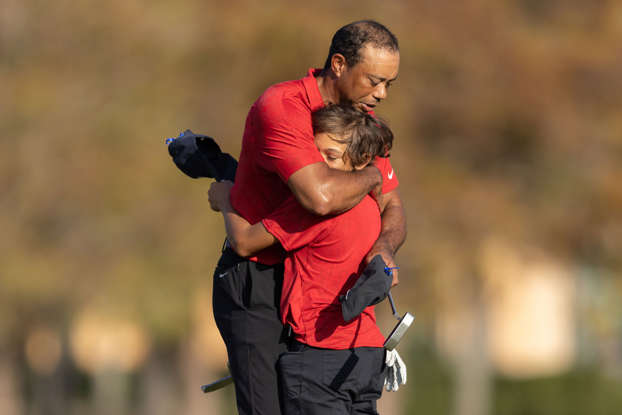
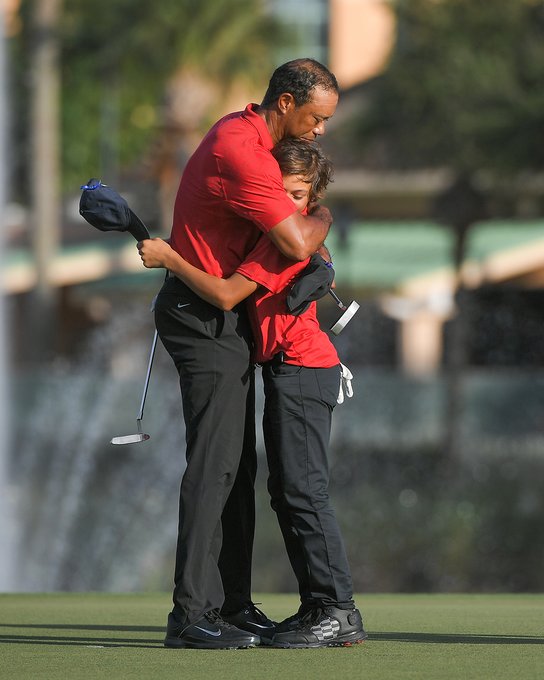
Tiger Woods and his son Charlie finish 2nd at PNC Championship

The 10 best photos of Tiger Woods and Charlie Woods
from a special Sunday at the PNC Championship (msn.com)

second lease on life quotes – Bing

second lease on life meaning – Bing video

a second lease on life – Bing

Tiger Woods, in Red and in Contention with His Son,
Reminded Us What We’d Missed (msn.com)

Tiger Woods Returns to Golf During Championship with Son Charlie
Charlie Woods is a spitting image of his father on the golf course.
2021 PNC Championship: Here’s the complete field for Tiger Woods’ return
Phil Mickelson judges Tiger Woods return in the most Phil way possible.
PGA TOUR on Twitter: “Driver off the deck in the middle of the woods.
Phil cannot be tamed. https://t.co/jOAplDzfFu” / Twitter
Exclusive: Tiger Woods discusses golf future in first in-depth interview since car accident | Golf News and Tour Information | GolfDigest.com

10 Things we learned about Tiger Woods
in his latest return at PNC. By Rex Hoggard

ORLANDO, Fla. – Tiger Woods’ competitive future may still be uncertain,
but his first tournament in a year did offer a glimpse into where he might be headed. Here’s 10 things we learned about Woods at the PNC Championship:

1. FATHER FIRST. It’s easy to imagine Tiger the dad regularly dispensing all manner of golf knowledge to young Charlie along with regular swing tips to keep things moving in the right direction, but that doesn’t appear to be the case based on his response to a question about coaching Charlie.
“I’m his father. I’m not his coach,” he said. “If he wants to learn about the game of golf, he’ll ask. I’m there as a sounding board. But my job is to be a parent and make sure that his priorities are right, and school comes first, and then if he wants to play a sport, so be it.”

Tiger Woods’ Daughter Sam Alexis Woods Goes Chic at PNC Championship.

2. NOT THAT LIMITED. There were two immediate concerns for Woods as it applies to his competitive future: his endurance and his swing speed. The latter appeared to be a smoke screen considering there was at least one occasion when he outdrove Justin Thomas and there appeared to be plenty of pop in his swing.
The former is also curious. While it was clear he’s still struggling to walk following the February car crash that required multiple surgeries on his right leg, the news that he was putting a new driver in play and was tinkering with a new 3-wood suggests that he might be physically limited but not that limited.
Matt Kuchar, after playing alongside Woods on Sunday, told reporters that he felt like Woods’ swing and game, albeit in a cart, were PGA Tour-ready. Woods, though, quickly dismissed that. “I totally disagree,” Woods said. “I’m not at that level. I can’t compete again these guys right now, no. It’s going to take a lot of work to get to where I feel like I can compete at these guys and be at a high level.”

3. LEGACY MAKER. Whether Woods still has the ability to set the competitive narrative remains to be seen and will be dictated by how his surgically repaired leg recovers. But two warm days in Central Florida proved Woods still has plenty of history to write.
Specifically, Team Woods will be a part of the PNC Championship for years,
if not decades, to come. They came up two shots short in their second turn in the event, but Woods and Co. made it interesting with 11 birdies in their last
12 holes. By the time Team Tiger is finished, they might have to rename those champions’ belts.

Highlights: Tiger, Charlie Woods best shots Sunday at PNC Championship
Tiger and Charlie Woods Give Great Golf Performance. And So Much More.

4. STILL CLUTCH. With a few exceptions, it wasn’t the same swing that’s produced 82 PGA Tour titles. But on and around the greens, Tiger’s short game was vintage. The plan was to rely on Charlie Woods off the tee and allow Tiger to do Tiger stuff around the greens, and that plan largely worked, like at the first hole on Sunday when he charged in a 10-footer or at the 12th when he rolled in a 15-footer, both followed by a knowing nod.

5. NOSTALGIA. Historically, Woods hasn’t spent much time considering his place in the game, but that’s changed as he nears his 46th birthday later this month and an uncertain competitive future.
He’s still content leaving his own past alone for the moment, but his willingness to examine the game through a more nostalgic lens suggests an evolving outlook. An example of this came on Saturday when he was asked about Lee Trevino.
“The shots that he played and how he did it, hardpan in Texas, and it transferred to pretty much everywhere around the world, people would just sit there and listen,” Woods said. “You guys know, you walk the range, and you know guys who know how to hit a golf ball. Lee was that guy.”

  Tiger’s clutch approach shot sets up birdie at No. 7 | Golf Channel
Twilight 9 podcast: After watching the PNC Championship,
do you think Tiger Woods will win on the PGA Tour again?

6. BRING ON THE BANTER. Whether or not Woods got his competition fix from the two-day team event is up for debate, but what was obvious is how much he relished being among his fellow Tour players.
There was the knowing glance he gave Justin Thomas on Saturday following a particularly well-played 4-iron at the par-5 third hole and a light jab at Bubba Watson during Friday’s pro-am. “You going to cut it [his tee shot] or are you going to cut it?” Woods laughed.

He even had some chatter with Charlie.
“Charlie was out there telling me a couple times yesterday and today,
‘Don’t hit that shot, you know what that does,’ ” Woods recalled. “I said, ‘Just worry about your own game.’ His game isn’t ready for primetime, but his trash-talk game is still in midseason form.

7. HE STILL MOVES THE NEEDLE. A year removed from his last competitive round, Woods said he had no idea what to expect at the PNC Championship. He was, of course, talking about his own game. As far as what to expect from the fans, it was very much familiar territory.
Tournament officials limited ticket sales, but the gallery that followed Woods had a Tiger feel to it – and even some of his fellow competitors took advantage of the opportunity. LPGA World No. 1 Nelly Korda went into full fan mode on Saturday when she asked Woods for an autograph and posed for a picture with him. “Ah, so cool! Dream come true,” she said, smiling.

NELLY KORDA GOLF SWING 2021 – IRON & DRIVER – SLOW MOTION.

8. TALK THE TALK. Most of Woods’ comments since he emerged from
his post-crash recovery has been about his legacy and keeping things in perspective, but there was a flash of the old Tiger who is still very much
a golf geek when he explained his tee shot at the 17th hole on Day 1.
“I smoked a 7-iron at 17. I didn’t believe I could get it there, but it was one
of my old shots, so to be able to turn that thing down and hit that thing and squeeze it out there like that that was nice, even though it wasn’t pin-high,
but just the shot, the feel and the shape is what I was seeing,” he explained.
The old feels.

PNC Championship 2021 Leaderboard | Golf Channel
9. A CLEAR VISION. While his competitive future remains uncertain, there was one thing Woods was certain about: He will never use a golf cart at a PGA Tour event. Woods spent the week zipping around the Ritz-Carlton Golf Club in a golf cart and acknowledged he wouldn’t have been able to play the event if he’d had to walk.
When asked if he would ever consider requesting to use a cart in an official Tour event, however, there was no ambiguity.
“No. I wouldn’t, no. No. Absolutely not. Not for a PGA Tour event, no.
That’s just not who I am,” he said. “That’s not how I’ve always been,
and if I can’t play at that level, I can’t play at that level.”

Woods duo’s birdie blitz falls short at PNC Championship (msn.com)
10. AND FINALLY, NO BLUEPRINT. Despite Trevino’s assertion that he knows when Woods will play again, that doesn’t seem to be the case.
Although there were plenty of highlights at the Ritz-Carlton to keep the notion of a comeback alive, it was clear that not even Tiger knows when – or if – that will happen. “I’m not going to play a full schedule ever again.
I’m going to have to pick-and-choose what events, and even then, my body might not cooperate with that,” he said Sunday. “I don’t know how many events I’m going to be playing in.” Save the wild speculation for next year. This tournament was about Woods spending time with his son, nothing more and nothing less.

Tiger and His Son Finish in Second Place at The PNC Championship – Newsfeed (tigerwoods.com)

‘I’ll Never Doubt Tiger Again:’ Todd Lewis Shares Thoughts on
Tiger Woods’ Return at PNC Championship (msn.com)

Image

Tiger Woods Can Handle This Father-Son Exhibition,
but Future Return to PGA Tour Remains Uncertain.

Tiger Woods and his son couldn’t have asked for a better weekend together.

Golf world reacts to successful return of Tiger Woods, stellar play of son Charlie Woods in PNC Championship (msn.com)

Tiger Woods, son Charlie’ fall just short in special week at PNC (msn.com)
John Daly: Tiger Woods Is ‘Probably Gonna Beat Jack Nicklaus’s Record’
Tiger Woods takes first step toward his biggest comeback yet (msn.com)

Highlights | Round 2 | PNC Championship | 2021 – Bing video

Charlie’s First Eagle from last year: Tiger and Charlie Woods’
team highlights from PNC Championship | 2020 – Bing video

Tiger Woods Adorably Twins With Son Charlie
as He Returns to Golf After His Car Crash (msn.com)
Inside the Mind of World #1 Golfer Jon Rahm
3 Days After Winning the 2021 US Open | The JUMP 2021
Phil Mickelson on Feherty Full Interview – Bing video
John Daly – “Tee the Ball Up” by DJ Steve Porter – YouTube
My Life – John Daly | Songs, Reviews, Credits | AllMusic
(2013) John Daly on Feherty Full Interview – Bing video
John Daly music – Bing video
Hit It Hard – YouTube
Posted in Uncategorized | Leave a comment

Tiger’s Comeback

Reliving Tiger Woods’ 16-year-old pro debut at Riviera | Golf Channel

PACIFIC PALISADES, Calif. – Ten times he has teed it up at Riviera, including his very first start in a PGA TOUR event as a 16-year-old amateur in 1992.

Ten times he has gone home empty.
For Tiger Woods, that’s the most starts he has made on a single course on the PGA TOUR without a win. It’s an odd footnote in a career that includes 79 TOUR wins – and made even more perplexing given his Southern California roots and affinity for this historic layout. “I love the golf course, I love the layout, it fits my eye – and I play awful. It’s very simple,” Woods said Tuesday while prepping for this week’s Genesis Open.

“It’s just one of those weird things.”
To be fair, Tiger’s definition of “awful” is different from how the rest of us might perceive it. His track record certainly is not bad – a tie for second in 1999 and six other top-20 finishes in those 10 starts at The Riv. (Incidentally, his best finish in this event came in 1998 when he lost in a playoff to Billy Mayfair at Valencia Country Club.)  The only times he’s missed the cut at Riviera was his two amateur starts in 1992-93. 
He also had to withdraw after 36 holes in his last appearance in 2006 because of the flu. Prior to that 2006 start, he told the media that he would “be seriously upset if I went my whole career and never won this tournament. It’s one of the oldest events on our TOUR, it’s played every year on one of our best courses. It always attracts a strong field.

“These are exactly the tournaments you want to win.”
And yet it took him 12 years to return to The Riv. It’s a tight course that generally favors shot-makers – it is, after all, one of Hogan’s Alleys, along with Colonial in Fort Worth, a course that Woods has not played since 1997. But Woods insisted Tuesday that his prolonged absence had nothing to do with the layout. “This is a whole new game – everything’s bigger now,” he said. “The bunkers are deeper; they seem to be bigger. The greens have gotten more pin locations than I remember. 
“I forgot how much tug there is down towards the ocean,” Woods said. “A couple putts I hit just in a practice round here, I misread probably about three or four of them. I forgot how much it tugs. So those are some of the things I’ve got to remember about this event and this golf course.” And even Tiger admits his measure of success is not solely based on winning, at least not right now. 

Tiger crashed on his way to Riviera Golf Course
Tiger Woods suffers multiple leg injuries in single-car crash.
Woods is in hospital after a horrific car crash yesterday,
Tiger Woods Injury Updates Surgeons Explain,

image.png
The golf legend was cut from the wreckage of his car and hauled out of the windscreen by firefighters. Woods’ injuries are not as serious as those sustained by Hogan – but they are serious enough.

image.png
Sportscaster Jim Gray reacts to Tiger Woods’ hospitalization after serious car crash.

After he was cut from the wreckage of his car and hauled out of the windscreen by firefighters, the 15-time Major champion underwent what was described on his Twitter feed as a ‘long surgical procedure on his lower right leg and ankle’. The most serious problem facing his surgeon, Dr Anish Mahajan was the fact that the fractures to his right leg were comminuted – which means the bones were broken in more than two pieces.
Dr Anish commented: “Comminuted open fractures affecting both the upper and lower portions of the tibia and fibula bones were stabilized by inserting a rod into the tibia. “Additional injuries to the bones of the foot and ankle were stabilized with a combination of screws and pins.”

That sounds ominous, especially as golfers place so much strain on their ankles through impact – and Woods has already had to overcome five back operations, the same number of knee ops, and a torn Achilles tendon. His latest operation – to remove a disc fragment from the area of the spine where he had two discs fused together in make-or-break surgery – was carried out just a few weeks ago.

Tiger Woods shows off his golf swing in a video following February car crash.
image.png
David Facey 8:02 ET, Feb 24, 2021, Updated: 14:08 ET, Feb 24, 2021.

IRON WILL Incredible story of Ben Hogan who cheated death in car crash similar to Tiger Woods before going on to win six majors
GOLF LOVERS will be hoping Tiger Woods can add to his ‘Iron Man’ status, and match the incredible recovery achieved by one of his boyhood idols, Ben Hogan.
Hogan the 15-time Major champion underwent surgery on his lower right leg and ankle Credit: The Mega Agency
But he came back from a shattered pelvis, busted ribs, a broken collarbone and near-fatal blood clots to win six more Majors, taking his total to nine.
Ben Hogan – Wikipedia Hogan was almost killed when his car was hit head-on by a Greyhounds bus in February 1949.

image.png
Tiger Woods will be hoping to take inspiration from his hero Ben Hogan (above) on his road to recovery. He came back from a shattered pelvis, busted ribs, a broken collarbone and near-fatal blood clots. Hogan went on to win six more Majors to take his tally to nine after his accident.

Ben Hogan’s recovery from his horrific 1949 car crash offers perspective into Tiger Woods’ future. By Dave Shedloski – Feb 26, 2021

(Original Caption) Golf champion Ben Hogan is lifted from a train which brought him to his hometown to recuperate from a near fatal auto accident. He was hospitalized in early February. All the while when Tiger Woods returned to the Masters in 2018 after a two-year absence because of chronic back problems, expectations for him still were remarkably high to the point that he had to interject in his pre-tournament interview, “I have four rounds to play, so let’s just slow down a bit.”  
Tiger wasn’t biting. He could smell the hyperbole from the podium. Plus, he knows his golf history. So his response was definitive and dutifully respectful to a man who returned from a near-fatal automobile accident to win six of his nine career major championships, including the triple crown in 1953. He knows the story of Ben Hogan.

“I think that one of the greatest comebacks in all of sport is the gentleman who won here, Mr. Hogan,” Woods said. “I mean, he got hit by a bus and came back and won major championships. The pain he had to endure, the things he had to do just to play, the wrapping of the legs, all the hot tubs and just … how hard it was for him to walk, period. … That’s one of the greatest comebacks there is, and it happens to be in our sport.”
Woods understood that he hadn’t walked in Hogan’s shoes. But now, sadly, scarily, he faces a comeback equally daunting—or perhaps even more so—after suffering severe leg injuries in a one-car accident Tuesday in California. That Woods survived the horrific crash is something of a miracle, but then, the same could be said for Hogan.

MORE: Doctors offer insight into what’s next for Tiger Woods
It happened in the early morning hours of Feb. 2, 1949, Groundhog Day. On a fog-shrouded, ice-covered road 37 miles west of Van Horn, Texas, a Greyhound bus collided head-on with a recently purchased black Cadillac sedan carrying the sinewy Texan and his wife, Valerie. The couple was returning home to Fort Worth from Phoenix, where Hogan had lost a playoff to fellow Texan Jimmy Demaret. Indisputably, he was the top player in the game, having already won twice in January after a 10-win season in 1948 that included the money title and Vardon Trophy. In all, he had collected 37 titles since the end of World War II.
Because he had just begun to cross a small bridge on Highway 80, Hogan had no room to avert the oncoming 20,000-pound bus, which had just passed a truck and was still occupying the eastbound lane. Driving an estimated 25 mph because of the fog and ice, Hogan jerked the car as far to the right as he could and then dove across the body of his wife as the bus barreled down on them at close to 50 mph. That gesture of gallantry turned out to be a lifesaving move for both of them.

Valerie, who was protected by her husband from being ejected through the front windshield, sustained minor injuries. But Ben, the reigning U.S. Open and PGA champion, was hurt severely. He suffered a broken left ankle, contusions to his left leg, a broken collarbone, a cracked rib, a double fracture of the pelvis, a head abrasion and internal injuries. Even so, he escaped certain death, as the engine of his car had pushed into the steering column, which in turn was propelled through the driver’s seat.
It took an hour to extricate Hogan from the wreckage and 90 minutes before an ambulance arrived. In the confusion, no one had immediately called for assistance. “Ben couldn’t understand why no one was coming to help us,” Valerie said later. He complained most about the pain in his mangled left leg.

Initially, doctors weren’t certain Hogan would survive, and if he did, they couldn’t be sure he’d ever walk again. Returning to top-tier competitive golf seemed like an impossibility for the 1948 “Golfer of the Year,” the first man since Gene Sarazen in 1922 to win the national open and PGA Championship in the same year.
© Provided by Golf Digest Ben Hogan’s recovery from his horrific 1949 car crash offers perspective into Tiger Woods’ future
Ben Hogan spent 59 days in an El Paso hospital after the accident before returning to his home, surviving a scare a month into his recovery when a blood clot traveled to his lung.

MORE: Tiger Woods’ car crash adds cruel twist to unreal saga
He spent 59 days in an El Paso hospital, but a month into his stay,
Hogan took a turn for the worse when blood clots began to form in his left leg and one broke off and invaded his right lung. Despite his doctors’ best efforts, more clots formed, and Hogan’s condition became grave.
A specialist from Tulane University in New Orleans, Dr. Alton Ochsner, was brought in, and he didn’t waste time. During a two-hour procedure, the vascular surgeon tied off the vena cava, the main vein that delivers blood from the lower extremities to the heart. Because of that, Hogan would endure severe pain and circulatory problems in his legs the rest of his life. He wrapped them in ace bandages every day, and he soaked them in hot water and Epsom salt after every round. Just as Tiger had said.
Though he didn’t have the benefit of the medical advances available today to Woods, Hogan was only 36 years old at the time, physically fit and without a history of injuries. Woods is 45, only months removed from his fifth back surgery and has undergone numerous surgeries on his right knee, the leg most severely damaged in the rollover crash.
Hogan arrived home on April 1, and as ambulance attendants carried him to the front door of his home, Valerie said, “I want you to see the redbuds in the yard. See them?”
“I see them. They’re wonderful,” he replied, smiling. “It’s great to be back.”

image.png

Ben Hogan stood next to his car that was totaled in his horrific 1949 accident: In May, Hogan was back on a golf course, but only as a spectator at Dallas Athletic Club, where he watched Byron Nelson and other friends in the Texas PGA. He told reporters he was able to walk about three holes and feared that of all the injuries, his broken collarbone was the most worrisome. 
“It wasn’t broken in a place where it can grow back easily,” he said. “I wonder if it will ever permit me to swing a golf club right again.” He improved well enough in the succeeding months to fulfill his duties as U.S. Ryder Cup captain at Ganton Golf Club in England in September and caused a minor kerfuffle by his decision to ensure his team was sufficiently fed by bringing with them nearly a ton of beef, ham and bacon.

The Americans rallied in singles for a 7-5 victory.
© Provided by Golf Digest 517403838
Hogan was well enough to fulfill his duties as 1949 U.S. Ryder Cup captain, leading his team to victory at Ganton Golf Club in England.

MORE: Revisiting Tiger Woods’ injuries through the years
It wasn’t until Saturday, Dec. 10 that Hogan was able to play his first 18 holes, touring Colonial Country Club with head pro Raymond Gafford. He did not reveal a score, but said only, “I didn’t hit them very well.” Which made the events one month later truly astonishing? Returning to competitive golf at the Los Angeles Open at friendly Riviera Golf Course, where he had won the U.S. Open (and where, coincidentally, Woods now hosts a PGA Tour event that ended two days before his accident), Hogan somehow played well enough to take the lead thanks to a final-round 69. 
But Sam Snead birdied his final two holes for a five-under 66 to tie Hogan at four-under 280.
His legs aching and weak, Hogan rued the thought of an 18-hole playoff, but he got a reprieve when heavy rains, which already had pushed the tournament into Tuesday, forced further postponement of the playoff by a week, to the following Wednesday. It didn’t matter. Snead emerged with the victory, shooting 72 to Hogan’s 76 and ruining a fairytale ending. But Hogan would go on to author a more incredible story a few months later by defeating Lloyd Mangrum and George Fazio in an 18-hole playoff to win the U.S. Open at Merion.
© Provided by Golf Digest514967340
Sixteen months after the accident, Hogan held off Lloyd Mangrum and George Fazio in a three-way 18-hole playoff to win the U.S. Open, the first of six more majors he’d claim during the remainder of his career.

MORE: The untold stories of Tiger Woods
The “mechanical man,” as he was known in the press, was just 16 months removed from the accident, and he would add five more majors: two Masters, two more U.S. Open titles and the 1953 British Open at Carnoustie that completed his triple-crown season. He arrived home to a ticker-tape parade.
Because of his chronic leg problems, Hogan competed only sporadically after the accident. Thus, only 11 of his 64 career titles came after 1949, the last, fittingly, at the 1959 Colonial National Invitation in Fort Worth. Though still a phenomenal player, Hogan lamented that his game “was not as good as before. I was better in 1948 and 1949 than I ever was.”
A postscript: The driver of the greyhound bus that struck the Hogan car was a man named Alvin H. Logan, who stood trial in Van Horn for aggravated assault for his role in the accident. Logan, 27, insisted that Hogan had crossed the median and was skidding sideways towards the bus preceding the collision. Investigators, however, determined that the bus was almost fully on the left side of the road at the moment of head-on impact. At the time of the trial, in mid-June, Logan already had left the Greyhound Bus Company following his involvement in another accident that resulted in one fatality. Logan was found guilty of the aggravated assault charge. He paid a fine of $25.

What Is Hogan’s Alley in Golf?
Ben Hogan obviously did walk again and that became one of the biggest parts of his rehab process. He slowly began resuming golf activities in the ensuing months and made his glorious return to the PGA Tour in January 1950 at the Los Angeles Open at famed Riviera Country Club. And, magically, he nearly won the tournament but lost to fellow legend Sam Snead in a playoff. But there was certainly more magic to come.
Five months later, just 16 months after the accident that nearly killed him, Ben Hogan won the U.S. Open at Merion Golf Club in suburban Philadelphia and hit one of the most famous shots in golf history en route to victory. Tied for the lead on the 72nd hole, Hogan hit a 1-iron into the green at the difficult 18th, which produced one of the most iconic photographs in sports history, and two-putted his way into an 18-hole playoff with Lloyd Mangrum and George Fazio.

Hogan was the only player to shoot under par in the playoff, firing a 1-under 69 to win by four over Mangrum and six over Fazio to secure his second U.S. Open and fourth major championship. 

Ben Hogan Was Told He Might Never Walk Again Following a Near-Fatal Car Accident and Won the U.S. Open 16 Months Later (sportscasting.com)

And there was still even more magic to come.
He went on to win 10 more times on the PGA Tour, including five additional major championships
Visual search query image
Ben Hogan at the 1950 U.S. Open – Bing

The famous U.S. Open win at Merion was Ben Hogan’s only victory of the 1950 PGA Tour season but it certainly wasn’t the final victory of his career. In 1951, he won The Masters for the first time and won a second consecutive U.S. Open, also winning the World Championship of Golf. The following year, he earned his third win at Colonial Country Club in Fort Worth, the same course that honors him to this day with a statue just outside the clubhouse.
Then, of course, there was that magical 1953 season in which he became the first (and still the only) player to win The Masters, the U.S. Open, and The Open Championship in the same calendar year. His victory at The Open, which was actually the only time he played the tournament in his entire career, made him just the second player in history — Gene Sarazen was the first — to win the career Grand Slam.

Since then, only Jack NicklausGary Player, and Tiger Woods have joined the highly exclusive club. Hogan won two other PGA Tour events in 1953 and one last one in 1959, naturally at Colonial. His 64 wins are good for fourth on the PGA Tour’s all-time victory list and his nine major championships also rank fourth (tied with Player). After nearly losing his life at age 36, Ben Hogan lived to be 84 years old before passing away on July 25, 1997. Valerie passed two years later.

Tiger Woods Returns to Competitive Golf with
His Son By His Side Since Horrific Car Accident (msn.com)

Tiger Woods has played down expectations ahead of his return
to competitive golf this weekend. 2021-2022 PGA TOUR Schedule.pdf
Woods is partnering 12-year-old son Charlie at the PNC Championship, 10 months on from a life-threatening car accident that left the 15-time major winner needing surgery on multiple leg injuries. Team Woods tee off on Saturday afternoon alongside Justin Thomas and his dad Mike in the first round of the 36-hole scramble event, which sees professional golfers’ team up with a family member in Orlando.
Having practiced with Woods, Mike Thomas had said it was “crazy how good he’s hitting it and (how) far he’s hitting it”, but the 45-year-old warned spectators to not expect much from him. I’m just starting to get back into trying to play again, so I don’t quite have the endurance that I would like to have,” he said ahead of his first competitive round of golf since 2020. “I’ve still got the hands, I’ve still the feel. Unfortunately, sometimes the feel doesn’t really match up with the speed or the shot that I’m seeing. 

The ball is not quite flying as far as I’d like, or I’m used to. “(My swing is) just not as powerful. I just don’t have the speed. I can’t generate the speed (I’m) used to, and you know, the body is not what it used to be. “Obviously it’s been a little banged up this year, and slowly but surely I’ll get to where the speed will start coming back up, and I can start hitting the shots that I know that I see that just aren’t quite coming off.”
Tiger last played competitively December 20 in last year’s PNC Championship. This year’s event takes place this Friday, December 17 through Sunday, December 19 at the Ritz-Carlton Golf Club Grande Lakes in Orlando, Florida. This is the 24th edition of the event which was formerly known as the PNC Father-Son Challenge through 2019. 

Tiger’s recovery from the crash has been “incredible,” a PEOPLE insider shared in the current issue. “Early on after the accident he was just so incredibly focused on physical therapy. Nothing was easy for him. He was in pain. He felt weak. He just never complained or gave up.”

RELATED: Tiger Woods’ ‘Positive Attitude and Dedication’ Helped ‘Remarkable’ Recovery After Crash: Source

Throughout it all, his children — Charlie, and daughter Sam, 14, with ex Elin Nordegren — have “been a huge motivation for him,” according to the insider.
Overall, his recovery has “exceeded expectations” and Woods is “very pleased” to play with Charlie, another golf source shared previously. “He has worked long and hard to recover and has done well because of his positive attitude and dedication,” added the source. Read the original article on People

 How many days since Tigers accidents?  238 days 
Tiger Woods will make his highly anticipated competitive return to golf this weekend pairing up with his 12-year-old son Charlie. Woods, who sustained major injuries to his right leg in a February car accident near Los Angeles, has not competed since last year’s edition of the PNC Championship (December 2020) where Team Woods placed seventh.

Tiger Woods and Charlie Woods will tee off at 12:18 pm ET in Saturday’s first round of the 2021 PNC Championship. Check out Golf Channel for the latest news and updates surrounding the tournament. See below for additional information on how to watch/live stream the 2021 PNC Championship.

RELATED: Could Tiger be unveiling a new TaylorMade driver at PNC Championship?
How to watch the 2021 PNC Championship: Tiger Woods’ tee time, live stream, TV Channel (msn.com)

Tiger Woods Twins w/ Son, 12, In First Golf Tournament Since Crash – YouTube
This year’s field features 20 teams in the field for the ninth consecutive year—an increase from 18 teams in 2012. 

2021 PNC Championship field
Bubba Watson & Wayne Ball |David Duval & Brady Duval | Gary Player & Jordan Player
Henrik Stenson & Karl Stenson | Jim Furyk & Tanner Furyk| John Daly & Little John Daly
Justin Thomas & Mike Thomas | Lee Trevino & Daniel Trevino | Mark O’Meara & Shaun O’Meara
Matt Kuchar & Cameron Kuchar | Nelly Korda & Petr Korda | Nick Faldo & Matthew Faldo
Nick Price & Greg Price | Padraig Harrington & Paddy Harrington | Rich Beem & Michael Beem
Stewart Cink & Reagan Cink | Tom Lehman & Sean Lehman | Tom Watson & Michael Watson
Tiger Woods & Charlie Woods | Vijay Singh & Qass Singh
The 2021 PNC Championship will be played at the Ritz-Carlton Golf Club Orlando, Grande Lakes, Dec. 16-19.

Golf fans react to Henrik Stenson’s 11-year-old son’s INCREDIBLE SWING | Golf Magic
Two years after accident, Oregon coach Casey Martin has right leg amputated | Golf Channel

https://www.cnn.com/2021/02/24/us/tiger-woods-car-accident-what-we-know-intl-spt/index.
Lee Trevino chats up Tiger and Charlie Woods, shares most feared shot.
A Closer Look at How Tiger Woods and Charlie Woods’ Golf Swings Are Different

Charlie Woods looks just like dad Tiger in sinking birdie putt (msn.com)
Look: Video Of Charlie Woods’ Incredible Putt Is Going Viral (msn.com)

Tiger Returns to Pro-Am, Cameras Come with Him, Power Off Tee Does Not
Tigers and Charlies Similar Mannerisms – Bing video
Casey Martin golfer – Bing

WATCH: Nelly Korda Meets Tiger Woods for First Time in Most Relatable Video Of 2021 (msn.com)

Watch: Nelly Korda turns into the ultimate fan girl in asking Tiger Woods for a photo (msn.com)

Nelly Korda gets her photo with Tiger Woods as Tiger praises Nelly

Golf World Reacts to Major Tiger Woods Development (msn.com)

Tiger Woods returns, flashing moments of his old form and grimaces of his new reality

Tiger Woods Can Handle This Father-Son Exhibition, but Future Return to PGA Tour Remains Uncertain (msn.com)

Tiger Woods and son Charlie at the PNC Championship (msn.com)

When will Tiger Woods play on again? Lee Trevino says he knows

Tiger Woods is enjoying everything at the PNC Championship

PNC Championship 2020 Leaderboard | Golf Channel

Tiger Speaks After Saturday – Bing

Like Father, Like Son

Tiger Woods, son Charlie fall just short of John Daly, John Daly II in PNC Championship

Photo: Awesome Moment Between Tiger, Charlie Woods Going Viral (thespun.com)

Tiger Woods’ 12-year-old son Charlie steals the show at PNC Championship.

Sports World Reacts To Charlie Woods’ Sunday Performance (msn.com)

Tigers Charlies Highlights at the 2021 PNC Championship – Bing

How much each team won at the 2021 PNC Championship.

Posted in Uncategorized | Leave a comment

A lithium-rich extinct Super volcano

Plans To Dig the Biggest Lithium Mine in the US Face Mounting Opposition. By  Cayte Bosler – Bing November 7, 2021

HUMBOLDT COUNTY, Nevada—Deep below the tangled roots of the old-growth sagebrush of Thacker Pass, in an extinct super-volcano, lies one of the world’s largest deposits of lithium—a key element for the transition to clean energy. But above ground, a cluster of tents has risen in the Northern Nevada desert where, for eight months, environmental and tribal activists are protesting plans to mine it for “green” technologies.

Resistance to Lithium Americas’ plans to dig an element critical to the energy transition at Nevada’s Thacker Pass shows that “clean” energy could face the same challenges as fossil fuels. 
“We are not leaving until this project is canceled,” said Max Wilbert, of the Protect Thacker Pass campaign. “If need be, this will come down to direct action. We mean to put ourselves in between the machines and this place.” Plans to dig for the element known as “white gold” have encountered a surge of resistance from tribes, ranchers, residents and activists who say they believe the repercussions of the mine will outweigh the lithium’s contributions to the nation’s transition to less-polluting energy sources than fossil fuels.

The opponents view lithium extraction as the latest gold rush, and fear
that the desperation to abate the climate crisis is driving a race into avoidable environmental degradation. The flawed assumption behind the “clean energy transition,” they argue, is that it can maintain levels of consumption that are inherently unsustainable. “We want people to understand that ‘clean energy’
is not clean,” Wilbert said. “We’re here because our allegiance is to the land.
It’s not for cars. It’s not a high-energy, modern lifestyle. It’s to this place.”

Proponents of the mine maintain its potential to address climate change and develop a rich domestic economy around a resource that is currently produced almost entirely outside the United States justify its environmental consequences and potential burden on local communities. Most mainstream environmental organizations and activists, while recognizing the significant environmental burdens from mining for elements required for the energy transition, see them as necessary to wean the world off of the fossil fuels that are driving global warming.

image.png

Lithium is essential for batteries to power electric vehicles (EVs) and to store energy produced by renewable but intermittent sources like wind and solar. But getting it can have environmental impacts that draw similar pushbacks to those associated with the extraction of fossil fuels—a conundrum that is taking center stage as the mining of minerals critical to new energy technologies comes to the U.S. in a major way for the first time.

“The tension between the local environmental and social impacts of mining and the demand for critical minerals is a worldwide problem, not just a challenge in the USA,” said Elizabeth Moses, Environmental Rights and Justice Associate with the Center for Equitable Development at the World Resources Institute.

Troubles around the Thacker Pass mine echo global conflicts over mineral extraction for renewable energy that are almost certain to grow with the world’s transition to clean energy and its rapid electrification of the transportation sector in particular. In the Democratic Republic of the Congo, a cobalt rush has brought human rights violations, child labor and dangerously tunnel-riddled neighborhoods. In Chile, lithium mining is stressing the water Indigenous peoples and native wildlife depend on in the Atacama desert. And in the once-pristine Arctic surrounding Norilsk, Russia, nickel production has turned rivers red, killed vast forests and darkened skies with the worst sulfur dioxide pollution in the world.

Some energy transition critics see these as harbingers of a new wave of green-energy driven ecocide—wanton, widespread destruction of the environment. Legal scholars and environmental activists are currently campaigning for the International Criminal Court in the Hague to take up ecocide as the fifth crime it would prosecute, alongside genocide, war crimes, crimes against humanity and crimes of aggression.
At the Thacker Pass camp, activists who call themselves “radical environmentalists” hope that addressing these challenges will press nations to choose to drastically reduce car and electricity use to meet their climate goals rather than develop mineral reserves to sustain lifestyles that require more energy. 

image.png
Will Falk at Protect Thacker Pass base camp. Credit: Max Wilbert

Controversial Development in a Contested Landscape.
In January 2021, the U.S. Bureau of Land Management approved the Thacker Pass Lithium Project, granting Lithium Americas, a multinational company headquartered in Vancouver, British Columbia, and its subsidiary, Lithium Nevada, the exclusive rights to mine there. Soon afterward, Will Falk, an environmental lawyer representing local tribes, and Max Wilbert, an organizer, set up an encampment at the site of the proposed mine.

The activists are allied with the local Paiute-Shoshone tribes, ranchers and concerned residents. Hundreds of supporters gather at the protest camp for events such as native-led “prayer runs” through towns and rural landscapes to finish at the pass.

Despite its name, and the fact that it is also developing a lithium mine in Argentina, Lithium Americas’ majority stakeholder is China’s Ganfeng Lithium, the world’s largest producer of the element.

image.png
Max Wilbert, an author and activist protesting the proposed lithium mine,
near the protest camp at Thacker Pass, Nevada on Monday, Sept. 13, 2021. Credit: Spenser Heaps.

The proposed project spans 17,933 acres that would hold an open-pit mine and a sulfuric acid plant to process lithium from the raw ore. The mine is expected to have a lifespan of at least 46 years. The mine operations at Thacker Pass will emit 152,713 tons of carbon dioxide annually, equivalent to the emissions of a small city, according to its Final Environmental Impact Statement (FEIS). It is expected to consume 1.7 billion gallons of water each year—500,000 gallons of water for each ton of lithium—in an arid region that is experiencing worsening droughts.
According to Bloomberg NEF, global demand for lithium chemicals will reach nearly 700,000 tons a year by 2025. Thacker Pass is expected to produce 60,000 tons a year. 
Lithium Americas claims they have established Environmental, Social and Governance (ESG) standards to meet the world’s increasing demand for sustainability in business, but they do not specify their measures or methodologies for them. A representative for the company commented by email that “Thacker Pass is designed to meet or exceed all state and federal requirements during construction, operation, and reclamation,” and will meet limitations on air and water pollution, which were assessed in the FEIS required under the National Environmental Policy Act (NEPA). Opponents engaged in ongoing litigation against the project claim the FEIS was rushed and failed to meet obligations specified under NEPA.

“Places like Thacker Pass are what gets sacrificed to create that so-called clean energy,” Wilbert said. “It is easy to say the sacrifice is justifiable if you do not live here.” Wilbert rejects claims that such trade-offs are necessary for the greater good.
“I look at this as the paradox of green growth,” said Chris Berry, an independent energy analyst who is on the Lithium Americas board. “There is no free lunch. To do this, I half-jokingly say that everyone is going to be unhappy. We have to get over the NIMBY mindset.”
Moses, at the World Resources Institute in Washington, sees the roots of such opposition as more complex. “Historically mining communities have lacked access to information or been denied a voice in policy decisions despite having the legal right to engage in most countries,” she said. “Overall, we need better transparency and accountability across the entire supply chain to ensure that mining communities aren’t asked to bear the brunt of the transition to the net-zero carbon economy. These communities need our support, including targeted tools and strategies that ensure they can protect their environment, cultural traditions and livelihoods.” 

Newfound Enthusiasm for EVs, But Some Question Their Benefits
Whatever processes are required, the demand for lithium is most likely immutable. “Lithium mining is going to happen somewhere [in the U.S.],” said Ian Lange, associate professor at the Colorado School of Mines who served as Senior Economic Advisor to the Trump Administration. “If not Thacker Pass, it’ll be another place.” 
In President Biden’s February 2021 Executive Order on America’s Supply Chains, the administration vowed to bring back more manufacturing and mining to the United States as part of its effort to develop lithium-ion batteries. The order said the administration would work to identify domestic sites where “critical” minerals could be mined and Congress to increase funding for the U.S. Geological Survey to map such resources. Currently, the majority of the world’s lithium is mined in Australia and South America, and more than 97 percent of it is refined in China.
 
President Biden’s American Jobs Plan includes $174 billion to promote electric vehicles and EV charging stations. In March, The U.S. Department of Energy announced policy actions to scale up a domestic manufacturing supply chain for advanced battery materials and technologies including a commitment of 24.5 million toward research and development of new private-public partnerships that “will focus on linking raw materials processing with supply chains and cell manufacturing, aiming to reduce battery costs,” said Michael Berube, deputy assistant secretary for sustainable transportation in DOE’s Office of Energy Efficiency and Renewable Energy, in a recent webinar.
In August, President Biden announced plans to sign a non-binding Executive Order calling for electric vehicles to make up 40-50 percent of new auto sales in the United States by 2030, and he has called the government’s investment in EVs a “race for the future.”
In addition to creating jobs, the investment is part of the administration’s efforts to combat climate change. By 2030, the administration is committed to reducing overall greenhouse gas emissions by at least 50 percent from 2005 levels. Transportation contributes almost 30 percent of those—the largest direct source among all U.S. sectors—with cars and light-duty trucks responsible for 59 percent of vehicle emissions, according to the International Energy Agency.

image.png
Thacker Pass in Northern Nevada sits on one of the largest known lithium resources in the world. Credit: Max Wilbert
 
It is also on frontlines in an energy battle: Is it worth sacrificing this rare sagebrush habitat in order to make batteries for electric vehicles?

But despite the reduction in emissions that the widespread adoption of EVs would bring, the Center for Interdisciplinary Environmental Justice at the University of San Diego, an organization of concerned scientists who monitor harms to communities from mining, opposes the electrification of transportation. Their analysis shows that in order to stabilize atmospheric carbon dioxide at 450 ppm by 2050—parts of gas per million parts of air—industrialized countries’ greenhouse gas emissions would have to decrease by 80 percent. Electric cars, the center’s researchers concluded, would achieve just 6 percent of that target, leading them to argue that driving electric vehicles is not a radical enough behavioral change to significantly slow climate change.
Exactly how much CO2 electric cars save compared to combustion cars is calculated based on the amount of CO2 emitted when electricity is produced or fuel is burned, as well as the emissions of the resource extraction for batteries. A Department of Energy-funded a life cycle analysis (LCA) by the Argonne National Laboratory looking at this scope with both types of vehicles found electric vehicles must travel approximately 13,500 miles before they become “cleaner” than a comparable vehicle burning fossil fuels.

A similar study was done by the nonprofit European Federation for Transport and Environment and concluded that “electric cars in Europe emit, on average, three times less CO2 than equivalent petrol/diesel cars.” Differences in life cycle assessment for electric cars result from the varying ways electricity is generated for the power grids that the vehicles plug into in different countries, as well as where the vehicles’ batteries are sourced. 
Globally, fewer than 1 percent of passenger cars on the road today are electric, but analysts at IHS Markit project that by 2035, they may make up a quarter of all new sales and 13 percent of vehicles on the road as gasoline cars are phased out. 

Unusual Hazards Lead to Legal Actions. 
There is a litany of concerns about the plans to build a lithium mine at Thacker Pass, with the various groups opposing it highlighting different issues. For many locals, the biggest concern is Lithium Americas’ plans to build a plant at the mine site that will convert molten sulfur into sulfuric acid, which is used to leech the lithium from the raw ore. 
Every day the operation would burn hundreds of tons of sulfur trucked in from as far away as the Alberta oil sands. Residents are concerned about the possibility of accidents and spills along the narrow highway between Winnemucca and Thacker Pass, which would be traveled by an estimated 75 tractor-trailers a day. Spills of molten sulfur in places like Florida and Washington state have seeped into the ground and permeated the air, while sulfuric acid and sulfur dioxide worsen asthma and contribute to particulate matter linked to heart and lung disease. 

Daranda Hinckey, secretary of People of Red Mountain, poses for a photo at Peehee Mu’huh, or Thacker Pass, Nevada, on Sunday, Sept. 12, 2021. Hinckey has rallied fellow tribe members around opposition to the proposed lithium mine, citing her people’s sacred ties to the land. Credit: Spenser Heaps
Daranda Hinckey, secretary of People of Red Mountain,
poses for a photo at Peehee Mu’huh, or Thacker Pass, Nevada, 

On Sunday, Sept. 12, 2021. Hinckey has rallied fellow tribe members around opposition to the proposed lithium mine, citing her people’s sacred ties to the land. Credit: Spenser Heaps
Locals voiced their fears about emissions from the sulfuric acid plant in public meetings held by the Nevada Division of Environmental Protection, but Jeff Kinder, chief engineer in the Bureau of Air Pollution Control at NDEP, said he believes state standards will provide adequate protection to nearby residents.
“The company will be required to do continuous emission monitoring,” he said. 
Many locals like Jennifer Cantley, an organizer with Mom’s Clean Air Force, a Nevada group that works with politicians to safeguard against pollution, said she believes any contaminated air from the plant is too much. “It scares me how quickly they did this,” she said. “This is my home. This will affect my family. I can’t let up.”
“The enormous piles of waste that would be dumped from the use of sulfur makes the fact that they call this a ‘green project’ really bizarre,” rancher Edward Bartell said. The most hazardous waste from the sulfur plant would be transported to Clean Harbors, a disposal facility located in Reno, according to the FEIS. The tailings from the mining waste—about 353 million tons—would be placed in a permanent lined storage facility on-site, according to the FEIS.

But the sulfur is just one of Bartell’s problems with the mine.
In early February 2021, Bartell, who owns 50,000 acres of property adjacent to Thacker Pass, sued the BLM alleging the mine violates the Endangered Species Act and NEPA. His complaint, filed in Nevada’s U.S. District Court, alleges that the mine could reduce streamflow enough to endanger Lahontan cutthroat trout, which the U.S. Fish and Wildlife Service lists as a threatened species—and the BLM failed to consult the USFWS about that possibility, the complaint says.
“There’s been an enormous concern with protecting cutthroat trout, with the BLM not allowing cattle to graze near the stream,” Bartell said of rules he had to follow to safeguard the fish. He said when the mine was proposed, the BLM reclassified the stream as “ephemeral,” meaning it doesn’t flow all the time, which allowed it and its fish to receive different protections than they had previously. The baseline data recorded in the FEIS did not accurately portray how the stream flows, he said, complaining that there are no long-term gauges to monitor it. 

A view looking toward Kings River Valley, Nevada over grids of exploratory wells in the area Lithium Americas plans to mine. Credit: Chris Boyer/Kestrel Aerial Services
A view of Kings River Valley, Nevada over grids of exploratory wells in the area Lithium Americas plans to mine.  Credit: Chris Boyer/Kestrel Aerial Services.

His lawsuit claims that approval of the Thacker Pass Mine was “based on a Final Environmental Impact Statement that was inaccurate, incomplete and contained misrepresented data.” It cites an Environmental Protection Agency letter to the BLM from January 2021 that criticized the BLM’s failure to analyze impacts on water quality and ensure that mine operations didn’t violate water quality standards. According to the BLM’s FEIS, Lithium Americas plans to pump 1.7 million gallons of water from the aquifer each year, which could leave less water to support the grasslands Bartell’s cattle graze. 
The lawsuit also cites EPA predictions that toxic water with high levels of uranium, mercury, arsenic and more than a dozen other contaminants could seep into groundwater from the tailings and other mine waste.

According to the EPA letter, “…the plans are not developed with an adequate level of detail to assess whether or how groundwater quality downgradient from the pit would be effectively mitigated.”
The sulfur compounds could degrade water quality both underground and, in the air, said Dr. Alexander More, a professor of environmental health at Long Island University. “As the EPA pointed out, the list of expected toxic water pollutants is clearly no one’s favorite recipe,” more said. “These are all major components of acid rain. In a drought region, the groundwater risks being polluted by toxic metals, while whatever little rain the area may receive will be polluted by acid emissions, which will impact farming and drinking water, not to mention the wildlife and plants. And the projected greenhouse gas emissions are no joke either.” 

Sacred Space and Critical Habitat
Bartell’s lawsuit is not the only one attempting to stop the mine. In late February 2021, four regional environmental nonprofits—the Western Watersheds Project, Great Basin Resource Watch, Basin and Range Watch and Wildlands Defense—filed suit against the Department of the Interior, BLM and Ester McCullough, district manager for the BLM’s Winnemucca office. The lawsuit claims that the project does not comply with the Resource Management Plan in Thacker Pass for greater sage grouse—a ground-dwelling bird on the verge of being listed as threatened whose populations have fallen into decline in areas with other types of energy development. 
The greater sage grouse is just one of the species that will be impacted by the mine, said Terry Crawforth, former director for the Nevada Wildlife Department. From his porch in the Kings River Valley, he gestures toward inactive “sleeper” mines in the Montana Mountains that are still considered toxic after their operators failed to clean them up.

“When ducks fly over and touch down, they are dead the next morning,” he said. He fears more of the same from Lithium Americas. “The way the mine is designed right now, it will destroy the local culture, especially if they suck up all the water and pollute it.”
Crawforth helped organize residents from Orovada and Kings River Valley into the Thacker Pass Concerned Citizens. He has arranged several meetings between them and Lithium Americas, largely over safety measures for traffic and the local school, in a process facilitated by Collaborative Decision Resources Associates, a mediation firm for “contentious” land projects. 
“Of course, if we thought there was a chance to halt the mine, we would try,” Crawforth said. But “it is inevitable,” he said, and negotiating to reduce the harms of the project is their only available recourse now.

image.png
“We’ve been here for over 100 days, and we’re not leaving until this project is canceled,” said Max Wilbert, one of the Protect Thacker Pass campaign leaders. Credit: Max Wilbert.

This area is “the last large sagebrush piece left for animals in Thacker Pass,”
he explained. According to Great Basin Resource Watch, it is an important linkup of wildlife habitats in the Double H Mountains and the Montana Mountains. The mine would degrade nearly 5,000 acres of pronghorn antelope winter range and 427 acres of their summer range, as well as sever two critical pronghorn migration corridors, according to the FEIS. It contains essential Greater sage-grouse habitat, golden eagle nests and it is the last known place where the Kings River pyrg, a rare spring snail, endures. “They will remove the habitat and with it many critters,”  Crawforth said.
Lithium Americas has responded to concerns about the mine’s impacts on wildlife with plans that include “advanced revegetation technologies” developed with the Greater Sagebrush Restoration Fund at the University of Nevada Reno and possible mitigations such as retrofitting utility poles to make them less likely to kill birds, and to reduce the productivity of a pair of golden eagles that nest in the area. 
 
Rulings in both lawsuits are expected in January 2022 by U.S. District Court Judge Miranda Du in Nevada. On Sept. 3, the judge denied a preliminary injunction requested by area tribes to halt archeological digging by a Lithium Nevada contractor to remove cultural artifacts that would be disturbed by the mine, following a BLM-approved plan. The tribes’ lawsuit alleged that the agency violated the National Historic Preservation Act in permitting the mine near a site where there is evidence of the massacre of at least three Paiutes by federal troops in 1865. Will Falk, the lead attorney in the case and a founder of Protect Thacker Pass, said the BLM did not attempt “good faith” consultations with those who hold the site sacred, and “handpicked” a few tribes that were suffering from the coronavirus pandemic knowing they’d struggle to respond.

Will Falk poses for a photo near the protest camp at Thacker Pass, Nevada on Monday, Sept. 13, 2021. Falk is the lead attorney for Indigenous groups suing the Bureau of Land Management over the proposed lithium mine and has been camping at the protest camp on-and-off since January. Credit: Spenser Heaps

Will Falk near the protest camp at Thacker Pass, Nevada on Monday, Sept. 13, 2021. 
Falk is the lead attorney for Indigenous groups suing the Bureau of Land Management over the proposed lithium mine and has been camping at the protest camp on-and-off since January. Credit: Spenser Heaps  
“For Native Americans, this is a government-sanctioned way to loot our artifacts,” said Michon Eben, Cultural Resource Specialist for the Reno-Sparks Indian Colony. “The treatment plan is based on discriminatory language and is in direct disrespect to our history.” Tribal members are usually brought to the actual sites and digs to counsel on the whereabouts of artifacts and burial grounds and to help ease the overall disturbance, she said. 

“We did not hear about this mine until it was too late and none of our tribal members have been asked to advise at the time of digging,” Eben said. “What they are calling adequate consultation is the fact that the BLM sent three letters to three different tribes.” Eben noted there are at least 15 tribes that attach spiritual significance to Thacker Pass.
The Protect Thacker Pass campaign and People of the Red Mountain are calling on Secretary of the Interior Deb Haaland, the nation’s first Native American cabinet secretary, to intervene. 
Alexi Zawadzki, president of North American operations for Lithium Americas, responded to the ruling in a statement: “Respecting the interests of Native American tribes is extremely important to us, which is why we have engaged with the Fort McDermitt Tribe since 2017…And, we’re just getting started. We are committed to working alongside anyone in the community.” 

A Rushed Process or a Race to Riches
With Lithium Americas promising cooperation, Kinder, at NDEP’s Bureau of Air Pollution Control, said that officials are used to working with mining executives. “We always have new industries coming,” he said, “And there are many regulations we have to get up to speed on, but this permitting process doesn’t feel that different from our normal course of business.”
But the environmental review process took less than a year to complete due, in part, to a Trump-era revision to the National Environmental Policy Act that put a 12-month cap on permitting reviews. According to research done by Cambridge University, the average Environmental Impact Statement is put together over the course of 3.4 years. The final leasing permit was issued in the last days of the Trump Administration.
The EIS process was also conducted during the Covid-19 pandemic, which limited community meetings. Many locals said they didn’t learn about the proposed mine until the public commenting period had ended.

Most supporters of the project reside in Winnemucca, a city of about 7,500 people about an hour’s drive from Thacker Pass. Mining has long been a dominant employer there, and locals know the new project means jobs. The company predicts it will bring approximately 1,000 construction jobs to the region for two years and employ an operational staff of about 300. 
RV parks and temporary housing units line the edges of the small city.
These “man camps” fill up and empty out with the booms and busts of local mines. 
People of the Red Mountain, a group at the Fort McDermitt Reservation opposing the mine, said  in a press release: “This will lead to an increase in hard drugs, violence, rape, sexual assault, and human trafficking. The connection between man camps and missing and murdered indigenous women is well-established.”

County Commissioner Dave Mendiola sees lithium mining and clean-energy technology as a means to diversify the economy but sympathizes with opponents’ concerns. 
“I guess you can chain yourself to the fence like some of the protesters might do and I don’t blame them for that,” Mendiola said, “but in the end, as a company, if they’ve followed all the rules, you’re probably not going to stop it. What we can do as a county is monitor it and come up with ways to address problems now.”
Humboldt County Sheriff Mike Allen, a sixth-generation Nevadan, said he’s seen bar fights and drug crimes rise with the opening of mines and plans to increase patrols to deal with the potential influx of hundreds of lithium miners. But, he added, “there is no doubt in my mind we can call a meeting, and the company will hear what the community is saying.” 
At one of the community meetings held by the company in Orovada in April, Tim Crowley, the vice president of government and community relations for Lithium Americas’ Nevada division and the former head of the Nevada Mining Association, addressed the attendees. “Our goal is to be a good neighbor,” Crowley said. “We’re confident that there will be more development beyond the 46 years, so we will be here for a very long time. The only way to be a good neighbor is to listen to you and accommodate wherever we can.”

Fort McDermitt Indian Reservation is the nearest tribal community to the proposed mine, about 26 miles away. Representatives from Lithium Nevada approached the tribal council there in 2020—while the community was struggling with Covid—to initiate the “engagement agreement,” a process typically undertaken by mining companies operating on or near tribal lands. Maxine Redstar, then the tribal chairperson, said she hoped the mine would provide well-paid work for some of the roughly 340 people on the reservation.
“More than 40 members of the Fort McDermitt tribe have expressed interest in high-wage jobs that Thacker Pass will bring,” wrote Lithium Americas’ Zawadzki at the time.
But last March, the tribal council withdrew from the community engagement agreement with Lithium Nevada after being presented with a petition opposing the mine signed by the majority of the reservation members, according to Myron Smart, a reservation member and spiritual leader for the community. 
“The agreement with the company was signed by the council behind closed doors,” said a Fort McDermitt reservation member who asked to remain anonymous due to fear of retaliation. “Everything related to the mine was hushed up. The decisions of the council do not reflect the beliefs of the community.” The council did not return requests for comment.
People gather for a ceremony at Sentinel Rock, at Thacker Pass, Nevada on Sunday, Sept. 12, 2021. People of Red Mountain and other Indigenous groups gathered for the ceremonial remembrance of a massacre of Paiute people near the spot on Sept. 12, 1865. Credit: Spenser Heaps
People gather for a ceremony at Sentinel Rock, at Thacker Pass, Nevada on Sunday, Sept. 12, 2021. 

People of Red Mountain and other Indigenous groups gathered for the ceremonial remembrance of a massacre of Paiute people near the spot-on Sept. 12, 1865. Credit: Spenser Heaps. 
“We’ve always welcomed input from our neighbors, and in return, we strive to communicate regularly and openly about our progress at Thacker Pass,” Zawadzki wrote in response to the judge’s ruling allowing excavation of cultural sites to proceed. “It’s this neighborly approach to doing things right that will lead to cultural preservation, good jobs and exciting economic opportunity.”

For some tribal leaders, those promises ring hollow.
“Offering well-paying jobs at a lithium mine is like the coal miners in Virginia who had to breathe coal dust,” said Reno-Sparks Indian Colony Chairman Arlan D. Melendez. “If that’s the only job to feed your family, you’re going to take it even if it means sickness or a shorter lifespan. The greater situation of failing reservation economies has never been addressed other than with undesirable jobs that harm our health.”
With the failure of the tribes’ lawsuit, and uncertainty about those that will be decided in January, the coalition of tribal members, ranchers and environmentalists gathering at the Thacker Pass encampment expect protests against the lithium mine to escalate, and the backlash against the energy transition it would feed to grow.
“Electric cars simply cause a different sort of harm: instead of the Gulf Oil Spill, we have the bulldozing of an increasingly rare desert habitat,” wrote Wilbert, the Protect Thacker Pass organizer and author. “To save the planet, we have to stop destroying it. A wound is a wound is a wound.”
CNN’s Rene Marsh travels to Nevada, home to a lithium-rich extinct Super volcano, to see how the rush to procure critical minerals in the United States is pitting environmental advocates against each other.  Lithium mining in Nevada has pitted some environmentalists against each other.

MSN    NV SUPER VOLCANO MAY HOLD LARGE LITHIUM DEPOSIT | CNN | wfmz.com

Does Nature Have Rights? A Burgeoning Legal Movement Says Rivers, Forests and Wildlife Have Standing, Too – Inside Climate News

Is it Time for the World Court to Weigh in on Climate Change? – Inside Climate News

Drastic ecological changes in Africa could affect the entire planet. Here’s why. 

Unknown group of humans lived on Faroe Islands before Vikings (msn.com)
Posted in Uncategorized | Leave a comment

GOD’s Connection

Nathalie Charles poses for a portrait outside the Princeton University Chapel in Princeton, N.J. 

On Wednesday, Dec. 8, 2021. Charles left her Baptist church at the age of 15 because as a queer woman of Haitian descent, she felt unwelcome in her congregation, with its conservative views on immigration, gender and sexuality. The 18-year-old freshman at Princeton has since identified as atheist, and then agnostic, before embracing a spiritual but not religious life. (AP Photo/Luis Andres Henao)

What’s your religion? In US, a common reply now is “None” (yahoo.com)

What’s your religion? In US, a common reply now is “None”
When Americans are asked by pollsters about their religious identity, the fastest-growing major group consists of those who don’t affiliate with any organized religion, By LUIS ANDRES HENAO, KWASI GYAMFI ASIEDU
and DAVID CRARY Associated Press. December 14, 2021, 12:35 PM

Nathalie Charles, even in her mid-teens, felt unwelcome in her Baptist congregation, with its conservative views on immigration, gender and sexuality. So, she left.
“I just don’t feel like that gelled with my view of what God is and what God can be,” said Charles, an 18-year-old of Haitian descent who identifies as queer and is now a freshman at Princeton University.
“It wasn’t a very loving or nurturing environment for someone’s faith.”
After leaving her New Jersey church three years ago, she identified as atheist, then agnostic, before embracing a spiritual but not religious life. In her dorm, she blends rituals at an altar, chanting Buddhist, Taoist and Hindu mantras and paying homage to her ancestors as she meditates and prays.
The path taken by Charles places her among the religiously unaffiliated — the fastest-growing group in surveys asking Americans about their religious identity. They describe themselves as atheists, agnostics or “nothing in particular.”
According to a survey released Tuesday by the Pew Research Center, this group — commonly known as the “nones” — now constitutes 29% of American adults. That’s up from 23% in 2016 and 19% in 2011.
“If the unaffiliated were a religion, they’d be the largest religious group in the United States,” said Elizabeth Drescher, an adjunct professor at Santa Clara University who wrote a book about the spiritual lives of the nones.
The religiously unaffiliated were once concentrated in urban, coastal areas,
but now live across the U.S., representing a diversity of ages, ethnicities and socioeconomic backgrounds, Drescher said.

Even in their personal philosophies, America’s nones vary widely, according to a recent poll by The Associated Press-NORC Center for Public Affairs Research. For example, 30% say they feel some connection to God or a higher power, and 19% say religion has some importance to them even though they have no religious affiliation.
About 12% describe themselves as religious and spiritual and 28% as spiritual but not religious. More than half describe themselves as neither.
Nearly 60% of the nones say religion was at least somewhat important to their families when they were growing up, according to the AP-NORC poll. It found that 30% of nones meditate and 26% pray privately at least a few times a month, while smaller numbers consult periodically with a religious or spiritual leader.
“There are people who do actually practice, either in a particular faith tradition that we would recognize, or in multiple faith traditions,” Drescher said. “They’re not interested in either membership in those communities formally or in identifying as someone from that religion.”

Over recent years, the prevalence of the nones in the U.S. has been roughly comparable to Western Europe — but overall, Americans remain more religious, with higher rates of daily prayer and belief in God as described in the Bible. According to a 2018 Pew survey, about two-thirds of U.S. Christians prayed daily, compared to 6% in Britain and 9% in Germany
The growth of the nones in the U.S. has come largely at the expense of the Protestant population in the U.S., according to the new Pew survey.
It said 40% of U.S. adults are Protestants now, down from 50% a decade ago. Among the former Protestants is Shianda Simmons, 36, of Lakeland, Florida, who began identifying as an atheist in 2013.
She grew up as a Baptist and attended church regularly; she says she left mainly because of the church’s unequal treatment of women. Not everyone in her family knows she has forsaken religion, and some who do know struggle to accept it, Simmons said. “There are certain people I can’t tell that I am atheist,” she said. “It has made me draw away from my family.”

Similarly, at the beauty store she owns, she feels she must keep her atheism “under wraps” from clients, for fear they’d go elsewhere. Like Simmons, Mandisa Thomas is a Black atheist — an identity that can be challenging in the many African American communities where churches are a powerful force. Thomas sang in a church choir in her childhood but was not raised Christian.
“Within the Black community, we face ostracism,” said Thomas, who lives near Atlanta and founded Black Nonbelievers, a support group, in 2011. “There is this idea that somehow you are rejecting your blackness when you reject religion, that atheism is something that white people do.”
Another advocate for the nones is Kevin Bolling, who grew up in a military family and served as a Roman Catholic altar boy. In college, he began to question the church’s role, and grew dismayed about its position on sexuality after he came out as gay. He’s now executive director of the Secular Student Alliance, which has more than 200 branches in colleges and schools nationwide. 

The chapters, he said, serve as havens for secular students or those questioning their faith. “I think this generation can be the first generation to be majority non-religious versus majority religious,” he said. Being Catholic also was a big part of Ashley Taylor’s upbringing — she became an altar server at 9. Now 30, she identifies as religiously unaffiliated.
“It just means finding meaning and maybe even spirituality without practicing a religion …. pulling from whatever makes sense to me or whatever fits with my values,” she said. Her faith gave her strength when she had cancer at 11, she said, but she also feels that growing up Catholic negatively affected her emotional and sexual development and delayed her coming out as queer.
Eventually, Taylor discovered Sunday Assembly, which provided her with a congregation-like community but in a secular way, offering activities such as singing, book clubs and trivia nights. She’s now board president at Sunday Assembly Pittsburgh. “They’re not trying to tell you what’s true,” said Taylor. “There’s always a spirit of curiosity and questioning and openness.”

For some nones, such as 70-year-old Zayne Marston of Shelburne, Massachusetts, their spiritual journey keeps evolving over decades. Growing up near Boston, Marston attended a Congregational church with his family – he remembers Bible study, church-sponsored dances, the itchiness of his flannel trousers while attending Sunday services.
Through high school and college, he “drifted away” from Christian beliefs and in his 30s began a serious, long-lasting journey into spirituality while in rehab to curb his alcoholism. “Spirituality is a soul-based journey into the heart, surrendering one’s ego to a higher will.” he said. “We’re looking for our own answers, beyond the programming we received growing up.”

His path has been rough at times – the death of his wife from a fast-moving cancer, financial troubles leading to the loss of his house – but he says his spiritual practice has replaced his anxieties with a “gentle joy” and a desire to help others. He previously worked as a landscape designer and real estate appraiser, and now runs a school teaching qigong, a practice that evolved from China combining slow, relaxed movement with breathing exercises and meditation.
“As a kid, I used to think of God up on a throne, with a white beard, passing judgment, but that has totally changed,” Marston said. “My higher power is the universe… It’s always there for me, if I can get out of my ego’s way.” The AP-NORC poll of 1,083 adults was conducted Oct. 21-25 using a sample drawn designed to be representative of the U.S. population. 
The margin of sampling error for all respondents is plus or minus 4 percentage points.
The Pew survey was conducted among 3,937 respondents from May 29 to Aug. 25. It’s margin of error for the full sample of respondents is plus or minus 2.1 percentage points.

Quiz small image

What is Your Ancient Religion?
Since the dawn of civilization, man has worshiped deities and followed mystical traditions. Take our fun quiz to discover the ancient faith you might have followed in a past life! What is Your Ancient Religion? – Quiz – Quizony.com

(4) What are your thoughts regarding religion? – Quora

Related Questions

What is your personal opinion about religion and how does it shape our lives?
What are your thoughts about religion and their involvement in our lives?
What is religion?
What’s your take on religion and God?
What is your religion and why?
What are your thoughts and views about your religion and the other religions? 
image.png

What is your religion?

Christian – Catholic 24% Christian – Protestant 22% Christian – Other 22% Jewish 2% Muslim 1% Hindu 1% Buddhist 1% Other 10% Unaffiliated 17%.. Based upon 5,951,706 responses. Snapshot of real-time results. Learn More

On Feb. 23, 2021, Tiger Woods was involved in a single-car crash in the Los Angeles area, where he suffered multiple injuries, including several to his right leg. Since then, reports of his progress have been limited to other Woods’ tweets, updates from fellow – pros and the occasional fan photo.

Tiger Woods suffers multiple leg injuries in single-car crash in Southern California (msn.com)

►Tiger Woods in 2021: Watch: Tiger Woods delighted by video comparing son Charlie’s golf mannerisms to his own

►Tiger Woods in 2021: Tiger Woods returns with a little help from his son

►Tiger Woods’ Car Wreck: Maps, updates, and location of crash site

► Excitement building ahead of Tiger Woods’ return this weekend (msn.com)

Posted in Uncategorized | Leave a comment

Omicron Spread

I AM not a believer in the vaccine: U.S. Covid Deaths Get Redder. 

Lakota Word: “Ista Cante” the eye of the heart, through which we are born, no judgement, pure, a reflection of the great spirit. When we connect to the Origin of self we open a world Beyond any perception, any logic, a language spoken in the realms of the infinite Spirit.Eagle

It was only a few percentage points higher in counties where Donald Trump had won at least 60 percent of the vote than in counties where Joe Biden crossed that threshold. In counties where neither candidate won 60 percent, the death toll was higher than in either Trump or Biden counties. There simply was not a strong partisan pattern to Covid during the first year that it was circulating in the U.S.

Then the vaccines arrived.
They proved so powerful, and the partisan attitudes toward them so different, that a gap in Covid’s death toll quickly emerged. I have covered that gap in two newsletters — one this summer, one last month — and today’s newsletter offers an update.
The brief version: The gap in Covid’s death toll between red and blue America has grown faster over the past month than at any previous point.
In October, 25 out of every 100,000 residents of heavily Trump counties died from Covid, more than three times higher than the rate in heavily Biden counties (7.8 per 100,000). October was the fifth consecutive month that the percentage gap between the death rates in Trump counties and Biden counties widened. Some conservative writers have tried to claim that the gap may stem from regional differences in weather or age, but those arguments fall apart under scrutiny. (If weather or age were a major reason, the pattern would have begun to appear last year.) 

The true explanation is straightforward: The vaccines are remarkably effective at preventing severe Covid, and almost 40 percent of Republican adults remain unvaccinated, compared with about 10 percent of Democratic adults. Charles Gaba, a Democratic health care analyst, has pointed out that the gap is also evident at finer gradations of political analysis: Counties where Trump received at least 70 percent of the vote have an even higher average Covid death toll than counties where Trump won at least 60 percent. (Look up your county.)

As a result, Covid deaths have been concentrated in counties outside of major metropolitan areas. Many of these are in red states, while others are in red parts of blue or purple states, like Arizona, Michigan, Nevada, New Mexico, Pennsylvania, Oregon, Virginia and even California. This situation is a tragedy, in which irrational fears about vaccine side effects have overwhelmed rational fears about a deadly virus. It stems from disinformation — promoted by right-wing media, like Rupert Murdoch’s Fox News, the Sinclair Broadcast Group and online sources — those preys on the distrust that results from stagnant living standards.

A peak? future of Covid is uncertain, but I do think it’s possible that the partisan gap in Covid deaths reached its peak last month. There are two main reasons to expect the gap may shrink soon.
One, the new antiviral treatments from Pfizer and Merck seem likely to reduce Covid deaths everywhere, and especially in the places where they are most common. These treatments, along with the vaccines, may eventually turn this coronavirus into just another manageable virus. Two, red America has probably built up more natural immunity to Covid — from prior infections — than blue America, because the hostility to vaccination and social distancing has caused the virus to spread more widely. A buildup in natural immunity may be one reason that the partisan gap in new Covid cases has shrunk recently.

Death trends tend to lag case trends by a few weeks, which suggests the gap in deaths will shrink in November.
Still, nobody knows what will happen next. Much of the recent decline in caseloads is mysterious, which means it may not last. And the immunity from vaccination appears to be much stronger than the immunity from infection, which means that conservative Americans will probably continue to suffer an outsized amount of unnecessary illness and death.

More on the virus:
Starting today, international travelers may enter the U.S. 
with proof of vaccination and a negative Covid test.
Housing advocates expected an eviction crisis to hit the U.S. like a tsunami.
Instead, it is unfolding slowly, especially in places with few tenant protections.
Romania, where religious figures have pushed anti-vaccine disinformation,
has the world’s highest Covid death rate.
After a woman died with long Covid, her family feared her organs were unsafe to donate. It points to gaps in protocols for organ donation in the pandemic.

Covid is worse for men on average than for women, and
vaccination rates don’t explain the difference. What could?

New data analysis has revealed that if US Democratic voters were to make up their own country, it would have one of the world’s most vaccinated populations, with over 91% of adults having received at least one shot.

 ‘It’s a fraught moment’: Omicron puts brakes on US return-to-office plans.
Meanwhile, approximately only 60% of Republican adults have received their first shot, according to data research by the New York Times.
And the gap in Covid’s death toll between “blue” states that vote mostly Democratic and “red” states that vote mostly Republican this fall widened more quickly than at any previous point of the pandemic.
A total of 25 out of every 100,000 residents in counties that voted for Donald Trump died of Covid in October, compared to the 7.8 per 100,000 in counties that voted heavily for Biden, according to the data analysis from the Times.
October marked the fifth consecutive month that the percentage gap of death rates in red and blue counties widened.
Charles Gaba, an independent health care analyst, said that in October, the “reddest” tenth of the US saw death rates from coronavirus six times higher than the “bluest” tenth.
“Those numbers have dropped slightly in recent weeks,” he told National Public Radio. “It’s back down to 5.5 times higher.”
Counties where Trump received over 70% of the vote experienced an even higher average of Covid-19 deaths compared to counties where Trump won at least 60%, the new data research revealed.

On the contrary, Covid-19 deaths in heavily Biden counties and swing counties did not rise over the past two months, despite the nationwide surge in cases.
In a press briefing on Friday, White House Press Secretary Jen Psaki reiterated the importance of Covid-19 precautionary measures and vaccines.
When asked about whether Biden will change his holiday plans and encourage Americans to think twice about doing anything special for the holiday break, she said: “We know that vaccines work, we know testing works … We know masking works … so we’re going to continue to double down on the steps and the approaches that we know have been effective to date.”
Earlier this week, the US death toll from Covid-19 passed 800,000, marking the highest reported toll of any country in the world.

The US accounts for approximately 4% of the world’s population but about 15% of the 5.3m known deaths from the coronavirus since the outbreak began in China two years ago.
Peter Weber, Senior editor November 8, 2021

By the end of 2020, there was no discernible difference between the rate of people who died of COVID-19 from areas that voted for President Biden and those who voted for former President Donald Trump — but “then the vaccines arrived,” and “they proved so powerful, and the partisan attitudes toward them so different, that a gap in COVID’s death toll quickly emerged,” David Leonhardt writes in Monday’s New York Times. And now, “the gap in COVID’s death toll between red and blue America has grown faster over the past month than at any previous point.”
Residents of heavily Trump counties were more than three times likely to die from COVID in October than those in heavily Biden counties — 25 per 100,000 versus 7.8 per 100,000 — Leonhardt reports. “Some conservative writers have tried to claim that the gap may stem from regional differences in weather or age, but those arguments fall apart under scrutiny.” In fact, he argues, the “straightforward” explanation is that “the vaccines are remarkably effective at preventing severe COVID, and almost 40 percent of Republican adults remain unvaccinated, compared with about 10 percent of Democratic adults.”

So while the pandemic has shifted regions, Leonhardt writes, “COVID deaths have been concentrated in counties outside of major metropolitan areas. Many of these are in red states, while others are in red parts of blue or purple states, like Arizona, Michigan, Nevada, New Mexico, Pennsylvania, Oregon, Virginia, and even California.””
“This situation is a tragedy, in which irrational fears about vaccine side effects have overwhelmed rational fears about a deadly virus,” Leonhardt writes, but the good news is that the partisan gap very well may have peaked, thanks to promising new antiviral COVID-19 medications from Pfizer and Merck and greater natural immunity in hard-hit red America. There are caveats, like that natural immunity appears to be weaker than vaccinated immunity, and that so much about the pandemic is still mysterious.

TUESDAY UPDATES: Red Zone report shows all Missouri counties have reported high community transmission rate – ABC17NEWS

Ohio increases to 783.2 coronavirus cases per 100,000, with Cuyahoga County No. 1 in severity – cleveland.com

(Cuyahoga County is Biden Country.)
Pro-Trump counties now have far higher COVID death rates : Shots – Health News : NPR

Ohio counties highest COVID death rate (fox8.com)
December 2021 Articles
COVID-19 San Diego

East County News Service December 6, 2021 (San Diego) –
The number of COVID-19 cases reported by San Diego County’s Health and Human Service Agency jumped to 1,153 on December 2nd. That’s nearly double the numbers the prior two days, which were in the 600s.  County health officials s believe the upturn is tied to Thanksgiving gatherings and not due to the new Omicron variant, which has not yet been identified in San Diego County. The Delta variant still accounts for nearly all COVID-19 cases and deaths in the U.S.
The news comes on the heels of a National Public Radio (NPR) analysis which found death rates from COVID-19 in recent months have ranged from three to six times higher in Republican-leaning red states than in Democratic leaning blue states – a dramatic difference likely due primarily to high vaccination rates in blue states and low vaccination rates in red states. NPR credits the high death rate in red states to misinformation on COVID and vaccines.

“Unfortunately, rises like these after holidays are not unexpected,” said Cameron Kaiser, M.D., M.P.H., County deputy public health officer. Kaiser says more case increases are likely to occur during the next couple months because of other upcoming holidays.
“County residents need to be mindful that Delta is still out there,” Kaiser said. “Indoor masking, vaccination and good hygiene are still strongly advised. People should not visit family and friends or go to work if you’re ill.”
With recent detections of the Omicron variant in Los Angeles and San Francisco, the County continues to work with the Centers for Disease Control and Prevention and the California Department of Public Health to review existing recommendations as more data becomes available.
County health officials urge San Diegans to continue following the measures to protect against all varieties of COVID-19, including the Omicron variant.

Get vaccinated and get a booster if you qualify. The vaccine is available at health care providers, retail pharmacies and community clinics. You can also make an appointment or find a site near you by calling (833) 422-4255 or visiting the My Turn website.
Wear a mask, especially in public indoor settings, regardless of vaccination status.
Get tested if you have any symptoms, whether you’ve been vaccinated or not. You can make a free test appointment or find a walk-in test clinic at coronavirus-sd.com.
Wash your hands frequently and stay home if you’re sick and distance yourself from others.
More information about COVID-19, testing and vaccinations can be found at coronavirus-sd.com.

image.png
This State Has the Most COVID-19 Deaths In America
By Douglas A. McIntyre – Bing video

“Sad Little Man” by Five Times August (Official Music Video) 2021 – YouTube
Lord Fauci Orders Americans To Comply With YEARLY Boosters…Which Will No Doubt Soon Become MONTHLY Spike Protein Injections…Their Genocide Will NOT Be Stopped  >>>   Fauci orders Americans to comply with YEARLY boosters… which will no doubt soon become MONTHLY spike protein injections – NaturalNews.com

Ironically, the nation that is considered the most medically advanced in the world has the highest number of both confirmed COVID-19 cases and deaths. The U.S. recorded just over 50.2 million cases, which is 18% of the world’s total. Deaths, at just over 798,000, are 15% of the world’s total. Contributing considerably to these counts is California, the state with the most COVID-19 deaths in America.

The U.S. was hit very hard early in the pandemic. Deaths and cases in New York City and surrounding areas exploded in March, April, and May 2020. Another wave hit the Western states in summer 2020. A third hammered most of the U.S. a year ago, when death rates and cases hit all-time highs. The current wave started in early September and has continued. Holiday gatherings this year could increase infection rates again, particularly as the omicron variant spreads.

Since COVID-19 began to affect people in late 2019 or early 2020, there have been over 270 million confirmed cases worldwide and over 5.2 million deaths. Many experts consider these numbers to be much too low. When the worldwide death figure crossed 5 million, Amber D’Souza, professor of epidemiology at the Johns Hopkins Bloomberg School of Public Health, told National Geographic, “It’s quite possible that the number of deaths is double what we see.” U.S. case and death counts are also undercounted, according to most experts. (Find out which states are doing a better job fighting the virus: COVID-19: These are the states fighting it most successfully.)

To find the state with the most COVID-19 deaths, 24/7 Wall St. used data from state and local governments current as of Dec. 13. The state where the most people have died of COVID-19 is California. Confirmed deaths sit at 75,554, or close to 10% of the national total. Confirmed cases, at 5,171,240, are also about 10% of the national figure. California’s population is just below 40 million, or about 12% of the American total.

California almost completely missed the first wave of COVID-19 in America, which ran from March to May 2020. It was hit at a moderate level by the summer surge last year. The surge that started a year ago and ran until late January was the devastating one in California. Highly populated parts of the state like Los Angeles County ran out of intensive care beds. (Find out if California is among the states where the most people are vaccinated.)

Doctor Says Fully Vaccinated People Are Going to Test Positive with Omicron: ‘Our New Normal’ (msn.com)

This is the city with the dirtiest air in America, according to data (msn.com) 

The #1 Cause of a COVID Infection, Say Experts (msn.com)

Ontario at ‘leading edge’ of Omicron: ER doctor | CTV News
California is part of the current surge in the U.S. and faces two challenges in the months ahead. One is the likely spread due to holiday gatherings. Another is the arrival of the omicron variant.

Vermont >Confirmed Deaths: 432 as of Dec 13 >Confirmed Cases: 56,084 as of Dec 13
Alaska >Confirmed Deaths: 862 as of Dec 13 >Confirmed Cases: 152,422 as of Dec 13
Hawaii >Confirmed Deaths: 1,055 as of Dec 13 >Confirmed Cases: 89,014 as of Dec 13
District of Columbia >Confirmed Deaths: 1,199 as of Dec 13 >Confirmed Cases: 68,702 as of Dec 13
Maine >Confirmed Deaths: 1,367 as of Dec 13 >Confirmed Cases: 129,997 as of Dec 13
Wyoming >Confirmed Deaths: 1,472 as of Dec 13 >Confirmed Cases: 112,862 as of Dec 13
New Hampshire >Confirmed Deaths: 1,781 as of Dec 13 >Confirmed Cases: 174,456 as of Dec 13
North Dakota >Confirmed Deaths: 1,989 as of Dec 13 >Confirmed Cases: 167,312 as of Dec 13
Delaware >Confirmed Deaths: 2,218 as of Dec 13 >Confirmed Cases: 160,768 as of Dec 13
South Dakota >Confirmed Deaths: 2,407 as of Dec 13 >Confirmed Cases: 171,583 as of Dec 13
Montana >Confirmed Deaths: 2,830 as of Dec 13 >Confirmed Cases: 193,947 as of Dec 13
Rhode Island >Confirmed Deaths: 2,969 as of Dec 13 >Confirmed Cases: 203,708 as of Dec 13
Nebraska >Confirmed Deaths: 3,263 as of Dec 13 >Confirmed Cases: 322,477 as of Dec 13
Utah >Confirmed Deaths: 3,661 as of Dec 13 >Confirmed Cases: 613,350 as of Dec 13
Idaho >Confirmed Deaths: 4,030 as of Dec 13 >Confirmed Cases: 311,719 as of Dec 13
West Virginia >Confirmed Deaths: 5,107 as of Dec 13 >Confirmed Cases: 308,204 as of Dec 13
Oregon >Confirmed Deaths: 5,381 as of Dec 13 >Confirmed Cases: 400,188 as of Dec 13
New Mexico >Confirmed Deaths: 5,474 as of Dec 13 >Confirmed Cases: 329,778 as of Dec 13
Kansas >Confirmed Deaths: 6,902 as of Dec 13 >Confirmed Cases: 490,078 as of Dec 13
Iowa >Confirmed Deaths: 7,550 as of Dec 13 >Confirmed Cases: 589,445 as of Dec 13
Nevada >Confirmed Deaths: 8,201 as of Dec 13 >Confirmed Cases: 479,762 as of Dec 13
Arkansas >Confirmed Deaths: 8,848 as of Dec 13 >Confirmed Cases: 538,426 as of Dec 13

image.png

Connecticut >Confirmed Deaths: 8,972 as of Dec 13 >Confirmed Cases: 447,316 as of Dec 13
Washington >Confirmed Deaths: 9,602 as of Dec 13 >Confirmed Cases: 793,129 as of Dec 13
Colorado >Confirmed Deaths: 9,830 as of Dec 13 >Confirmed Cases: 859,545 as of Dec 13
Minnesota >Confirmed Deaths: 10,042 as of Dec 13 >Confirmed Cases: 960,549 as of Dec 13
Mississippi >Confirmed Deaths: 10,326 as of Dec 13 >Confirmed Cases: 519,115 as of Dec 13
Wisconsin >Confirmed Deaths: 10,386 as of Dec 13 >Confirmed Cases: 1,024,195 as of Dec 13
Maryland >Confirmed Deaths: 11,255 as of Dec 13 >Confirmed Cases: 592,912 as of Dec 13
Oklahoma >Confirmed Deaths: 11,384 as of Dec 13 >Confirmed Cases: 681,346 as of Dec 13
Kentucky >Confirmed Deaths: 11,610 as of Dec 13 >Confirmed Cases: 816,108 as of Dec 13
South Carolina >Confirmed Deaths: 14,375 as of Dec 13 >Confirmed Cases: 929,077 as of Dec 13
Louisiana >Confirmed Deaths: 14,884 as of Dec 13 >Confirmed Cases: 777,106 as of Dec 13
Virginia >Confirmed Deaths: 14,957 as of Dec 13 >Confirmed Cases: 1,000,694 as of Dec 13
Missouri >Confirmed Deaths: 15,718 as of Dec 13 >Confirmed Cases: 956,218 as of Dec 13
Alabama >Confirmed Deaths: 16,265 as of Dec 13 >Confirmed Cases: 852,574 as of Dec 13
Tennessee >Confirmed Deaths: 17,729 as of Dec 13 >Confirmed Cases: 1,336,078 as of Dec 13
Indiana >Confirmed Deaths: 18,014 as of Dec 13 >Confirmed Cases: 1,154,552 as of Dec 13
North Carolina >Confirmed Deaths: 19,020 as of Dec 13 >Confirmed Cases: 1,575,243 as of Dec 13
Massachusetts >Confirmed Deaths: 19,634 as of Dec 13 >Confirmed Cases: 969,589 as of Dec 13

image.png

Arizona >Confirmed Deaths: 23,040 as of Dec 13 >Confirmed Cases: 1,318,580 as of Dec 13
Michigan >Confirmed Deaths: 26,880 as of Dec 13 >Confirmed Cases: 1,564,627 as of Dec 13
Ohio >Confirmed Deaths: 27,371 as of Dec 13 >Confirmed Cases: 1,787,029 as of Dec 13
New Jersey >Confirmed Deaths: 28,589 as of Dec 13 >Confirmed Cases: 1,306,722 as of Dec 13
Illinois >Confirmed Deaths: 29,954 as of Dec 13 >Confirmed Cases: 1,908,614 as of Dec 13

image.png

Georgia >Confirmed Deaths: 30,798 as of Dec 13 >Confirmed Cases: 1,676,787 as of Dec 13
New York >Confirmed Deaths: 59,784 as of Dec 13 >Confirmed Cases: 2,853,344 as of Dec 13
Florida >Confirmed Deaths: 62,026 as of Dec 13 >Confirmed Cases: 3,713,214 as of Dec 13
Texas >Confirmed Deaths: 74,939 as of Dec 13 >Confirmed Cases: 4,387,404 as of Dec 13
California >Confirmed Deaths: 75,554 as of Dec 13 >Confirmed Cases: 5,171,240 as of Dec 13

United States COVID – Coronavirus Statistics – Worldometer (worldometers.info)
More Than 8.6 billion Shots Given: Covid-19 Vaccine Tracker (bloomberg.com)
US COVID-19 Vaccine Progress Tracker | Vaccinations by State | USA Facts
U.S. COVID-19 vaccine tracker: See your state’s progress (mayoclinic.org)

Cuyahoga highest: The number of coronavirus cases in Ohio per 100,000 residents increased to 783.2 from last week’s 718.5, with Cuyahoga County now leading the state with the most severe rate. Laura Hancock reports. Cuyahoga County has 1,267.7 cases per 100,000 residents, putting it at No. 1, up from 850.2 cases per 100,000, at No. 32.

Case record: The state of Ohio on Thursday reported 11,803 new cases of COVID-19, the highest total for any single day this year. Julie Washington reports the last three days of case reporting has been inflated somewhat to catch up on a backlog of cases dating back to the spring. This included an extra 1,347 older cases reported Thursday.

This COVID-19 symptom might mean you have the omicron variant (msn.com)
How concerned are you, if at all, about the possibility of personally contracting the Omicron variant of the COVID-19 virus yourself?

Somewhat concerned 41%
Not at all concerned 32%
Very concerned 26%
Other / No opinion 1%

Based on 1,032 responses. Snapshot of real-time results. Learn More

ALSO READ: COVID-19: These Are The States Fighting It Most Successfully

If the world as we know it is ending. Why are we still at work? (msn.com)

This State Has the Most COVID-19 Deaths in America (msn.com)

Scratchy Throat First Sign Omicron virus – Bing

<<<<<<<<<<<<<<>>>>>>>>>>>>>>>>>>>>>>>>>>>>>>

Study Finds Two Pfizer Vaccine Doses Offer Less Protection Against Omicron Than Against Delta (msn.com)

Kentucky workers who survived tornado say candle factory should have been closed that night (msn.com)

National Park Tours & Vacation Packages | Train to National Parks (vacationsbyrail.com)

Powerful Storms Sweep Across The Plains and Midwest – Bing video

Severe windstorms sweep across the Midwest (msn.com)

Beware Prophecies of Civil War (msn.com)

(4) What is religion? – Quora

What is your religion? – Bing images
MORE RESEARCH: 

Geheimgesellschaft-1 wie-man-die-welt-nicht-regiert 1.pdf (xn--stverstuuv-fcb.de)
Das Mordkomplott gegen JFK Ein Staatsstreich WDR Doku – YouTube
Das Mordkomplott gegen JFK Ein Staatsstreich WDR Doku – Bing video

Geheim Gesellschaften – Bing
Das Kennedy Attentant – Bing video

Posted in Uncategorized | Leave a comment

Cannabis Oil

When I Began Blogging December 21st, 2011, I quickly learned Cannabis Is
the Single Most Popular Topic That Visitors Want to Read from This Blog.

Through Years I Have Learned Don’t Smoke it. Consume The Oil, Do Your Own Research and to find A Professional Who Has a Proven Track Record with Cancer Patients.
Most Importantly: Never Consume More Than the One Gram Daily Which Rick Simpson Suggests in his Videos. Reason: Excessive Amounts Can Cause Seizures. (Start At 1:1 Ratio CBD | THC and Make the Ratio Work for You?)

The #1 Cause of Marijuana Side Effects, Say Experts,
Marijuana is no longer the unfairly maligned vice of decades past. Today, more Americans than ever support its legalization and recreational use. Medical marijuana—which is now legal in 36 states—has science-supported benefits. But that doesn’t mean pot is completely harmless; no drug is. (Even the most familiar over-the-counter medications like aspirin and ibuprofen have side effects and contraindications.) In some people, marijuana can cause side effects that are unpleasant and even dangerous. This is the main reason why. Read on to find out more—and to ensure your health and the health of others, don’t miss Sure Signs You’ve Already Had COVID.

1. The #1 Cause of Marijuana Side Effects.
Marijuana contains an ingredient called THC, a.k.a. delta-9 tetrahydrocannabinol. It’s psychoactive, meaning that it works on the brain. THC is responsible for many of marijuana’s most well-known side effects, from relaxation and appetite stimulation (the drug is prescribed to some chronically ill people who have lost their appetite) to some that may be distressing or harmful.  Read on to find out more.

2. Sleep Problems.
According to research published last month in BMJ, recent marijuana users were 34% more likely to report short sleep duration—less than six hours a night—than non-users. People who used cannabis within the last 30 days
were also more likely to oversleep—meaning more than nine hours a night—compared to non-users. Recent marijuana users were also more likely to say they had difficulty falling asleep, staying asleep, or sleeping too much during the past two weeks.  “Current evidence suggests that delta-9 tetrahydrocannabinol (THC), the other major cannabinoid present in most strains of cannabis, has stimulant and hallucinogenic properties contributing to sleep disruption,” the study’s authors wrote.

RELATED: 5 Recalled Items to Check Your Medicine Cabinet For ASAP

3. Anxiety and Mental Health Issues.
A 2019 study published in The Lancet Psychiatry found that daily marijuana users were three times as likely to experience psychosis—losing touch with reality—than non-users. Several previous studies have associated marijuana use with anxiety and depression. “Marijuana should be used with caution if you have a mental health condition,” warns the Mayo Clinic. “Marijuana use might worsen manic symptoms in people who have bipolar disorder. If used frequently, marijuana might increase the risk of depression or worsen depression symptoms.”

RELATED: This Blood Type Puts You at Risk for Dementia

4. Heart Problems.
As THC moves from the lungs into the bloodstream, it can increase heart rate and blood pressure, raising the risk of heart attack and stroke. “Marijuana raises heart rate for up to three hours after smoking,” says the National Institute on Drug Abuse (NIDA). “This effect may increase the chance of heart attack. Older people and those with heart problems may be at higher risk.” 
One study found that heart attack risk increases up to five times in the first hour after using marijuana.

RELATED: This Makes You 15 Times More Likely to Die of COVID, Says New Study

5. Cannabinoid Hyperemesis Syndrome (CHS).
Some heavy marijuana users experience severe queasiness, vomiting, and stomach pain. It’s called cannabinoid hyperemesis syndrome, or CHS. Experts estimate 2.7 million Americans experience the condition, which is frequently misdiagnosed. Last year, it was the subject of a “Medical Mysteries” column in the Washington PostOne study found that the cannabinoid receptors THC attaches to may cause reduced intestinal motility, or prevent the digestive system from doing its job, leading to nausea and vomiting.
RELATED: How to Reverse a Fatty Liver, Say Experts

6. Risks to Fetal Development.
A recent study conducted by the Proceedings of the National Academy of Sciences found that children of women who use cannabis during pregnancy have a greater risk for developmental and behavioral issues. “Maternal cannabis use is associated with increased cortisol, anxiety, aggression, and hyperactivity in young children,” the study’s authors wrote. “This corresponded with widespread reductions in immune-related gene expression in the placenta which correlated with anxiety and hyperactivity.” Adds NIDA: “With regular use, THC can reach amounts in breast milk that could affect the baby’s developing brain.” And to get through this pandemic at your healthiest, don’t miss these 35 Places You’re Most Likely to Catch COVID.

One major downside to this decision is the lack of information about the potential side effects of marijuana use. Because the federal government categorizes pot as having no medicinal value and a high likelihood for abuse, research grants related to weed consumption are sparse.
Even without a lot of research, though, experts do know that marijuana use is not totally consequence-free as it relates to people’s physical health and wellbeing. What are the Side Effects of Weed and Using Marijuana?

Some of the negative effects of weed and cannabis below might be controversial to some, but each person is different and will be impacted in their own individual way.

1. Addiction.
There’s long been a debate about whether pot is physically addictive and very little about whether it’s psychologically addictive. Both are true, especially as it concerns younger, long-term users who started their habit on potent strains with high THC, the psychoactive ingredient in weed.

2. Memory Loss.
study that followed more than 3,000 American pot users over a 25-year period discovered that people who used weed on a daily basis for five years or more developed a “poorer verbal memory in middle age than people who didn’t smoke or smoked less.”
Many users will agree that they have had bouts of not remembering something that happened at some point while high.

3. Social Anxiety Disorders.
A committee appointed by the National Academies of Science, Engineering and Medicine assessed marijuana-usage data and reports that regular use can lead to mental health issues such as depression, anxiety and even schizophrenia.

4. Paranoia.
A study conducted at the University of Oxford found that the psychoactive element of pot, THC, can lead users to feel a sense of paranoia as a result of
the changes in their sensory perception. Sometimes the strain of marijuana smoked can have an impact in this area, with certain strains causing more paranoia than others.

5. Heart Damage.
Though the stereotype is that pot mellows people out, it can also significantly raise a person’s heart rate for up to three hours.
One study found that people who use pot are “26 percent more likely to have a stroke at some point in their lives than people who didn’t use marijuana.”

6. Lung Problems.
According to the Alcohol and Drug Abuse Institute, pot has a similar range of chemicals to tobacco when smoked. Long-term use, notes the institute, increases the risk of serious respiratory issues, such as airway inflammation, wheezing and an increase in mucus coughed up from the respiratory tract.

7. Low Testosterone.
High levels of THC, found in many of the more modern strains of pot, do cause the body to produce lower levels of testosterone.
Low testosterone can lead to sluggishness, weight gain and a diminished libido among other side effects. Fortunately, testosterone levels generally return to normal when marijuana use is stopped.

8. Appetite Irregularities.
Cannabinoids affect cells in the brain that have to do with appetite. These cells, which normally tell the brain that the body is full, transform and cause feelings of hunger.
This can lead to weight gain, and there’s also anecdotal evidence that regular smokers sometimes experience a lack of any appetite unless they’re under the influence of THC, which can lead to weight loss.

9. Risk of Greater Potency.
With lax regulations on marijuana products, certain strains of marijuana
have incredibly high rates of THC compared to pot from just 20 years ago.
Between 2013 and 2014, shortly after Colorado legalized recreational weed, emergency room visits doubled, mostly as a result of potent edibles.

10. Decrease in Motor Responses.
The National Institute on Drug Abuse (NIDA) reports that “marijuana significantly impairs motor coordination and reaction time,” which is a detriment, most especially while driving, but can be a factor in other types of preventable accidents as well.

11. Poor Decisions.
While there’s been no recorded fatal overdose as a result of weed, there’s no question that many people think differently while “high” as opposed to when they’re sober.
This doesn’t always lead to the best decisions, whether it’s eating too much, getting behind the wheel or deciding to stay “high” all the time.

Will Marijuana Addiction Become a Problem?
While marijuana is widely recognized as being much safer when compared to alcohol and other drugs, it can still cause many of the health issues described above.

Most marijuana users will agree that they have experienced some,
if not many of these negative side effects of weed at any given time.
Now that marijuana is recently legal in many parts of the country, time will tell if the most debated of these side effects – addiction – will become more serious than anyone expected.

marijuana side effects
Marijuana, according to the National Institute on Drug Abuse (NIDA),
is the most commonly used illicit drug in the country. However, the marijuana landscape in the United States has changed. Multiple states have legalized the sale and consumption of recreational weed. In addition, most states now allow the use of medicinal marijuana.
Nineteen states, including California, Vermont, Nevada, and Arizona, already have legalized marijuana for recreational use. So it’s simply a matter of time, suggest pro-pot advocates. Hopefully, states will take the initiative in performing valid studies on the adverse side effects of chronic, long-term marijuana use and not focus solely on revenue. After all, the lives of people are more critical than high profits.
70% of High School Seniors responded to the question of the side effects of smoking marijuana by answering, “No Side Effects.”
Even though the federal government still considers pot illegal, it would be shortsighted to expect state marijuana laws to revert.

From a public health standpoint, such widespread use of the drug has raised quite a few concerns, including:
Heavy use can stunt brain development in users until around the age of 25, when the brain reaches maturity
Reduces thinking, learning, and memory functions that can be permanent
Ongoing chronic use, one study suggests, results on average in an eight-point IQ loss between the ages of 13 and 38
.
Possibly cause breathing problems, which lead to an increased risk of chronic lung infections or lung-related illnesses
Raises the heart rate, which can increase the likelihood of heart attack, especially among older users or those with existing heart problems
Pregnant women that smoke weed risk causing both brain and behavioral issues in their child
Worsens mental health conditions, such as depression, anxiety, bipolar disorder, schizophrenia, and suicidal thoughts
On average, research suggests, one out of every 11 marijuana users become addicted to the drug.

An interesting point to remember:
Is that this is only the limited amount of information researchers have gathered. The Drug Enforcement Administration (DEA) still lists marijuana as a Schedule I drug.
The University of Texas at Dallas conducted a study using MRI on subjects that do not use pot and those that use it three times a day. Assistant professor at UTD and founder of Advance MRI, Dr. Sina Aslan, said of the study’s results.
“…the structural connectivity or ‘wiring’ of the brain starts degrading with prolonged marijuana use.”
A fascinating 2015 Pew Research survey found that nearly 70 percent of U.S. citizens believe drinking alcohol regularly is more harmful to their health than smoking marijuana. Do we know enough about the long-term side effects of smoking weed to assume it is “better” for you than drinking alcohol? And why do so many people think smoking marijuana isn’t detrimental to your health?

Memory, Emotion, and Learning.
Specific characteristics are in chronic marijuana users:
Poor working memory (for example, forgetting how to install a car battery soon after being shown by a mechanic how to do it)
Impaired executive functioning (ability to manage time, plan, organize, and remember details)
decline in cognitive processes (lower IQs than non-users)
Although over 400 chemical compounds are in marijuana, most of the side effects experienced are THC, the primary psychoactive substance in cannabis. Prevalent in the brain, cannabinoid receptors readily accept THC and facilitate its ability to induce neural changes in the brain that lead to alternations in various cognitive processes.
Neuroimaging studies investigating the effects of chronic pot use have found potentially permanent alterations in the brain structure of frequent marijuana smokers. Scientists are very interested in the hippocampal area of the brain. The hippocampus controls memory, emotion, and learning. Studies indicate that long-term adult cannabis users present reduced right hippocampus volume.

One study found that 60 percent of high school seniors think that smoking weed is harmless. There is, however, prominent science to the contrary, especially as it relates to teenagers and young people.
Another study involving young adults (18 to 20 years old), heavy marijuana users revealed the same adverse effects on hippocampal volume. Thus, researchers conclude that decreased hippocampal volume may also reinforce risk factors for young adults to develop severe cannabis dependence.
Heroin, cocaine, methamphetamine, prescription pain pills, barbiturates, and marijuana all exhibit similar pharmacokinetic properties as marijuana, including Rapidly absorbed by the body.
Quick entrance into the central nervous system (spinal cord and brain)
High bioavailability (in other words, little of the drug once it enters the body)
Short half-lives (the effects of addictive drugs do not last long because they are quickly metabolized and eliminated by the body).

Addictive substances primarily target the brain.

Liver Disease
2005 literature review found that endocannabinoids may be “involved in several aspects of acute and chronic liver disease, including vascular changes, modulation of the inflammatory process and neurological function.”

Testicular Cancer
A 2012 study involving healthy men and men diagnosed with testicular cancer suggested a correlation between pot use and the risk of developing it.

Lung Disease.
Pooled analysis results published in the International Journal of Cancer did not find solid evidence that chronic pot-smoking increased a user’s risk for lung cancer. However, the report’s authors reiterated that “the possibility of potential adverse effects for heavy [marijuana] consumption is real.”
According to the American College of Cardiologists report, “Using marijuana raises the risk of stroke and heart failure even after accounting for demographic factors, other health conditions and lifestyle risk factors such as smoking and alcohol use, according to research scheduled for presentation at the American College of Cardiology’s 66th Annual Scientific Session.”

Respiratory Disorders.
Longitudinal studies of habitual pot smokers indicate they experience multiple respiratory symptoms (wheezing, coughing, sputum) similar to those experienced by cigarette smokers. Moreover, bronchial biopsies of chronic cannabis and tobacco smokers show “significant bronchial mucosa histopathology,” or disorders of the bronchial tissues.
Part of the side effects of weed use is psychological and physical dependency. Statistically speaking, 9% of the people of use marijuana will become addicted to it. After continual use, it can become an intense obsession.

Addictiveness.
A bonafide condition is known as “Cannabis Use Disorder,” as defined by The Diagnostic and Statistical Manual of Mental Disorders (DSM). Millions of people meet the medical criteria for marijuana addiction and need treatment. Part of the criteria is known as “withdrawal,” the psychological and physical manifestations of stopping use.

Related:
Drugged Driving Fatalities Surpass DUI Deaths for the First Time

Teens Now Smoke More Marijuana Than Cigarettes
Structural and Functional Changes in the Brain from Addiction.

CBD & Cannabis OIL CAN Produce Certain Side Effects in Some People?
Serious CBD Oil Side Effects Nobody Told You About (loudcloudhealth.com)

Long-term effects of cannabis – Wikipedia

Health Effects of Marijuana | Marijuana | CDC

Marijuana Addiction Treatment
 
You might also be interested in:
Was This the Largest Ever CBD Effectiveness Study? What Were the Results?
Hemp Might be Removed from Controlled Substance List: Federal Lawmaker Lobbying for Legalized Hemp Farming in the U.S.
Marijuana Legalization in Canada: Oh Cannabis, Glorious and Free
Legalized Marijuana Might Go Up in Smoke from Pesticides and Politics
Marijuana Breathalyzer – When You’re Too High to Drive
Marijuana Remains Schedule I, For Now Anyway


Inspire Malibu
Inspire Malibu is the premier Non 12 Step, drug, alcohol, and detox treatment center in Malibu California led by our board-certified addiction specialists. Our state-of-the-art treatment program combines the latest scientific research with proven, evidence-based therapies to address both alcohol and substance abuse successfully.
Inspire Malibu is Joint Commission (JCAHO) accredited and has been designated a Higher Level of Care from the Department of Health Care Services. We are uniquely qualified to address dual diagnosis disorders.

cannabis side effects list – Bing video

cannabis side effects headache – Bing video

cannabis side effects medicine – Bing video

cannabis side effects warnings – Bing video

cannabis side effects cognition – Bing

cannabis side effects long term – Bing
Posted in Uncategorized | Leave a comment

The Pandemic

Congress Holds Moment of Silence Over 800K Deaths, Cornell Reports Possible Omicron Outbreak: COVID Updates – Info Magazine. MSN

House Speaker Nancy Pelosi (CA) and lawmakers participate in a moment
of silence in memory of the 800,000 American lives lost to COVID-19 on December 14, 2021, in Washington, DC. alternative. Omicron outbreaks in
New York and New Jersey are spreading faster than those in other states. Compare states’ vaccination progress or select a state to see detailed information

COVID Live Update: Deaths from the Coronavirus – (worldometers.info)
The US death toll from Covid-19 has passed 800,000, a once-unimaginable figure seen as doubly tragic given that more than 200,000 of those lives were lost after vaccines became available last spring. The figure represents the highest reported toll of any country in the world and is likely even higher.

The US accounts for approximately 4% of the world’s population but about
15% of the 5.3 million known deaths from the coronavirus since the outbreak began in China two years ago.

Related: What makes boosters more effective than the first two Covid jabs?
The grim milestone comes as the world braces for rise in cases of the new Omicron variant, with the World Health Organization (WHO) warning it was spreading at an unprecedented rate. WHO chief Tedros Adhanom Ghebreyesus told reporters on Tuesday the variant had been detected in 77 countries and was probably present in most countries worldwide. Omicron, first detected by South Africa and reported to the WHO on 24 November, has a large number of mutations, which has concerned scientists. 
The new variant is posing a fresh threat as it gains a foothold in the US, though experts are not yet sure how dangerous it is. The number of Covid deaths in the US, compiled and released by Johns Hopkins University on Tuesday, is about equal to the population of Atlanta and St Louis combined, or Minneapolis and Cleveland put together. It is roughly equivalent to how many Americans die each year from heart disease or stroke. A closely watched forecasting model from the University of Washington projects a total of over 880,000 reported deaths in the US by 1 March.

The deadly milestone comes as cases and hospitalizations are on the rise again in the US, a spike driven by the highly contagious Delta variant, which arrived in the first half of 2021 and now accounts for nearly all infections. Health experts lament that many of the deaths in the US were especially heartbreaking because the widely available and effective vaccines made them preventable. About 200 million Americans are fully vaccinated, or just over 60% of the population. That is well short of what scientists say is needed to keep the virus in check.
“Almost all the people dying are now dying preventable deaths,” said Dr Chris Beyrer, an epidemiologist at the Johns Hopkins Bloomberg School of Public Health. “And that’s because they’re not immunized.” When the vaccine was first rolled out, the country’s death toll stood at about 300,000. It hit 600,000 in mid-June and 700,000 on 1 October. Beyrer recalled that in March or April 2020, one of the worst-case scenarios projected upwards of 240,000 American deaths. “And I saw that number, and I thought that is incredible – 240,000 American deaths?” he said.

“And we’re now past three times that number.” He added: “And I think it’s fair to say that we’re still not out of the woods.”

Related: US air force discharges 27 service members for refusing Covid vaccine
The pandemic could end in 2022 — here’s what ‘normal’ life might look like soon, according to medical experts The pandemic could end in 2022 — here’s what ‘normal’ life might look like soon, according to medical experts By Cory Stieg

Almost two years into the Covid-19 pandemic, an end might finally be in sight.
Experts say that Covid will likely lose its “pandemic” status sometime in 2022, due largely to rising global vaccination rates and developments of antiviral Covid pills that could become more widespread next year.
Instead, the virus will likely become “endemic,” eventually fading in severity and folding into the backdrop of regular, everyday life. Various strains of influenza have followed a similar pattern over the past century or more, from the Spanish flu pandemic of 1918 to the swine flu pandemic in 2009.
Covid will probably remain dangerous once the pandemic ends — much like the flu, which killed as many as 62,000 people in the U.S. between October 2019 and April 2020, according to the Centers for Disease Control and Prevention.
But barring any major developments, “normal” post-pandemic life could arrive soon.

Here’s what you can expect from the next year and beyond:
Covid could become much more seasonal.

Once endemic, Covid won’t dictate your daily decision-making as much, as billionaire health philanthropist Bill Gates described in his end-of-year blog post last week: “It won’t be primary when deciding whether to work from the office or let your kids go to their soccer game or watch a movie in a theater.”
Endemic illnesses are always circulating throughout parts of the world but tend to cause milder illness because more people have immunity from past infection or vaccination. You might get a cough and sniffles, but if you’re up to date on your vaccinations, you’ll be protected enough to prevent severe illness or hospitalization.
Like other respiratory viruses, there will be times of year when Covid infections peak — most likely the colder fall and winter months, meaning Covid and flu seasons could regularly coincide going forward.

When sick, you’ll be advised to keep wearing masks and staying home.
If the virus does become more seasonal, wearing a mask on public transit and indoors during Covid season could become the norm — potentially even in offices, says Shaun Truelove, an infectious disease epidemiologist at Johns Hopkins Bloomberg School of Public Health and member of The Covid Scenario Modeling Hub, a team of researchers who make Covid projections.
Other familiar prevention strategies, like regularly washing your hands and maintaining distancing practices in high-risk settings, could also stick around.
“We don’t necessarily have to come up with new interventions [to prevent Covid],” Dr. Timothy Brewer, a professor of epidemiology at the UCLA Fielding School of Public Health, told CNBC Make It last week. “It’s just that we’ve got to do a better job continuing to do the things we know that work.”
To that end, Truelove hopes people “take a little bit more personal responsibility and stay home when they’re sick,” he says. That could mean working from home if you’re symptomatic but still able to work or taking a sick day when you know you need to rest, he adds.

Covid tests could get more affordable and accessible.
If you’ve ever waited in a long line to get a Covid test, or stressed about getting your results back in time for an event, you know firsthand how the country has been “hamstrung by the delays and challenges with getting PCR tests,” Truelove says.
In early December, President Joe Biden announced a plan to require private insurance companies to cover the cost of rapid at-home Covid-19 tests. If you’re one of the 150 million people in the U.S. with private health insurance, you could potentially one day get reimbursed for a Covid test that you buy at the drugstore.
The plan is imperfect, experts say, because not everyone can afford to wait for reimbursement — and the responsibility would fall on consumers to figure out how to file a claim.
At-home Covid tests approved by the Food and Drug Administration are widely available now, but the tests can cost upwards of $20 a pop. Elsewhere around the world, you can get a rapid Covid test for free, a model that some experts say could be replicated in the U.S.

More kids will be able to get vaccinated against Covid.
On November 2, children ages 5 to 11 finally became eligible to get the Covid vaccine. Seven million shots have been administered to those kids so far in December alone, CDC director Dr. Rochelle Walensky said during a press briefing Monday.
If you have children under age 5, you might wonder when vaccine eligibility will expand to those young children. Scientists are currently working on getting you an answer, by determining an appropriate dosage for the age group.
It’s an important determination. Too high of a dosage could lead to unwanted side effects, while too low of a dosage won’t effectively protect your child.
Pfizer anticipates having data on its Covid vaccine in this age group by the end of this year, and potentially getting federal authorization in early 2022. Moderna’s researchers won’t have enough comparable data to move forward until mid-January, Dr. Bill Hartman, a principal investigator for UW Health’s KidCOVE Moderna pediatric vaccine trial, told TODAY last week.

Annual Covid boosters could become a reality.
On Monday, Walensky touted boosters as the best available defense against the threat of new Covid variants like omicron. Currently, 27% of fully vaccinated people who are eligible for booster shots have gotten them, according to the CDC.
There’s a chance you might need to get regular Covid boosters going forward. Some experts say that Covid vaccines could become an annual occurrence, similar to your flu shot.
This might be a good thing: If new Covid variants keep popping up, each year’s booster can be specifically designed to fight whichever variant is dominant at the time.
But convincing people to follow through could prove challenging. It’s hard enough to convince people to get their annual flu shots: During the last flu season before Covid, only 48% of American adults got a flu vaccine, according to the CDC.
The CDC currently recommends annual flu vaccinations for anyone 6 months or older.
“People in a pandemic can accept things,” Ali Ellebedy, an associate professor of pathology and immunology at Washington University School of Medicine in St. Louis, told STAT on Wednesday. “But I think if you’re talking about a regular vaccine that’s not really needed because of a pandemic, I’m not sure if people would be more accepting of that.”
Correction: This story has been corrected to reflect that it is nearly two years into the pandemic.
Sign up now: Get smarter about your money and career with our weekly newsletter
Don’t miss: Is returning to the office in January actually Covid-safe? Here’s what experts say

AMBRIDGE, Mass. – The omicron variant of the coronavirus is moving faster than surveillance systems can track it and has so unnerved some medical experts that they’re starting to put the brakes on preparations for their holiday gatherings.
“Personally, I’m reevaluating plans for the holidays,” Bronwyn MacInnis, director of pathogen genomic surveillance at the Broad Institute of MIT and Harvard University, said on a call with reporters Tuesday. “It’s the responsible thing to do and what feels right given the risk.”
She and a handful of other Massachusetts-based researchers on the call said they’ve been stunned by the pace by which omicron has been crowding out other variants and taking over the pandemic.
Start the day smarter. Get all the news you need in your inbox each morning.
The Centers for Disease Control and Prevention reports that about 3% of COVID-19 cases in the U.S. are omicron. But MacInnis said she believes that number was probably an underestimate on Dec. 11 – just three days ago – when the CDC first announced it, and now it’s likely much higher.

HOW DOES COVID-19 AFFECT ME?
 Don’t miss an update with the Coronavirus Watch newsletter
“At the rate that it seems to be spreading, there isn’t a surveillance system on the planet truly that could keep up with it,” MacInnis said.
In some parts of the country, there are hints omicron already accounts for about 15% of cases, said Jeremy Luban, a virus expert at the UMass Chan Medical School.
Omicron has been moving “faster even than the most pessimistic among us thought that it was going to move,” said Dr. Jacob Lemieux, an infectious disease expert at Massachusetts General Hospital. “There’s a high likelihood that it will come to your holiday gathering.”
While previous variants popped up in one country and then another, and “you could watch it unfold from place to place to place,” Lemieux said, omicron “seems to be happening in every place at once.”
Lemieux said he is particularly worried because the SARS-CoV-2 virus that causes COVID-19 has already killed more than 5.3 million people around the world, including 800,000 in the United States.
Although the variant was identified only the day before Thanksgiving, as more data emerges it is confirming omicron’s ability to spread incredibly fast – probably twice as fast as the delta variant, which has dominated the global pandemic since this summer. 

THE OMICRON VARIANT IS FUELING MISINFORMATION ABOUT COVID: Experts explain why and how to spot false claims.
Even if omicron is less dangerous, it will still cause a huge number of infections and, therefore, a large number of hospitalizations and deaths, Lemieux said.
Plus, the U.S. was already seeing a growing number of infections, largely with the delta variant. An average of 118,000 new infections a day were reported over the past week – a 37% increase over the previous week. 
“Our hospitals are already filling up. Staff are fatigued,” Lemieux said. “We’re almost two years into the pandemic, and there may be limits on capacity to handle the kinds of the caseloads that we see from an omicron wave superimposed on top of the delta surge.”
Cases of omicron have been skyrocketing in South Africa since the variant was first identified last month. Omicron already accounts for as many cases as when delta reached its peak there, about two months after arriving.

Early data from South Africa’s largest private health insurer, Discovery Health, suggests vaccines and prior infections are less protective against omicron than they have been with earlier variants, though they may still prevent severe disease. 
Hospitalization rates are still lower with omicron than with earlier waves and patients are less likely to require ventilation, though it’s not clear whether that’s because of the newness of the variant, because it is less dangerous, or because prior infections and vaccinations provide protection, MacInnis and the others said. About 16% of South Africans hospitalized with COVID-19 have been vaccinated.

For these reasons, the scientists on the Tuesday call said they were reconsidering gathering for Christmas. “It’s time to step back and reevaluate,” said Dr. Amy Barczak, a professor of medicine at Harvard Medical School. “My family has changed our plans so that we are no longer going to be getting together with particularly vulnerable members of the family over the holidays the way we had been planning to do.”
People who have been the most vulnerable throughout the pandemic – senior citizens, those who are immune-compromised and people who have other health conditions like diabetes – will remain most vulnerable to omicron, she said. 
Asked if rapid home tests before gatherings could mitigate some of the risk, MacInnis said it was “tricky” because it’s not yet known how sensitive the tests are for the omicron variant.
‘JUST A MATTER OF TIME’: How scientists in San Francisco found the first case of the omicron COVID-19 variant in the US
Lemieux said that if a group is definitely getting together, at-home rapid tests could be useful as a risk-mitigation strategy, but he urged caution. 
“I think it’s time to reevaluate whether a gathering is necessary and big gatherings are necessary,” he said.

If people do go ahead with a gathering, they should “do everything you can to conduct it as safely as possible,” Lemieux said, which means staying outdoors as much as possible, ventilating indoor spaces by opening windows and masking when indoors. 
Flying, Luban and others said, remains relatively safe because of masking, vaccination requirements and good air filtration. Travel restrictions don’t work, the experts on the call said, because the virus has already spread across the globe. 
They also all supported the idea of booster shots, which seemingly can restore protection that may have faded with time. The fact that fewer people are dying in South Africa from omicron than earlier variants suggests that vaccines, though they aren’t preventing all infections, may be stopping the most severe cases. 

The rise of omicron, MacInnis said, “does not mean our vaccines are failing us.” Contact Elizabeth Weise at eweise@usatoday.com and Karen Weintraub at kweintraub@usatoday.com.

Health and patient safety coverage at USA TODAY is made possible in part by a grant from the Masimo Foundation for Ethics, Innovation and Competition in Healthcare.

The Masimo Foundation does not provide editorial input.
This article originally appeared on USA TODAY: 
Omicron is spreading ‘every place at once,’ experts say. What it could mean for holiday plans.

Current Covid boosters are enough to fight the omicron variant, Fauci says (msn.com)

17 Easy Ways To Beat Bloat Without Totally Changing Your Diet (msn.com)

Posted in Uncategorized | Leave a comment

What is Mother nature?

Our materialist culture has produced a strange and insidious thought form, one that speaks of the “intelligence of nature”, its “wisdom” and its “laws”, without any real definition. Without ever telling us “Who” Nature is…

Spread smiles and light around you, and everything that is dark will dissipate on its own. Your time allows, your time belongs only to you every day.

Time is of the essence – for some it’s too fast,

for some it’s too slow. 🌼💖


Write YES if you choose today to be grateful and happy for all

the moments present with your family and loved ones! 🌹✅

‼THE COMMUNAZI GOVERNOR OF THE STATE WASHINGTON + A LEADING STAR IN THE RULING DEMONrat (DEMONcrap) PARTY OF KAMALAmerica CALLED UNVACCINATED AMERICANS, “DOMESTIC TERRORISTS.” Governor Jay Inslee is known for his friendly attitude towards the BLA + ANTIFA anarcho–communist terrorists, COMMUNIST & VIRUS–GENERATING China, the illegal aliens, and the RAPEfugees.

👿– 😡– 🤢– —‼- 

Perfect Relaxing Music with Beautiful Nature for Stress Relief and a Calming Mind – YouTube

For those who don’t realize it, although Biden has plans of ‘Build Back Better’ he isn’t really the one in charge, Nor are those controlling him behind the scenes. Our God is in charge, and it appears his plan may well be disciplining our Nation, because he has other plans. … “plans for good and not for disaster” to give us a better future and a better hope.

So, trust in the Lord’s plans for America, knowing that no matter what happens,

He will bring good out of the situation. ☃

Materialist culture tells us that Nature is nothing more than a series of mechanisms and laws produced by chance, devoid of consciousness.

But this approach makes no sense: in our daily lives we can easily observe
how doing something that we can deem “intelligent” requires “someone’s” commitment. The more intelligent and loving one is, the more the product of their creativity will be useful and intelligent. This never happens by chance, without “someone” putting intelligence, attention, thought, love and will into it. These are all qualities attributable to consciousness.

Why is it so easy in our culture to attribute a consciousness of some kind to
all beings – be they humans, animals or even plants – yet deny it to Mother Nature, when it’s so evident that Nature is a great creative consciousness?
Because otherwise we would have to say that Mother Nature is a God, or a Goddess.
And our materialistic culture refuses to even consider this possibility.
From the observation of our social and personal life, we can, however,
derive a universal law:

Each level of consciousness corresponds to a level of creativity. Growing states of consciousness correspond to a greater and more mature level of creativity. So, the product of creativity always and expresses the level of consciousness of the author, with great precision.

Let’s consider a tree, a mountain, a butterfly, the sea, an ecosystem: how beautiful, wonderfully perfect, functional, wise and loving is Nature?
Obviously as much as its creator… And how intelligent, wise, artistic, capable, loving is this creative consciousness?
Certainly, to a degree that we could simply call divine. If only our thoughts were free from the strings of our barbaric non-culture…
If we come to the conclusion that Nature is a conscious intelligence, we can open ourselves up to the idea that it actually may be speaking to us in a constant and intelligent dialogue which, as its children, we can participate in.
When we view everything as the result of chance – Nature included – we are alone, at the mercy of a blind fate and a stupid nature which appears indifferent to its creatures.
If, on the other hand, the events and creatures that surround us are not random, it means that someone thinks of them, follows them and organizes them constantly.
And when we consider that we don’t have conscious control of our neurons, our tendons, our organs and our muscles, we can surmise that “someone” might be doing it for us…Is our opinionated science capable of organizing Earth’s ecosystems and creatures? 

We’re not even capable of creating a blade of grass, never mind a sunset.
So who is it that constantly creates, organizes and follows Nature’s beings? We really should finally decide to actively look for those talented organizers of this beautiful, non-random world. Perhaps they are just waiting for us to make that first step in initiating a conversation. And they will certainly have much to tell us…
Could it be that the concept of an “intelligent nature” born out of randomness was created and spread on purpose to prevent this dialogue, knowing that this dialogue would free us from conditioning and help our consciousness grow?
There’s one way in which we can find this out: let’s try to initiate a loving internal conversation with Nature’s Beings today, by our own free will, and observe which intuitions may surface from it.
“People often have a romantic idea of the forest, but if you sit under a tree, every insect within a ten-meter radius will make a beeline for you. It’s not romantic. It is, however, transformative. To feel its pulse, its rhythm, its life.
Learn its ways, its regenerative power, its creative prowess. When we look at trees, we think of them as trucks, branches, and leaves. We forget that under the ground there is a vast and complex system of intertwined roots that is as large and fascinating as the system above the soil. It is through this underground system that the trees talk to each other, warn each other of danger, help the sick trees, support the elderly ones, and generally have an elaborate and purposeful way of communicating with the whole ecological community.”  ― Donna Goddard, Prana

“The world has enough for everyone’s needs, but not enough for everyone’s greed.”

― Mahatma Gandhi

Gandhiji had said these immortal words that are so true now than at any other time. Mother Nature has given us resources that are sufficient for everyone but not enough for everybody’s greed.

Some people, because of their greed, are trying to keep a lot more than what is required for themselves. This is creating socio-economic disparities. Most importantly, Gandhi’s philosophy was about creating a better world. We have a choice to lead a simple life, but one that is truly ‘rich’ in meaning.” ― Avijeet Das

32 Beautiful Quotes About Saving Mother Nature and Earth
Updated: June 13, 2021 / Home » Quotes [ Lesson for Life]

Some say the planet is sick and humans are the virus, it is undeniably we as a species have destroyed this beautiful planet at an alarming rate. Putting aside global warming and climate change, no species is as greedy as the human race, we take more than we need and leave a trail of destruction.


😭 😍 😂 Save Mother Nature – Together we can challenge the threats to nature and help ensure its ability to provide—for the sake of every living thing, including ourselves.

There is a saying, everybody wants to change the world, but nobody is
ready to change themselves for the world. Perhaps it is time for us to reflect on ourselves and ask, what have I done for mother nature? Do you really need to use that much plastic bag? Will you walk to the nearby shop instead of driving? It is all the little things that matter, and if everyone contributed indirectly, the planet will be a beautiful place to live in – less resources needed, less destruction and better environment. Some of the illustrations are sketches by Alfred Basha, check out his Instagram.

We do not inherit the earth from our ancestors, we borrow it from our children. – Native American Quote

Only after the last tree has been cut down. Only after the last river has been poisoned.
Only after the last fish has been caught, only then will you find that money cannot be eaten. – Cree Indian Prophecy
Trees are a poem the earth writes across the sky. Humanity cuts them down for paper so we may record our emptiness. – Kahlil Gibran

The earth has music for those who listen.

Take a quiet walk with mother nature. It will nurture your mind, body, and soul.

We are living on this planet as if we had another one to go to.

Earth provides enough to satisfy every man’s needs, but not every man’s greed. – Mahatma Gandhi

When it comes to climate change, you must be the change you wish to see in the world.

How is it possible that the most intellectual creature to ever walk the planet Earth is destroying its only home? – Jane Goodall
Look deep into nature and then you will understand everything better. – Albert Einstein
One touch of nature makes the whole world kin. – William Shakespeare
Nature does not hurry, yet everything is accomplished. – Lao Tzu
You will find something more in the woods than in books. Trees and stones
will teach you that which you can never learn from masters. – St. Bernard
Nature is man’s teacher. She unfolds her treasures to his search, unseals his eye, illuminates his mind, and purifies his heart; an influence breathes from all the sights and sounds of her existence. – Alfred Billings Street

In the trees, in the breeze, seek nature’s peace and bliss.
We are all visitors to this time, this place. We are just passing through. Our purpose here is to observe, to learn, to grow, to love, and then we return home. – Australian Aboriginal
Humans are the only creatures in this world, who cut the trees, make paper from it and then write, Save Trees on it.

If all insects and arthropods on Earth suddenly died, within 50 years all life
on Earth would perish. If all humans on Earth suddenly died, within 50 years,
all life would flourish.

We do not see nature with our eyes, but with our understanding and our hearts.

We never noticed the beauty of nature because we were too busy trying to recreate it.

When it comes to global warming, everybody wants to change the world, but nobody wants to change himself.

If the bees disappeared off the surface of the globe, then man would only have four years of life left. No more bees, no more pollination, no more plants, no more animals, no more man.

It’s the air we breathe and the atmosphere that makes Earth livable – and it’s under threat from humanity.

This planet is our one and only home. We have no other choice – we must care for it.

When the blood in your veins returns to the sea, and the earth in your bones returns to the ground, perhaps then you will remember that this land does not belong to you, it is you who belong to this land.

Earth was created for all of us, not some of us.
If people sat outside and looked at the stars each night, I’ll bet they’d live a lot differently.

The world is not to be put in order. The world is order, incarnate. It is for us to put ourselves in unison with this order. – Henry Miller

Look deep into nature and then you will understand everything better.

It’s very, very dangerous to lose contact with living nature. – Albert Hofmann

Man is the most insane species. He worships an invisible God and slaughters a visible Nature without realizing that this Nature the slaughters is this invisible God he worships. – Hubert Reeves

Life in the world is one, it is, Mother Earth And we all the world should live according to the laws of mother nature, so we can get rid of all disease, suffering, and destruction. From mining salt, coal, ore, oil gas and so on: the Glaciers are melting, and the climate is changing at a rapid pace. Environmental pollution and the worst environmental disasters in the world are caused by man. We are a child of Nature, and we depend on Mother Earth, it is better to start taking care of mother Nature. Global industrialization and urbanization have led to global climate change for the worst in the world.
To recover and permanently terminate mining of soil, gravel, sand, stone,
salt, coal. ore, oil, gas and more. So, we can prevent global environmental catastrophe. Between us and other animals and plants, there is no difference – we are all children of the Earth, and we are all one family. We all the world should live according to the laws of mother Nature and save Mother Earth from ecological disaster.

Also Called:
Nature Mother
The Force of Nature herself.

Properties:
As an archetype, the mother nature, personification/entity of nature that focuses on the life-giving and nurturing aspects of nature by embodying it in the form of the mother and associated with fertility, fecundity, and agricultural bounty. This powerful female archetype and force of nature can also cause devastatingly powerful natural disasters everywhere if angered or her emotions shifts beyond a peaceful state.
Unlike Mother Earth, mother nature is able to control the full spectrum
of nature. Nature Mothers are sometimes paired with Sky Fathers and
the Father of Time acting as their balancing counterparts.

However, Earth Fathers are not unheard of in mythos.

Amazing Mother Nature Compilation – Part 1
Amazing Mother Nature Compilation – Part 2

Associated Powers:
The Secret Energy Of Your body – Bing video

All disease comes from the soul – Bing images

O’er the Land O’er the Sea (Live) (feat. David Brown, Biko Casini & Rising Appalachia) –

On Our Way – MercyMe (Lyrics) – YouTube MercyMe is AMAZING!!!

Pink Floyd – “Shine on You Crazy Diamond” PULSE Remastered 2019

Pink Floyd – Sorrow (360 Reality Audio / 2019 Remix / Official Audio)

Us and Them, Any color you like, Brain damage, Eclipse with Lyrics

Diversity in early Christian theology | Wikipedia audio article

Final “Echoes” performance with Richard Wright (Pink Floyd)

Covid-19 Cases Rise in Many States After Thanksgiving

Rodolfo Caesar, “A Arte Dos Sons” [CP-095]

Queen of the Sabbath – YouTube

Hypnopyre – YouTube

Jimmy Boy – YouTube

Enero – YouTube
Posted in Uncategorized | Leave a comment