On this April Fools Day is the liberal population that big of fools to follow the likes of Nancy “supposedly” Pelosi into the wrath of evil ~ heat of hell. Being the hypocrite that she is in trying to convince her loyal followers in her own district. That she could careless about them being homeless. After her and Mitch McConnell giving themselves and an elbow bump “paid leave” during the Coronavirus outbreak. While most of the country afflicted are Democrat stronghold areas believing in all the other free stuff and Abortion and she is withheld communion at mass in her Catholic Faith 🙁
So why doesn’t God stop all the suffering and pain? The Bible says that He is all-powerful (Revelation 4:8). That means He has the power to stop it any time He chooses. The Bible also describes God as being all-good (Luke 18:19). Wouldn’t a good person want to help someone who is suffering? How can God be all-good and all-powerful, and yet still allow people to suffer? In order to answer this question, we must go all the way back to the Garden of Eden. Before Adam and Eve sinned, there were no diseases or suffering. Everything God had made was pure and good. One of those good things that God gave Adam and Eve was the freedom to make their own decisions. They were given the ability to decide if they wanted to obey or disobey God. The heavenly Father did not create humans to be like robots that must do what they are programmed to do. God is love (1 John 4:8), and love allows people to make their own decisions. [Think of how parents love their children and because of that love, allow the children to make personal choices on occasion.] Unfortunately, Adam and Eve made the wrong decision. They chose to disobey God, and their sin brought pain, suffering, disease, and death into the world. These terrible consequences of sin are not God’s fault; rather they are the results of sinful human beings. And one reason that God does not remove all suffering in this life is because He wants us to be free to make our own decisions—just like Adam and Eve.
But what about innocent people such as babies? Why do they sometimes suffer even when they have done nothing wrong? Look at the life of Jesus. He suffered terribly, even though He never had done anything wrong. Innocent people sometimes suffer because those around them make wrong decisions. Even though suffering and pain seem terrible now, we must remember that they are only temporary. This world never was intended to be our final home, and the suffering that God allows to take place on this Earth is small compared to the joy that He will give to faithful Christians. The apostle Paul wrote: “For I consider that the sufferings of this present time are not worthy to be compared with the glory which shall be revealed in us” (Romans 8:18).
God loved humans so much that. He allowed them to have the freedom to choose even when He knew it would cost Him the death of His precious Son Jesus. Let’s use the suffering that comes into our lives to help others see God’s love. The issue of sickness is always a difficult one to deal with. The key is remembering that God’s ways are higher than our ways (Isaiah 55:9). When we are suffering with a sickness, disease, or injury, we usually focus solely on our own suffering. In the midst of a trial of sickness, it is very difficult to focus on what good God might bring about as a result. (Romans 8:28) reminds us that God can bring about good from any situation. Many people look back on times of sickness as times when they grew closer to God, learned to trust Him more, and/or learned how to truly value life. This is the perspective God has because He is sovereign and knows the end result. This does not mean sickness is always from God or that God always inflicts us with sickness to teach us a spiritual lesson. In a world tainted by sin, sickness, disease, and death will always be with us. We are fallen beings, with physical bodies prone to disease and illness. Some sickness is simply a result of the natural course of things in this world. Sickness can also be the result of a demonic attack. The Bible describes several instances when physical suffering was caused by Satan and his demons (Matthew 17:14-18; Luke 13:10-16). So, some sickness is not from God, but from Satan. Even in these instances, God is still in control. God sometimes allows sin and/or Satan to cause physical suffering. Even when sickness is not directly from God, He will still use it according to His perfect will. It is undeniable, though, that God sometimes intentionally allows, or even causes sickness to accomplish His sovereign purposes. While sickness is not directly addressed in the passage, (Hebrews 12:5-11) describes God disciplining us to “produce a harvest of righteousness” (verse 11). Sickness can be a means of God’s loving discipline. It is difficult for us to comprehend why God would work in this manner. But, believing in the sovereignty of God, there is no other option than suffering being something God allows and/or causes.
The clearest example of this in Scripture is found is Psalm 119. Notice the progression through verses 67, 71, and 75 – “Before I was afflicted I went astray, but now I obey your word…It was good for me to be afflicted so that I might learn your decrees…I know, O LORD, that your laws are righteous, and in faithfulness you have afflicted me.” The author of Psalm 119 was looking at suffering from God’s perspective. It was good for him to be afflicted. It was faithfulness that caused God to afflict him. The result of the affliction was so that he could learn God’s decrees and obey His Word.
Sickness can be a challenging topic. We think that a good and loving God would not allow sickness, and yet we know that sickness exists. We can begin to believe that sickness is the result of a person’s sin. While that may sometimes be the case, sickness is often just a result of living in a fallen world.
So why does God allow this?
In John 9 describes Jesus healing a man who had been blind since birth. Jesus’ disciples asked if the man’s blindness was caused by his sin or that of his parents. Jesus replied, “Neither this man nor his parents sinned … but this happened so that the work of God might be displayed in his life” (John 9:3 NIV). In this case, God allowed sickness in order that. His glory might be shown.
If we trust in the sovereignty of God and the goodness of God, we know that nothing happens outside of His will (Matthew 10:29; Ephesians 1:11; Job 42:2), and we also know that everything He does is motivated by love (1 John 4:8; Luke 18:19). Therefore sickness must sometimes fit into His will and into His loving nature. This is not to say that God is the cause of sickness. As mentioned, sometimes sickness is just a natural result of living in a world marred by sin. At times sickness can also be an attack of Satan (Matthew 17:14-18; Luke 13:10-16). Sickness could be used to test and refine our faith, as Job’s trials were. Sickness could also be a form of discipline, a tangible demonstration of imperfect life that leads us to greater dependence on and obedience to God (see Psalm 119:65-72).
An important thing to remember is that God’s ways are not our ways (Isaiah 55:8-9). Often we do not understand exactly why God allows things to happen or causes things to happen a certain way. But we do know God and can trust in His character. He is for us (Romans 8:31-32). We also “know that for those who love God all things work together for good, for those who are called according to his purpose.” (Romans 8:28). But through sickness we may not understand, we can trust that in God’s timing the sickness will be redeemed.
God will work it into His good purpose for our lives and for His glory
Again, sickness and suffering are never easy to deal with. One thing is for sure, sickness should not cause us to lose faith in God. God is good, even when we are suffering. Even the ultimate of suffering—death—is an act of God’s goodness. It is hard to imagine that anyone who is in Heaven as a result of sickness or suffering regrets what they went through in this life. One final note—when people are suffering, it is our responsibility to minister to them, care for them, pray for them, and comfort them. When a person is suffering, it is not always appropriate to emphasize that God will bring good out of the suffering. Yes, that is the truth. However, in the midst of suffering, it is not always the best time to share that truth. Suffering people need our love and encouragement, not necessarily a reminder of sound biblical theology.
Versailles High School graduate and Premier Health X-ray technician Lauren Bohman
Nurse on the front lines of virus fight in New Orleans The Daily Standard By William Kincaid
YORKSHIRE – Seeking out a new medical experience, Premier Health X-ray technician Lauren Bohman landed her first travel assignment in New Orleans. Little did the 24-year-old Versailles High School graduate know her eight-week placement in The Big Easy’s second-largest hospital would put her on the front line of a hellish, unfathomable pandemic with sickened patients descending upon the emergency room in droves. “I went down there at the beginning of February, and I had no idea it was going to turn out the way it did,” she said. Bohman’s last day on the job was Saturday. On Sunday, she packed up her things and drove back to her parents’ home in Yorkshire. Her father, Dave Bohman, is originally from Osgood, and her mother, Mary Bruns Bohman, St. Henry. Bohman, while in quarantine, recounted her harrowing experiences working in an urban hospital overwhelmed by a fast-moving contagion. Though she hasn’t contracted the disease, she was intensely exposed to it while working 12-hour shifts in a ballooning hot spot. She’s isolating herself for 14 days in accordance with a state mandate The last few weeks at the hospital, which she cannot name due to confidentially rules, had felt as if she were living in a movie, seeing many COVID-19 patients gasp for what would be their last breath, she said. “It is crazy to see how fast this is taking over people’s lives,” she said. “This disease, it spreads fast, and when you get it, things can happen, change quickly.” Bohman was assigned to the hospital’s emergency room. Coronavirus talk heated up three to four weeks ago, she said. “It was the week after Mardi Gras … it started getting talked about a lot more,” she said. “And then Thursday, March 12, was our first positive case we had come into the ER, and that’s when it got real.” A man had tested negative for the flu but a week later had not improved. That’s when his wife brought him to the emergency room. The next day he was on a ventilator in one of the hospital’s overflow rooms that were last used after Hurricane Katrina in 2005, she said. “He was a younger gentleman. He was 45 years old, healthy, a very well-known guy in the community, and just like that he was on life support,” Bohman said. In a week’s time the number of incoming patients rose from just a handful to an overwhelming flow. “Our hospital was maxed out with only COVID patients,” she said. “Last week was really bad. We could not keep up. We were completely out of (personal protective equipment) some days, and it was very stressful.” The numbers continued to surge on Saturday, her last day of work. The emergency room has 45 beds. “We had a waiting room completely full, and we had tents set up outside that could hold approximately 50 people. Everything was full,” she said. In fact, the hospital had reached its limit and would not accept any more patients, as ambulances were detoured to other local hospitals. The facility was overwhelmed, to say the least. “When I walked in on Saturday to go do my first rounds in the ER, to see one entire hallway with patients that had big flashing signs in red (over their rooms) that said DNR (do not resuscitate) – they were positive COVID-19 patients – that was just a really defeated feeling,” she said. “Those patients did not want put on a ventilator and actually several of them … took their last breath before my shift was ever over.” COVID-19 test results take some time to come back. The next fastest way to see whether a patient likely has the disease is by X-ray, Bohman said. “So we X-rayed every patient that came in the ER,” she said. “By seeing the X-rays you can almost assume that they have it with what it looks like.” It looks like bilateral pneumonia but worse, Bohman said, adding it’s hard to describe for someone not familiar with reading X-rays. “Usually a good clear healthy set of lungs is nice and black and full of air,” she said. “These lungs looked like somebody had smashed cotton balls all over them, and they were white, full of fluid. They’re showing that the patient is drowning, basically. There’s no lung capacity.” People ranging in age from 20 to 90 showed up at the hospital with the disease, Bohman said. “I can’t say it was ever really elderly. It was more middle aged. I would say ages 40 to 60,” she replied when asked the most common demographic in the ER. “We have to help out in ICU a lot also, and a majority of the patients on ventilators were between 40 to 60.” During the pandemic, hospital protocol for personal protective equipment began to change. Instead of wearing one mask a day, health officials were told to use one mask every five days, she said. Staff were not permitted to wear handmade masks, Bohman said. The infectious disease control doctor did not feel those masks alone offered much protection against COVID-19. “Now, we could use it as a protective covering over our mask, since we’re wearing the same mask for five days,” she added. Medical gown supplies began to diminish as well. “There was one gown that hung outside the patient’s room and any staff member that went into that patient’s room, all the staff shared that one gown,” she said, noting it’s stressful to put on such a gown not knowing if the previous employee had taken all the necessary precautions against contamination. Health officials attempted to sterilize the gowns to reuse them. “At one point we were trying to recycle the gowns and hang them up. Gowns are like napkins. They are paper-thin. They rip very easy. So that process did not work as well as planned,” she said. “One day when we ran completely out of gowns, the health care workers were just wrapping themselves up in the gowns and ribbons that we provide for our patients to change into.” Bohman revealed her mindset going into to work each day. “I was always questioning, ‘Is this going to be the day I’m going to contract the virus? Is there going to be equipment for me to wear?’ There were so many questions. Every day was a different day. I had no idea what to expect,” she recalled. None of her colleagues had to step out of the rotation due to infection. “Thankfully, all my co-workers in ER, none of them have had to step out, yet,” Bohman said. “(But) it’s just a matter of time, especially with the PPE getting scarce as it is.” Near the end of her stay, Bohman said a downtown convention center was being repurposed into a medical isolation ward with 1,000 beds for COVID-19-positive people not requiring ventilators. “(Officials) are bracing for (cases) to peak within the next week or two,” she said. Bohman works for Premiere Health, dividing her time between Miami Valley and Upper Valley hospitals. “My travel agency is completely separate from the hospitals here,” she said. “I signed up with a travel agency, just like a traveler nurse would, and they just kind of send you from spot to spot, wherever the need is.” This was her first traveling medical assignment. “I signed up in January, and I got sent out in the beginning of February to go down to New Orleans,” she said. “Young, single and I just wanted to travel. I never thought this would happen.” She’s anxious to return to Premier Health once she leaves quarantine. For the public, Bohman stressed the importance of hand washing and social distancing in protecting against the coronavirus. People must be vigilant for the virus’ symptoms. Shortness of breath is a particularly critical symptom, she said. “This past week we saw a lot of people who had tested positive earlier without coming to the ER and then they came once they had the shortness of breath,” she said. “I hate to say it, but some of those patients were dead within … my 12-hour-shift.” As for health officials, Bohman recommended they wear personal protective gear when dealing with coronavirus-infected patients. They should also limit their interactions with such patients, as hard as that is to do as a health professional. How the coronavirus outbreak happened
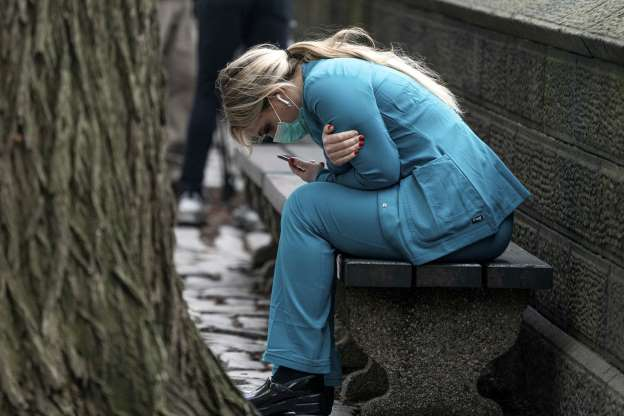
A Healthcare worker near Central Park in the Manhattan Borough of N.Y.C. ― Mar. 30.
I Just Got Out Of The COVID-19 ICU. Here’s How I Made It Through. Courtesy of Kelli Dunham
I live with two unrelated roommates even though I’m 51 years old, I have multiple day jobs (nursing, and working with high school students) that support my art (performing comedy), and until two weeks ago I hated New York Gov. Andrew Cuomo for a stunning array of well-thought-out political reasons but now I’m not sure whether I’m in love with him or want him to be my dad.
In other words, I’m a typical New Yorker. Despite my 15-plus years in the five boroughs, there are days when my Wisconsin-born soul unexpectedly ― and quite inconveniently I might add ― intrudes on my Brooklyn life. Like last week, when I found myself leaning against a stretcher gasping for breath in a local pediatric ER turned COVID-19 ER. I felt not just the substantial terror of “Oh shit, this is serious” but also the embarrassment of “Can we please not make quite such a big deal about this? And also, “P.S., can you please quit looking at me?”
It’s a Midwestern thing. Making people worry feels like bad manners. But I’d had a bad cough for a few days and then had grown steadily more short of breath. I hadn’t initially suspected COVID-19 since I hadn’t really had a fever. But red-faced with the embarrassment of, OMG, needing something and blue-lipped with lack of oxygen, I headed to the Manhattan hospital where I’ve received extremely competent medical care in the past.
I walked in with a red flannel button-up shirt tied midlevel around my face. If any of the initial assessment staffers thought I looked like a middle-aged genderqueer version of an Old West bank robber, they were kind enough not to share their impression. Instead, the triage nurse said dryly, “I applaud your efforts,” handed me an actual disposable mask that hadn’t been part of anyone’s wardrobe in the last hour, and took my vitals. For a moment, it seemed like a regular Thursday morning in any emergency room. But then a tech clad head to toe in plastic protective gear called my name and motioned me to follow her.
We stepped through a heavy door. “Oh,” I said. “Oh, this is where you’re keeping the pandemic.” I tried to keep my eyes on my own paper as the tech walked me past row after row of beds separated by opaque plastic walls that had been pulled out from freestanding columns like portable movie screens turned sideways. Each makeshift cubicle was stuffed with various pieces of equipment, a patient who was trying very hard to breathe, and one or more staff members in their astronaut-esque gear. And then I was in my own room, leaning against a stretcher, with an ER doc ― who looked as exhausted as if she’d just completed the New York City Marathon even though it was not yet 9 a.m. ― staring intently at me.
“I’m worried about how rapidly you’re breathing.” “Ah … yes,” I said, trying to lighten the mood a little although my comic timing was being annoyingly hampered by the whole gasping-for-air business. “We … ah … share … this concern.” Tired and Kind Doctor (whose name I cannot remember despite having inquired about it three times) asked if I would be OK with being intubated. I can remember thinking that it was a weird time to have a theoretical conversation about such a serious matter. What was she doing, taking a survey? But then I noticed the gathering of health care providers outside the room, suiting up in their protective gear and circling like scrub-clad extraordinarily helpful jackals. This was alarming.
No visitors were allowed in the area I also suddenly realized that no one had ever asked for my insurance info. This scared me even more. Although, I was lucky: I responded to non-invasive efforts, so the Helpful Jackals moved on to address the dozens of similar situations I heard going on around me. The first rule of the COVID-19 floor is that there are no visitors on the COVID-19 floor set aside for patients whose symptoms placed them squarely in the “presumed COVID-19” category. I messaged folks to let them know where I was, asking my sister and my girlfriend to pass along the info since I’d forgotten an extra phone battery.
After I shut off my cellphone, I had some time to think. I thought about my girlfriend’s smile. I thought about how my students were dealing with the pandemic, even ― or perhaps especially ― the kid who makes the most fun of my tattoos. I thought about my 86-year-old mother who has been on chemo for a rare blood disorder nearly five years and how pissed off she would be if I died before her. And how she would smile if she knew that’s what I was worried about. And then without other distractions and surrounded by the alarming sounds of respiratory distress (including my own), I could no longer not think about what I was trying not to think about. I’ve been a nurse for more than two decades but the vast majority of my experience managing severe respiratory distress has been in my personal rather than professional life. In 2010, my then-partner Cheryl was diagnosed with Hodgkin’s lymphoma, which ― with treatment ― has a five-year survival rate of 86%. In a grossly ironic (for real this time, Alanis) instance of the cure being worse than the disease, the standard chemo treatment that Cheryl received caused her to develop pulmonary side effects.
When her symptoms became so severe that she had to be admitted to the hospital, I moved in alongside her, sleeping curled up in a blanket on the radiator next to her bed. I was lucky to be able to do that: I had supportive friends and short legs. Cheryl struggled to breathe for three months, cycling through the intensive care unit, the step down unit and then back to the ICU. The memory of standing outside her hospital room yelling, “I’m here, honey! Just look at my face!” while they put her on a BiPAP machine, a single tear running outside the mask and down her cheek, is one of the most searingly painful of my life, perhaps even more painful than the moment she died in my arms. In that instant of physical separation, I had felt so helpless, like I was doing nothing for her. After wrestling my respiratory rate into something more compatible with ongoing life, the staff moved me upstairs into the ICU. The next few days were as unpleasant as you might imagine ― struggling to breathe, reliving those terrible moments in the hospital with Cheryl and negotiating all the random death-related worries that popped into my head. “Damn, I wish I’d given someone my Facebook passcode to shut down my page,” I thought. “I don’t want people writing corny shit on my wall.” Despite the logistical isolation and the very real physical distress, however, there were moments of connection that kept me from feeling truly alone. My girlfriend called and said, “You don’t have to talk. We’ll just stay on the phone.” My roommates texted me photos of our ridiculous cats doing ridiculous things. Friends sent video messages of their choreographed quarantine dance moves. A nurse took an extra moment to look into my eyes and not just at my vitals on the monitor. A respiratory therapist putting me on high flow oxygen started our interaction with “I know this is scary but ….” The director of pulmonary care laughed at my attempted (but not funny) joke. After a little less than a week, I was able to breathe well enough to leave the hospital and I am acutely aware of how lucky ― and privileged ― I am. I had economic and logistical access to medical attention that will likely become much more scarce in New York in upcoming weeks.
I speak the language of health care and feel comfortable enough in the hospital setting to advocate for myself, even when I was quite sick. I have a job and an apartment to return to. COVID-19 ― like most crises ― has magnified social and economic inequities and left the planet’s most vulnerable citizens exponentially more vulnerable. On the macro level, if we really believe that everyone deserves the kind of care and support Prince Charles and Tom Hanks are getting, it’s the responsibility of all decent humans to collectively scrap like hell to make that a possibility. If I’m being honest, I was hoping for a slightly different flavor of global crisis, maybe involving a giant gorilla, a great soundtrack, lots of sexy costumes and the Rock saving us all in the end. Or at the very least, a scenario in which we could hug. But to paraphrase my Midwestern mom, we can’t work with the pandemic we’d like to have, we have to work with the pandemic we’ve got. And this becomes our everyday challenge: What does it mean to show up for the people we care about when the nature of the crisis requires us to be physically apart? I doubt that anyone I referenced earlier understands what a profound difference their small actions made to me, just as I didn’t understand ― until this past week ― how being present while just out of reach for Cheryl could have made any difference in her distress. We can’t say that these small moments of connection through plastic, masks or Wi-Fi mitigate any of the actual human tragedy. But these moments can reinforce our faltering humanity and while this is far from enough, its profound and stunning improvement over no connection at all. https://www.youtube.com/watch?v=eGRl5ekAqo0
Three years ago, NPR accompanied disease ecologist Kevin Olival on a field trip to Malaysian Borneo. Olival, who is with the nonprofit research group EcoHealth Alliance, was there to trap bats and collect samples of their body fluids. He and his collaborators would then test the samples for viruses. Bats are known for carrying some dangerous ones, particularly viruses that have the potential to kick off global outbreaks through what’s called “spillovers” — instances of an animal virus jumping into a human.So the researchers were on a hunt for the next big threat. The results of their work put the current coronavirus outbreak in China in a wholly new light. Scientists say it was caused by a spillover event. And the findings from the sample collection project suggest these kinds of spillovers have actually been quietly taking place in China for years.
Swabbing bats: The evidence comes from hours of painstaking sample collection sessions, like the one NPR witnessed in Borneo: Olival is at the edge of a rain forest, sitting in a makeshift outdoor lab. There are plastic chairs. On a folding table, he places a small female bat.
Why Killer Viruses Are On The Rise” It’s OK, girl. It’s OK, girl,” says Olival soothingly as the bat wriggles.”So we’re getting the oral swab in the back of the throat,” Olival explains. “And I’m just holding her head between my two fingers.” He smiles. “Oooh, good one! There’s definitely some sample on that swab.” The bat gives a sudden squeak. “That was a reaction to a rectal swab,” says Olival wryly. A few more swabs and it’s all done.
“Now she gets her special treat,” says Olival. “A little bit of mango juice as a reward.” At that time, Olival and his colleagues were also in the process of collecting samples from thousands of bats in China. Fast-forward to the present day. Olival says what they found is alarming: “We found evidence for, in total, from all the sampling we did in China, about 400 new strains of coronavirus.” That means 400 potential candidates to spark another outbreak. After all, a coronavirus caused a massive outbreak in China back in 2002 — severe acute respiratory syndrome, or SARS. And this current outbreak is from a SARS-related coronavirus. No cases of COVID-19 where you live? You should still stay home.
A Direct Path to Humans: It gets worse: Scientists had thought spillovers were rare — that bat coronaviruses weren’t generally capable of infecting humans, so it took complicated steps. Step one: A bat coronavirus would have to infect some animal species that had closer contact with people than bats do. Step two: While in that other animal’s body, the virus would need to pick up new genetic code. Bats Carry Many Viruses.
So Why Don’t They Get Sick? But the sampling project found that those steps are not needed, says Olival. “What we showed was that SARS-related viruses in these bat populations have the potential to go directly into human cells and do not need that extra mutational step [of] infecting another host.” In other words, the path to sparking new outbreaks is potentially much more direct.For example, one of the coronaviruses that the researchers found was a very close genetic match for the SARS virus. So they put it in a petri dish with human cells. The virus succeeded in infecting the cells. After the sampling is over, the bat will be released back into the wild.
Bat contact: Olival says the fact that a bat coronavirus had at least this biological ability in a lab setting raised an obvious next question: Is there evidence that these viruses are infecting people in the real world?So the researchers started taking blood samples from villagers in China who lived near some of the bat caves they’d been studying. Hongying Li is an ecologist with EcoHealth Alliance. She says there were any number of ways these people seemed at risk of inadvertently coming into contact with bat saliva, urine or poop.
“In some places: you could find bats roosting in people’s homes,” she says. “A lot of people reported, ‘Once a bat flew into my house and I killed it’ or ‘Bats ate the fruits in my backyard.’ “And people even visited the bat caves, says Li. The caves were a particularly popular hangout in the summer, when they provided respite from the heat. “When we went to the caves for sampling, we’d usually see people’s beer bottles and water bottles,” says Li. She and her colleagues checked the villagers’ blood for signs of recent infections with bat coronaviruses. The team did this again with people in some other rural areas. Each time, says Li, “we found coronaviruses that had already spilled over into the human population.”These were multiple mini-outbreaks that had gone undetected. Olival says this discovery was a huge red flag: “The signal is there that these SARS-related viruses were jumping into people even if they weren’t causing any noticeable disease.” Indeed, people might have even had symptoms, but health authorities simply never picked up on it.
Spillovers: Which brings us to this current coronavirus outbreak. As soon as it started, EcoHealth Alliance’s longtime collaborators in China (principally researchers at the Wuhan Institute of Virology and the Wuhan Jinyintan Hospital) compared the new virus with the bat samples they’d collected. They found an extremely close match. “A viral taxonomist would probably call that the same virus species,” says Olival. That suggests this current outbreak — which has infected tens of thousands of people — could have come directly from bats, says Olival. And, he adds, the larger takeaway is clear: “These bat SARS-related coronaviruses are actively spilling over in the human population.” Not all of them will spark deadly pandemics. But the more frequent these spillovers, the greater the chances. NPR reporter Michaeleen Doucleff and senior editor Jane Greenhalgh contributed to this report. https://www.msn.com/en-us/news/coronavirus?ocid=msedgntp
This is a virus, everyone will get it, there is no cure.Conspiracy Theorists state that is made in a lab to manage global health care cost and limit green house emissions (via Bill Gates twisted mindset) and probably will destroy the global economy. While 80% that is inflicted, will not have severe symptoms to require a hospital stay, it will hospitalize 20% of the people and kill 3% of ailing people. Distancing simply flattens infection rate. Those with other conditions, lung, breathing and heart conditions are at extreme risk of death. The problem is that most people cling to their fears, because they believe it’s a part of who they are. If you aren’t ready to face your fears, you probably won’t transcend them. And there’s nothing wrong in that. Everything happens in its own time. CBS News medical contributors Dr. David Agus and Dr. Tara Narula and CBS News business analyst Jill Schlesinger — to answer questions from viewers around the country who want to know how the coronavirus affects their health and their finances. https://www.cbsnews.com/news/coronavirus-questions-answered-can-i-walk-outside-is-the-virus-on-my-shoes-covid-19/ America’s fear the worst to come ‘weeks from now’ for COVID-19 cases. As they erect a Make Shift New York’s Central Park coronavirus field hospital !!! ANALYSIS: Nearly every person dying from the coronavirus likely has these three things in common!!! It’s interesting to me that cancer in the United States is a Pandemic also. However, nobody fears that as much as Coronavirus (Covid-19). https://worldpopulationreview.com/states/cancer-rates-by-state/
CORONAVIRUS: Why flattening the curve is so vitally important!! Rather than letting the virus quickly rampage through the population and burn itself out fast, the idea is to spread all those infections out over a longer period of time. Flattening the curve is another way of saying buying more time. Yes, it would potentially prolong the epidemic. But in doing so, public health agencies and the health care infrastructure gain invaluable time to respond to the crisis. There are many myths swirling around on the internet at the moment about COVID-19, more commonly known as the coronavirus. To ensure that we all stay informed with the accurate information, the World Health Organization (WHO) has put together a “myth busters” page, highlighting the truth about some of the most popular misconceptions out there. Coronavirus expert says he knows when the virus ‘will burn itself out,’ according to leaked analysis!!! With the overall death toll climbing each day, but the daily death toll showing signs of subsiding, fear and uncertainty have spread farther and farther around the globe as the novel coronavirus continues to captivate the world’s attention. However, John Nicholls, a pathology professor at the University of Hong Kong, says he knows when the virus will become inactive. In a private conference call organized last week by CLSA, a brokerage firm based in Hong Kong, investment analysts had a chance to ask Nicholls, one of the world’s foremost experts on the topic, questions about the novel coronavirus. In the days since the call took place, details of Nicholls’ analysis have surfaced on social media and elsewhere online, including a transcript of the call. Nicholls responded to emailed questions from AccuWeather on Wednesday and confirmed his participation in the discussion, but emphasized that his remarks were made in “a personal capacity” and meant to remain “private.” He said the call was recorded “without my knowledge or consent” and then leaked on social media. When asked by AccuWeather, Nicholls did not dispute any of quotes attributed to him in the leaked transcript. CLSA has not responded to AccuWeather’s request for a comment on the conference call. The transcript of the call showed Nicholls believes weather conditions will be a key factor in the demise of the novel coronavirus. Referencing the SARS outbreak from 2002 and 2003, Nicholls said he thinks similar weather will shut down the spread of the novel coronavirus.
“Three things the virus does not like: 1. Sunlight, 2. Temperature, and 3. Humidity,” Nicholls said in response to a question about when he thinks confirmed cases will peak. “Sunlight will cut the virus’ ability to grow in half so the half-life will be 2.5 minutes and in the dark it’s about 13 to 20 [minutes],” Nicholls said. “Sunlight is really good at killing viruses.” For that reason, he also added that he doesn’t expect areas such as Australia, Africa and the Southern hemisphere to see high rates of infection because they are in the middle of summer. Regarding temperatures, Nicholls said the warmer the better for stopping the spread of the virus, according to the transcript of the conference call. “The virus can remain intact at 4°degrees (39° degrees Fahrenheit) or 10° degrees (50° F) for a longer period of time,” Nicholls said, referring to Celsius measurements, according to the transcript. “But at 30° degrees (86° degrees F) then you get inactivation. And high humidity — the virus doesn’t like it either,” he added, the transcript of the call showed. However, Nicholls also said that he doesn’t consider SARS or MERS, a Middle Eastern novel virus that spread in 2012, to be an accurate comparison for this year’s outbreak. Rather, the novel coronavirus most closely relates to a severe case of the common cold. “Compared to SARS and MERS, we are talking about a coronavirus that has a mortality rate of eight to 10 times less deadly to SARS to MERS,” Nicholls said. “So, a correct comparison is not SARS or MERS but a severe cold. Basically, this is a severe form of the cold.” Similar to a common cold, the surrounding environment of the outbreak plays an important role in determining the survivability and spreadability of the virus, he continued. Because of the impending shift in seasons, Nicholls said he expects the spread of the virus to be curbed in a matter of months. “I think it will burn itself out in about six months,” Nicholls said. According to the transcript, Nicholls elaborated on exactly when he expects the novel coronavirus to subside as investment analysts posed more questions. “The environment is a crucial factor. The environment will be unfavorable for growth around May,” Nicholls said. “The evidence is to look at the common cold — it’s always during winter. So the natural environment will not be favorable in Asia in about May.” Average temperatures typically reach as high as 86° F in Wuhan, the outbreak’s epicenter, on June 17. The AccuWeather forecast calls for temperatures ranging from a high in the low 60s F to a low of below 30 F over the next seven days. When asked about the probability of the novel coronavirus becoming endemic, Nicholls responded, “If it is like SARS it will not be endemic. It most likely will be a hit and run just like SARS.” Outside of China, Nicholls added to AccuWeather that he would expect the impacts of the virus to be varied in places such as Singapore, Indonesia and Malaysia. Singapore, Nicholls said, may potentially see the virus linger for longer due to an abundance of large public spaces with indoor air-conditioning, such as malls, where people congregate and temperatures and humidity remain lowered. AccuWeather Founder and CEO Joel Myers speculated earlier this month that spring may be a pivotal time for the fate of the coronavirus. In response to Nicholls analysis, Myers said, “By mid-April we should know” whether the virus is on the decline because of the changing weather. Experts that AccuWeather has spoken to previously have stopped short of linking weather to the spread of the virus. Earlier this month, Andrew Pekosz, Ph.D. professor and vice chair of the W. Harry Feinstone Department of Molecular Microbiology & Immunology at Johns Hopkins University, told AccuWeather cooler weather provides more favorable conditions for the spread of most respiratory viruses. “Many respiratory viruses transmit better at low temperature and humidity, but we have no data on how this might affect 2019-nCoV transmission,” Pekosz said in an email to AccuWeather on Feb. 4. “Respiratory coronaviruses do appear more frequently in cooler months (late fall, winter). Since we don’t know how this virus was also transmitted within its natural host, it’s difficult to predict if it will have the same pattern as human respiratory coronaviruses,” Pekosz said at the time. Nicholls’ comments, while made privately, represent the most definitive tie to the weather a health expert has made yet. At the University of Hong Kong, Nicholls has spent the past 25 years studying coronavirus and he served as a key member of the team that characterized SARS. The Hong Kong University Faculty of Medicine’s Clinical Research Centre also created the world’s first lab-grown copy of novel coronavirus, according to CNN correspondent Kristie Lu Stout, giving researchers a major breakthrough in understanding the behavior of the virus. However, in an interview with Lu Stout, Nicholls said there is one key difference between prior outbreaks and the current spread of the novel coronavirus. Unlike previous versions of coronavirus, the novel coronavirus has been able to be spread before symptoms present themselves in patients. But despite that frightening trait, Nicholls’ long-term optimism hasn’t changed in other public remarks that he’s made recently. “My feeling is that this is going to be just like SARS, that the world is going to get a very bad cold for about five months,” Nicholls told CNN last week. “Of course the weather and climate will be crucial,” Myers said of the virus’ capacity to spread as the seasons change. “Where spring comes early with above-normal temps and more sunshine, the virus spread will slow faster than where clouds diminish the sunshine and temperatures and humidities are slow to rise.” The World Health Organization (WHO) officially designated the virus COVID-19 on Tuesday, adding that the first vaccine could be available in 18 months, according to Reuters. Source https://news.yahoo. com/coronavirus-expert-says-knows-virus-204850255.html
Age is not the only risk for severe coronavirus disease !!! WASHINGTON — Older people remain most at risk of dying as the new coronavirus continues its rampage around the globe, but they’re far from the only ones vulnerable. One of many mysteries: Men seem to be faring worse than women. And as cases skyrocket in the U.S. and Europe, it’s becoming more clear that how healthy you were before the pandemic began plays a key role in how you fare regardless of how old you are. The majority of people who get COVID-19 have mild or moderate symptoms. But “majority” doesn’t mean “all,” and that raises an important question: Who should worry most that they’ll be among the seriously ill? While it will be months before scientists have enough data to say for sure who is most at risk and why, preliminary numbers from early cases around the world are starting to offer hints.
NOT JUST THE OLD WHO GET SICK Senior citizens undoubtedly are the hardest hit by COVID-19. In China, 80% of deaths were among people in their 60s or older, and that general trend is playing out elsewhere. The graying of the population means some countries face particular risk. Italy has the world’s second oldest population after Japan. While death rates fluctuate wildly early in an outbreak, Italy has reported more than 80% of deaths so far were among those 70 or older. But, “the idea that this is purely a disease that causes death in older people we need to be very, very careful with,” Dr. Mike Ryan, the World Health Organization’s emergencies chief, warned. As much as 10% to 15% of people under 50 have moderate to severe infection, he said Friday. Even if they survive, the middle-aged can spend weeks in the hospital. In France, more than half of the first 300 people admitted to intensive care units were under 60. “Young people are not invincible,” WHO’s Maria Van Kerkhove added, saying more information is needed about the disease in all age groups. Italy reported that a quarter of its cases so far were among people ages 19 to 50. In Spain, a third are under age 44. In the U.S., the Centers for Disease Control and Prevention’s first snapshot of cases found 29% were ages 20 to 44.
Then there’s the puzzle of children, who have made up a small fraction of the world’s case counts to date. But while most appear only mildly ill, in the journal Pediatrics researchers traced 2,100 infected children in China and noted one death, a 14-year-old, and that nearly 6% were seriously ill. Another question is what role kids have in spreading the virus: “There is an urgent need for further investigation of the role children have in the chain of transmission,” researchers at Canada’s Dalhousie University wrote in The Lancet Infectious Diseases.
THE RISKIEST HEALTH CONDITIONS Put aside age: Underlying health plays a big role. In China, 40% of people who required critical care had other chronic health problems. And there, deaths were highest among people who had heart disease, diabetes or chronic lung diseases before they got COVID-19. Preexisting health problems also can increase risk of infection, such as people who have weak immune systems including from cancer treatment. Other countries now are seeing how pre-pandemic health plays a role, and more such threats are likely to be discovered. Italy reported that of the first nine people younger than 40 who died of COVID-19, seven were confirmed to have “grave pathologies” such as heart disease. The more health problems, the worse they fare. Italy also reports about half of people who died with COVID-19 had three or more underlying conditions, while just 2% of deaths were in people with no preexisting ailments. Heart disease is a very broad term, but so far it looks like those most at risk have significant cardiovascular diseases such as congestive heart failure or severely stiffened and clogged arteries, said Dr. Trish Perl, infectious disease chief at UT Southwestern Medical Center.
Any sort of infection tends to make diabetes harder to control, but it’s not clear why diabetics appear to be at particular risk with COVID-19. Risks in the less healthy may have something to do with how they hold up if their immune systems overreact to the virus. Patients who die often seemed to have been improving after a week or so only to suddenly deteriorate — experiencing organ-damaging inflammation. As for preexisting lung problems, “this is really happening in people who have less lung capacity,” Perl said, because of diseases such as COPD — chronic obstructive pulmonary disease — or cystic fibrosis. Asthma also is on the worry list. No one really knows about the risk from very mild asthma, although even routine respiratory infections often leave patients using their inhalers more often and they’ll need monitoring with COVID-19, she said. What about a prior bout of pneumonia? Unless it was severe enough to put you on a ventilator, that alone shouldn’t have caused any significant lingering damage, she said.
THE GENDER MYSTERY Perhaps the gender imbalance shouldn’t be a surprise: During previous outbreaks of SARS and MERS — cousins to COVID-19 — scientists noticed men seemed more susceptible than women. This time around, slightly more than half the COVID-19 deaths in China were among men. Other parts of Asia saw similar numbers. Then Europe, too, spotted what Dr. Deborah Birx, the White House coronavirus coordinator, labeled a concerning trend. In Italy, where men so far make up 58% of infections, male deaths are outpacing female deaths and the increased risk starts at age 50, according to a report from Italy’s COVID-19 surveillance group. The U.S. CDC hasn’t yet released details. But one report about the first nearly 200 British patients admitted to critical care found about two-thirds were male. One suspect: Globally, men are more likely to have smoked more heavily and for longer periods than women. The European Center for Disease Prevention and Control is urging research into smoking’s connection to COVID-19. Hormones may play a role, too. In 2017, University of Iowa researchers infected mice with SARS and, just like had happened in people, males were more likely to die. Estrogen seemed protective — when their ovaries were removed, deaths among female mice jumped, the team reported in the Journal of Immunology. https://www.insider.com/ratio- of-men-to-women-in-each-state- 2018-12#alaska-has-more-men-than-women-2
Country Singer Kalie Shorr Reveals She’s Contracted Coronavirus By Meredith B. Kile Country singer Kalie Shorr is the latest celeb to announce that she’s contracted COVID-19. The “Fight Like a Girl” singer shared her experience with the coronavirus on Twitter on Monday, writing that she has been quarantined for three weeks and is beginning to feel better.”Despite being quarantined (except for a handful of trips for groceries) for three weeks, I managed to contract COVID 19,” Shorr tweeted. “I’m feeling significantly better, but it’s proof how dangerous and contagious this is. It’s endlessly frustrating to see people not taking this seriously.” “The first few days were absolutely miserable. I’ve never felt like that before,” she detailed. “My entire body was in pain, and my fever was like riding a wave. I completely lost my sense of taste and smell.” Despite her “miserable” symptoms, the 25-year-old singer shared in another tweet that she’d found a way to beat the quarantine blues — even if it had unexpected consequences. “Impulsively dying my hair purple during quarantine was all fun and games until my agent asked me to do a self tape for a really big movie and now I have… purple hair,” she shared. Shorr joins Tom Hanks, Rita Wilson, Idris Elba, Laura Bell Bundy and many others in her announcement that she suffered from the coronavirus during the ongoing global pandemic. Many others have shared accounts of family members and friends who have fallen ill or died. Like Joe Diffie from the flu-like virus, in an attempt to raise awareness and urge followers and fans to heed the advice of medical professionals to stay at home and avoid social contact in order to help slow the spread of the COVID-19 virus.
A 101-year-old man has been released from the hospital in Rimini, Italy, after recovering from the coronavirus. The man, identified only as “Mr. P.,” was admitted to the hospital last week. The city’s deputy mayor said the recovery gives the country “hope for the future.” Visit Insider’s homepage for more stories. A 101-year-old Italian man has recovered from COVID-19 and his city’s deputy mayor said the story provides “hope for the future,” CNN reported. Gloria Lisi told reporters the man, identified as Mr. P., had an “extraordinary” recovery. “Mr. P. made it. The family brought him home yesterday evening,” CNN reported Lisi saying. “To teach us that even at 101 years the future is not written.” The man was born during the Spanish flu pandemic, which killed between 30 million and 50 million people around the world, according to CNN. As of Friday, the coronavirus has killed more than 25,000 people. Incredibly, the man is so old that he was born during the Spanish flu pandemic, which killed between 30 and 50 million people worldwide. As of Friday, the coronavirus has killed more than 25,000 people, with 100,000 confirmed cases in the US alone. More than 8,000 of the deaths have been in Italy, which has become the centre of the pandemic. The man’s recovery is especially miraculous given that older people are particularly vulnerable to the virus. In the UK, people over 70 years old have been advised to “self-isolate” inside their homes for 12 weeks. The World Health Organization has called on people to protect “the collective wisdom” of society by looking out for seniors during the pandemic. The Italian man isn’t the only centurion to overcome the disease. An 103-year-old woman and a 100-year-old man in China also beat the disease this week. This old women’s name Zhang Guangfen, a Chinese national, who recovered from the disease after receiving just six days of treatment at a hospital in Wuhan, China-the city the outbreak originated. Zhang Guangfen who survives from coronavirus COVID-19 brings new hope for elderly people. The centenarian is now the oldest person who recovers from the virus, One day after a 101-year-old man also beat the virus in Wuhan. She was diagnosed at Liyuan Hospital, Tongji Medical College, in Wuhan, China, according to media reports.
With this said, some expert are telling us to stay home and treat Mild Cases of Coronavirus Ourselves.
This is What Happens to Your Body When You Get Coronavirus Whether you feel symptoms or not, one thing we all have in common is a wary curiosity about what the heck is happening to your body if you have—or should you contract—Covid-19, a.k.a. the coronavirus. We talked to researchers on the frontline to find out, and here’s what they said.
1. First, it Enters Your Body “The virus primarily affects the respiratory system and is transferred between humans by airborne mechanisms, like coughing or sneezing, or by contact of contaminated surfaces, doorknobs, etc, with hands and then rubbing the face,” says Dr. Jeffrey Langland, Ph.D., an instructor for Medical Microbiology, Immunology, and Concepts in Research. “It attacks the human body in three phases: viral replication, immune hyperactivity and pulmonary destruction,”—pulmonary meaning your lungs—says Dr. Monika Stuczen, FIBMS, a Medical Microbiologist and R&D and QC Laboratory Manager at MWE.
2. In the Beginning, You Might Feel Nothing “At the beginning of infection, people produce a large quantity of the virus,” says Stuczen. “The incubation time is between 2 and 14 days with an average of 5 days. During this time infected people do not show any symptoms but they contribute to the spread of the virus without even realizing it. Moreover, it is proved that some people may be asymptomatic but they are still able to infect others.”
3. What it Does Once in Your Body “The virus infects the cells in the respiratory tract, taking over the cells’ functions, allowing the virus to replicate and then spread from cell to cell,” says Langland. “In mild cases, the body’s immune system helps to limit the spread of the virus within the body.” That’s when a fever may set in, to combat the infection. “In more severe cases, the viruses spread more and can lead to a ‘cytokine storm’ where the immune system is highly stimulated.”
4. Then You Can’t Breathe “This infection can lead to the problems of breathing difficulties from the bronchials constricting and limiting airflow. You might cough as a result or feel shortness of breath,” says Langland.
5. Depending on Your Health, it Could Get Worse—Much Worse “There are three patterns presented with Covid-19,” says Stuczen. “It usually begins with mild upper respiratory illness followed by non-life-threatening pneumonia. After about 7 days it can progress to severe pneumonia with acute respiratory distress syndrome when the patient may require life support. In severe pneumonia, lungs are filled with inflammatory material. They are unable to get enough oxygen to the bloodstream, reducing the body’s ability to take on oxygen and remove carbon dioxide what in most cases causes death. About 1 out of 6 people who contract Covid-19 becomes seriously ill and develop difficulty breathing.”
6. If You Have an Underlying Condition, Your Body Has a Harder Time Fighting the Virus “People with underlying conditions such as cardiovascular problems, high blood pressure, diabetes, cancer, immuno-suppressed patients and older people are more likely to develop serious illness,” says Stuczen.
7. Eventually, With Good Care and Good Luck, Your Body Heals “Don’t panic,” says Langland. “Most cases are minor and even the more moderate cases will be fine. The majority of deaths are in the elderly or those with other underlying conditions, including hypertension and diabetes.”
8. What to Do if You Feel Like You Have It “Anyone experiencing flu-like symptoms, high temperature, new, continuous cough or shortness of breath should stay at home and self-isolate immediately,” says Stuczen. “People with mild symptoms are able to recover at home. – Make sure you drink plenty of fluids. Proper hydration is very important in your recovery process. – Don’t take anti-inflammatory drugs such as Ibuprofen as there are many reports confirming that they exacerbate the condition. Take Tylenol instead. – Separate yourself from other people at home as much as possible and do not share personal household items such as cups, plates, drinking glasses, towels or bedding. You should stay in one room and use a separate bathroom if available. – Wash your hands very often. – You should also restrict contact with pets and animals. It is recommended that people with the virus limit contact with animals until more information is known. – If you need to leave home make sure you wear a facemask and you keep at least six feet distance from other people. – Remember that you may only experience mild symptoms and recover quickly but if you don’t use all precautions you may infect other people with weaker immune systems. Their bodies may not be able to cope with the virus and it may cost their life. Everyone reacts to this virus in a different way and we need to make sure we protect not only ourselves but also the people around us.”
9. If Your Symptoms Worsen “If your symptoms are worsening (for example you have difficulty breathing) seek medical care immediately,” says Stuczen. “Don’t go to hospital or doctor’s office. Call ahead and tell them your symptoms. They will tell you what to do. You can leave home after at least 7 days have passed since your first symptoms appeared and you have no fever for a minimum 72 hours without the use of medicine that reduces fever and all other symptoms have improved such as cough or shortness of breath.”
10. How to Prevent Infection in the First Place “Try to avoid contact with others. Keep distance between you and others if you need to be in a public space. Wash hands and avoid touching your face with your hands. Disinfect surfaces where others may have touched. Also, try to stay healthy. Eat well, get rest and try to not stress. Keep your immune system strong and healthy,” says Langland. “The novel coronavirus is just that, new, which means the world’s population has no immunity,” says Marjorie Golden, MD, a Yale Medicine infectious disease specialist. Stay inside to keep you—and everyone else—happy and healthy, and your body will thank you. Checkout: Vitamin C | Lysine | Oregano capsules | Aloe Vera Juice And to get through this pandemic at your healthiest, don’t miss these 18 Coronavirus Survival Secrets.
For weeks, maybe, it seemed that if we ignored the COVID-19 coronavirus, it would go away.
By Laura Johnston, Cleveland.com — China seemed far, and no one here was wearing masks. The first case of a new coronavirus that’s sickened nearly 300 people in Asia and spread Europe has been reported in a patient in Washington state, on January 21st, 2020. The coronavirus, in the same family as SARS, MERS and the common cold, often circulates among animals. It can jump from animal to human, and in rare cases can mutate and spread from person to person. The Washington state patient, a man in his 30’s, had traveled to Wuhan, but said he did not visit the market in question or know anyone who had the virus.
Cases also have been reported in Beijing, Shanghai and Shenzhen, as well as in Taiwan, Japan, Thailand and South Korea. “Information is rapidly evolving. We hope over the coming days the situation will become clear,” Dr. Nancy Messonnier, director of the National Center for Immunization and Respiratory Diseases, said Tuesday. The key information, according to Messonnier, will be determining how easily the virus can spread from person to person.
The United States began screening for the new virus at airports in New York, San Francisco and Los Angeles on Jan. 17. The Washington state patient entered the United States before the screening system was implemented and before any of his symptoms developed. Health officials said Tuesday they’ll expand screenings to airports in Chicago and Atlanta. Health officials also are doing a contact investigation from China to Washington state, said Dr. Scott Lindquist,
https://www.pbs.org/video/ what-we-know-and-dont-know-about-coronavirus-rqdtck/ How scared should I be? A recent paper from the Chinese Centers of Disease Control and Prevention analyzed more than 70,000 cases of the coronavirus in China and showed that about 81% of cases were mild. Most people wouldn’t need to go to the hospital or ER. Rather, they’d need medicine for fever, like Tylenol, and plenty of fluids.The coronavirus fatality rate is between 2% and 4% in Wuhan, and 0.7% outside Wuhan, according to the World Health Organization. For people with mild disease, recovery time is about two weeks, while people with a severe form of the disease usually recover within three to six weeks. Read more here. How does the coronavirus compare the flu? Or A common cold? https://www.bing.com/videos/search?q=How+does+the+ coronavirus+compare+the+flu%3f+A+common+cold%3f&FORM=HDRSC3 A case of the coronavirus sweeping China could be mild, severe or end in death, according to the CDC. The same can be said of the flu. The coronavirus appears to spread similarly to the flu, through droplets when someone coughs or sneezes. It shares similar symptoms, like fever and cough. The most common symptoms at onset of illness were fever, fatigue, dry cough, muscle pain and difficulty breathing. Less common symptoms were headache, dizziness, abdominal pain, diarrhea, nausea, and vomiting. With the flu, symptoms appear faster, usually between one and four days. Meanwhile, it can takes between two days and two weeks for symptoms of the coronavirus to appear after you’ve been exposed. Read more here.
What should I stock up on? By Emily Bamforth, Cleveland.com CLEVELAND, Ohio — To prepare for the spread of coronavirus in the United States, doctors originally said you could stock up on your favorite over-the-counter medications, said the director of the Ohio Department of Health. Pain relievers could alleviate the fever and aches that come with the COVID-19 coronavirus, doctors say. But a report March 14 from the French health inister warned that anti-inflammatory medications, such as ibuprofen, could aggravate the disease and recommended acetaminophen instead. Ohio Department of Health director Amy Acton also mentioned having a 14-day supply of Nyquil, or whatever cold medicine you prefer, so you don’t have to run to the pharmacy when you’re sick. “Whatever it is, you want to have those medicines with you,” Acton said at a news conference with Gov. Mike DeWine at MetroHealth Medical Center. She also advised making sure you have enough supplies for your children, parents and/or pets. “I would prepare for the worst.”
Everything you need to know about coronavirus | What survivalists say you’ll need in case of a coronavirus outbreak The U.S. Centers of Disease Control and Prevention believe an outbreak of the disease, which originated in Wuhan, China, is inevitable. “We’re kind of in for a long haul,” Acton said. She did not recommend ordinary citizens wearing masks, in part because there will likely be a shortage for doctors and nurses. Doctors say the majority of coronavirus case here will likely be mild. That could mean flu-like symptoms, with coughing, sneezing, fever and shortness of breath. What would you do? Cleveland.com readers who texted Editor Chris Quinn through the new, free Subtext program suggested their own preparations: Stocking up on frozen meals and electrolyte replacement drinks, pet food and soft foods like yogurt and oatmeal, in addition to over-the-counter medications and slippers. They also encouraged hand-washing with anti-bacterial soap. Whether ibuprofen or acetaminophen is better depends the patient, Jason Briscoe, Discount Drug Mart’s director for pharmacy operations, said. It depends on health history and personal preference. It can never hurt to have a first-aid kit on hand. Briscoe said pharmacists will be able to work with those experiencing symptoms or who are worried about the virus. There’s been a run on masks at Discount Drug Mart, but no flood of people stocking up on over-the-counter medicine. Discount Drug Mart also has a “Health Solutions” facility in Avon Lake, which the company staffs to take calls and give advice on health issues. Briscoe said that option is one reason he’s not worried about coronavirus overwhelming pharmacy staff. When it comes to alleviating upper respiratory symptoms, like suppressing cough, the best over-the-counter medicines is Mucinex, however, a behind the counter with script is more effective verify with your primary physician. Also Dr. Keith Armitage, medical director for the UH Roe Green Center for Travel Medicine and Global Health stated. If you feel short of breath, call your doctor. That’s one of the indicators that the virus could have progressed into a lung infection and supplemental oxygen is necessary. The elderly & people with pre-existing conditions will be at greater risk for severe symptoms. Armitage reiterated in this internet link that, based on what is known now, most coronavirus patients will be able to recover at home, rather than in a hospital. “I don’t think people need to go buy a bunch of over-the-counter remedies for the common cold,” he said. “Pay attention to respective public health authorities.” https://www.livescience.com/possible-treatments-new-coronavirus.html https://www.foxnews.com/health/coronavirus-treatment
By MATTHEW WRIGHT FOR DAILYMAIL.COM PUBLISHED: 20:20 EDT, 24 March 2020 | UPDATED: 10:46 EDT, 25 March 2020 The Long Island based pulmonologist and critical-care specialist with Northwell Health shared that patients are given three to four doses a day New York hospitals are treating coronavirus patients with high dosages of VITAMIN C after promising results from China!!! Dr Andrew Weber says he has been immediately giving his intensive-care patients 1,500 milligrams of intravenous vitamin C. The Long Island-based pulmonologist and critical-care specialist with Northwell Health says patients are given three to four doses a day. Jason Molinet, a spokesman for Northwell, says Vitamin C is being ‘widely used’ as a coronavirus treatment throughout the health system. A clinical trial into the effectiveness of intravenous vitamin C patients with coronavirus was conducted on February 14 at Zhongnan Hospital in Wuhan. Coronavirus symptoms: what are they and should you see a doctor? Doctors throughout New York state are giving their critically ill coronavirus patients massive doses of vitamin C, a tactic said to have helped those hit the hardest in China. Dr Andrew Weber, a Long Island based pulmonologist and critical-care specialist with Northwell Health, shared that he has been immediately giving his intensive-care patients 1,500 milligrams of intravenous vitamin C. Those patients are then re-administered the doses of the powerful antioxidant three or four times a day, the doctor explained to the New York Post. Dr Andrew Weber said he has been immediately giving his intensive-care patients 1,500 milligrams of intravenous vitamin C.
The recommended daily allowance for men is 90mg. Each dose is more than 16 times the daily dietary vitamin allowance of vitamin C advised from the National Institute of Health. For adult men, the allowance is 90 milligrams, with 75 milligrams recommended for women. Weber said the regimen is based on experimental treatments administered to coronavirus patients in Shanghai, China. ‘The patients who received vitamin C did significantly better than those who did not get vitamin C,’ he said. ‘It helps a tremendous amount, but it is not highlighted because it’s not a sexy drug.’ Jason Molinet, a spokesman for Northwell, said that Vitamin C is being ‘widely used’ as a coronavirus treatment throughout the health system. He noted, however, that the amount given to patients varies. ‘As the clinician decides,’ Molinet added. Northwell Health is the state’s largest healthcare provider, with 23 hospitals across New York. According to Molinet, approximately 700 patients across the hospital network that are being treated for the coronavirus.
He could not specify how many were receiving vitamin C treatment. There are now 25,665 cases of the virus in New York, including 14,904 in New York City. Dr Weber explained that the vitamin C is just one treatment being given to coronavirus patients. They have also received the anti-malaria drug hydroxychloroquine, the antibiotic azithromycin, as well as various biologics and blood thinners. Patients with coronavirus who suffer sepsis – an inflammatory response that occurs when the body overreacts to the infection – suffer significant drops in vitamin C levels, said Weber. ‘It makes all the sense in the world to try and maintain this level of vitamin C,’ he added. A clinical trial into the effectiveness of intravenous vitamin C on patients with coronavirus started on February 14 at Zhongnan Hospital in Wuhan, China, the epicenter of the country’s outbreak. It is expected to be completed at the end of September, according to information on the US National Library of Medicine’s website. Read More
What The Relationship Between Blood Type And Coronavirus Susceptibility Means For Future Treatments. A new study that has come out of China claims to have found that people with type A blood may be more susceptible to the novel Coronavirus (COVID-19). What does this mean for patients, doctors, and researchers, and should people with A blood types be worried? The study was conducted by a group of Chinese researchers and analyses 2,173 patients who contracted the COVID-19 virus from three hospitals in Wuhan and Shenzhen and then compared them to the bloods types of the two general populations in the area. Their meta-analysis found that people who were part of “blood group A had a significantly higher risk for [contracting] COVID-19 compared with non-A blood groups.” As outlined in the study, the normal population in Wuhan has a blood type distribution of:
Type A – 31% | Type B – 24% | Type AB – 9% | Type O – 34% Comparatively, Wuhan residents who had contracted COVID-19 had a blood type distribution of: Type A – 38% | Type B – 26% | Type AB – 10% | Type O – 25%
Today In: Healthcare These percentage distribution differences held relatively consistent with the Shenzhen populations as well. “The work is very preliminary, but it is biologically plausible that different blood groups might vary in their susceptibility to COVID-19.” Say Dr. William A. Petri, Jr., M.D., Ph.D., of the University of Virginia, after reviewing the study. But why would someone’s blood type make them more susceptible to COVID-19? The answer, Petri explains, has to do with how proteins on the surface of Coronaviruses bind to the different sugars on the surface cells, which go hand in hand with a person’s blood type. “We know some of the Coronaviruses that infect cattle have proteins on their surface that bind to sugars and sugars are what dictate blood group antigens*.
If you are blood group A, you have an extra sugar on the surface of your cells called anacitosal glucosamine, which you don’t have if you are blood group O.” Dr. Kirsten L. Hokeness of Bryant University, who also reviewed the study, goes on to explain, “The ABO blood-group system is part of the immune system.” Interestingly, the core of how our immune system fights infection, as well as the variability of how different infections affect different people, is found in our blood types. This blood type – immune system connection has been explored by immunologists for over 100 years. “The concept that individuals with different ABO blood Groups would differ in their susceptibility or resistance to viral and bacterial infections and diseases has been explored since the early 1900s.” Says Dr. Hokeness, “A lot of this work has been done in malaria but there have been a number of other bacteria and viruses that have been studied as well including hepatitis and Norovirus. The fact that interaction with pathogens has over time caused the ABO blood Group to evolve over thousands of years could suggest that there is an interaction between the two systems.”
So should people with blood type A be more worried than the rest of us? Both Dr. Petri and Dr. Hokeness agree – No. “If you are blood group A you shouldn’t be more scared.” Says Dr. Petri, “The study shows very small changes in susceptibility. It goes from 31% of people who reportedly didn’t have COVID-19 versus 38% who did. So it’s tiny changes and it hasn’t been replicated and the study has not yet been peer reviewed. So while it’s interesting and it kind of makes sense biologically, it might not be true. Regardless, if it is true, it probably does not have a huge impact on overall susceptibility.” “At this point, people with blood type A do not need to be worried since this does not appear to be any concrete driver of infection.” says Dr. Hokeness, “I would not let blood type be something that would put fear or rest assuredness into people. We should all still be considered vulnerable to this infection despite blood type or any other quantifiable trait.” Between the fact that the paper has not yet been peer reviewed, the small sample size, and relatively small variability of infection rates found in the study, people with blood type A don’t have a much higher cause for concern. However, the study does point to some interesting factors regarding how treatment could be developed to fight COVID-19.
“There are a lot of microorganisms that cause infection that interact with human cells by binding to sugars on the surface of those cells.” Says Dr. Petri, “The best example of that is influenza. The flu virus binds to the sugar on the surface of human cells called sialic acid.” Continuing that, “Tamiflu is a drug that inhibits the binding ability of influenza to these sugars and that is a great example where the recognition of neuraminic acid’s (an acidic amino sugar in the blood) interaction helped identify an effective antiviral medicine.” This study, and future studies like it, could eventually identify ways to block the COVID-19 virus before it takes over. “Better understanding how the virus gets access to host cells, could help in treatment development.” Says Dr. Hokeness. “And if these basic science studies can tell us a bit more about how the virus unlocks the host receptor or that these antibodies can block that interaction, we could use that information in order to create a treatment. But there is certainly a lot more data that we need to know at this point.” So instead of causing further anxiety among the population, the study is instead signalling the early stages of antiviral treatment research and should therefore be more of a sign of hope and further despair.
Coronavirus isn’t a bioweapon Nextstrain’s visualization tools have also helped engage a public that’s hungry to learn about the science of the coronavirus, says Kristian Andersen, a computational biologist at Scripps Research in La Jolla, California, whose lab has contributed more than a thousand genomes, including West Nile and Zika viruses, to the project. In addition, the ability to reveal the virus’s evolutionary history helped researchers quickly debunk conspiracy theories, such as the one that SARS-CoV-2 was secretly manufactured in a lab to be used as a bioweapon. A March 17 article in Nature Medicine co-authored by Andersen makes this argument by comparing the genomic features of SARS-CoV-2 with all of its closest family members, including SARS, MERS, and strains isolated from animals such as bats and pangolins. First off, most of SARS-CoV-2’s underlying structure is unlike any of coronaviruses previously studied in a lab. The novel coronavirus also contains genetic features that suggest it encountered a living immune system rather than being cultivated in a petri dish. Moreover, a bioweapon designer would want maximum impact and might rely on history to obtain it, but the novel coronavirus carries subtle flaws indicative of natural selection. For instance, coronaviruses use what are known as spike proteins, which look like heads of broccoli, to bind and access cellular “doorways” called receptors. t’s how the viruses infect animal cells. Experiments have shown that the novel coronavirus strongly binds with a human receptor called ACE2, but the interaction isn’t optimal, the authors explain. “This isn’t what somebody who wanted to build the perfect virus would have picked,” Andersen says. Overall, their analysis suggests the virus jumped from an animal to humans sometime in November. ReadMore:
A sequel to having a COVID-19 infection would be something completely different. You may think that the one “positive” of testing positive for the COVID-19 causing coronavirus (SARS-CoV2) and surviving would be that you won’t get infected by that virus again. At least not during this pandemic. Ah, but is this assumption really true? Will you indeed be immune to the SARS-CoV2 after you’ve recovered from a COVID-19 infection? Some reports out of Japan and China seem to suggest otherwise. For example, Daniel Leussink and Rocky Swift reported for Reutersabout a female tour bus guide in Japan who tested positive for the virus after recovering from a COVID-19 infection. Here is a UNTV news report on the case: Does this case actually prove that re-infection with the virus is possible? Or was this just a mistake in the testing? Or did the person have a particularly weak immune system so that she couldn’t generate immunity? After all, one case can be an accident, an aberration, an anomaly, an aardvark in a sea of anemone. Well, oops something like this happened again, according to a more recent NHK-World Japan report. This time it was a man in his 70’s, who first tested positive for SARS-CoV2 on February 14 while on a Diamond Princess cruise ship. After being transferred to a medical facility in Tokyo, he stayed there until testing negative for the virus. On March 2, he left the facility and traveled home via public transportation. However, the man eventually began feeling sick with a fever, which prompted him to go to a hospital on March 13. The following day he tested positive for the virus again.
Then there’s the February 14 article from Caixin, a Beijing, China-based media group, that was entitled “14% of Recovered Covid-19 Patients in Guangdong Tested Positive Again.” Umm, 14% would seem more like an “ooop” than an “ooops.” This CGTN news warned of such reinfection possibilities: Remember though, these are news reports and not scientific studies yet. While the reappearance of Nicholas Cage with a flaming skull riding a motorcycle may not call for additional scientific studies, all of these cases certainly do. First, scientists need to confirm whether the test results were indeed accurate. Remember, no test is perfect. If people can screw up a drink order, they can certainly mess up a medical test. Even if a test is performed properly, you could still get a positive result when you don’t actually have an infection. On the flip side, just because you test negative doesn’t necessarily mean that there is no way that you are carrying the virus. That’s why a doctor may test you multiple times to be sure of a result.
Secondly, doctors and other scientists need to double-check or triple-check that each of these patients actually got re-infected with the virus rather than had an infection that simply lasted a long time. What if, for example, the cruise passenger and the tour bus guide each had fairly long infections and just happened to have intervening false negative test results? The tests could have simply been like commercial breaks in the middle of a single long episode of a television show. Third of all, the amount of immunity that you build up after being exposed to any virus depends on not only virus itself but surprise, surprise your immune system and its response. When your immune system sees a particular virus for the first time, it can essentially get caught with its pants down, not ready to defend your body against this new invader. However, exposure to the virus either through a vaccine or getting infected may train your immune system so that, borrowing the words of former President George W. Bush, “fool me once, shame on — shame on you. Fool me — you can’t get fooled again.” If strong enough, your immune system then may be ready with proper defenses next time the virus comes calling. Could the cases of reinfection then be examples of people who happened to have weaker immune systems?
Or are these cases any indication that our immune systems may not be able to consistently build up enough protection against SARS-CoV2? Well, a review article published in January 2020 in the Journal of Medical Virology summarizes much of what is known about your immune system’s response to various types of coronavirus. As you can see, this involves a complex orchestra of different cells and chemicals. Therefore, the immune response to one virus won’t necessarily be the same as to another virus, even if both viruses were different types of coronaviruses. All of this also depends on how strong your immune system may be and how well your immune system recognizes an invader like SARS-CoV2. Plus, your immune system has got to remember the virus. Over time, immunity may fade, allowing the virus to reinfect you. It’s like when you get back together with an ex after you have forgotten how terrible you are for each other. The question then is how long can your immune system remember SARS-CoV2? With SARS-CoV2 having emerged so quickly, there just haven’t been enough studies yet on how your immune system may react specifically to SARS-CoV2 and how this may differ from person to person. Therefore, we have to rely on studies of other coronaviruses for now. The closest approximation is probably the even more evil cousin of SARS-CoV2, the original SARS virus that caused the outbreak of 2002-2003. In a study published in a 2007 issue of Emerging Infectious Diseases, a research team from the Shanxi Provincial Center for Disease Control and Prevention in Taiyuan, China, followed 176 patients who had severe acute respiratory syndrome (SARS). On average, SARS-specific antibodies remained at the same level in a patient’s blood for about two years. Then, during the third year after infection, antibody levels tended to drop precipitously. This suggests that immunity to the SARS virus may remain for two to three years with reinfection possible after three years.
Keep in mind though that antibody levels do not always correlate with immunity. They can be like selfies on Instagram, only indirect measures of what’s really going on at a deeper level. Some people may have immunity against a virus without detectable antibody levels, and some people may be very susceptible to infection even though antibodies are present. The only way to have determined if the patients actually had immunity against the SARS virus would have been to have re-exposed them to the virus and checked what happened. And that would have been a horrible experiment to do. The other question is how many different versions of SARS-CoV2 may be running around, or rather spreading around since viruses don’t have little feet and little sneakers. It’s difficult to answer this question for sure without more thorough and widespread testing. According to a study published in the journal National Science Review, an analysis of samples from 103 COVID-19 cases suggests that at least two different versions of SARS-CoV2 are circulating. This doesn’t necessarily mean that these versions are so different that immunity to one version doesn’t mean immunity to another. Regardless, things may evolve in the near future. Viruses can be like the characters in Game of Thrones or an actor in a Broadway show, changing rapidly. Over time, the new coronavirus could possibly mutate to the point that new versions are no longer as recognizable by your immune system as the original version. After all, mutations are probably what allowed the virus to jump from another animal to humans. Not knowing exactly how immunity against SARS-CoV2 works and how long it may last throws a gigantic wrench into public health planning. Many trying to predict the course of the pandemic have been assuming that once a high enough proportion of the overall population has been infected and has become immune, the pandemic will subside. Herd immunity is the percentage of the overall population that is immune to a given pathogen. When this percentage gets high enough, the virus will struggle to find more susceptible people to infect, sort of like trying to sell Justin Bieber T-shirts in a crowd when most of the people are already wearing such shirts. The belief is that when around 70% of the population is immune to the virus, SARS-CoV2 will struggle to continue transmitting.
However, things could change substantially if people can actually get re-infected with the virus or different enough versions of the virus end up circulating. Such possibilities would be yet more reasons to question the “herd immunity” approach to controlling the pandemic that’s currently being discussed in the U.K. and described by Sarah Boseley for The Guardian. Since there is no vaccine available against SARS-CoV2, there is actually talk of allowing those with stronger immune systems to get infected to achieve the 70% or so herd immunity threshold. Huh? This strategy would make sense except for the fact that it doesn’t. First of all, those who get infected could end up having serious consequences such as death, which is typically a very serious consequence. This would be reminiscent of the saying that “the operation was successful, but the patient died.” Allowing people to become infected by a potentially deadly virus is always a risky proposition, sort of like playing roulette when your lungs are on the betting table. So far, the COVID-19 case-fatality rate seems to be somewhere between 1% and 3.4%. This isn’t as high as the rate for SARS but nonetheless significantly higher than that of a bad flu season. Secondly, this herd immunity strategy depends on people not getting re-infected with the virus. But with the aforementioned reports from Japan and China, you have to wonder if the strategy is not a “herd immunity” strategy but rather a “herd immunity maybe” strategy to borrow the words of Carly Rae Jepsen. “Maybe” may work to some degree with flirting and dating but not when lives are at stake.
Third of all, this strategy assumes that people will not leave or enter the U.K. That may work only if you want to completely eliminate travel to and from the country. Finally, such a strategy would run counter to other mitigation strategies such as social distancing as indicated by the following tweet: Uh, U.K., would this really be O.K.? All of this is a reminder that scientists do not yet know enough about this new coronavirus. What percentage of people become immune to the virus if exposed? How strong is the immunity? Will it actually prevent reinfection? How long would this immunity last? Is it two years as the SARS study hints at or could it be much shorter than that? How does all of this vary from person to person? How many different versions of the virus may end up circulating?
As the Internet meme goes, I and many other scientists have so many questions. Therefore, if you do get exposed to the virus and recover, don’t view it as a free pass to start hugging strangers, digging your fingers deep into your nose like you are looking for pocket change, and licking door knobs. Keep doing what everyone else should be doing such as social distancing, washing your hands frequently and thoroughly, keeping your filthy fingers from gravitating towards your gigantic face, and actively disinfecting surfaces and objects that you have in your living room. Just because you survived the first infection, doesn’t necessarily mean that future exposures and possible infections will end up OK. As you know, sequels don’t always have the same endings.
**THESE ARE SUGGESTIONS FOR THOSE WHO SHOW MILD SYMPTOMS, NOT SERIOUS SYMPTOMS. IF YOU HAVE SYMPTOMS AND NOT SURE, CALL YOUR PHYSICIAN OR MEDICAL PRACTITIONER. STAY CALM AND DON’T PANIC. TAKE A DEEP BREATH. DON’T LET ANXIETY OR FEAR OVERTAKE YOU.** Risa Morimoto MY Thought: Eat A lot OF Red Onion for prevention?
The name Corona is of Latin origin. The meaning of Corona is“crown of laurels”. It is also of Spanish origin, where its meaning is “halo”. Studies suggest the differences between the flu and coronavirus are far starker than some people suggest…. It’s going to get worse before it gets better — a lot worse. Why Covid-19 is worse than the flu, in one chart It’s more contagious, more deadly (particularly for older people), and it has a greater potential to overwhelm our health care system. TUESDAY, Jan. 21, 2020 (HealthDay News) — The first U.S. case of a new coronavirus illness that originated in central China has been identified in a patient in Washington State, federal health officials announced on Tuesday. In a news briefing, officials said that the male patient was hospitalized with pneumonia last week and had recently traveled to Wuhan, a city of 11 million people in China where the outbreak is thought to have begun. The man is being quarantined at Providence Regional Medical Center in Everett, “out of an abundance of precaution and for short-term monitoring, not because there is severe illness,” stressed Dr. Chris Spitters, interim health officer for the Snohomish Health District.
“We believe the risk to the public is low,” added Washington State Secretary of Health John Wiesman. The quarantined patient is in his 30’s and resides in Snohomish County, state epidemiologist Dr. Scott Lindquist explained at the briefing.The patient is currently in good condition and clinically not ill, officials said.The man flew home into Seattle-Tacoma International Airport on Jan. 15 via an indirect flight, officials said. Airport screening for the new virus didn’t start until Jan. 17.
According to officials, the man had been keeping up with the news, and when he developed symptoms on Jan. 19, he reached out to his doctor. The U.S. Centers for Disease Control and Prevention confirmed that he had the coronavirus by the next day. The news comes a day after the leader of a Chinese government team of experts announced Monday that human-to-human transmission of the new coronavirus had been confirmed in that country. .Also on Tuesday, Chinese health officials confirmed that more than 300 cases of infection have now been identified, including six deaths, According to the CDC, coronaviruses comprise a large family of viruses. Some of these pathogens only circulate among animals such as camels, cats and bats, the agency said, but some can be transmitted from an animal and infect people and cause respiratory symptoms. In rare cases — such as occurred in the Severe Acute Respiratory Syndrome (SARS) and Middle East Respiratory Syndrome (MERS) outbreaks over the past decade — coronaviruses can spread person-to-person.One U.S. emergency medicine physician said it’s still far too early to be alarmed by the outbreak. “It’s important to put this in perspective — it’s more likely that you would encounter the flu compared to the coronavirus at this time,” said Dr. Robert Glatter, of Lenox Hill Hospital in New York City. He noted that coronavirus infection develops differently than the flu, so people should be on the lookout. “Because this coronavirus is occurring during the flu season, many people may be more concerned, and rightfully so,” Glatter said. “The onset of the flu is quite different than a typical coronavirus infection. The flu is more severe in onset, with high fever, dry cough, back pain, muscle aches and fatigue, compared with a coronavirus, which generally develops more gradually with fever, malaise, loss of smell or taste and less severe symptoms. It resembles more of a cold-like virus initially, but later can become more severe over a few days,” he explained.
What is The Coronavirus? A coronavirus is a kind of common virus that causes an infection in your nose, sinuses, or upper throat. Most coronaviruses are not dangerous. Over the past decade there have been outbreaks of a variant of the coronavirus. It first appeared in Saudi Arabia, then other countries in the Middle East, Africa, Asia, and Europe. However, in early January 2020, the World Health Organization (WHO) identified a new type: 2019 novel coronavirus (2019-nCoV) in China. This is the virus that is associated with China; specifically the city of Wuhan, in Hubei province.
How Did The Coronavirus Start? Evidence shows the coronavirus is not lab-made? The disease can be transmitted by both animals and people making it much easier to spread. The Wuhan coronavirus case was identified in Wuhan in mid-December 2019. It has been traced back to a market in Wuhan which sold live animals and seafood. Since the coronavirus outbreak started, 21,297 people have died and more than 472,030 confirmed cases have been reported across the globe. So far, most of the deaths have involved elderly people with other conditions. This has even spread internationally as there have been at least 69,219 confirmed cases reported in the United States and now a total of more than 198 other countries outside China have reported incidents of the virus. For current statistics, you can check out this live map produced by John Hopkins Center for Systems Science and Engineering (CSSE)
How Is the Coronavirus Spread? The virus can be spread by both animals and people. That’s why the market in Wuhan offered a prime opportunity for the coronavirus to spread since live seafood as well as animals were being sold. Selling live wildlife at a market is described by experts as a perfect incubator for novel pathogens. Disease scientists believe the coronavirus mayhave jumped from the host species, bats, to snakes, and then to humans at the beginning of this coronavirus outbreak. However, this hasn’t been fully confirmed.
Treatment of Coronavirus. If a person does contract the virus, there are no specific treatments for coronavirus infections. Most people will recover on their own, according to the CDC. Treatment involves rest and medication to relieve symptoms. A humidifier or hot shower can help to relieve a sore throat and cough. The most susceptible to the virus are those with a weakened or compromised immune system. That is why children and the elderly are at greatest risk. “The bottom line is: that we need to stay calm, and not panic, as we learn more about this novel coronavirus,” Glatter said. “At the same time, however, we still need to be vigilant of this new and potentially emerging threat.”
Florida man with coronavirus says drug touted by Trump saved his life. A Florida man diagnosed with coronavirus claims he was saved from certain death by an anti-malaria drug touted as a possible treatment by President Trump. Rio Giardinieri, 52, told Los Angeles’ Fox 11 that he struggled with horrendous back pain, headaches, cough and fatigue for five days after catching COVID-19, possibly at a conference in New York. Doctors at the Memorial Regional Hospital in South Florida diagnosed him with the coronavirus and pneumonia and put him on oxygen in the ICU, he told the outlet. After more than a week, doctors told him there was nothing more they could do and, on Friday evening, Giardinieri said goodbye to his wife and three children. “I was at the point where I was barely able to speak and breathing was very challenging,” Giardinieri said. “I really thought my end was there.” Then a friend sent him a recent article about hydroxychloroquine, a prescription drug that’s been used to treat malaria for decades and auto-immune diseases like lupus. Overseas studies have found it to be promising as a treatment for COVID-19, though it hasn’t been approved by health officials. Trump last week said he was instructing the FDA to fast-track testing of hydroxychloroquine and a related drug,chloroquine, as treatment for COVID-19. Giardinieri said that he contacted an infectious disease doctor about the drug. “He gave me all the reasons ‘why,’ I would probably not want to try it because there are no trials, there’s no testing, it was not something that was approved,” said Giardinieri. “And I said, ‘Look, I don’t know if I’m going to make it until the morning,’ because at that point I really thought I was coming to the end because I couldn’t breathe anymore,” Giardinieri continued.
“He agreed and authorized the use of it and 30 minutes later the nurse gave it to me.” After about an hour after taking the pills, Giardinieri said, it felt like his heart was beating out of his chest and, about two hours later, he had another episode where he couldn’t breathe. He says, he was given Benadryl and some other drugs and that when he woke up around 4:45 a.m., it was “like nothing ever happened.” He’s since had no fever or pain and can breathe again. Giardinieri said doctors believe the episodes he experienced were not a reaction to the medicine but his body fighting off the virus. Giardinieri, the vice president of a company that manufactures cooking equipment for high-end restaurants in Los Angeles, said he had three doses of the medicine Saturday and is hoping to be discharged from the hospital in five days. “To me, there was no doubt in mind that I wouldn’t make it until morning,” said Giardinieri. “So to me, the drug saved my life.” Foot Note; I have seen on the internet that people have overdose on hydroxychloroquine. So don’t self-administer it to yourself.
The country of Italy is on lock-down as the number of cases of COVID-19, the official name for the novel coronavirus, soars. With more than 74,386 cases and counting, Italy has the second-highest reported death toll and number of confirmed infected cases, behind China. With 7503 deaths, Italy’s death toll is doubled the next highest. So what has put Italy and its people at higher risk for severe disease? The answer is multifaceted.To start, part of the answer may lie in the age distribution of Italy’s population. Italy has an older population with a greater percentage of adults over the age of 65 than the U.S. The Centers for Disease Control cautions that older adults may be at risk for more serious COVID-19 illness.
Data from China, where the majority of COVID-19 deaths have occurred, shows that about 80% of adults that have died were over the age of 60. “We do know that the mortality rate associated with coronavirus infection is increased in those aged 60 years and older, and increased each decade thereafter,” said Dr. Sarah Banks, an infectious disease physician at The Hospital of Central Connecticut. “We also know that underlying medical conditions also play a role in morbidity and mortality — however to what degree is still being looked at.” Another risk factor may relate to smoking. COVID-19 is a respiratory disease that can lead to pneumonia, respiratory failure and, in the worst cases, death. Smoking is known to impair lung function and the immune system, contributing to more severe respiratory illnesses. A recent study suggests that more than 21% of Italians are smokers, compared to less than 14% in the U.S. MORE: Coronavirus outbreak in Europe has many asking, ‘Why Italy?‘: Reporter’s Notebook
An additional risk factor could be related to local customs. The CDC has urged the use of social distancing as a precaution against the spread of COVID-19 — but prior to this outbreak, the common custom in Italy was to greet friends and loved ones with a kiss on both cheeks. “We do know that the virus is transmitted from person to person through droplets and possibly through contaminated surfaces,” said Banks. “Social isolation is certainly being advocated by many experts around the globe in an effort to curb the spread of the virus.” Dr. Banks said that a final reason the mortality rate in Italy appears to be so high could be statistical. “If asymptomatic or minimally symptomatic patients are not being tested, this will also skew the numbers we are seeing and increase the rates of adverse outcomes,” she said. What is ‘social distancing’? What’s the difference between an ‘epidemic’ and a ‘pandemic’? A glossary of COVID-19 terms.
Experts say it’s difficult to predict if the U.S. will fare better than Italy as the virus runs its course.
Coronavirus deaths in the United States could reach peak in three weeks, epidemiologist says. One doctor at Elmhurst Hospital Center in Queens said the facility had faced “the first wave of this tsunami” of coronavirus patients. As the coronavirus death toll rises, so is the number of recovery stories. David Begnaud speaks to people who say they experienced debilitating symptoms but, thanks to their support systems, the care of medical staff and in some cases, faith, they pulled through. News to stay informed. Advice to stay safe.
Modeling is not precise, and uses known data to project trends in disease spread, and there were dissenting opinions expressed to CNN about Longini’s analysis. Yet two other disease experts broadly agreed with the estimate. Longini’s suggestion that US deaths could peak in less than a month will have two possible impacts. First, a sudden surge in deaths risks overwhelming health care systems that are currently struggling to prepare for cases needing intensive care. Secondly and conversely, it could support calls — echoed by President Trump — to reduce restrictions on movement in the coming weeks. Longini said: “I would guess the U.S. will hit a peak in deaths in the next two-three weeks, as the doubling time seems to be about two-three days.” He added: “Maybe a partial lifting of the shelter-in-place for those less vulnerable may make some sense, in about three weeks. By then, much of the damage will have been done.” Asked if there could be a risk of a relapse when the virus circulated again in the following weeks, he said: “If it were limited, and we continued to protect the most vulnerable, that may be acceptable for now. Also, let’s see what happens in the next two-three weeks. We can also keep an eye on China as they begin to relax restrictions there.” The two other experts who broadly agreed with Longini offered slight variations on his projection, and both noted that the outbreaks are hitting each US community in a different way. Dr. William Schaffner, an infectious disease specialist at Vanderbilt University, said the peak might take three more weeks. “My notions are harmonious in that I also anticipate … (the next) three to six weeks will be critical here in the United States,” he said. He added it might take six weeks as the U.S. is a “very diverse country with a hot spot in New York right now and warm spots.
The rest of the country is warming up. In the next three to six weeks, all those areas will start to surge or will have their curve depressed or blunted by the social distancing that’s going on. The virus will tell us.” He said he was more skeptical about the United States being able to lift restrictions on only part of the population. “Asking a subset to remain sheltered in place, to remain in home, that’s more difficult to do,” he said. A second expert agreed broadly. Dr. Arnold Monto, a professor of epidemiology at the University of Michigan School of Public Health, said by email: “I agree that by 3 weeks, we will have a better idea of what is going to happen going forward. The outbreaks seem to be hitting different communities at different times and at different intensities, so it is hard to generalize However, I agree in general. And that is why action now in terms of social distancing is so important.” Epidemiology has informed United State, UK and other government policy as it provides informed guesses as to where and how fast infections are spreading. A recent sharpening of US and UK restrictions was, for example, based on modeling from the UK’s Imperial College, which significantly worsened its prediction of how many people would require intensive care in hospital, using data from Italy.
Peak is ‘impossible to predict,’ another expert says, One disease modeler said it was “impossible to predict” when the peak would hit.
Dr. Stefan Flasche, a disease modeler at The London School of Hygiene & Tropical Medicine, told CNN by email the peak was influenced by the efficiency of lock down measures, and “may be anywhere between some time very soon and not for another few months.” “One scenario is we can indeed reverse the spread as done in China and South Korea, then reach a point to lift the distancing measures,” Flasche said. “But (we may) have to repeat this cycle for a few times because of an inevitable resurgence of cases in the absence of population immunity. In that scenario, we would see multiple peaks in the upcoming 12 months.” President Donald Trump has said his desire to lift measures as quickly as possible is motivated by a desire to get the American economy moving again. He has expressed a belief that the economy could experience a “v” shaped, ultra-fast recovery. Yet one economist expressed doubt recovery could be that fast-paced and warned snapping back in and out of restrictions could cause greater damage. Erin Strumpf, a professor of economics at McGill University, told CNN: “Nothing suggests that we could just ‘snap back’ to life as it was before. We’re taking concrete actions to lower the probability of an uncertain outcome.” She cautioned that it’s hard to put a price on the uncertainty — and deaths — that might occur were the government to begin loosening restrictions. “Markets, investors, and economies don’t do well in the context of panic and uncertainty,” she said. “The people that are going to be dying from coronavirus are going to be very visible. We are going to know exactly who those people are. That changes the discussion a lot.”
Trump Is Right About the Coronavirus. The WHO Is Wrong,’ Says Israeli Expert.
[U.S. President Donald] Trump is right. Not that the coronavirus is just plain flu – it absolutely isn’t – but as he put it: ‘This is just my hunch – way under 1 percent’ [will die].’ Dr. Dan Yamin has developed models for predicting the spread of infectious diseases, and helped curb the Ebola epidemic. He says the coronavirus could take some 13,000 lives in Israel – but there’s cause for optimism. “The virus spreads in a geometric progression,” Benjamin Netanyahu declared last week, going on to explain to the lay public what that means: “One person infects two people. Each of them infects two more. The four infect eight, the eight infect 16, the 16 infect 32, the 32 infect 64, the 64 infect 128 – and so on and so forth.”
According to the prime minister’s logic, 100 percent of the Israeli population will become carriers of the coronavirus within a short time. On the other hand, according to that same logic, 100 percent of the population will also come into contact with each other within a short time. Is this really the situation? “We do not move about in space like particles,” says Dan Yamin, of Tel Aviv University’s industrial engineering department. “Try to remember what you did yesterday. Even without all the social distancing measures, you probably would have met the same people you met today. We move across networks of social contact. So, from a certain stage, it will be difficult to infect even those who bear a potential for becoming infected, because the carriers don’t wander around looking for new people to infect.” Dr. Yamin is an engineer, not a physician. But in 2008, when he was a graduate student at Ben-Gurion University in Be’er Sheva, a certain research study caught his eye. “It was an analysis of a dynamic model for the spread of smallpox,” Yamin, 38, says. “The researchers used tools from game theory.
It was so interesting that I decided to conduct a similar study on influenza – which turned into a doctoral thesis on disease-spread models. “If, 40 or 50 years ago, epidemiology researchers came exclusively from the field of medicine, today we understand that in order to predict the spread of diseases, it’s also necessary to understand how humans behave as a collective, to be able to analyze big data and to have the ability to create models and perform mathematical simulations – and for that you need engineers.” Yamin encountered his first real epidemiological crisis while doing postdoctoral work at the the Center of Infectious Disease Modeling and Analysis at Yale University’s school of public health. “At Yale we worked for three weeks, with almost no sleep, to create models based on engineering tools for the spread of Ebola. The dilemma of the Liberian health ministry regarded whom to prioritize, given a serious shortage of isolation facilities. The Liberians assumed that it would make more sense to quarantine those who were ill with less serious symptoms, because the others could not be saved in any case. “We showed that it was precisely the patients with the most acute symptoms who are the most infectious, both because of the high viral load [meaning, the amount of a virus in one’s body] and also because of the increase in the number of encounters between people: The acute patients were dying, so everyone came to take their leave from them,” Yamin says. “I was pleased that Liberia adopted our recommendations and isolated those who were seriously ill.
In retrospect, we know that that new policy helped curb the epidemic.” Yamin currently heads the Laboratory for Epidemic Modeling and Analysis in TAU’s engineering faculty. His primary field of work is development of models for the spread of infectious diseases, with an emphasis on viruses responsible for respiratory ailments, such as flu and RSV (respiratory syncytial virus), which causes bronchitis. He is actually somewhat optimistic about the models he has developed for the spread of the coronavirus, which is also a respiratory disease. “The big, open question is what the chance is of dying from the virus,” Yamin explains. “When you ask epidemiologists what the most important datum is concerning a virus, they will say it’s the rate of the basic reproductive ratio, or R0 [often called “R nought”] – the average number of people a sick person will infect. That’s an interesting question, but a theoretical one. “The R0 of measles is 12, meaning that each person who is ill with measles infects 12 people on average. However, only 5 percent of the population can actually be infected, because most of us have been immunized or had measles in the past. So that is the upper limit of its spread.” But we know that the R0 of the coronavirus is 2, and we still don’t know whether anyone is naturally immune to the disease. Yamin: “The overwhelming majority of people are apparently not immune, because it’s not a common disease. After all, there is no precedent for such an infectious and violent type of virus from the corona family, so it’s safe to assume that the majority has not been exposed to the virus before this and that they can be infected. However, that’s not to say that the majority of the population will actually contract the disease.
“The basic principle is that a virus with an R0 of 2 in a non-immune population can be expected to infect 50 percent of the population. After that the R0 will reach a value of 1 or less, and the disease will be contained. BTW, it will recede in a converging exponential; in other words, the coronavirus can be expected to disappear from this region with the same dizzying speed with which it entered our lives.” But we don’t know for certain whether a person can be infected twice. ‘But with the majority of viruses, if you’re infected and you have recovered, you won’t be re-infected, because of immunological memory. And if you are infected again, the symptoms will be less acute the second time. The exception to the rule is influenza: Its mutation frequency is so high that you can be infected by it year after year. Last year alone, the flu underwent 17 mutations. Whereas the last time we heard about corona was 17 years ago, with SARS.
In other words, the coronavirus did not undergo mutations at the same frequency as the flu. Of course, the mutations themselves are a function of the number of infections: The more infections there are, the greater the likelihood that mutations will occur. But in practice, the most rapid mutations occur in animals, and they only infect us then, and obviously it’s less probable that we will be infected again by a bat in the near future. “By the way, viral mutations are more frequent in bats, whose immune system is astonishingly weak, while their social network is extensive and characterized by a lot of interaction.” So we’re talking about maximum rate of infection – that is, of becoming a carrier – of 50 percent. That’s still a lot of patients, a lot of hospitalizations and mainly a lot of deaths. “Again, the most interesting issue for decision makers is the mortality rate. When we look at the dry data, we see a very high mortality rate, of 4 to 7 percent, in countries like Italy and Spain, alongside far lower numbers in countries like Germany and South Korea. “And then there’s China, though it’s very difficult to believe the numbers coming out of there – and in any event no country in the West can allow itself to adopt the measures that China adopted to contain the spread. Now ask yourself: How do you check the mortality rate in all those countries?
You take the total number of deaths and divide it by the total of reported patients.” So the research is biased. “Very biased. If I can only carry out few tests, I will test those who have the highest chance of becoming ill, and then, when I check the mortality rate among them, I will get very high numbers. But there is one country we can learn from: South Korea. South Korea has been coping with corona for a long time, more than most Western countries, and they lead in the number of tests per capita. Therefore, the official mortality rate there is 0.9 percent. But even in South Korea, not all the infected were tested – most have very mild symptoms. “The actual number of people who are sick with the virus in South Korea is at least double what’s being reported, so the chance of dying is at least twice as low, standing at about 0.45 percent – very far from the World Health Organization’s [global mortality] figure of 3.4 percent. And that’s already a reason for cautious optimism.” ‘Worst-case scenario’ Let’s move from percents to people. Hospital president Kim Sang-il (C) stands outside a COVID-19 novel coronavirus testing booth at Yangji hospital in Seoul on March 17, 2020. AFP “Just a minute. Although we’re both Westernized countries, we are absolutely not South Korea. South Korea has one of the highest proportions of elderly people in the world, whereas Israel tops the graph in fertility, and we have a very young population.
So, if we use the upper limit [of mortality] of South Korea and normalize the mortality rate for the population in Israel, we are talking about the probability of a mortality rate of 0.3 percent among those who have been infected. “Now we’ll go to a severe scenario in which no one is immune and every second person is sick, so that the disease is incapable of spreading further – namely, a situation where there’s a maximum infection rate of 50 percent. “We are a country of nine million citizens. So in the worst-case scenario, we are talking about 4.5 million Israelis who will become ill with the coronavirus. Multiply 4.5 million by 0.3 percent and you get 13,500 Israelis who are liable to die from the disease. By comparison, 700 to 2,500 Israelis die every year of complications from other respiratory ailments.” But German Chancellor Angela Merkel talked about a rate of infection of 70 percent in Germany. “And Netanyahu talked about a mortality rate of between 2 percent and 4 percent. And do you know what’s most absurd? That in the final analysis
“We must be cautious, of course, but at the moment a high probability is emerging that the risks are far lower than what the World Health Organization presented. Under two assumptions – that the health system doesn’t collapse and that life continues as usual – we are not likely to see more than 13,500 victims of the coronavirus in Israel.” (About 45,000 people die in Israel in a normal year, which would make for a rise of approximately one-third.) But, social distancing should lead to fewer cases of infection and death, no? “No, because we won’t be able to isolate ourselves completely or forever. At some stage, we will have to resume a regular routine, and then the R0 will stabilize at 2 again. Effectively, we are delaying the inevitable. I have no criticism of the decisions made until now. On the contrary: With such a large area of uncertainty, Israel’s decision makers are considering not only a reasonable scenario but also a margin of safety. “It’s my opinion, the Health Ministry deserves tremendous credit for being ahead of the world by having instituted no few measures. In the same breath, the public needs to understand that these measures of social distancing mean that we will find ourselves with corona for a longer period, even to 2023.” “Take the swine flu, from 2009. Reliable models show clearly that it was contained in Israel because its appearance coincided with the Jewish holidays in the fall [when people weren’t out much in public]. From the virus’ point of view, the timing wasn’t good for it in Israel. By contrast, in the United States there was significant infection in 2009-2010. But in the end, it balances out. So we saw swine flu in Israel both in 2009-10 and in 2010-11, whereas in the United States it just came and went. The American population as a whole was exposed to the virus at high rates, so those who fell ill and recovered served as a ‘human shield’ for those who did not get sick.” So what you’re saying is to tear the bandage off in one fell swoop, and expose everyone at once, the way they tried to do in Britain. “We need to make decisions based on the most precise models possible. What should be done? Of course, we must significantly increase testing, using the rapid P.C.R. test, and that is what is actually being done. In parallel, serologic tests should be conducted. These differ from regular tests in that they examines an individual’s immunological reaction to exposure. That’s the only way we will be able to get an accurate picture of the distribution of the virus in Israel, and thereby of the mortality rates.”
What will that test be able to tell us? “It will solve the riddle of the young people: It’s still not clear whether young people are infected by the coronavirus but don’t develop symptoms, or are simply immune and thus don’t become infected. This is different from most respiratory ailments. With those illnesses, like RSV or flu, this is a key population: The 5-to-19 age group is not at risk but they are responsible for infecting others.” Because children don’t wash their hands, and they drool on themselves? “It’s not only a function of hygiene, it’s mainly a function of contact between people. Picture the average old person. How many different people does he encounter in a day? And what is the nature of those encounters? The older we get, the less we caress and kiss others. Also, children constitute the only age group that comes into contact with all other age groups – not just theirs. That’s why it is the key population in spreading respiratory diseases.”
As soon as we know whether children infect others with corona, we will know whether the schools can be opened. “Yes. And there are also other potential pockets of infectiousness that can be isolated on a specific basis. In a study based on cellphone data that we conducted in Israel recently on contact networks of flu, we found two locales that are more ‘responsible’ than their relative proportion of the population should be for spreading infectious diseases: Tel Aviv and Petah Tikva. “Regarding Tel Aviv it’s clear. It’s the hub. A million Israelis enter the city [on a normal] day. The Tel Avivians are like Saudi sheikhs – they just wait for people to come to them. Whereas Petah Tikva is the exact opposite: Everyone flees. But seriously, Petah Tikva is a very diversified city socioeconomically, with a rich mosaic of ultra-Orthodox. Orthodox, secular, poor, rich. That’s what makes it, together with Tel Aviv, a focal point for the spread of respiratory ailments: Petah Tikvans encounter everyone. Whereas, in most places, people tend to meet up with people who are like themselves. I myself live in Ramat Gan. My neighbors are from [the mostly ultra-Orthodox city of] Bnei Brak, but it’s not reasonable to assume that I will be infected by them. [Yamin is not Haredi.] We saw cases of measles [in 2019] in Bnei Brak and Brooklyn of a sort that did not get to Ramat Gan. On the map of viruses, Bnei Brak is closer to Brooklyn than Ramat Gan. So, with a high probability, we can say that our situation is not good – but it’s not apocalyptic.” A man in Rome, Georgia, said he was initially sent home after he went to the hospital with flu-like symptoms and later tested positive for coronavirus. Read More: