The most recent polar reversal, called the Laschamp excursion, happened about 41,000 to 42,000 years ago. During this time, the north magnetic pole moved to the southern hemisphere and then back to the north.
Scientists studied ancient kauri trees found in wetlands in northern New Zealand. These trees were alive during the Laschamp excursion. By analyzing the growth rings, researchers measured a spike in atmospheric radiocarbon levels, which occurred when Earth’s magnetic field weakened. This helped them create a detailed timeline of the changes.
Earlier studies focused on what happened while the magnetic poles were reversed, during which Earth’s magnetic field was only 28% as strong as it is now. However, this new research revealed that the biggest changes happened during a transition period called the Adams Event.
During this time, the magnetic field dropped to just 0-6% of its current strength.
Researchers compared their findings with data from other Pacific sites and used climate models to show how the Adams Event caused major environmental changes. These included the growth of ice sheets in North America and shifts in wind patterns and tropical storm systems.
The event may also explain the sudden rise in cave art during this time.
As cosmic radiation increased, people likely sought shelter in caves, leading to a surge in cave painting. The study warns that if a similar magnetic field shift happened today, the effects would be devastating. Cosmic radiation could destroy power grids and satellite systems while triggering rapid climate change.
Professor Dosseto stressed the importance of understanding this event: “What happened 42,000 years ago is terrifying and could happen again. The weakening of the magnetic field only lasted a few hundred years, but its effects on the climate, environment, and life lasted thousands of years. It’s a warning for our planet today.”
Magnetic Poles can easily Change Climate! But can we Prove it yet ! But 99 percent of Scientists said there is Climate Change! It’s mostly Trump and his supporters go along with him! He doesn’t know !! He’s a Commercial Builder not a scientist! Umm where do you take your car to McDonald’s ( Sorry digression). Because we aren’t taking care of Earth and Sea ( water is 3/4 ) and Many areas Reefs are dead or dying! Fact. But obviously we won’t know how Magnetic Fields affect anything until something more Happens! And we don’t need to call people names! That’s really ridiculous! It’s great if you are educated in certain fields or look all this up. But if half of us think we’re not destroying stuff! Well. ??!!
Jane Johnson I don’t understand those who laugh. What is so unbelievable about it? It’s documented, there are multiple studies showing the same thing. How is this so mind shattering? Fragile reality, unable to expand because frightened to break any ceilings of understanding? Be brave, you’ll survive!!!
I know, they think we have so much power over nature but we don’t. If Earth was an apple the deepest we could dig down would be half way through the skin, and there are less greenhouse gasses now than ever before. Let them charge their electric cars, not knowing that the resources needed to create one lithium battery is more damaging than driving a petrol car on the road for 10 years, and that new mines have to be dug worldwide to access the minerals. If an electric car is in an accident no services are allowed to touch it as the battery is deadly, specialists have to be called in. We are forcing toxicity onto the people who just believe what they’re told. It’s a sad situation that is setting the hive mind on an awful path. Is Lithium mining hazardous to the environment – Search
Jane JohnsonZaena Burdick Apparently where it flooded in the hills of NC and all over there’s lithium mines that are there and that’s what they are after, not only that, the lithium, when the land for mining isn’t buyable, it’s stolen by the government supposedly for ” the greater good”. For who? The companies making money off of the products? Certainly not the Native Indigenous tribes that a lot of the land is taken from, regardless of their sacred places and land treaties…ugh. Gotta stop, it’s a rant now.
Minnie Spencer you ever hear that they can now direct hurricanes where they want to send them?? How else does one end up in the mountains that has never happened before where they find lithium that people refuse to sell land to mine????? MANY people lost property and lives and are still struggling to survive.
Where is fema for them and the people of Lainia. $700 per family for help and offers to buy their land cheap?? Funny that anything painted blue didn’t burn in those fires. Makes you wonder who you are being attacked by.
Jane Johnson The scenario of an EV in an accident should be sufficient to ban this vehicle favoured by fanatics. Plus the gauss meter readings inside the EV, or when being recharged are horrendous! Those with EH or a pacemaker CANNOT be in an EV!
The mining is devastating. I think people believe they are doing the Earth good… but all they are doing is filling the rich and wealthy pockets. I bet dollars to donuts they are still all driving gas powered vehicles.
Never mind also the disposal of those batteries when they need replacing and they will , or when the car is scrapped from an accident or age . 0ne private flight produces more carbon than you would produce in your entire lifetime. How many flights do climate activists like John Kerry take a year? Watch the documentary on Youtube THE TOXIC COST OF GOING GREEN I will never get one and I hope my children won’t either .
Planes burn up more fuel than cars per journey, and therefore produce more carbon dioxide. But how does this work out by passenger & by distance?
Asked by: Grant de Souza, by email
A Boeing 747 uses 7840kg of aviation fuel for the take-off, climb and descent portions of the flight and these account for about 250km. For journeys longer than that, the plane will use 10.1kg for each additional kilometre under typical cruising conditions. So to fly from Heathrow to Edinburgh (530km) uses 10,668kg of fuel, which releases a little over 33 tonnes of CO2.
Whereas a Ford Mondeo 1.8 TDCi emits 151g of CO2 per km and covers 650km to reach Edinburgh. That works out to be 98kg for a single passenger, compared to 79kg per person for the Jumbo, assuming it carries its full complement of 416 passengers. But you could drive 336 cars to Edinburgh for the same CO2 as one plane.
Jane Johnson … When you have lived long enough you realize that the so-called experts really have no idea how to slow down the process. Save the trees so we turn to plastic…save the oceans so we replace plastic with reusable… reusable causes disease so we change back to plastic and paper, but that is ok because we charge for them (rolling eyes). Incandescent lights use too much electricity so we go fluorescent…now we go LED – Search Videos
D. We are using too much water so we voluntarily cut back on consumption and then the price goes up because we are not using enough.
Do-gooders and “scientists” travel around the world spreading their messages of conservation and the dangers of fossil fuels…in their huge private jets!!! Now, forget that there are major factors adversely affecting the planet… It is full steam ahead for electricity.
Kathy McConnell not quite true, the magnetic poles are shifting, like a magnet one end positive, one end negative. The location on a map is like locating the Mississippi River on a map. 100 years ago it ran a different course. The shifting of the earth’s magnetic poles is like the shifting of the river, you can’t exactly depend on that map, it’s shifting, but not noticeable to the naked eye, but the river is. We all like to believe when something is shown to be in the same spot our whole lives, it’s something that can’t change. Guess what….
Mary Chancellor the thing that is unbelievable about her comment, what makes it so laughable is her denial of climate change. Much though there is a shift taking place, a very slow shift that is taking place over the course of tens of thousands of years we have seen a dramatic shift in the climate just since the dawn of the industrial age and the considerable acceleration of the use of fossil fuels…the sort of change in climate that historical records “normally” happen over the course of ten thousand years or more that have taken place before our very eyes in a period of barely 100 years…this is an unprecedented shift in what in the course of “normal events” amounts to a blink of the eye and yet Jane posits that “we are not causing climate change. That, THAT is what is totally laughable.
If you’re buying into the notion that climate change being caused by human activity is not real, try to understand the difference between “natural” events that take place over the course of A Thousand Years as compared to what has transpired over a period of barely 100 years.
Mary Chancellor Over 100 years ago, Swedish scientist Svante Arrhenius in 1896, – Search who calculated the potential impact of a doubling of atmospheric carbon dioxide on global temperatures through the greenhouse effect.
The Earth’s molten core is responsible for our magnetic field, maybe a shift in how the core behaves causes the poles to reverse? I’m against all the climate change hysteria, but on the flip side I’m all for humans to stop polluting our mother earth, it will take major lifestyle changes for this to happen imo.
I’m looking for end of the world movies, not post apocalyptic movies where everything is already bad and you get flashbacks to when it was normal. But where everything is fine and normal in the beginning and then everything starts going bad. Kinda sounds like the movie 2012: Doomsday | Free Sci-Fi Disaster Horror Movie | Full HD | Full Movie | The Asylum
I partially believe that it is scripted. The most powerful people in the world understand how the world works & what happens when you/we die. It’s why they don’t feel so bad when people cross over, or their energy is transferred. Maybe this sounds like crazy talk.
All ancient civilizations speak of a world event that claims all that are on it. The knowledge that the most powerful have, it isn’t shared with us.
At least not in the way you’d hope for it to be shared. It’s in Predictive Programming. We are actually told. Just most won’t see this as anything more than conspiracy yet there have been so many movies that have predicted events that have come true.
What about the movie Contagion? Watch it. Think about what took place in 2019 & 2020. Even something like the movie “White Noise” & what happened in Palestine, Ohio. Not as devastating, but so many similarities. I mean, really there’s a laundry list. Even Terminator. That movie had SkyNet. Guess who has SkyNet?
I mean the list goes on. Even the House of Cards. What’s next, the movie “Leave the World Behind”. Look, just keep an open mind. We are told. Unless you have critical thinking & unless you have the ability to look outside the box you were placed in, you’ll forever stay in that box. Get ready, because we are headed for some world changing events many of which are intentional & many that are historical & natural. Some maybe not even from this place we reside in.
There is only one pole, the north pole. The North Star, Polaris can be found where exactly every night of the year, that’s correct, it remains fixed directly above the north pole. If we were moving anywhere near the speed that is claimed, the constellations would constantly be changing, but they’re not.
They postulated that this is slowly happening now. They think that there are places, such as Bermuda Triangle Explained where compasses and such just spin, indicating lack of a magnetic pole in that area. They think those areas will enlarge and eventually shift to the magnetic south.
Wow crazy propaganda for climate change , they really are looking for anything to convince the public. About climate change and how dangerous it may or may not be , they have no idea what went on 41000 years ago or even 2000 years ago as they still have no information on how or who really built the pyramids just a couple of thousand years ago but they want you to believe they know exactly what happened 41000 years ago
The only warning we as a mankind should be aware of is are we living our lives according to God’s commands and have obeyed the teachings in the word of God if we can we be saved from eternal damnation if we are not doing God’s will!
It is only about 6000 years old and man was created in God’s image. Gen 1:26.
Amazing to think that a 42,000-year-old tree can provide us with valuable insights into Earth’s magnetic field reversals. The fact that scientists can study the growth rings and measure the spike in atmospheric radiocarbon levels is just mind-blowing!
It’s called “precession” and it’s supposed to happen every 26,000 years.
“Axial Precession – As Earth rotates, it wobbles slightly upon its rotational axis, like a slightly off-center spinning toy top. This wobble is due to tidal forces caused by the gravitational influences of the Sun and Moon that cause Earth to bulge at the equator, affecting its rotation.
Earth’s axis appears stable, but it actually wobbles very slowly, like a spinning top. It takes Earth’s axis about 26,000 years to complete a circular “wobble.” This wobble is called axial precession. Earth’s axis helps determine the North Star, and axial precession helps change it.
However, the Earth’s tilt changes from 22° to 24° and back again about every 40,000 years. Right now, it is tilted at 23.5°.”
The Night’s Embrace ~ As twilight fades to inky black, The night unfurls its starry cloak, A canvas vast, where shadows dance, And whispers of the world invoke. The moon, a sentinel of light, Guides dreams through corridors of sleep, Its silver glow on silent streets, A vigil that the darkness keeps. In night’s embrace, the world transforms, The hustle of the day recedes,
A time for secrets to unfold, for hearts and minds to find their peace. Each star a story, each a spark, A map of wonders yet unseen, the night, a keeper of our dreams, A realm of what has been and been. So let us cherish this dark time, when day’s loud clamor fades away, for in the night, we find ourselves, In silent, solemn, sweet display.
I used to love living in the United States. It was a great place to call home. But lately, things have changed. The country is divided and there is a lot of hate. I don’t feel as safe as I used to and I worry about the future.
I don’t know what happened to this once great nation, but I hope we can find our way back to what we once were. Crime is up and out of control. After Decreases in 2020, Both Property and Violent Crimes Are Up in 2021.
Where did we go wrong?
It’s no secret that the United States is in decline. We’re losing our status as a world superpower, we’re becoming increasingly divided as a nation, and our economy is struggling. So what happened? How did we get here?
While many factors have contributed to this downward spiral of America, it all boils down to one word: POLITICS. Politicians are constantly fighting for power instead of working together on solutions and compromises. The number of people voting has dropped significantly over the years because they believe their vote doesn’t matter or they don’t know how to register or vote.
There is less opportunity for education because of state budget cuts (many schools offer only partial-day kindergarten). And many families are being torn apart by senseless violence (due to gun violence). All these factors have combined into a perfect storm which has led us into an era where American exceptionalism has been severely challenged.
The economy
The U.S. economy has been through a lot since 2020. The pandemic hit hard, causing widespread job loss and economic decline. The stock market crashed, businesses closed their doors, and families struggled to make ends meet.
Things are slowly starting to improve, but the damage has been done. The country is still reeling from the effects of the pandemic and struggling to get back on its feet.
Immigration
The United States has always been a nation of immigrants, but today, it seems like the country is more divided on the issue than ever before. Even though immigrants have always contributed to the growth and prosperity of the United States, many people are now calling for stricter immigration laws and even a complete shutdown of the country’s borders.
This divisive rhetoric has led to an increase in hate crimes against immigrants and a general feeling of unease throughout the nation. It’s time for Americans to come together and find a way to move forward, but it’s going to be a long and difficult road ahead.
The Supreme Court
Two Americas, one liberal and one conservative are moving in opposite directions on abortion, climate change, guns, and other issues. Pressed by Supreme Court decisions that limit liberal rights while expanding conservative rights, the United States appears to be schizophrenic, with diametrically opposed social, environmental, and health policies.
The most recent tipping point is abortion, with roughly half of the country soon limiting or prohibiting the procedure while the other half expands or reinforces access to reproductive rights. However, the ideological fault lines extend far beyond that single issue, to climate change, gun control, L.G.B.T.Q. rights, and voting rights.
Political correctness vs. Free speech
In recent years, there has been an increasing trend of people self-censoring to avoid offending others. This is due in part to the rise of political correctness. Political correctness is the idea that we should all be careful about the language we use to not offend or hurt anyone’s feelings.
While this may seem like a good idea, it can have some negative consequences. For one, it can lead to people being afraid to speak their minds for fear of offending someone. This can stifle open and honest dialogue. Additionally, political correctness can be used as a way to silence dissent or squelch unpopular opinions.
Media bias against conservatives
In recent years, it seems like the media has been biased against conservatives. This is evident in the way that news outlets often report on conservative politicians and policies. For example, when reporting on President Donald Trump, many media outlets use loaded language and negative framing.
This creates an inaccurate and unfair portrayal of conservatives and their beliefs. As a result, Americans are becoming more divided than ever before.
Climate change propaganda
Our once great country is now a shadow of its former self, and it’s all thanks to climate change propaganda. For years, we’ve been bombarded with messages about how we’re destroying the planet, and how we need to change our ways.
And while there’s some truth to those messages, they’ve been blown way out of proportion. As a result, we’ve become a nation of scared, paranoid people who are too afraid to take risks or make any real progress. We’re stuck in our ways, and it’s only going to get worse from here.
How did this happen so quickly and quietly?
In just a few short years, the United States has gone from being a world leader to a nation in decline. How did this happen so quickly and quietly? Some say it’s because we’ve become complacent, while others believe it’s due to the rise of other nations.
Whatever the reason, it’s clear that something has gone wrong. If we don’t take action soon, our decline will continue. Here are some steps we can take to turn things around: 1. Address the root causes of our decline. 2. Invest in our future. 3. Be more competitive globally. 4. Improve our infrastructure. 5. Address social and economic inequality. 6. Increase investment in education and training.
Final Thoughts
In short, the United States is a nation in decline. Our economy is struggling, our political system is gridlocked, and our social fabric is fraying. We are becoming more unequal, more polarized, and more dysfunctional.
The question is: Can we turn things around?
I’m not sure. But I do know that it won’t happen unless we start making some changes.
We need to start investing in our future, and that starts with each and every one of us.
by Jerry D. Marx, Ph.D., M.S.W., University of New Hampshire
The Affluent Society
As the decade of the 1960s began, the United States had the “highest mass standard of living” in world history.1 The strong American postwar economy of the late 1940s and 1950s continued into the 1960s. In fact, from 1940 to 1960, the U.S. gross national product increased fivefold.2 There were several reasons for this economic growth. As previously discussed, the military spending during World War II finally pulled the economy out of the Great Depression. The temporary curtailment in production of many consumer products during the war resulted in a burst of consumer demand at war’s end. Servicemen rushed home to take a job, buy a car, purchase a home in the suburbs, and start a family. This led to a “baby boom” and further consumer demand for products. During this period, growing U.S. corporations were well positioned to meet both domestic and foreign demand for products, given the crumbled economic infrastructure of foreign competitors such as Japan and Germany. Military spending during the “Cold War” rivalry with the Soviet Union added further to this economic expansion, creating a formidable “military-industrial complex” in the United States.3
Leading intellectuals began to deliberate on the nature of this society and the impact it was having on American citizens. In 1958, economist John Kenneth Galbraith published “The Affluent Society” in which he described the growing power of American corporations, their success at producing material goods, their ability to create consumer demand through advertising, and the growing “New Class” of highly educated business and professional people for whom work was no longer dirty and menial, but interesting and rewarding.4 Galbraith argued that, in the old world, poverty was an “all-pervasive fact” of life, but that in the contemporary United States, social and economic policies should be based on the fact that “the ordinary individual has access to amenities – foods, entertainment, personal transportation, and plumbing – in which not even the rich rejoiced a century ago.”5
Four years later, in 1962, social critic (and Socialist) Michael Harrington chose to emphasize “The Other America” and its “culture of poverty.”6 This, he argued, was a land of between 40,000,000 and 50,000,000 relatively invisible poor people, the unskilled workers, the migrant farm workers, minorities, people for whom work was sporadic, demeaning, and demoralizing. To be sure, the other America is not impoverished in the same sense as those poor nations where millions cling to hunger as a defense against starvation. This country has escaped such extremes. That does not change the fact that tens of millions of Americans are, at this very moment, maimed in body and spirit, existing at levels beneath those necessary for human decency. If these people are not starving, they are hungry, and sometimes fat with hunger, for that is what cheap foods do. They are without adequate housing and education and medical care. But even more basic, this poverty twists and deforms the spirit. The American poor are pessimistic and defeated, and they are victimized by mental suffering to a degree unknown in Suburbia.7
Civil rights leader, Martin Luther King, Jr., explaining the cause of the 1965 riots in the Watts section of Los Angeles, also focused on the poor in a land of plenty. I believe what happened in Los Angeles was of grave national significance. What we witnessed in the Watts area was the beginning of a stirring of a deprived people in a society who had been by-passed by the progress of the previous decade. I would minimize the racial significance and point to the fact that these were the rumblings of discontent from the “have-nots” within the midst of an affluent society.8
In the early 1960s, poverty for a family of four was officially defined as living on an income of less than $3,000.>sup>9 Populations at high risk of poverty in the 60s included rural Americans, minorities, low-paid workers, and female-headed families. (The poverty status of older Americans improved considerably during the 60s thanks to increases in Social Security benefits.) To illustrate, in 1966, the percentage of rural Americans in poverty was 19 percent, compared to 14 percent for urban Americans. In that same year, the percent of nonwhite Americans in poverty was 41 percent, in contrast to 12 percent of white Americans. Furthermore, 32 percent of poor families in 1967 contained a head of the household that worked full-time, and another 25 percent of poor “breadwinners” worked part-time. What is more, many poor female heads of households, because of child-rearing duties and lack of child care, could not work outside the home, leaving 11 million of the poor in 1963 in these families.
The Political Agenda
Kennedy and the New Frontier
Democrat John F. Kennedy won a close presidential election over the Republican candidate, Richard M. Nixon, in 1960. Kennedy, the first Catholic President in American history, won by 2/10 of 1 percent of the popular vote.10 Much like the 2000 presidential election between George W. Bush and Albert Gore, the 1960 election was so close that there was talk of a recount in certain disputed states, but Nixon discouraged the effort, noting how impractical and disruptive a recount would be, and declaring, “No one steals the presidency of the United States.”11
Did You Know?
John Kennedy was often criticized for his wealthy father’s heavy financing of his political campaigns. Showing his sense of humor during public speeches, John (called “Jack” by relatives and friends) would pretend to have just received a wire from his father. Reading it to the audience, John would say: “Dear Jack, Don’t buy a single vote more than is necessary – I’ll be damned if I’m going to pay for a landslide victory.”12
Although a Democrat and an activist relative to his predecessor, Dwight Eisenhower, Kennedy at first did not share the passion for social reform characteristic of traditional Roosevelt Democratic supporters. Given his father, Joseph P. Kennedy, Sr. was FDR’s Ambassador to England, Kennedy appeared more interested in foreign affairs than domestic policy.13
In any case, most of Kennedy’s legislative agenda, called “the New Frontier,” was not approved by Congress during his lifetime. The reasons for this included his congressional inexperience and low-status with older politicians in Congress.14
In getting elected, Kennedy, to a significant extent, had circumvented the traditional political process and appealed directly to the American people through the media. His career in Congress (or any political position) had not been long or distinguished, typical qualifications for a serious presidential bid.
Yet, both John and his father were familiar with Hollywood and the modern media.15 Most television viewers who watched the first 1960 debate between candidates Kennedy and Nixon thought that Kennedy with his movie star appearance had won, while radio listeners gave the edge to Nixon. As such, John Kennedy became the first made-for-television presidential candidate. But there was more than the television advantage. The Kennedy campaign adroitly used his photogenic qualities to appeal to the editors and readers of many popular magazines. During the campaign, the nation’s newsstands were filled with positive articles on Kennedy, his wife, and family.
And there was more to Kennedy than glamour. Setting a trend in modern American politics, the Kennedy family was the first to use private polling to ascertain local voter concerns during the campaign.16 As a result, Kennedy was able to directly address key issues of local communities as he traveled the nation in search of the presidency. These advantages in addition to the Kennedy family wealth got him elected, but Congressional leaders, given the razor-thin victory, saw no significant mandate for Kennedy’s legislative agenda.
Despite this disadvantage, the Kennedy Administration did enjoy some legislative success.17 The Manpower Development and Training Act of 1962 was the country’s first major job training program. Also, the Kennedy Administration increased federal funding to local welfare departments for casework, job training, and job placement through passage in 1962 of the Public Welfare Amendments to the Social Security Act (also known as the “Social Service Amendments”).
Reflecting a stronger economy than the 1930s, the focus on job training was more conservative than Franklin Roosevelt’s emphasis on public employment during the Great Depression. It should also be noted that the Kennedy Administration allowed states to include two-parent, unemployed families in their AFDC programs. The change was called Aid to Families with Dependent Children – Unemployed Parent, or simply, AFDC-UP.
During his campaign, Kennedy had visited the rural poverty areas of Appalachia. (A famous photo contrasts a handsome, well-polished Kennedy standing in front of a destitute Appalachian family on its front porch.)18 Once elected, Kennedy created the Area Redevelopment Agency in 1961.19 This agency provided support in the form of loans, subsidies, and public works to local businesses in poverty areas such as Appalachia.
The Kennedy family had also been sensitized to the needs of people with mental illness, given that one of John’s sisters had suffered with this problem. Consequently, the Community Mental Health Centers Act was passed in 1963.20 This act provided federal funds to public or private nonprofit organizations for construction, and later staffing, of community mental health centers providing outpatient and prevention services.
Another Kennedy legislative success was the Juvenile Delinquency and Youth Offenses Control Act of 1961.21 This program, although small and less well known, became a model for many of the Great Society programs. It sought to reduce juvenile delinquency by providing federal funding for local demonstration projects (such as “Mobilization for Youth” in New York) that created opportunities for youth education and training. These opportunities would be created through a comprehensive and rationally planned set of services to youth and their neighbors. These services might include individual, family, and group work as well as community organization.
Furthermore, in 1962, the Kennedy Administration passed tax credits for business investment and increased business depreciation allowances.22 These policy changes, along with an income tax cut passed in 1964, contributed to the continued economic growth of the 1960s.
Did You Know?
The night of his nomination for President, Kennedy decided to select Senator Lyndon Johnson from Texas as his Vice Presidential running mate. Some people close to Kennedy were shocked and angry with the selection. When confronted, Kennedy responded: “I’m 43 years old and I’m the healthiest candidate for President in the United States… I’m not going to die in office. So the vice presidency doesn’t mean anything.”23 Four years later in November of 1963, President Kennedy was assassinated in Dallas, Texas. Although his legislative successes were few, Kennedy created a significant policy agenda before his death for his successor, Lyndon B. Johnson (LBJ).24 This agenda included legislation dealing with civil rights, poverty, food stamps, health care, public school aid, and further tax reform. All of these were Kennedy initiatives in various stages of progress when he was assassinated in 1963.
Kennedy and Johnson, as a result, turned out to be a great team for the development of social programs. Kennedy created the agenda. He and his advisers were the intellectuals, the idea generators, the brains behind the legislative proposals.25 In fact, Thomas “Tip” O’Neill, the long-time Speaker of the House, believed that one of Kennedy’s greatest achievements as President was the talented people he brought to government.
Lyndon Johnson, who scoffed at intellectualism, subsequently pushed Kennedy’s agenda through Congress. Johnson became the idea champion before Congress, the political muscle needed to pass legislation in the 1960s.26 In contrast to Kennedy, Johnson had much congressional experience and knew how to get things done in Congress. He consulted many members of Congress during the legislative process. He gave credit to individual members of Congress for legislative successes. In short, Johnson was a better “politician” than was Kennedy in the traditional sense of negotiation and compromise. The result was the successful passage of much federal legislation during the Johnson Administration.
Johnson and the Great Society
President Lyndon Johnson significantly expanded the federal partnership in American social welfare, a partnership of the federal government with private and other public institutions to promote social welfare. As discussed in earlier chapters, when traditional institutions in the for-profit and nonprofit sectors failed during the Great Depression, the federal government under President Franklin Roosevelt was forced to create new institutional relationships in an attempt to solve the crisis. That is, Roosevelt was forced to establish a significant role for the federal government in maximizing social welfare throughout the country. The “Great Society,” as Johnson called his legislative agenda, greatly expanded this role.
The agenda of the Great Society consisted of numerous pieces of legislation. The first, and perhaps most important, was the Civil Rights Act of 1964. When Johnson took office, the “Civil Rights Movement” was already well underway through court action and the voluntary efforts of various groups in the nonprofit sector. In 1954, the Supreme Court had ruled that school segregation was unconstitutional.27 Then in 1955, the refusal of an African American woman named Rosa Parks to give up her seat to a white rider on a Montgomery Alabama bus lead to a “boycott” of all public buses in that city by African Americans. The Montgomery Improvement Association, headed by the Reverend Martin Luther King, Jr., organized the successful boycott, in which African Americans refused to spend their money on bus transportation until the buses were desegregated.
This civil rights victory led to further efforts to challenge segregation in southern states. African American college students began to use a “sit-in” strategy to desegregate lunch counters in stores across the south, refusing to leave their seats until served or jailed.28 In 1961, eleven youth calling themselves “Freedom Riders” began a protest of segregated bus stations and other discriminatory interstate travel laws. Then, in 1963, the Southern Christian Leadership Conference, headed by King, and the Alabama Christian Movement for Human Rights lead a campaign to protest segregation in Birmingham, Alabama, the largest industrial city in the South. King’s coalition used a nonviolent strategy, employing peaceful mass marches, sit-ins, and business boycotts to achieve their objectives. His advocacy effort attracted media attention nationwide (indeed, worldwide), forcing the cooperation of the federal government in enforcing African American civil rights.
Jailed during the Birmingham campaign, King wrote a famous letter to a group of clergy that had publicly criticized King’s coalition for moving too quickly for social change. Here is part of his letter written in response while in jail:
“We have waited for more than 340 years for our constitutional and God-given rights. Perhaps it is easy for those who have never felt the stinging darts of segregation to say, “Wait.” But when you have seen vicious mobs lynch your mothers and fathers at will and drown your sister and brothers at whim… when you suddenly find your tongue twisted and your speech stammering as you seek to explain to your six-year-old daughter why she can’t go to the public amusement park that has just been advertised on television, and see tears welling up in her eyes when she is told that Funtown is closed to colored children, and see ominous clouds of inferiority beginning to form in her little mental sky, and seeing her beginning to distort her personality by developing an unconscious bitterness toward white people; when you have to concoct an answer for a five-year-old son who is asking: “Daddy, why do white people treat colored people so mean?”… when your first name becomes “nigger…” when you are forever fighting a degenerating sense of “nobodiness” – then you will understand why we find it difficult to wait.”29
King believed public pressure generated from the Birmingham demonstrations contributed greatly to the Johnson Administration’s passage of the Civil Rights Act of 1964.30 The act promoted black voting rights by outlawing poll taxes and literacy tests. It also called for desegregation of public facilities and prohibited employment discrimination in organizations receiving federal money. To oversee the employment requirements, the Equal Employment Opportunity Commission was established. In addition, the U.S. Attorney General was given the right to file suits to desegregate schools. A weakness of the legislation was that enforcement was done on a case-by-case basis (i.e., individual lawsuits). This feature of the bill made it more difficult to enforce anti discrimination.
To expedite legal action, the Civil Rights Act of 1965 was passed.31 This act gave the federal government the right to presume discrimination in any state (or its subdivisions) where less than 50% of minorities voted in the latest federal election. The act also presumed discrimination in any area using screening tests such as literacy tests. In these cases, federal authorities could directly administer elections. Within one week from the bills signing, the federal Justice Department had filed suits to have poll taxes voided in Texas, Virginia, Mississippi, and Alabama.32 In addition, voter screening tests were suspended in several states.
Did You Know?
The Reverend Martin Luther King credited the civil rights demonstrations in Selma, Alabama with the passing of the 1965 Civil Rights Act. Indeed, President Johnson encouraged King to go ahead with the march in an effort to build mass public support for the legislation.33 They both hoped no one would get hurt, but Alabama state troopers used tear gas, clubs, and whips to stop the march. Television coverage of the graphic violence served to generate support for the civil rights legislation, just as Johnson and King had hoped it would. In any case, the 1965 Civil Rights Act is a clear example of government and nonprofit voluntary groups working in partnership to produce social change.
A third major piece of legislation passed during the Johnson Administration was Medicare (Title 18 of the Social Security Act).34 Medicare made health care more affordable for older Americans. The mandatory part of the program, Part A, covered various hospital costs and was financed by a payroll tax on employers and employees. Another characteristic of the bill is that it required no means test (i.e., no income requirements for eligibility). Some of its weaker characteristics were its failure to cover many chronic or long-term conditions. Furthermore, it did not cover preventative and outreach services and contained few cost controls.
To assist the poor with health care, the Johnson Administration passed Medicaid (Title 19 of the Social Security Act).35 This legislation was funded through matching grants with states. States had to provide emergency care and certain other basic services. In addition, each state had to accept people receiving Aid to Families with Dependent Children. Beyond these requirements, it was left to each state to determine eligibility requirements and any additional services. The weaknesses of Medicaid were similar to those of Medicare. It did not promote outreach and preventative services and there were few cost controls in the legislation.
A fifth major piece of legislation passed as part of Johnson’s Great Society was the Older Americans Act of 1965. Title 3 of this act authorized the creation of a national network of Area Agencies on Aging. These agencies coordinate and subsidize services such as homecare and nutrition programs for older Americans.
The Johnson Administration also passed the Elementary and Secondary Education Act in 1965.36 Johnson, a former public school teacher, had been sensitized to the needs of low-income schools working in Texas. This act provided federal assistance to low-income public school districts. In so doing, the legislation allowed private schools to share books and supplies with public schools.
Other Great Society programs included the Work Incentive Program and the Food Stamp Program. The Work Incentive Program was part of the welfare amendment of 1967. This program funded training programs and child care for women on welfare.37 It was one of the first punitive pieces of welfare reform in that clients could be cut off from AFDC if they refused job training or employment. Yet, the program allowed clients to keep part of their employment earnings without a reduction in benefits. Also, as stated, the Johnson Administration passed the Food Stamp Act, which established a Food Stamp Program to assist the poor in purchasing food. This program was later expanded, standardized (in terms of eligibility), and made mandatory in all states during the Nixon Administration.
The centerpiece of Johnson’s Great Society legislative agenda, however, was the “War On Poverty.” This anti poverty legislation, officially entitled The Economic Opportunity Act of 1965, consisted of several programs including Job Corps and the Neighborhood Youth Corps.38 Job corps provided urban school dropouts with alternative educational and training programs, while the Neighborhood Youth Corps provided part-time jobs to youth in local agencies.
The War on Poverty also offered a Work-Study Program that provided poor college students with campus jobs.39 In addition, the Volunteers in Service to America program, better known as “VISTA,” was initiated. VISTA was a domestic version of the popular Peace Corps program. Instead of sending Americans to work in foreign countries for a stipend, VISTA sent them to do community organizing in poor U.S. neighborhoods. Furthermore, the “War” included legal aid to the poor and the creation of medical clinics in poor neighborhoods.
The most controversial piece of the War On Poverty was the “Community Action Programs,” referred to as “CAP” agencies.40 Housed in the Office of Economic Opportunity, these CAP agencies were given several objectives: to plan and coordinate local services for the needy, to fund and deliver certain services (such as the preschool program, Head Start), and to advocate for the poor. Not only were the CAP agencies supposed to advocate for the poor, they were instructed to encourage “maximum feasible participation” of the poor in their programs. Maximum feasible participation of the poor was viewed as a way to bridge social reform and individual change. More specifically, proponents reasoned that empowerment through participation in social change activities would lead to better mental health for the individual. To promote empowerment and maximum feasible participation of the poor, many of the CAP agencies employed paraprofessionals from their neighborhoods and client populations.
Although CAP programs such as Head Start have proven very successful over time, the CAP agencies suffered from several weaknesses.41 Their objectives proved to be too broad, and at times, contradictory, therefore confusing the mission of the agencies. Were they a planning agency or an advocacy agency or a direct service agency? This ambiguity led to problems in implementing the programs at the local level. To illustrate, the Johnson Administration wanted to reduce welfare dependency, while clients used Great Society legal aid services to challenge welfare denials. What is more, many CAP agencies suffered from poor management practices, including inefficiency, patronage, and corruption.
The CAP agencies were indicative of the weaknesses of the Great Society legislation in general. Johnson wanted to be a great president, even greater than his hero, Franklin D. Roosevelt. However, although many social programs were established under Johnson, his administration did not pay enough attention to adequate funding and proper implementation.42 Fewer programs, better funded and implemented may have been more effective in the long run for American social welfare. Instead, many Americans got the impression that the federal government was just “throwing money” at social problems. This perception, along with Johnson’s prolonging of the Vietnam War, turned popular opinion against him and undermined his Great Society programs. In the end, he decided not to run for reelection.
Yet, those close to Johnson maintain that his commitment to the poor and civil rights was genuine.43 He accomplished in civil rights and national health care what Franklin Roosevelt and the New Deal did not. In so doing, millions of needy Americans have benefited from the right to vote, Medicare, Medicaid, legal aid, Head Start, student financial aid, and other Great Society programs.
Critical Analysis: Was the Johnson Presidency a Failure?
Some historians consider the presidency of Lyndon Johnson to be a failure, but is this a fair and accurate assessment? True, Johnson significantly expanded the United State’s war in Vietnam, stating: “I am not going to be the President who saw Southeast Asia go the way China went meaning communist.”44 Yet, at least four presidents – Eisenhower, Kennedy, Johnson, and Nixon – can share some of the blame for the Vietnam War.45 They all contributed to American involvement in the Vietnam War. In any case, haven’t the Great Society programs helped millions of Americans at risk of racial discrimination and poverty? These programs weren’t perfectly designed in hind sight, but weren’t they critically needed? Does foreign policy failure outweigh domestic policy progress when evaluating a presidency?
Nixon and the Federal Social Welfare Partnership
Richard M. Nixon succeeded Lyndon Johnson as President of the United States in 1968. Although a Republican who was highly critical of Johnson’s Great Society, Nixon continued expanding the federal partnership in social welfare.46 Nixon’s policy views on the Great Society reflected the anger and resentment of the middle class and many local community leaders with the concept of maximum feasible participation of the poor in local services. That is, the practical realities of empowering the poor to take more control of local community institutions and services threatened local community politicians and administrators, leaving a resentment that Nixon capitalized on politically.
Did You Know?
President Richard Nixon detested social workers! He felt that they coddled the undeserving poor. He also felt that many of the Great Society services were ineffective programs that served bureaucrats and social workers more than the country.47
At the same time, however, Nixon sought to build voter support for his presidency and the Republican Party by enacting more and better social legislation than the Democratic Party.48 He did so by promoting legislation that helped the working poor and what America has historically viewed as the “deserving poor” – older Americans, people with disabilities, and children. Nixon pursued his strategy, to a considerable extent, by adding expansive amendments to Democratic policy proposals, by out-bidding them on certain pieces of legislation that assisted the working and/or deserving poor. In short, he tried to beat the Democrats at their own game as he saw it. The result was the passage of a considerable amount of health and human service legislation during Nixon’s presidency and a substantial addition to the federal government’s responsibility for social welfare.
Legislation enacted by the Nixon Administration included the Supplemental Security Income program in 1972.49 This legislation brought Old Age Assistance, Aid to the Blind, and Aid to the Disabled under the sole administration of the Social Security Administration of the federal government. Most of the cost for the program was assumed by the federal government. Supplemental Security Income, better known as “SSI,” provided assistance to people with mental and physical disabilities. This clientele included deinstitutionalized mental health patients. An important point to remember with SSI is that Nixon, the Great Society critic, greatly expanded the number of people receiving assistance in the various categorical services that comprise SSI.
Nixon also expanded the federal government’s role in the Food Stamp Program by passing reforms to the program in 1970 and 1973.50 He made funding and administrative oversight of the program a responsibility of the federal government. In doing this, Nixon established national eligibility standards for Food Stamps which included the working poor. Nixon also made participation in the Food Stamp Program mandatory for all states.
During his first term, Nixon also approved a 20 percent increase in Social Security benefits and indexed Social Security to inflation.51 This meant that as the cost of living went up, benefits would also rise. Unfortunately, the legislation did not include a corresponding increase in the payroll tax to fund the benefit increase. This, along with double digit inflation and an increase in retired people per worker, contributed to an eventual funding crisis in the Social Security Program.
Nixon also pioneered in the use of Revenue Sharing and Block Grants.52 “General Revenue Sharing” provided federal funds to local government for general operating expenses, while “Special Revenue Sharing” (including Block Grants) contributed federal funds to local government for broad categorical areas. Examples of Nixon’s Special Revenue Sharing were the Comprehensive Employment and Training Act (CETA) and the Housing and Community Development Act. CETA was a consolidation of job training programs, some of which included public service jobs. (Hence, CETA funds could only be used by the local government for this purpose.) The 1974 Housing and Community Development Act contained the Community Development Block Grant Program. These federal grants could be used by local communities for neighborhood improvement.
Title XX of the Social Security Act, passed during the Nixon Administration, was also designed as a block grant. This legislation contributed federal funds to states for a broad array of social services – including critically needed services such as child care and domestic violence shelters. (It should be noted here that many local private nonprofit health and human service providers ultimately received these funds through service contracts with the state government – part of the federal, state, and local partnership in social welfare!) Nixon was also the first president to pass legislation which used the tax system to give resources to the poor. This was the “Earned Income Tax Credit.”53 The credit was a payment to the working poor with dependent children of up to $400 based on a percentage of their earned income for the year.
Other legislation passed during the Nixon Administration included the Rehabilitation Act (1973), the Education for All Handicapped Act (1975), the Health Maintenance Act (1973), the Family Planning Services and Population Act (1974), the Occupational Safety and Health Act (1970), the Juvenile Justice and Delinquency Act (1974), and the Child Abuse Prevention Act (1974).54 The Rehabilitation Act led to major efforts to make buildings, public transportation, and jobs accessible to people with disabilities, while the Education for All Handicapped Act subsequently “mainstreamed” students with disabilities in public schools.
A bill that would lead to significant changes in the U.S. healthcare system, the Health Maintenance Act provided funding for the development of Health Maintenance Organizations. Another Nixon health bill, the Family Planning Services and Population Act helped low-income women obtain family planning services. And the Occupational Safety and Health Act provided federal oversight of safety standards in industry through the establishment of the Occupational Safety and Health Administration, better known as “OSHA.”
The final two pieces of legislation dealt with child welfare-related issues. In the early 70s, there was a growing concern in America with child abuse. Part of this concern was the physical abuse of children guilty of minor delinquencies, but institutionalized in adult facilities. Consequently, amendments to the Juvenile Justice and Delinquency Act in 1974 offered support to local juvenile diversion services for runaway and truant youth, while the Child Abuse Prevention Act provided funding to universities and demonstration projects for research on child abuse and neglect.
It should also be noted that Nixon took some positive steps on the issue of civil rights.55 For example, he followed through on desegregation of southern schools. In addition, the Nixon Administration’s “Philadelphia Plan” promoted affirmative action in the employment of women and minorities. Yet, Nixon’s agenda in his second term became more conservative with respect to federal spending on programs that might benefit these groups.
Public opinion polls showed that many white ethnic, blue-collar, and middle-class groups resented the militant tactics of activist groups and opposed further social spending. Thus, during his second term, Nixon attempted to focus more on the concerns of this “silent majority” – issues such as inflation, government spending, and ironically, crime. Facing the possibility of impeachment because of his involvement in the cover-up of a burglary at the Democratic National Headquarters in Washington, D.C., Nixon was forced to resign the presidency in 1974.56
Discussion: Politics, Social Workers, and Ethics
The June 17th 1972 burglary that led to the resignation of President Richard Nixon took place in the Watergate building in Washington, D.C.; hence, the scandal came to be known as “Watergate.”57 It took place during Nixon’s campaign for re-election. One of the men arrested in the break-in of the Democratic National Headquarters, James McCord, was a “security consultant” for the Central Intelligence Agency (C.I.A.) and “security coordinator” for the “Committee to Re-elect the President” meaning Nixon. As later revealed, Watergate was only part of a vast array of break-ins, wiretaps, and sabotage connected to Nixon. 58 Nixon’s rationalization of the Watergate burglary was that this type of political behavior was not unique to him, except that he got caught. In fact, in his first congressional campaign, all of his pamphlets were stolen in a break-in at Republican Party Headquarters in California. The pamphlets, costing $3,000, had been purchased with money received from his wife’s sale of a piece of land.59 Was Nixon’s conduct in political office pretty much standard or was it significantly different and unethical? Does gaining and maintaining public office in America often involve unethical behavior? In any case, what lessons and concerns should social workers involved in politics derive from the Nixon story?
Developments in the Social Sector
The Women’s Movement
The Civil Rights Movement of the 60s helped to rekindle the Women’s Movement of the 1970s.60 Women have often been empowered to organize around their own specific issues by prior involvement in other social movements. Women were very active in the Civil Rights Movement just as they were in the Abolition Movement, the Temperance Movement, and the Antipauper Movement.
But the Civil Rights Movement was not the only factor contributing to the growth in the Women’s Movement.61 Other factors included the publication of Betty Friedan’s book, “The Feminine Mystique.” This best seller discussed “the problem that had no name.” This problem was the lack of identity of women in America. That is, American women at the time gained recognition only through the achievements of their husbands and children. For middle class women in the 50s and 60s, working outside the home was not an option. Thus the homemaker living in the dream home in the suburbs with all the latest labor-saving appliances was, in fact, suffering from depression.
Another influential book was Susan Brownmiller’s Against Our Will, published in 1975. This book discussed the various ways that women throughout history have been the victims of domestic violence and rape. The prevention of violence against women, therefore, became a key issue for the women’s movement.
Another issue underlying the women’s movement was discrimination in the workplace. Those women who did work outside the home were paid a lower wage than men doing the same work – about 69 cents for every dollar the male was paid. Furthermore, the 1973 Roe versus Wade Supreme Court decision legalizing abortion and the fact that the Great Society had failed to adequately address women’s issues served to galvanize women across America. These kinds of issues came up again and again in the growing number of women’s groups and women’s studies courses. The result was a major campaign to pass an Equal Rights Amendment to the Constitution. In the end, the Amendment was not passed, but the campaign helped women to see their common interests, leading to successful efforts in the 1980s and 90s for increased women’s rights and services.
The Reagan scalpel sliced deeper into federal social programs Tuesday, cutting about $5 billion from the budgets for veterans benefits, youth employment and food stamps and legal services for the poor.
The proposal for cutting funding for veterans staffing and construction was new, as was the proposal to take even more money from the Comprehensive Employment and Training Act by consolidating some of its programs.
But several reductions would be achieved by hastening the cuts announced in February, such as in the consolidating of elementary and secondary education categorical grants.
Combined with the cuts announced Feb. 18, President Reagan has now axed these amounts from the 1982 budget proposed by President Jimmy Carter: jobs and unemployment benefits, $5.8 billion; food, $4.9 billion; education, $2.4 billion; health, $1.2 billion; legal service and juvenile justice, $500 million; housing, $200 million; other welfare, $3.4 billion; community and regional development, $1 billion; postal service $200 million.
Additional cuts Reagan proposed Tuesday:
Comprehensive Employment and Training Act — $700 million, consolidating several programs, including summer youth employment and youth community conservation. Last month he proposed phasing out CETA’s public service jobs for a reduction of $3.6 billion.
Food assistance — $500 million from the food stamp program, and $900 million by converting food assistance for Puerto Rico into a block grant.
Education — $100 million this year and $1.1 billion in 1982 by hastening the cuts through consolidation of 44 elementary and secondary grants into two general block grants. In February the administration proposed no cuts in 1981 and $106 million in 1982. Vocational education, earlier scheduled for no cut this year, targeted for 25 percent this year and 20 percent in 1982, $200 million.
Veterans Administration — Overall reduction of about $700 million, including $100 million by cancelling and delaying some VA hospital construction and $300 million by trimming the VA’s Department of Medicine and Surgery to its 1979 staff level.
Small Business Administration and Farmers Home Administration — $800 million in 1981 by terminating the SBA’s non-physical disaster loan program, $800 million and $300 million by reducing the FHA’s direct loans for water and waste systems.
Justice — $300 million by terminating the Legal Services Corp., and transferring the Justice Department’s juvenile justice programs to a broad social service block grant.
‘Increased pro bono efforts by private attorneys, as part of their professional responsibility, are a major way of augmenting legal services activities financed by the block grant,’ the Office of Management and Budget said.
The budget bureau did not say how the additional food stamp cuts would be made.
‘The changes in the food stamp program are designed to eliminate anomalies found in the present program under which families with high annual incomes are nevertheless eligible for food stamps,’ it said.
Aware that veterans groups already have condemned any cuts, the White House said several hospital projects would be deferred or cancelled ‘but there will be no reduction in medical personnel serving patients directly and no reduction in compensation payments for the service-connected disabled or in pensions for other disabled veterans.’
Reagan also killed Carter’s proposal for a $130 million youth initiative program in education, training and employment.
Personal Profiles: Fannie Lou Hamer and Shirley Chisholm
One of the most high profile civil rights activists of the 60s was a woman named Fannie Lou Hamer. Born in 1917 in Montgomery County, Mississippi, Fannie dropped out of school at age 6 to help support her family by picking cotton.62 Yet, during her civil rights career, she would receive honorary degrees from two colleges, including the prestigious Howard University.
In August of 1962, Hamer tried to register to vote, but was rejected when she failed to interpret a section of the Constitution correctly.63 She finally passed the screening test in December of 1962. However, when she tried to vote in August of 1963, she was rejected again, because she had not paid a poll tax for two years. This occurred after she had been arrested in June of 1963 in Winona, Mississippi while trying to integrate a segregated bus terminal with a busload of other African Americans. While in jail, she was severely beaten by two inmates on orders from police officers.
Showing incredible courage, Hamer continued her community organizing around voter registration and other social issues throughout her life. In September of 1965, she was asked to testify at a closed hearing of the House Elections Committee. During her testimony, Hamer stated that if “Negroes were allowed to vote freely, I could be sitting up here with you right now as a Congresswoman.”64
A second prominent female activist in the 1960s was Shirley Chisholm. Born in 1924 in Brooklyn, New York to immigrants from Barbados and Guyana, Chisholm went on to earn a Masters Degree in Education from Columbia University.65 She was elected to Congress in 1969 while emphasizing such social issues as job training, equal education, adequate housing, enforcement of anti-discrimination laws, child care, and an end to the Vietnam War. In 1971, Chisholm ran for President of the United States, becoming the first viable female candidate of color. She ended up receiving 151 delegate votes for the presidential nomination. After the campaign, Chisholm stated, “What I hope most, is that now there will be others who will feel themselves as capable of running for high political office as any wealthy, good-looking white male.”66
Impact on Professional Social Work
By the 1960s, social workers were no longer leaders in developing social policy on a national level. As discussed previously, social work was more concerned with casework and professionalization in the 1950s. Therefore, with the possible exception of H.E.W. Secretary Wilbur Cohen and social workers involved in a few influential projects such as Mobilization for Youth, social work, as a profession, was not at the forefront of policy making during the Great Society as it had been in the New Deal. According to John Ehrenreich, there were very few articles on civil rights in Social Work before 1963.67 Those most influential in 1960s social policy, people such as Michael Harrington and the Reverend Martin Luther King, were not social workers.
In fact, the profession of social work came under attack.68 The National Welfare Rights Organization, established in 1967, advocated for the rights of public welfare clients. The target of this advocacy was often social workers in administrative positions in the public welfare bureaucracy. In addition, social work students began to protest against schools of social work. Given key social issues such as civil rights and welfare rights during the 1960s, many students believed social work curriculums to be irrelevant. As a result, schools of social work started adding courses in community organization, social planning, as well as race, cultural, and oppression. Furthermore, social work courses started to include more information on systems theory, prevention, and the causes of social problems.
During the 1960s, casework, itself, was attacked for either ignoring the poor or controlling the poor.69 Those who criticized casework for ignoring the poor pointed to all of the caseworkers serving the middle class in family service agencies around the country. The poor, critics contended, did not benefit from these agencies. Those who claimed that casework was overly controlling of the poor based their claims on “social control theory.” They pointed to America’s system of philanthropy, of services based on the wealthy giving to the poor, as another form of colonialism – philanthropic colonialism. In response, schools of social work began emphasizing “client advocacy” and “radical casework.”
Later, the Women’s Movement also had an impact on professional social work. The theoretical base of casework (with its heavy Freudian emphasis) was criticized for being sexist.70 In any case, during the 60s and early 70s, social work once again began to reflect the socio political environment at the time. This environment emphasized systemic causes of social problems and social action to remedy these problems.
You can completely recover from cancer. I’m living proof!
A tumor on my ovary the size of a football!
My entire life flipped upside down. Surgery. Chemo. and the long recovery after.
I struggled for months on months after I finished chemo. I needed to get back to myself.
Find health again. Find myself again.
After months of cancer fatigue, hot flashes, and gaining weight *sigh*
I wondered if I would ever feel healthy again?
Well – as you can see – I am healthier now than I was before cancer. I just needed to fuel my body to lose the weight and reclaim my energy. And the hot flashes? I’m completely hot flash free! https://www.instagram.com/p/Cg0R9EJAQ23/
Dr. Amy Morris, also known as Dr. Amy, is a cancer recovery expert and a cancer survivor herself. She was diagnosed with ovarian cancer at the age of 30 and has since dedicated her life to helping others navigate their cancer journeys.
Her program focuses on science-backed strategies to support the body through cancer treatment and recovery, aiming to help individuals achieve a cancer-free life and minimize long-term side effects2. Helping thousands of women diagnosed with cancer, I’ve discovered exactly what you need for recovery, remission and radical weight loss.
Life has offered me a unique view into cancer care. With over 13 years of clinical experience, a Doctorate Degree Focusing in Cancer Care (University of Toronto, College of Pharmacy), and as a STAGE 3 Cancer Survivor, I truly understand what it’s like to go through cancer. Dr. Amy’s story is one of resilience, hope, and empowerment, inspiring many people around the world1.
Her story is one of resilience, hope, and empowerment, inspiring many people around the world. Would you like to know more about her program or her personal journey?
But now – there are many days when I find it hard to believe that I ever had cancer at all.
Welcome to Dr Amy Morris M.D. – Search Videos where your health and well-being are our top priorities. Conveniently located at 4310 Old Shell Rd D, Mobile, AL 36608, our practice is dedicated to providing exceptional medical care to the community. Dr. Amy M. Morris, a highly skilled and compassionate physician, is committed to delivering personalized healthcare services tailored to meet the unique needs of each patient.
Our clinic offers a comprehensive range of medical services, ensuring that you receive the best possible care in a warm and welcoming environment. Whether you need a routine check-up, chronic disease management, or specialized medical advice, Dr. Morris and her experienced team are here to support you on your journey to optimal health. Visit us today and experience the difference of patient-centered care.
I’m owing you nine steps to complete0:05cancer healing whether you’ve just been0:07diagnosed years out from your treatment0:10or even if you’re just worried about0:11being diagnosed with cancer this video0:14is for you now look if you’ve gone0:15through cancer treatment you know that0:17you get a ton of support and guidance0:20when you’re in treatment but as soon as0:22you’re done you’re just left to figure0:24it out on your own you aren’t given any0:26guidance on how to prevent a cancer0:27recurrence for cancer survivors this is0:30really hard to believe I mean you’re0:32grateful to be cancer free and alive and0:34well but how do you make sure this0:36doesn’t happen to you again but no one0:38on your oncology team gives you the0:41answer to that you get really vague0:43information like just eat healthy and0:45exercise or give yourself time to rest0:48and recover and these strategies well0:51they don’t work before cancer I’m sure0:53you were already trying to eat healthy0:56and exercise so what can you do0:58differently now there must be something0:59something and there is this is exactly
The Problem With Online Cancer Advice
1:02why I’m giving you my nine steps to1:04complete cancer healing if you have1:06spent any time researching cancer online1:09then you know there’s a lot of1:11information out there and worse yet most1:13of it is conflicting it’s frustrating1:15because you’re trying to do what’s right1:17for you but what’s right what’s actually1:20going to work the trouble with advice1:22online is that it’s often extreme many1:25people will have you eating no sugar no1:27Dairy no grains and it’s just not1:29sustainable in the long term it’s really1:32hard to balance restrictive eating with1:35the demands of your work life and taking1:37care of your family the other problem1:39with online cancer advice is that it’s1:41very rarely evidence-based a lot of1:44advice that cancer influencers give is1:47just based off of their personal1:49 experience but just because it works for1:51one person does not make that true for1:53everyone it’s actually unlikely to work1:55for you instead in this video I’m going1:58to show you what has worked for2:00thousands of people before you what has2:02been proven to lower your risk of cancer2:06we know this because it’s worked for2:07thousands of people before you as a2:09cancer survivor myself after I finished2:12treatment I felt completely foreign in2:15my own body I had gained weight during2:17treatment my body achd all the time and2:21I was exhausted I was anxious about my2:24food and I was terrified of a cancer2:26occurrence it was a horrible place to be2:29in you were diagnosed with cancer you2:31deserve to feel amazing you deserve to2:34truly live your life confidently after2:36your diagnosis but the unfortunate truth2:39is hardly anyone is going to help you2:41find a path to actually lower your risk2:43of a cancer recurrence you need to help2:45yourself you need to take action now
Step 1 Eat Lean Protein
2:50without a doubt how you fuel your body2:53it matters from weight gain to joint2:55pain to hot flashes what you eat makes a2:58difference unfortunately there’s a lot3:00of misinformation about how to eat after3:03cancer some people will say to do the3:05keto diet and others will say to eat 3:07vegetarian and still more people will3:10say to avoid sugar or avoid soy but what3:13is the actual truth there are a few key3:16aspects to lower your risk of cancer the3:18first thing that you need to focus on is3:20lean protein most cancer survivors are3:22not eating enough protein it’s really3:24not your fault Comfort foods are not3:27often high in protein things like3:28crackers or toast they’re carbohydrates3:31they’re not protein but your body needs3:34protein to heal and recover it needs3:36protein to maintain your weight and fuel3:38your metabolism to be free of the long3:41chemo side effects and to help stay3:43cancer free your body needs protein and3:46as a cancer survivor you can still eat3:48meat you do not need to become a Vegetarian Vegan3:50vegetarian or a vegan you can still eat3:52lean proteins like chicken turkey or3:55seafood and occasionally you can eat red3:58meat now if you choose to eat vegetarian4:01or vegan for ethical or personal reasons4:04then I love that for you let’s support4:06you in getting the lean protein that you4:08need through plant-based sources but you4:10do not have to give up animal protein if4:13you don’t want to there’s a really clear4:15reason why white meat like chicken4:18turkey or fish it has never been linked4:21to increasing your risk of a cancer4:23recurrence as humans we’re actually much4:25better at absorbing animal protein4:28versus plant protein it’s true because4:30of our Evolution and our genetics is4:32just how the body works now not to say4:35you can’t get adequate vitamins and4:36nutrients if you’re a vegetarian or4:38vegan but it’s just going to take more4:40work eating vegetarian might be the best4:43strategy for you personally but it’s not4:45necessary if you want to prevent a4:47cancer recurrence so include some white4:49meat some seafood and some plant-based4:51protein sources and occasionally include4:54some red meat now of course the amount4:56of lean protein you need to be targeting4:59well that that’s specific to you it’s5:00really important to get expert Cancer5:03Care guidance to find the right lean5:05protein Target specific to you in your5:07body now because it needs to be specific5:09to you we can’t determine your unique5:12protein Target within this video but we5:15can assume that you likely need to start5:18eating more protein so let’s start hereStep 1 Protein5:20start by increasing the amount of lean5:22protein you eat with each meal you5:24should be aiming for 30 gram of protein5:27at every meal breakfast lunch and supper5:29these are foods like eggs or egg whites5:32chicken black beans or chickpeas that
Step 2 Eat Plant Forward
5:37now let’s clear this up because eating5:39plant forward does not mean the absence5:42of animal protein eating plant forward5:44means that the majority of foods that5:46you’re eating are plants and here’s how5:48to build your plate like a cancer5:51thriver I want you to load up half of5:54your plate with vegetables yes half I5:57know that’s a lot but there’s a reason5:59reason for this vegetables are packed6:02with antioxidants and fiber and that’s6:04exactly what you need to help recover6:06from cancer and stay in cancer remission6:09fiber has been shown to reduce your risk6:11of a Cancer recurrence and antioxidants6:14well they help restore your immune6:16system and also help lower your risk of6:18a cancer recurrence now fiber and6:20antioxidants they’re mostly found in6:22fruits and vegetables so start by6:24building half of your plate with6:26vegetables at each meal breakfast lunch6:28and supper now breakfast is going to be6:31the most challenging so start here make6:33an egg or an egg white omelette and add6:36some spinach to it now you’re eating6:38lean protein and you’re eating plant6:40forward on to step number three targeted
Step 3 Targeted Cardio Exercise
6:43cardio exercise you need to be strategic6:45about your exercise or your movement6:47this is one of the steps that make the6:49biggest impact in lowering your risk of6:51a cancer recurrence when you use6:53targeted cardio in combination with6:56targeted strength training you can lower6:58your risk of a cancer recurrence by up7:00to7:0259% now a lot of cancer survivors7:04mistakenly think that they just need to7:07rest and recover after their cancer7:09treatment if they want to reclaim their7:11energy if they want to feel like7:12themselves again then they just need to7:14rest but this is 100% inaccurate you7:18need to be strategic about your exercise7:21here’s how you’re going to do that start7:23with low intensity cardio I want you to7:25start with gentle exercise walking start7:28by tracking how many steps you take in a7:30day do that for S days just make a note7:33of how many steps you’re taking every7:35day once that’s done figure out the7:37average daily steps that you take over7:39that 7-Day period for the upcoming week7:42I want you to add 500 steps that’s now7:44your new goal you’re going to repeat7:46this process every week until you hit7:4910,000 steps but don’t worry if it takes7:51you a bit to get to 10,000 steps this is7:54not a race you’re still reducing your7:56cancer risk over time your ultimate goal7:59is is to hit 150 to 300 minutes of low8:02intensity cardio every single week but I8:05also do not want you to dive into8:08high-intensity cardio exercise this can8:10make your long chemo side effects worse8:13joint pain hot flashes exhaustion it can8:16actually make it worse it’s also not the8:19best approach to drop weight after8:21cancer either you want to start slow and8:23steady so start with walking this gentle8:26approach will help you reclaim your body8:29much faster after cancer will still8:31lowering your cancer risk that brings me
Step 4 Targeted Strength Training
8:36you need to use strength training in8:38combination with low intensity cardio8:40 it’s the combination of the two together8:42that’s been shown to lower your risk of8:44cancer by up to 59% now lots of women8:47are Keen to jump on the cardio part8:49makes sense we all know how to walk we8:51all feel comfortable doing that but8:53strength training that can be8:55intimidating but it doesn’t have to be8:57strength training can be done with just8:59just your body weight that’s it starting9:01with your body weight alone is a perfect9:04place to start strength training should9:05be done two to three times per week and9:07should focus on a full body exercise9:10there are some people who like to train9:12an arm day or a leg day but that should9:15not be your approach here you need to9:16focus on full body strength training9:19with each session okay next up is Step
Step 5 Cancer Prevention Supplements
9:24 supplements now this step is not what9:26you think there are a lot of cancer9:28 survivors that search for this one9:31magical supplement that’s going to lower9:33their risk of a cancer recurrence some9:36pill or powder that can stop cancer but9:38without addressing your nutrition and9:41the rest of these steps then focusing on9:43 supplements will make very little impac t9:46 they’re called supplements for a reason9:49they’re designed to supplement your9:51nutrition so we actually need to make9:53sure that you’re fueling your body9:54correctly before we dive into which 9:57 supplements are best for you don’t spend9:59spend time or energy here unless you’re10:02confident that the rest of these nine10:04steps are maximized okay and next isStep 6 Beans Legumes 10:07
Step 6 Eat beans and legumes five times per week
this is a commonly10:13overlooked aspect of cancer recovery and10:16remission eat more beans and legumes10:19beans and legumes have consistently been10:21shown to lower your risk of cancer or a10:23 Cancer recurrence and hardly anyone is10:25eating them they’re inexpensive they’re10:28easy to make start by including them in10:30your nutrition this might be things like10:33adding black beans to a salad or eating10:35humus maybe toss some lentils into a10:38soup or a stew just start by eating them10:40more often okay and on to step number
Step 7 Foods to Avoid
seven avoid these two Foods there’s a10:45lot of Babble online about what foods to10:47avoid after cancer sugar dairy meat the10:51list goes on and on it’s exhausting and10:54it’s also largely untrue there are two10:56foods that you should seriously consider10:59avoiding or limiting and it’s not sugar11:01sugar has never been linked to11:03increasing your risk of cancer or11:05fueling cancer there’s never been any11:08scientific evidence on that now of11:10course a high sugar diet well that’s not11:12healthy for anyone but if you’re fueling11:14your body with healthy Whole Foods then11:17it’s okay to have a treat every once in11:20a while you do not need to completely 11:23avoid sugar but the foods that have11:25consistently been linked to increasing11:28your risk of cancer are two things11:30 processed meats and alcohol first11:33 processed Meats now processed meats or11:35 any meat that’s had something done to it11:37to change its shelf life or to change11:39its color or its taste these are things11:42like cured ham bacon or hot dogs or deli11:46meat they have been shown to increase11:48your risk of cancer or a cancer11:49recurrence it’s unclear at this time if11:52nitrates in processed meats are what’s11:55responsible or if it’s something else so11:57to be safe it’s better best to avoid all12:00processed meats nitrate-free or not12:03second is alcohol alcohol has been known12:06to raise your risk of cancer let me give12:09you specific numbers we know that women12:11who drink less than six drinks per week12:14so less than a drink a day well they12:17increase their risk of cancer by about12:199% but women who drink less than four12:22drinks per week so less than a half a12:24drink a day will they increase their12:26risk of cancer by about 4% so if you12:29want to occasionally enjoy a drink or a12:32glass of wine with friends then go for12:34it but the more you cut back the lower
Step 8 Healthy Body Weight
12:37your risk okay but on to step number12:39eight and this is an important one12:42maintain a healthy body weight women who12:44maintain a healthy body weight will they12:46lower their risk of cancer and look12:49speaking from personal experience I know12:51that this is not easy as a cancer12:53survivor myself I struggled with weight12:56gain because of steroids or surgery12:59restrictions emotional eating or because13:02of forced menopause it was really rough13:05if you’ve gained weight I understand13:07it’s not your fault but it is going to13:09contribute to your increased risk of a13:12cancer recurrence the good news is that13:14there are clear strategies to help you13:16drop the weight even in force menopause13:18after chemo even on drugs like tamoxifen
Step 9 Develop a cancer remission mindset
This one is almost always always overlooked entirely 13:33 mindset work is a key part to cancer 13:36 recovery and remission and hardly anyone13:39is talking about it your mind is so13:42powerful now I’m not saying you can just13:44will your way out of cancer but your mindset can make a significant impact13:49there’s literature to show that people13:51who watch a comedy show before they13:53received their chemo well they actually13:56had higher levels of immune sell else13:59you can actually increase your immune 14:01 systems activity just by watching a14:04comedy show through mindset that’s the14:07power that your mind has you need to 14:09 start challenging your mindset so if you14:12feel like you’re doomed and that cancer 14:14is inevitable it’s going to come or 14:16 you’re going to be rediagnosis14:28start here start by reading this book by14:31Carol Dweck it’s called mindset I’ll link14:33this up below so you can find it okay so14:36now that you know these nine steps to14:38complete cancer healing we need to start14:40diving into your nutrition first this is14:43going to make the biggest impact I’ve 14:45linked up this next video here on foods14:47that help cancer cells die click the14:49link here I’ll see you in the next video
Today she joins us to share everything you want and need to know when it comes to cancer, specifically in females.
She shares the symptoms you need to be on the lookout for, how you can be making small changes every day that will reduce your risk of cancer by 59%, and what foods aren’t actually as bad for you as you may think.
We touch on the controversial conversation around Pink Washing and how big brands are taking advantage of Breast Cancer Awareness Month, how changing your habits can impact your family for generations to come, and why looking at yourself naked is the first way to detect breast cancer.
I was born in Tallinn in 1989. I started basketball training in the third grade and eventually rose to the Estonian youth and adult basketball teams, became a multiple Estonian champion and was chosen as the best player of the Estonian championship league season.
After graduating from Audentes Sports School with a gold medal in 2008, I went to America for four years at Binghamton University, where I played basketball in the NCAA Division 1 and received a bachelor’s degree in psychology, graduating cum laude in 2012 and being among the best basketball players in my conference.
After university, I returned to Europe and played two seasons of professional basketball – first in Bulgaria and later in Italy. While studying in America, I was diagnosed with Lyme disease, which unfortunately turned into chronic neuroborreliosis, ended my sports career and led to a 12-year fight for my health.
After giving up my professional career, I worked as a beekeeper for my father at Lemmena Beekeeping Farm, moved to Hiiumaa and started developing myself in photography. Inspired by the nature of Hiiumaa, I bought my first camera, wanting to share its beauty with the whole world.
That’s where my Youtube channel started, where I traveled around Hiiumaa in my videos, accompanied by my beloved dog Jack. I rescued Jack from a shelter as a puppy and he is my best friend. Over time, beekeeping became my hobby and photography became my full-time job – I founded my own company in 2021 and now I am diving deeper and deeper into the wonderful world of photography and videography.
I got my basic knowledge of photography from a black and white photography course at university, where I developed my first photos in the darkroom and captured the New York landscape. This was followed by a digital photography course, after which I knew that photography had a special place in my heart.
However, it was another 10 years before I bought my first camera and started to delve deeper into photography. I am now constantly improving my skills in various photography courses and I enjoy this work more and more. Life has been one big adventure and I would like to thank all the people who have lived with me and supported my activities, whether it be my work as a basketball player, a beekeeper or a photographer! Thank you for being you!
I was diagnosed with Lyme disease in 2012, after getting sick nine months earlier and trying to see what was wrong with me. The road to diagnose was slippery, but I got treated with antibiotics right away after being diagnosed. However, the symptoms prevailed and I went for years feeling the symptoms with no doctor willing to retest or re-treat me for lyme.
After being sent to various doctors so see if I have something else causing the symptoms, I ended up in the hospital in 2020 only to find out I have neuroborreliosis. Why is diagnosing and treating Lyme disease so difficult and why are people not getting the help they need?
I am sharing my personal experience and views on this very complicated disease in hopes to help others who are struggling with the same problems. I am not a doctor, and this video is not intended to give any medical advice, but rather to share my story and bring awareness of Lyme disease.
Lyme disease can cause severe pain due to several factors:
Inflammation: The bacteria that cause Lyme disease, Borrelia burgdorferi, can trigger inflammation in various parts of the body, including joints, muscles, and nerves. This inflammation can lead to significant pain and discomfort1.
Neuropathy: Lyme disease can affect the nervous system, leading to neuropathy, which is damage or dysfunction of the nerves. This can result in nerve pain, tingling, and weakness, especially in the hands and feet1.
Arthritis: One of the later stages of Lyme disease can cause Lyme arthritis, which is characterized by severe joint pain and swelling, particularly in the knees and other large joints.
Systemic Impact: Lyme disease can affect multiple systems in the body, including the brain, heart, and muscles, leading to a wide range of symptoms that can contribute to overall pain and discomfort.
Early diagnosis and treatment are crucial for managing Lyme disease and reducing the severity of symptoms. If you suspect you have Lyme disease, it’s important to seek medical attention promptly.
1www.lymedisease.org2www.cdc.govLittle update 4 months after the video- my doctors are thinking I might be suffering from neuroinflammation- a condition brought up by my immune system being over active after years of fighting with lyme bacteria- and that overreaction causes inflammation in the brain.
It makes sense to me as my symptoms come and go really fast, and I can usually track down what triggered them (usually eating anything gluten/dairy/white sugar, not sleeping properly, mental stress or doing too much physical work).
I don’t react to my symptoms mentally anymore (aka dont freak out or allow it to make me sad/frustrated/angry) and I have realized that if I am feeling the symptoms (extreme fatigue, dizziness, numbness of hands/fingers, brain fog), then instead of just resting and sleeping it off, I go to walk or move, to get my blood running, and that speeds up the recovery and helps me to feel better much quicker.
I avoid things that cause inflammation, and I am feeling quite well right now! Wishing you all the best, don’t give up!!! There are many people who have overcome Lyme and I am sure that it is treatable, you just gotta keep fighting for your health!!! I am right here with you & sending you lots of love!!!
Little update from March 2024! I have found the solution to my chronic Lyme disease through bee venom therapy!
So many people in the Bee venom.. therapy group have gotten totally rid of it after trying everything else that didn’t work! We just use regular honeybees that the beekeepers use and sting ourselves 3 times a week. I am not going to go into details, but you find all the information you need for free in the “Healing Lyme with Bee Venom” group on Facebook. Join the group and go under files, and then find the Bee Venom Protocol pdf.
@seanhunt2365 I need to do some more research on that because it still keeps lingering around when I am not careful, thank you for sharing! I got a lot of help from CatsClaw and also Biocidin LSF, these two made a huge difference for me. Wishing you all the best!!!
I found a possible reason why bee venom can help with chronic Lyme. Chronic Lyme is linked to Mast Cell Activation Syndrome (MCAS). Scientific article on spandidos-publications. Inhibitory effects of bee venom on mast cell-mediated allergic inflammatory responses
If you have any questions you can search in the group, probably your question has been answered already there. Or if you don’t find one, you can always ask in the group as well. My experience has been super good with it so I really recommend reading through the materials and looking into it. Best part is that it is very cheap and you can do it on your own at your own home, so you are not dependent on doctors who don’t believe/know how to help you anyways. Sorry to just throw it out there but just reading about people losing hope- bee venom has brought so many people back to health.
I did it for 7 months last year and got totally rid of most symptoms and also the food allergies- I can eat gluten and dairy again without relapsing! I thought that some of the symptoms I had were irreversible and that I have to live with them for the rest of my life- long story short they are not and I made almost a full recovery! I am not a doctor and cannot give you medical advice but I can say for myself that bee venom therapy gave me my life back when all that doctors could suggest to me was to start taking antidepressants! I am still continuing the therapy and will make a video about it soon! Until then take care and I am sending you lots of love!
Note: What works for one person may not always work for everyone else. That is my point. I think people overstep, sometimes in making announcements that even doctors would not ever consider saying.
Maybe it does work for some people and I’m happy for them.
I heard a friend of mine was getting treated for aggressive breast cancer, and so went straight to her to tell her about the research Dr. Eve Sapi out of University of New Haven – Search is doing between the connection of breast cancer and Lyme (to tell her to consider looking into if she has Lyme). She looked right at me and said “oh, I’ve had Lyme for years”. It flares often and I treat it with antibiotics and then it goes away.
I’m so sorry you are struggling like this. Thank you for having the courage to share your story . I’m going through it hard right now again but finally got a diagnosis 6 months ago. Had been bedridden past three years, and sick in and out of hospital for the past 10 years. Affected my joints, spine, muscles , bones, brain , heart, liver , and spleen . Walking or sitting is out of the question when this flare up hits. Doctors thought I had fibromyalgia, lupus, and Hashimotos and chronic fatigue .
The brain fog is AWFUL! I thought I was getting better but last week had a hard flare up for 9 days straight with the most insane constant pain. I am feeling WAAAY BETTER today after learning and treating properly. Due to all my bad experiences over a decade with medical doctors, I focused the last 2 years on naturopathic doctors and started using CellCore Biosciences products offers detox and gut health supplements to remove parasites, Lyme, mold toxicity, as Biotoxin’s, use carbon binders etc.
I’ve been on the products for parasites and BABESIA (a coinfection of Lyme that affects heart & red cells for 9 months and was feeling better than normal. Then I got Covid and experienced the worst pain of my life for 3 weeks. 2 months later, I had this flare up of bartonella and other coinfections that weren’t initially treated or diagnosed.
I have been working exclusively with highly recommended naturopathic doctors. On Instagram, Dr. Ashley Beckman, Dr. Jess Peatros, and Dr. Allyssa Lascala Aka “Biohacking bombshell”, I know when funds are tight because you haven’t been working since you’ve been sick, working with a naturopathic doctor and paying out of pocket is not always possible. So even if you can’t work with one of these Doctors, please check out their highlights and Instagram page because you will learn so much.
Dr. Jess MD has a platform setup to empower us to be our own doctor where we get to converse with 4 other doctors and figure out the root cause of any disease and treat it. I’ve learned a lot from Biohacking Bombshell aka Allysa because of all the free information she posts on her highlights . Highly agree with you on supporting your immune system first and sleeping 8-10 hours. In addition to cell core products that are killing and binding the Lyme, coinfections, and parasites , I found I also needed additional support for my slow mitochondria, inflammation, and immune health . So I started taking adaptogenics like cordyceps, eleuthero root, ashwagandha, lion’s mane , and my energy started getting better and stress went down . I added krill oil day and night with tumeric to help with inflammation.
But️ one important thing I just learned is that you have to protect and repair the area you are having symptoms because that is where the most damage occurs. So, for me I need collagen for my joints, alpha lipoic to protect my nerves in body and brain, Japanese’s Knotweed or Resveratrol and ubiquinol for heart health and oxygen to the brain.
Lyme disease kills our mitochondria. It is so just dealing with the toxic load that we end up not having enough oxygen left for our brain. This results in brain fog. Our brain needs at least 25% oxygen but when we have an overflow of the pathogens there just isn’t enough oxygen to go around. I get air hunger too and chest pains because I have BABESIA coinfection as well.
The most comprehensive protocol that has been working for me is cellcore products which you can get either working with a practitioner or ND or you can simply ask them for their code to order, . But I highly recommend starting 6 months guided by a doctor with the products because they are powerful and take care of biofilms, parasites, binders, parasites, restoring ATP and cell energy, and removing inflammation. It uses very potent herbal healing to attack and remove the microbial disease .
Lastly, a helpful tip, look into METHYLENE BLUE – Search. By Proscriptions because of their exceptional testing and purity and good taste … This troche or lozenge dissolves in your cheek and gum and works straight for your brain ! Restores incredible focused energy and productivity. They advertise it as a brain pharmaceutical but the 4 doctors behind it have a defined interest in Lyme disease and people with chronic fatigue . I’ve used it 3xs and the results are phenomenal! But you will have a blue Smurf tongue .
I don’t mind it. Add red light therapy and infrared saunas to your treatments if possible as they kill the microbes in your body, increase cell health which we definitely NEED, and alleviates pain, numbness, and brain fog. I do red light therapy and methylene blue daily, but I do the sauna weekly cause it sweats your toxins out and opens up your drainage pathways which is VERY IMPORTANT when detoxing from parasites and Lyme.
ALL YOUR DRAINAGE PATHWAYS like colon, lymph, liver, kidneys, MUST STAY OPEN in order to properly allow your body to flush them out. I hope this helps! I am happy to share or help anyone going through this cause it sucks and is prolly the hardest thing we’ll ever have to do. Grateful for this community to share, grow and heal together!
Fasting helped shift things for me mentally. Keto, C8 oil for ketones, NAC, a pure grain free AIP diet, probiotics, and Quercetin, in fact Inflammatone TM is a good combination products, has curcumin, Quercetin, nattokinase, frankincense resin extract, rosemary extract. It has a good product data sheet explaining the inflammatory pathways it regulates. Good luck, you got this. Great, you made the mental shift towards activity and acceptance. Awesome work.
Naturally tranquil and serene, I’m compelled to keep going down this beautiful road.
Edit: Thank you everybody for all of your help. I was very stressed out trying to decide what was best for my next step. I really didn’t want to do the Rifampin or the IM Bicillin shots (couldn’t find anyone to do those anyhow). I messaged my LLMD about switching to herbals and she was agreeable to it. She suggested Japanese knotweed, cryptolepis and /or Houttuynia. I really appreciate you all.
Rifampin…is it worth the risk? I’ve been on every antibiotic, anti-fungal and malaria medication out there and feel like I am running out of options. When the informed consent came over from my LLMD, I got scared and didn’t sign it. Why would the FDA allow a carcinogen in this medication? According to the IC, Rifampin puts me at a higher risk of developing cancer now and in the future. I’m already worried about the impact all of these heavy medications are having on my organs now and in the future and now this.
Yes! Hard as it may seem to think of GETTING UP instead of going down.. but if you just put on sneakers and walk five minutes at a hard pace, slow down after ten. You’ll find so much has been reduced . You don’t have to THINK to walk, just go. Pay attention to breathing, you may get winded in a minute, not it passes in a few more, when it happens, breath deep diaphragmatic breaths. Breath in 4 seconds, hold 4 breath out 8 hold 4. It’s like each exhale, inflammation goes down. Pain reduces as oxygen gets through to muscles.
@nwidas1 Thank you for posting. I gave up on most Drs and have figured out the same things on my own (self studying, pubmed, and good yt drs) I also high dose vitamins and minerals and take other herbs (too long to list) like yourself I will speak to anyone who will listen but often it falls on deaf ears. Have you tried iodine, avoiding plastics, sunlight/wet earth grounding, and fasting methylation(Dr Ben Lynch) Praying and a good mindset and being positive is essential all these have helped me as well. Thank you for spreading the truth. God Bless.
Lauren Lovejoy yes. Andrographis worked for me but yes it takes a long time. Yet It did no damage. And organisms do not develop resistance to it because the mechanism of action is different.
Jane Payeur BaldwinIf you do not want to go the synthetics (Rx) route, you could try the herbal route. My LLMD used both.
Does anyone else suffer from episodes of derealization where familiar surroundings look/feel uncanny, and even threatening, like in a nightmare? How would you describe derealization caused by Lyme?
Yes this happened a lot when I first started treatment and has gotten better in the past 2 1/2yrs for me. I would often tell my LLMD that “I know I’m here but don’t feel like I’m here, feels like something/someone has taken over my body and brain. It’s almost like Deja vu but a weird Deja vu, only way to describe it.
Peggy Canaris Derealization episodes, where familiar surroundings feel strange or unsettling, can be a symptom of neurological effects from Lyme disease. It’s often described as feeling disconnected from reality, like being in a dream or nightmare, and can be linked to inflammation or nervous system involvement caused by Lyme.
I have been on active lyme for years now. And the treatment did not work, so I did it twice. What worked was deciding lyme does not define me, i define lyme. I work with my mental health and my body, eat well and fresh, have my vitamins balanced, and sleep as much as I need. Gluten, milk, sugar and caffeine is mostly out of my diet. I have an active lifestyle, and I move a lot outside. Do only the things that I love. I do saunas and winter swimming for positive stress. Using essential oils do support me both physically and mentally. Having a massage once a month. Being balanced in my body and soul is the only way for me to have control over diseases. I host a party for lyme in my body the way it will be passive and can’t dictate over me. Haven’t had numbness for about 3-4 years for now. 💥️ It’s a great success. 💥
Combination chemo helps people with Leiomyosarcoma cancer live longer – Study finds
For years, the chemotherapy drug doxorubicin has been the mainstay of treatment for people with many types of advanced sarcoma i.e. cancers that begin in the bone or the soft tissues of the body.
Previously, it had been established that combinations of doxorubicin with other chemotherapy drugs helped some people live longer.
“But, compared with doxorubicin alone, the side effects of such combinations were severe, leading many doctors to consider them to be too risky to use in everyday patient care,” the National Cancer Institute (NCI) of the U.S says.
But based on the results of a clinical trial conducted in France, this may soon change.
The trial, NCI reports, showed that adding trabectedin (Yondelis) to doxorubicin as an initial treatment for people with a type of sarcoma called leiomyosarcoma helped them live longer than people initially treated with doxorubicin alone. This increased the median survival time from 24 months to 33 months.
The findings were published September 5, 2024, in the New England Journal of Medicine.
Understanding Leiomyosarcoma
So what is Leiomyosarcoma? The name itself might sound foreign to many people but to those affected, it does ring a bell.
It is a rare and aggressive type of cancer that develops in the smooth muscle cells found throughout the body. Smooth muscle cells can be found in the urinary tract system, digestive system, uterus and blood vessels.
There are three different types of Leiomyosarcoma (LMS): Cutaneous or Subcutaneous LMS, Somatic soft tissue LMS and LMS of Vascular region.
According to Cleveland Clinic, Somatic soft tissue LMS affects your body’s connective tissue. It’s the most common form of LMS. Cutaneous or subcutaneous LMS affects the piloerector muscles in the skin. The piloerector muscles are located in your skin and eyes. They’re responsible for giving you goosebumps and making your pupils dilate. LMS of a vascular origin on the other hand is the rarest type of leiomyosarcoma. It develops in a major blood vessel, such as the pulmonary artery, inferior vena cava or peripheral arteries.
Although Leiomyosarcoma affects both men and women, data shows that it occurs more often in women, and it’s more common in people over the age of 50.
The process in which this cancer develops is through a genetic mutation in the smooth muscle cells which can result to uncontrolled cell growth and multiplication.
There are several risk factors that can increase a person’s likelihood of developing Leiomyosarcoma including; genetic conditions, exposure to chemicals such as, vinyl, asbestos or pesticides.
According to the NCI, Early signs and symptoms of this cancer vary depending on the part of the body affected and the tumor size, and they may include; changes in bladder function, gastrointestinal complaints such as nausea, vomiting, belly discomfort and bloating, pain and swelling on the affected area, unintended weight loss and a lump on the affected area.
Despite there being signs, it’s quite crucial for Leiomyosarcoma to be detected early because the symptoms can tend to mimic those of other conditions.
It is diagnosed through a physical examination in order to assess the patient’s health and look for any signs of the disease, imaging tests like x-rays, CT scans or MRI’s and a biopsy is also done by taking a small sample of tissue of the affected area and analyzed.
After the diagnosis, treatment begins. The treatment options, NCI says, are;
Surgery: The best option for LMS treatment is surgery. If all of the tumor is removed, there is a good chance of LMS being cured. If some cancer cells are left behind, there is a greater chance of the cancer coming back in the same spot, or a different part of the body.
Radiation therapy: Radiation therapy can be used around the time of surgery. The radiation is aimed at the tumor area to prevent it from growing back after it is removed.
Chemotherapy: When the LMS tumors are large, or the cancer cells have spread to other parts of the body, then chemotherapy is used in combination with surgery.
The likely outcome of this disease and the survival rates vary depending on the stage of the cancer, the location of the tumor and the overall health of the patient. In the case of the stage of the disease, there is a 5-year relative survival rate whereby; 60% is for localized disease that is one that is still confined within its original site, 37% for regional disease that shows up in tissue or lymph nodes near the original site and 12% for distant disease that which has been found in tissue away from the original location. Distant disease is most common in places like the lungs, liver, brains and bones.
Treating people who have advanced leiomyosarcoma with the combo chemotherapy drugs trabectedin (Yondelis) and doxorubicin can help them live longer, a clinical trial has found. Combination Chemo Helps People with Leiomyosarcoma Live Longer
Leiomyosarcoma is a malignant tumor of smooth muscle cells; it’s most common in the uterus, abdomen or pelvis.
By Sharon Reynolds
For decades, the chemotherapy drug doxorubicin has been the mainstay of treatment for people with many types of advanced sarcoma, cancers that begin in the bone or the soft tissues of the body. Previously tested combinations of doxorubicin with other chemotherapy drugs helped some people live longer. But, compared with doxorubicin alone, the side effects of such combinations were severe, leading many doctors to consider them to be too risky to use in everyday patient care.
The findings were published September 5 in the New England Journal of Medicine.
Giving the drugs at the same time also appeared to be more effective than giving one for a period followed by the other (sequentially). Although almost 60% of people in the trial initially treated with doxorubicin alone later received trabectedin, they still didn’t live as long as those who got both drugs together from the beginning of their treatment.
People initially treated with the combination, which was given for about four and a half months, could continue taking trabectedin by itself for up to almost a year, a strategy called maintenance therapy.
This makes it hard to tease out the effects of the combination from the effects of longer treatment overall, explained Dr. Margaret von Mehren, MD., a sarcoma expert from Fox Chase Cancer Center, who was not involved with the study.
But people in the trabectedin plus doxorubicin group lived almost a year longer, she continued, “which argues that the initial response to combination treatment and maintenance was helpful in a way that sequential therapy is not” she said.
The combination treatment did come with a spike in side effects, including serious issues that can substantially impact quality of life. But many patients may accept that risk if it can potentially help them live longer, said Dr. Robert Benjamin, MD, – Search Videos of the University of Texas MD Anderson Cancer Center, another sarcoma expert who was not involved with the study.
Rare tumors, difficult studies
Sarcomas are rare, making up less than 2% of all cancer diagnoses. This already small number includes around 70 different subtypes. Because of their rarity, clinical trials of new treatments have often included people with many different types of sarcomas in order to have enough participants to produce meaningful results.
But research has indicated that different subtypes of sarcoma may be sensitive to different drugs, suggesting that treatment strategies need to be tailored to each subtype.
The combination of doxorubicin and trabectedin had shown promise in small studies of leiomyosarcoma, a tumor that develops in smooth muscle cells. Although it can arise almost anywhere in the body, it’s most common in the uterus, abdomen, and pelvis.
It took the French Sarcoma Group several years to enroll 150 people into their trial. Participants had been diagnosed with leiomyosarcoma that couldn’t be removed surgically or had spread (metastasized) and hadn’t yet received any treatment.
The researchers randomly assigned about half of the participants to receive up to six cycles of doxorubicin given once every 3 weeks, and the other half to six cycles of doxorubicin plus trabectedin given over the same time frame. Participants in both groups received medications to prevent the number of blood cells in the body from dropping dangerously low.
People in the combination chemotherapy group could continue to receive trabectedin as maintenance therapy for almost a year, as long as the drug appeared to be keeping their cancer in check.
More treatment, longer survival
After a median of more than 4.5 years of follow-up, people who received the combination therapy lived twice as long without their cancer getting worse as those who only got doxorubicin at the start of treatment: 12 months versus 6 months. Two years after starting treatment, 30% of people in the combination chemotherapy group were alive without their cancer getting worse, compared with only 3% who received doxorubicin alone.
Of the people who initially got doxorubicin alone, about 38% eventually received trabectedin after their cancer had come back, or relapsed, and 23% received it after a third or later relapse.
The six cycles of planned chemotherapy shrank the original or metastatic tumors enough to allow for complete surgical removal in 20% of people who received both doxorubicin and trabectedin, compared with only 8% of those who initially received only doxorubicin.
Historically, patients who are able to have their cancer completely removed with surgery “have the same potential for long-term survival” as those whose cancer is completely eradicated by chemotherapy alone, Dr. Benjamin explained.
With more side effects come decisions about best treatment choice
The addition of trabectedin to doxorubicin did substantially increase the number of serious side effects among participants in the combination chemotherapy group.
Almost everyone (97%) in this group had at least one major treatment side effect, including drops in the number of red or white blood cells and temporary liver damage. By comparison, just under 60% of people in the doxorubicin-alone group had serious side effects during treatment.
Despite the higher rate of side effects, 81% of people in the combination chemotherapy group finished all six initial cycles of chemotherapy, compared with 71% of people in the doxorubicin group. One death related to treatment—from heart failure—occurred in the doxorubicin group.
Some people with other health conditions, such as heart problems, liver disease, or problems with their bone marrow, may not be able to receive both drugs together, explained Dr. Benjamin.
“But I think for most patients with leiomyosarcomas, if you need to use chemotherapy, this [combination] is what you would want to use,” he said.
There are other strategies that could be explored to let more patients try combination chemotherapy up front, including the use of drugs that protect the heart, such as dexrazoxane, Dr. Benjamin added.
But some people with advanced sarcomas may still prioritize fewer side effects over a chance at living longer, said von Mehren, MD, “You have to take into account the patient’s preference on the impact of treatment on their ability to [live] their life day to day,” she said.
Others may want to join a clinical trial testing newer treatments, such as immunotherapies, she added. And people shouldn’t be discouraged from joining studies that include people with different sarcoma subtypes if that gives them the opportunity to try other treatment options, she said.
Brandie always had painful menstrual periods and a family history of fibroids and endometriosis, but her symptoms eventually got much worse! She then underwent ovary removal surgery and an elective hysterectomy. She then learned she had leiomyosarcoma, a rare cancer of the smooth muscle. Leiomyosarcoma is a rare, aggressive cancer that grows in the smooth muscles, like those found in your stomach, bladder, uterus, intestines and blood vessels.
The Patient Story: The Patient Story is led by a dedicated team of medical, editorial, and video experts, committed to authentically portraying the cancer patient experience. Sharing your story holds transformative power, culturally and personally.
We handle each narrative with utmost care, compassion, and scientific rigor. Our editorial process adheres to the highest journalistic standards, ensuring medically researched, vetted, and fact-checked content.
Backed by experienced medical professionals, we offer insights into the latest medical advancements. Beyond patient narratives, we provide comprehensive coverage of cancer news and medical resources. From symptoms to clinical trials, insurance, finances, and support groups, we offer guidance in a humanized manner.
My surgeon, Dr. Chawla was a sarcoma specialist. I was treated with proton radiation in order to shrink the tumor for surgical removal and it was successful. It made a hash of my bladder too. In fact, in many ways the radiation damage has lasted almost a year. I’m thankful that you made it through your journey. I just celebrated my one year after surgery and tests showed no more cancer so far.
Scott Hamilton’s Chemocare provides chemotherapy drug and side effect information, cancer wellness information, and links to additional reliable resources and organizations. The website is created and reviewed by a multidisciplinary team at Cleveland …
This post was originally published October 2, 2024, by the National Cancer Institute.
I would like to Thank Kara Perrin for help Foster this blog concept
For seven years, Tanya Dupagne lived with symptoms that doctors couldn’t put their finger on. Fatigue, extreme pain, poor concentration, brain fog, low-grade fever, issues with her muscles.
One neurologist suggested she may have Multiple Sclerosis, but it was when someone mentioned the tick-borne illness, Lyme Disease, that everything clicked for Tanya.
The former Rural Woman of the Year and head of the children’s charity Camp Kulin in W.A. had been bitten by a tick while working in the United States, which is a known hotspot for the disease.
But as she discovered, the Australian medical community’s resistance to claims that the disease occurs locally makes diagnosis and treatment — even for accepted cases like hers — incredibly hard to come by.
What is Lyme Disease?
Lyme Disease is an illness caused by an infection from the bacteria Borrelia burgdorferi, typically transmitted to humans via the bite of some species of ticks. Ticks carrying the infection can be found in Asia, Europe and North America.
In fact, Lyme Disease is the most common tick-borne illness in the Northern Hemisphere. The US’s public health institute (Centers for Disease Control and Prevention) alone receives reports of roughly 30,000 Lyme Disease cases each year.
But according to researchers, it doesn’t exist in Australia.
According to the Medical Journal of Australia and a number of medical authorities, including the Royal College of Pathologists of Australasia, there is no convincing evidence that Lyme Disease occurs in Australia, nor is there evidence that the bacteria that causes it exists in any Australian animal or insect.
However, some people argue that this evidence is based on a sole 1994 government-funded research study that failed to find the North American strain of the bacteria in Aussie ticks.
Critics of the research argue that it didn’t test for similar strains of the bacteria that may cause illness and nor did it test any other insect, such as a mosquito or a flea, that may carry the same or similar strains.
Listen to The Quicky, Mamamia’s daily news podcast, talk about Lyme Disease.
Lyme Disease is a controversial topic in Australia, we attempt to unpack the science and the symptoms and find out why Aussie doctors are bound to say it doesn’t exist. CREDITS Host/Producer: Claire Murphy Executive Producer: Melanie Tait Audio Producer: Ian Camilleri Thanks to our special guests Tanya Dupagne and Dr Brad McKay
The Quicky is the easiest and most enjoyable way to get across the news every day. And it’s delivered straight to your ears in a daily podcast so you can listen whenever you want, wherever you are…at the gym, on the train, in the playground or at night while you’re making dinner. The Quicky. Getting you up to speed. Daily. Want The Quicky in your ears every day? Subscribe at mamamia.com.au/the-quicky or in your favourite podcast app. Love the show? Send us an email thequicky@mamamia.com.au or call the podphone 02 8999 9386.
As a result of the Australian medical community’s position on local Lyme Disease and the fact that symptoms (including a circular red rash around the tick bite, fever, headache, joint aches or swelling, and swollen lymph nodes) can also be caused by a host of other conditions, diagnosis can be difficult to come by. It usually occurs via a combination of clinical presentation (ie. a doctor’s assessment of symptoms) and lab testing.
However, there are questions about whether Australian labs are equipped to test for the bacteria. Some say that, as a result, patients have been scammed into spending large amounts of money to send blood to unaccredited overseas labs, only to get a false-positive result and then put themselves through unnecessary treatment.
What treatment for Lyme Disease is available in Australia?
In a Lyme Disease endemic country, after a positive diagnosis, treatment would involve antibiotics to fight the bacterial infection.
Dr Brad McKay, a family doctor and science communicator, explained to Mamamia’s daily news podcast The Quicky, that these antibiotics are usually effective. However, delays in administering them can lead people to be sick for longer periods of time.
Some patients call this “chronic Lyme Disease”, but as Dr McKay says, “at the moment in medicine, we sort of see that as being a bit of a fictitious diagnosis. It’s not that the Lyme is sitting in your body chronically, but it is that it has set up a long-term inflammatory process, which can give people all sorts of horrible symptoms. So that’s anything from having muscle aches and pains, weakness, fatigue, headaches, and just feeling really clouded.”
Tanya is among those with long-term, ongoing symptoms.
She says treating these is currently costing her up to $2,000 per month, made all the more difficult by the fact she is unable to work. Because Lyme Disease is not recognised in Australia, she is unable to obtain mortgage insurance or Centrelink payments to help ease the financial burden.
“Mine actually should be a really clear-cut case,” she told The Quicky, “because I have a known tick bite from a known endemic area in America; I’ve had a known bullseye rash, which is the Lyme-specific rash that indicates Lyme; I have tested positive in an internationally accredited lab in Germany; I have an MRI that actually shows two lesions on my brain consistent with tick-borne illness; and all my blood work is consistent with Lyme, as well as a list of over 40 clinical symptoms that are also consistent. Yet I’m still struggling to access treatment here in Australia.”
Theda Euthanised herself because she could no longer tolerate the pain she was in. Her head was on fire and felt as if it would explode. She had seen a Neurologist that day who could not help. Theda had not slept for a week, nothing the doctors prescribed gave her any sleep or pain relief she was the bravest person I know. Theda did not want to die; she loved life and had so many plans for when she got well. She was being treated by a doctor in America, who said she was too weak to tolerate Lyme treatment.
She could see no future for herself.
Euthanasia is thought out and planned. For Theda it was scary and sad. I know how she suffered spending years in a dark room,able to cope only with audio books. Often I could not hold her hand as it was too painful. How do I know all this? I am her Mother and nursed her for 14 years, I was with her when she was insulted and patronised by the medical profession. My beautiful girl wanted to live.
Wow, that is sad. To the scotland mate, it does NOT take time to pass the infection, if the tick attaches itself common sense would tell you the bacterium can get into your bloodstream at any given moment, where in the heck is the evidence showing the infection just simply cannot pass in seconds?! It IS possible.
The ignorance is EVERYWHERE, especially in the U.S.
Doctors all deny treatment here also due to the IDSA guidelines. I encourage everyone to watch the Documentary Under Our Skin as well as Under the Eightball by which, in 1951 at Fort Detrick, Maryland, construction crews built a hollow metal sphere four stories high. Inside germ weapons were to be exploded, creating mists of infectious aerosols for testing on animals….and people.
Employees called it the eight ball. In their eighteen-month long journey Grey and Russell travel the country in search of answers and interview top experts in the world of Lyme and Tick-Borne Diseases. Under the Eight ball includes live footage, historical documents, original animation and archival military footage.
LymeLight – The Story Of Professional Freeskier Angeli VanLaanen Living With Lyme Disease from NEU PRODUCTIONS
LymeLight is a Lyme Disease awareness film that serves as an inspirational story for those who have fought to overcome chronic illness and physical setbacks. It delivers a powerful message of the importance of living a healthy, active lifestyle on a daily basis.
Angeli VanLaanen is one of the top female freeskiers in the world and a well rounded athlete with expertise in all areas of her sport. She has been featured on the cover of Skiing Magazine and in renowned skiing publications such as Powder Magazine and Freeskier Magazine. Angeli has also competed in high level halfpipe events such as the X-Games and Dew Tour.
LymeLight is a 30 minute documentary film based on Angeli VanLaanen’s battle with Lyme Disease. Angeli, now 27 years old, started showing Lyme symptoms at the tender age of 10. After developing a chronic sinus infection, fainting spells, dyslexia and fatigue, Angeli faced over a decade of misdiagnoses. Through the years, her symptoms fluctuated and progressed into a debilitating chronic illness. In the summer of 2009 VanLaanen was sleeping for multiple days at a time and experiencing crippling body pain. Lyme Disease is a bacterial infection spread by the bite of an infected Black Legged Tick (commonly known as a Deer Tick).
Many children and adults cannot recall a bite because young Deer Ticks can be as small as a poppyseed. If caught promptly, Lyme Disease can be treated in a matter of weeks. Angeli’s story of misdiagnosis is all too common due to the lack of knowledge in our society and in the medical community. After her diagnosis in November 2009, VanLaanen was forced to put her competitive halfpipe career on hold at the peak of her career. “It’s the lowest I’ve ever felt,” Angeli says.
“With no guarantee that treatment would relieve my symptoms, I had very little to hold on to.” Motivated by her struggle, Angeli linked up with Director John Roderick of Neu Productions in November of 2011 to make an awareness piece sharing a raw account of her experience. “Our goal with LymeLight is to educate people about Lyme Disease, where it comes from, what the symptoms are and the challenges people face reclaiming their health,” says Roderick. Neu Productions is a diverse action sports and adventure production company based in Breckenridge, Colorado, producing powerful digital content.
After taking 3 years off from halfpipe for Lyme treatment.
Angeli returned to competition and placed 6th at the FIS World Championships and is ranked 9th in the world on the AFP points list for the 2012-2013 season. Halfpipe skiing was recently added to the list of events to premier at the Winter Olympic Games in Sochi, Russia 2014. VanLaanen’s dream of becoming an Olympian is possible now that she is symptom free and in remission.
After the Olympics next year, Angeli plans to tour LymeLight in schools around the country as a part of an awareness program she has created. “When I was young I just flicked ticks off of me.” Angeli recalls “I didn’t know to tell my mom or doctor.” With the help of the LymeLight Foundation, a nonprofit VanLaanen is a spokesperson for, she will educate kids about Lyme Disease prevention and overcoming hard times.
In 2004, Richard Longland was sickened by an undiagnosed disease after spine surgery.
In the months following, a list of maladies appeared: headaches; neck, throat and shoulder pain; and random “lightning shocks.” In 2005 and 2006, other problems emerged and challenged his sanity: cardiovascular and neurological troubles; bone-crushing fatigue; and the proverbial brain fog.
After battling the medical system, he was finally diagnosed with a systemic bacterial infection in 2007. The mycoplasma pneumonia that disabled him could have originated from any number of sources: the surgical intubation process, the hospital, any public place, or even a tick. He visited more than twenty doctors for a diagnosis.
During this difficult period, he created The Arthroplasty Patient foundation, produced its first educational film and helped spine patients get “back on their feet with an active global discussion board. His focused research on antimicrobials and anti-biofilm treatments led to his treatment program using pharmaceutical and naturopathic agents to rid his body of systemic bacterial biofilms. The interviews are available individually, and the film available here when it is released.
if you want to know everything about Lyme and why it is being ignored…Screw the new blood tests, Dr’s just need to accept the fact it is REAL and treat the persons adequately and not ignore them when there is a tick bite, ticks carry pathogens not only borrelia but micro filarial worms and parasites as well….I have no faith in Drs. This illness is all over the world, and here in the USA it is an epidemic. So sorry to hear about Theda.
Is more research being done?
The Australian Department of Health says they are aware that there are many Australians who are experiencing chronic debilitating symptoms, which many sufferers associate with a tick bite, and have promised that at some stage in 2020 they’ll be releasing educational material that will help assist health professionals and the public better understand Lyme disease.
But they have made it clear that it will be an evidence-based care model. So if the evidence still shows that there is no bacteria that causes Lyme disease present in an Australian-based vector, like a tick or a mosquito, then they have to base their response on that.
In the meantime, even people like Tanya, whose cases were contracted overseas and aren’t disputed, are facing off against a medical system ill-equipped to offer proper help. “The deterioration has just been so extreme for me,” she said, “it’s just about being able to get out of bed in the morning and make it through the day.”
Detoxing is an essential part of fighting Lyme Disease and achieving relief from a herx. You are exposed to toxins on a daily basis, in your food, water, the air, and even your home in the form of mold. As a patient of tick-borne disease, these toxins can serve as an additional catalyst to your symptoms and can even send you into relapse, especially during treatment. Project Lyme has developed this resource to educate you on how to detoxify your system while treating your illness.
*Note, the medical information on this website is provided as an information resource only and is not to be used or relied on for any diagnostic or treatment purposes. Please see our Privacy Policy/Disclaimer for full information.
What Is A Herxheimer Reaction?
The Jarisch-Herxheimer Reaction, known colloquially as a Herxheimer Reaction or “herx”, was discovered by dermatologists Adolf Jarisch and Karl Herxheimer in their studies of syphilis. Both syphilis and Lyme bacterium are spirochetes, meaning they have a spiral shape and can cause the same reaction in patients during treatment. The reaction occurs as an adverse response to toxins released by the bacteria being killed by antibiotics. The tips in this resource are designed to help lessen the effects of herxes as you treat your disease.
Use Detoxifying Herbs and Supplements
Toxin binders can help you to detoxify from Lyme disease, coinfections, mold illness, and more. They assist by binding to toxins and withdrawing heavy metals from your body so that your immune system can work more efficiently. It is important to note that binders can’t differentiate between substances, so don’t use them within two hours of taking any herbs, supplements, or medications in order to make sure they are absorbed properly.
There are two commonly used binders:
Chlorella contains a spectrum of amino acids, iron, vitamins, and minerals. In addition to binding to toxins, it assists in healing and soothing the gut.
Activated charcoal can prevent the body from absorbing toxic substances. Manufacturers then treat the charcoal to make it more porous; increasing its surface area in this way allows more substances to bind to it.
In addition, you can use detoxifying herbs and supplements. These may come in a variety of preparations, including pills, liquids, and powders. They include
Garlic contains a chemical called allicin that promotes the production of white blood cells, helps fight against toxins, and also has natural antiviral, antibacterial, and antibiotic properties.
Milk thistle has been used for thousands of years to support a healthy liver, the primary organ responsible for detoxification.
Dandelion is known to help support liver function.
Glutathione is a powerful intracellular antioxidant that helps support enzymes that aid in the elimination of toxins.
NAC (n-acetyl cysteine) is an essential component for the formation of glutathione inside cells. NAC is an antioxidant that helps protect liver function.
Alpha Lipoic Acid is protective of liver function and helps remove toxins from the body.
Berberine supports liver health, healthy circulation, gut health, a balanced microbiome, and more.
Burbur Pinella provides antioxidant and brain/cognitive support as well as helps your body to cleanse itself.
This list is not exhaustive. To learn more about detox methods that include patient votes for effectiveness, check out this resource on detoxing by Tired of Lyme.
Sweat It Out With an Infrared Sauna
Infrared saunas can improve circulation, decrease inflammation, and relieve pain. Infrared saunas can also help to remove heavy metals and other toxins through sweating. The removal of these toxins can help to boost your immune capabilities as well as increase endorphin production. But be careful: If you use this method in excess, it can actually be harmful to your recovery. To avoid any issues, keep the temperature tolerable, your time short, and make sure to stay hydrated.
Flush Toxins With Specialty Drinks
While drinking water is one of the ways you may be exposed to toxins, drinking lots of it in conjunction with other liquids can actually flush toxins out of your body. Some great detoxifying drinks include:
Lemon water and apple cider vinegar can stimulate the production of bile, help cleanse your liver, and balance your acid-alkaline levels, which helps detoxify chemicals and metabolize drugs.
Herbal teas can keep you hydrated and supply you with easily-absorbed antioxidants to quell inflammation. There are many types, including:
Milk thistle and dandelion root teas provide liver support.
Peppermint and ginger teas can reduce nausea.
Chamomile, lavender, and lemon balm teas help with sleep.
Licorice root and orange peel teas aid in combating fatigue.
Get Appropriate Exercise
While not every patient will be able to apply this step, there are times when exercise is an appropriate step for your healing. If your symptoms are stable or improving, it’s probably time to add some movement to your daily routine. Exercise improves circulation, oxygenates your tissues, and enhances the work of the lymphatic system through muscle contractions. To cut down on the risk of exacerbating your symptoms, stick to low-impact exercises. To learn more about low-impact movement options, check out the Movements for Lymies guided class.
Intermittent fasting has become a popular dietary approach to help people lose or manage their weight. It has also been promoted as a way to reset metabolism, control chronic disease, slow aging and improve overall health.
Meanwhile, some research suggests intermittent fasting may offer a different way for the brain to access energy and provide protection against neurodegenerative diseases like Alzheimer’s disease.
This is not a new idea—the ancient Greeks believed fasting enhanced thinking. But what does the modern-day evidence say?
First, what is intermittent fasting?
Our diets—including calories consumed, macronutrient composition (the ratios of fats, protein and carbohydrates we eat) and when meals are consumed—are factors in our lifestyle we can change. People do this for cultural reasons, desired weight loss or potential health gains.
Intermittent fasting consists of short periods of calorie (energy) restriction where food intake is limited for 12 to 48 hours (usually 12 to 16 hours per day), followed by periods of normal food intake. The intermittent component means a re-occurrence of the pattern rather than a “one off” fast.
Food deprivation beyond 24 hours typically constitutes starvation. This is distinct from fasting due to its specific and potentially harmful biochemical alterations and nutrient deficiencies if continued for long periods.
The brain accounts for about 20% of the body’s energy consumption.
Here are four ways intermittent fasting can act on the body which could help explain its potential effects on the brain.
4 ways fasting works and how it might affect the brain.
1. Ketosis
The goal of many intermittent fasting routines is to flip a “metabolic switch” to go from burning predominately carbohydrates to burning fat. This is called ketosis and typically occurs after 12–16 hours of fasting, when liver and glycogen stores are depleted. Ketones—chemicals produced by this metabolic process—become the preferred energy source for the brain.
Due to this being a slower metabolic process to produce energy and potential for lowering blood sugar levels, ketosis can cause symptoms of hunger, fatigue, nausea, low mood, irritability, constipation, headaches, and brain “fog”.
Consistent with this, increasing ketones through supplementation or diet has been shown to improve cognition in adults with mild cognitive decline and those at risk of Alzheimer’s disease respectively.
Time-restricted eating is when you eat your meals within a six to ten-hour window during the day when you’re most active. Time-restricted eating causes changes in expression of genes in tissue and helps the body during rest and activity.A 2021 study of 883 adults in Italy indicated those who restricted their food intake to ten hours a day were less likely to have cognitive impairment compared to those eating without time restrictions.
3. Mitochondria
Intermittent fasting may provide brain protection through improving mitochondrial function, metabolism and reducing oxidants.
The gut and the brain communicate with each other via the body’s nervous systems. The brain can influence how the gut feels (think about how you get “butterflies” in your tummy when nervous) and the gut can affect mood, cognition and mental health.
In mice, intermittent fasting has shown promise for improving brain health by increasing survival and formation of neurons (nerve cells) in the hippocampus brain region, which is involved in memory, learning and emotion.
There’s no clear evidence on the effects of intermittent fasting on cognition in healthy adults. However one 2022 study interviewed 411 older adults and found lower meal frequency (less than three meals a day) was associated with reduced evidence of Alzheimer’s disease on brain imaging.
Some research has suggested calorie restriction may have a protective effect against Alzheimer’s disease by reducing oxidative stress and inflammation and promoting vascular health.
When we look at the effects of overall energy restriction (rather than intermittent fasting specifically) the evidence is mixed. Among people with mild cognitive impairment, one study showed cognitive improvement when participants followed a calorie restricted diet for 12 months.
Another study found a 25% calorie restriction was associated with slightly improved working memory in healthy adults. But a recent study, which looked at the impact of calorie restriction on spatial working memory, found no significant effect.
Bottom line
Studies in mice support a role for intermittent fasting in improving brain health and aging, but few studies in humans exist, and the evidence we have is mixed.
Rapid weight loss associated with calorie restriction and intermittent fasting can lead to nutrient deficiencies, muscle loss, and decreased immune function, particularly in older adults whose nutritional needs may be higher.
Further, prolonged fasting or severe calorie restriction may pose risks such as fatigue, dizziness, and electrolyte imbalances, which could exacerbate existing health conditions.
If you’re considering intermittent fasting, it’s best to seek advice from a health professional such as a dietitian who can provide guidance on structuring fasting periods, meal timing, and nutrient intake. This ensures intermittent fasting is approached in a safe, sustainable way, tailored to individual needs and goals.This article is republished from The Conversation under a Creative Commons license. Read the original article.
What Is Intermittent Fasting and How Does It Work?
Intermittent fasting is an eating pattern that may benefit heart health, reduce inflammation, improve cell repair processes, and help burn fat.
Intermittent fasting is an eating pattern in which you cycle between periods of eating and periods of fasting.
There are many types of intermittent fasting, such as the 16:8 and 5:2 methods.Numerous studies suggest that it can have powerful benefits for your body and brain.Here are 10 evidence-based health benefits of intermittent fasting.
When you don’t eat for a while, several things happen in your body.
For example, your body changes hormone levels to make stored body fat more accessible and starts important cellular repair processes.
Here are some of the changes that may happen in your body as a result of intermittent fasting:
Insulin level: Your blood level of insulin drops significantly, which promotes fat burning.Human growth hormone (HGH) level: Your blood level of HGH may increase dramatically. Higher levels of this hormone promote fat burning and muscle gain and have numerous other benefits.
Cellular repair: Your body starts important cellular repair processes such as removing waste material from cells.Gene expression: Beneficial changes occur in several genes and molecules related to longevity and protection against disease.
Many of the benefits of intermittent fasting are related to these changes in hormones, cellular function, and gene expression.
Many people try intermittent fasting in an effort to lose weight.
Generally, intermittent fasting will make you eat fewer meals. Unless you compensate by eating much more during the other meals, you’ll end up taking in fewer calories.
Additionally, intermittent fasting enhances hormone function to promote weight loss. Lower insulin levels, higher HGH levels, and increased levels of norepinephrine all increase the breakdown of body fat and make it easier for your body to use fat for energy.
For this reason, short-term fasting actually improves your metabolism, helping you burn even more calories.
In a 2022 study involving 131 people with obesity, researchers found that those who participated in 12 weeks of intermittent fasting lost an average of 9% of their body weight — more than those who engaged in other weight loss methods.
But this study focused on the 5:2 intermittent fasting plan, which means the participants ate normally for 5 days and restricted their calories for 2 days each week
.The authors of a 2020 review of 27 studies noted that participants doing intermittent fasting lost 0.8–13% of their baseline body weight.
In a 2020 trial, researchers focused on people who followed the 16:8 method, which involves fasting for 16 hours per day and eating within an 8-hour window.
The people who fasted didn’t lose significantly more weight than those who ate three meals per day. But after testing a subset of the participants in person, the researchers found that those who fasted had lost a significant amount of lean mass, including lean muscle.
More studies are needed to investigate the effect of fasting on muscle loss. But, all things considered, intermittent fasting has the potential to be an incredibly powerful weight loss too.
SUMMARY
When you fast, your insulin level drops and your HGH level increases. Your cells also start important cell repair processes and change which genes they express.
Intermittent fasting helps you eat fewer calories while slightly boosting your metabolism. It’s a very effective tool for losing weight and visceral fat.
3. Can reduce insulin resistance, lowering your risk for type 2 diabetes
Intermittent fasting has been shown to have major benefits for insulin resistance and to lead to an impressive reduction in blood sugar levels.
Anything that reduces insulin resistance should help lower your blood sugar levels and protect against type 2 diabetes.
In a 2022 review of 10 studies on intermittent fasting, the authors concluded that fasting blood sugar was reduced by an average of 0.15 millimoles per liter.
A 2018 study in mice with diabetes also showed that intermittent fasting improved survival rates and protected against diabetic retinopathy, a diabetes complication that can lead to blindness.These results suggest that intermittent fasting may be highly protective for people who are at risk of developing type 2 diabetes.
However, there may be some differences between the effects in men and women. One 2015 study, as reported in a 2017 meta-analysis, showed that blood sugar regulation in women actually worsened after a 3-week intermittent fasting protocol, whereas men experienced an improvement in blood sugar regulation.
SUMMARY
Intermittent fasting can reduce insulin resistance and lower blood sugar levels, at least in men.
4. Can reduce oxidative stress and inflammation in your body
Oxidative stress is one factor that can contribute to aging and many chronic diseases.It involves unstable molecules called free radicals, which react with other important molecules, such as protein and DNA, and damage them.
According to a 2018 review, intermittent fasting may enhance your body’s resistance to oxidative stress.Additionally, a 2019 study suggests that intermittent fasting can help fight inflammation, another key driver of many common diseases.
SUMMARY
Studies suggest that intermittent fasting can reduce oxidative damage and inflammation in your body, leading to benefits related to aging and the development of numerous diseases.
Research shows that intermittent fasting can improve many risk factors for heart disease, including blood pressure, cholesterol levels, triglyceride levels, and inflammatory markers.
Explore our comprehensive research of FDA-approved Rybelsus including treatment application, dosage, side effects, FAQs, and more. LEARN MORE
6. Induces various cellular repair processes
When you fast, the cells in your body start a cellular waste removal process called autophagy.
In this process, the cells break down and metabolize broken and dysfunctional proteins that build up inside them over time.
Increased autophagy may provide protection against several diseases, including cancer and neurodegenerative diseases such as Alzheimer’s disease.
SUMMARY
Fasting triggers a metabolic pathway called autophagy, which removes waste material from cells.
7. May help prevent cancer
Cancer involves uncontrolled growth of cells.
Fasting has been shown to have several beneficial effects on metabolism that may lead to reduced risk of cancer.
Promising evidence from animal studies suggests that intermittent fasting or diets that mimic fasting may help prevent cancer.
However, research in humans has had inconsistent findings, and more research is needed to help health experts understand how intermittent fasting might affect cancer risk.
There’s also some evidence that fasting may reduce the side effects of chemotherapy in some cases.
Intermittent fasting has been shown to help prevent cancer in animal studies and some human studies. Research in humans also suggests that intermittent fasting can help reduce side effects of chemotherapy.
8. Has benefits for your brain
What’s good for your body is often good for your brain as well.
Intermittent fasting improves various metabolic features known to be important for brain health.
Animal research has shown that intermittent fasting may increase the growth of new nerve cells, which could have benefits for brain function.
Fasting also increases levels of a brain hormone called brain-derived neurotrophic factor (BDNF). A BDNF deficiency may be involved in depression and other brain conditions.
Additionally, research suggests that intermittent fasting may help protect against brain damage due to stroke.
SUMMARY
Intermittent fasting may have important benefits for brain health, including increasing growth of new neurons and protecting your brain from damage.
One of the most exciting applications of intermittent fasting may be its potential to extend life span.
Research in rodents has shown that intermittent fasting extends life span in a similar way to continuous calorie restriction.
In a 2017 study, mice that fasted every other day had about a 13% increase in life span.
Daily fasting has also been shown to improve the overall health of male mice. In a 2019 study, it helped delay the onset of conditions such as fatty liver disease and hepatocellular carcinoma, both of which are common in aging mice.
Additionally, intermittent fasting has been found to increase the life span of fruit flies.
While researchers have not yet determined that fasting has the same effect in humans, intermittent fasting has become very popular in anti-aging circles.
Given the known benefits for metabolism and all sorts of health markers, it makes sense that intermittent fasting could help you live a longer and healthier life.
Fasting for 16 hours a day can be an effective way to lose weight. That said, according to a 2022 review, alternating your fasting days might actually be more effective than the 5:2 diet or time-restricted eating such as the 16:8 diet.
What are the benefits of 16:8 intermittent fasting?
Fasting for 16 hours and eating for 8 hours every day may help you lose weight, lower your blood sugar, and have other positive effects on your body that may be associated with a longer life span. However, more research is needed to find out whether this is the case.
What happens if I do intermittent fasting every day?
Generally, following an intermittent fasting diet, every day may have a positive impact on your overall health and your weight. But you might experience some negative side effects such as lethargy, headaches, and constipation. You also need to be careful not to overeat during the eating window.
Intermittent fasting is a very popular weight loss method, but its benefits extend beyond that. It may help you live a longer and all-around healthier life, according to studies involving animals and humans.
There are many ways to practice intermittent fasting. Some methods involve fasting during certain hours each day. Other methods require fasting on only some days of the week. Approaches — and results — vary.
If you’re interested in starting intermittent fasting, consider speaking with a doctor or a registered dietitian. They can help you decide whether it’s safe for you. Be sure to discuss any medications you’re taking, as some could cause negative side effects if you fast.
SUMMARY
Intermittent fasting may help you live longer, according to studies in animals.
However, more research in humans is needed.
SUMMARY
Studies in animals suggest that intermittent fasting may help protect against neurodegenerative diseases such as Alzheimer’s disease.
President-Elect Trump should rescind JFK’s executive order that permits government employees to join unions. Those unions feed the Democrats and do nothing for We the People. It used to be that govt employees earned less than the private sector. No longer:
End ALL Govt UNIONS (including Teachers* ).
* No federal funding for jurisdictions with Teachers Unions.
Trump needs to do to Govt unions what Reagan did to the Air Traffic Controllers.
American citizens should NOT be held Hostage by corrupt bargains on the Left.
Unions had a purpose in the beginning, but they have outlived their need.
Today, the Union’s primary goals are to collect dues and tell the members just enough fluff to convince them they have the worker’s interests at heart. Absolutely true.
It is one of four major decisions in my lifetime that has greatly damaged life in the US and will continue to damage until they are reversed.
Having worked for local government for years, yes I guarantee unions are one of the biggest reasons the government is so inefficient. They’re not even bashful about just showing up and waiting out years till retirement… like spoken aloud in front of supervisors… It’s the old boys network within the government.
They look out for each other’s back pockets. No shortage of favors and tactics.
Please find a way to fire these leeches. These government workers are much like our politicians. They don’t work for the people they are Greedy Selfish Black hearted.
They are not worried about being efficient and saving tax$$.
They were designed to serve themselves. Unions have long outlived their original purpose. All they do nowadays is stop progress and keep terrible employees employed.
The sentiment against government unions isn’t new.
FDR himself opposed federal government unions, recognizing the unique dynamics of public vs. private sector bargaining. It’s a complex issue where efficiency and union rights often clash. The debate continues on whether unions in government sectors truly serve the public interest or if they prioritize their members’ interests at the expense of broader societal needs.
𝑳𝒐𝒏𝒈𝒔𝒉𝒐𝒓𝒆𝒎𝒂𝒏 𝑺𝒕𝒓𝒊𝒌𝒆; 𝑳𝒂𝒃𝒐𝒓’𝒔 𝑵𝒆𝒄𝒆𝒔𝒔𝒂𝒓𝒚 𝑬𝒏𝒆𝒓𝒈𝒚 the resounding success of the ILA strike proves that unionization is the path to winning back working-class power after decades of regressive neo-liberalism.
Unions have long outlived their original purpose. All they do nowadays is stop progress and keep terrible employees employed.
The sentiment against government unions isn’t new. FDR himself opposed federal government unions, recognizing the unique dynamics of public vs. private sector bargaining. It’s a complex issue where efficiency and union rights often clash.
The debate continues on whether unions in government sectors truly serve the public interest or if they prioritize their members’ interests at the expense of broader societal needs.
It’s very fascinating-this country could have quickly gone Communistic.
Government unions do not allow democratically elected officials to fire or direct them. They enslave the nation they serve and are a de facto dictatorship.
Unions have no place in the public sector. They collectively bargain for the greatest compensation and the least labor & responsibility – against the public’s interests. Remember, LIBS have a different priority for the Government and your money.
In my 25 years in public school education, including 14 years as an administrator, I have never once heard the union bargain or grieve over anything directly related to ensuring what is best for students. Not ever. Not once.
In theory Unions could be a way for workers to organize with management and resolve work related issues for the benefit of all. In reality, the Unions are horribly corrupt Mafia style protection rackets that take money from workers and management, and help workers very little.
Government employees don’t do anything- there’s nothing they hate more than work, and they’re paid a fortune.It is illegal for government employees to form or join a Union. See the Wagner Act. Government employees work for a nonprofit organization… the American taxpayers.
JFK gave them some bargaining rights… Announced that government workers would all vote Democrat. Only For-Profit organizations or business employees can form or join a Union. Read FDR’s opinion on government employees and JFK for giving them some rights.
The Supreme Court ruled on this. There is no such thing as a Public Employee Union!
It’s the Mandela Effect…tell a lie often enough and people think that it is fact.
Reverse the river flow of $$$ and this will be eliminated organically even by the people who faithfully pay dues to unions. If the system’s been broken for this long, it’s time for some serious change. Government unions were never meant to be this powerful, and they’re definitely not helping to improve efficiency.
Time for a major reset in Government. Unions are an antiquated relic from a time period when they were necessary. Now they are predatory institutions that hurt businesses, workers, and consumers. Unions are a useless money laundering scheme with voluntary victims.
You can cancel any union contact if you’re willing to fire everyone.
You don’t even have to fire everyone. You just have to be willing to. Easy fix.
YES, I’M SICK TO DEATH OF THE POST OFFICE CRAP???
THEY GET TO “ENDORSE” DEMOCRAPS AND THEN HELP TRANSPORT ALL THE BALLOTS THEY NEED TO WIN?????????????? THEY SHOULDN’T BE ALLOWED TO DONATE AT ALL OR “ENDORSE” ANYONE! I’M BEGINNING TO THINK “UNIONS” ARE BECOMING A VERY BAD THING! THEY DIDN’T USED TO BE, BUT LIKE EVERYTHING, SOMEONE ALWAYS FINDS A WAY TO CORRUPT IT, OR RUIN IT!
Unions in America are their own worst enemy.
Unions are a known political funnel as they mostly feed the Democratic Party coffers.
I think it’s so funny that 97% of the civil workers for the government are Democrats and of course the Democrats think there’s nothing wrong with there being a union where you can’t fire him
No government unions. Less government overall. Give the power back to the people.
Unions have no place in the federal government. At all. Not the post offices, not flight controllers…not any of them. And certainly not in schools and teachersPublic sector Unions are unnecessary and need to be abolished. They work against the interests of the American people. I would continue to support Police Unions, but only if they stop controlling political campaigns and elections.
How can there be a union tying up our federal government which is funded by taxpayer money, how is this in any way constitutional? This needs to be litigated, if there is no budget for their salary and if they can’t work in office they should be fired! WTF is up with government unions? The government is not a private entity, it’s owned by the taxpayers,
Many unions mainly support the company’s now. Where the hell were they during covid vaccine forced mandates? Let the employees have a confidential indolently counted vote – their money, their choice. As for government unions, shut them all down.
Cut the USPS unions. They create sooo much waste and only benefit employees who are inefficient on their duties. Keeps lumps of lazy on the payroll instead of kicking them to the curb. Merit and work ethic are not rewarded; Grievances of the lazy are.
Elon, while you’re rooting around in the government and their spending I suspect that you’ll be looking into cognitive research that has been being studied through the use of remote neurotechnologies.. the issue with this theory is that it’s being done without the public consent.
That would be a start. We also need to, as a society, run more ethical businesses. Morality needs to come back in style. The Government should treat us as precious as gold. We are what make the Country and the World. Businesses should see employees as important as the customer.
When unions are established in governments the union members and their bosses interests are perfectly aligned. The people paying these salaries and benefits (namely taxpayers) have NO ONE standing for their interests. This is insane. So it’s time to get rid of them. Unions have no place in government at any level.
@JTLonsdale. This is why Government unions lend to an abuse of taxpayer dollars. They exist to extort the taxpayer, Absolutely right,
@CalPolicyCenter launched the Janus Project in 2018, to educate government workers about their 1A rights & help them leave their unions through http://mypaymysay.com. We’d appreciate your support in this endeavor.
Trump should abolish government unions. Obviously any contracts signed by the prior admin designed to tie Trump’s hands are void & must be rescinded.
Unions are the only true democracy in this country.
Executive order empowered government unions. Executive orders can be undone.
In Mexico every year leaders of so many Unions end up convicted of corruption. The very word Union for the average Mexican means corruption. In Mexico we had more than 80 years of the one party corruption that destroyed Mexico’s prosperity, it was called The Perfect Dictatorship (Spanish: La dictadura perfecta) by Mario Vargas Llosa Nobel Prize in Literature 2010.
This vile party applied all the destructive socialist ideologies of Leon Trotsky. Among those were the Unions which even nowadays continue destroying the work market for the average Mexican due to the rampant corruption. One of the saddest lessons of history is this: If we’ve been bamboozled long enough, we tend to reject any evidence of the bamboozle.
We’re no longer interested in finding out the truth. The bamboozle has captured us. It’s simply too painful to acknowledge, even to ourselves, that we’ve been taken. Once you give a charlatan power over you, you almost never get it back.
Carl Sagan stated, The Demon-Haunted World: Science as a Candle in the Dark Corruption is the root cause of poverty.
It doesn’t matter how good a system has been designed if the feedback signal is always going to destabilize the system. Corruption and poverty are the worst forms of violence.
No man/woman who is corrupt, no man/woman who condones corruption in others, can possibly do his/her duty by the community. Theodore Roosevelt
If someone doesn’t value evidence, what evidence are you going to provide to prove that they should value it? If someone doesn’t value logic, what logical argument could you provide to show the importance of logic? Sam H.
We cannot reward incompetence and deceit.
Rich men, no matter how educated, just can’t seem to learn this lesson no matter how many times it’s repeated, or how many times it’s taught in history. You can either pay 30% taxes or 100% after the revolution.
Our schools had several unions w/their own agendas: teachers, teaching assistants, administrators, cafeteria/custodians. Student welfare should be the only agenda. Not really – in FDR’s time what was the private industry doing?
They offered pensions and a gold watch at employees retirement – corporations need to step up as well – pendulum going to swing both ways always so please keep it real on both sides. Unions were originally formed to protect workers against the disparate power management wielded over employees. Collective bargaining was seen as a pathway to balance the power between management and labor.
In effect, “management” was seen as an evil force that was trying to take advantage of the workers (which was often true). The interesting disconnect concerning government unions is that “management” authority ultimately resides with the voting electorate, which includes the workers. Agency or Department “management” is just a middleman in the equation.
Tax dollars pay worker wages (supplemented occasionally by fines and fees that are imposed by the agencies and departments on other taxpayers). If a government union strikes, the workers are theoretically striking against themselves. Of course, this is no more absurd than when States sue the Federal Government.
While Taxpayers foot the bill for both sides.
The same is true of government union strikes.
Taxpayers foot both sides of the bill, and any resultant harm caused by the cessation of work is incurred by… you guessed it… the taxpayers. On the plus side, if a government strike results in higher wages, the government (who might independently be considered to be the “bad guy” in this scenario) benefits from being able to collect additional income tax.
If unions are formed to protect workers from an unjust employer, then they should not exist for Government employees, because the Government should never be unjust. Streamlining government accountability starts with addressing these union:
Instead of using her hands to push herself off the floor, Corey hit her head
(Image: Kennedy News/Nicole Guest)
Horror footage shows the moment a cheerleader snaps her neck in a “freak accident” while attempting a backflip at a football game.
Corey Martens, 29, had stepped in at the last minute to perform in the halftime show during the American football game for Morehead State University when the stomach-turning incident happened November 2, 2024. The video shows her teammate perfectly executing the ‘back handspring up’ seconds before she makes her own attempt.
But on her turn, instead of landing on her partner’s hands, Corey ‘blacked out’ – before her head sickeningly crunches into the floor, snaps back under her and breaks her neck. Corey, who lives in Kentucky, says that she ‘blacked out at the worst possible moment’ while performing the complex move due not having eaten enough food and low iron levels.
The back handspring is usually executed by the cheerleader thrusting their body back onto their hands and then jumping back onto their feet, landing on their partner’s hands. Instead of using her hands to push herself off the floor, Corey hit her head. She says she was ‘very lucky’ not to have been left paralysed after the horror fall broke one of her vertebrae.
Corey, who was cheerleading for her ‘dream team’ Morehead State against and University of St. Thomas at the time of the accident, said: “I was not actually originally in it [the performance]. But a bunch of people were missing – either because of injuries or because they were out of town, so I ended up jumping in to do it.
“When I went to throw the back handspring up, I ended up blacking out – which we brought down to not having eaten enough food and I had low iron levels. It [blacking out] only lasted for a second but it happened at the worst time. My feet didn’t leave the ground and I didn’t actually jump, I just landed straight on my head.”
A call was made to 911 and Corey, who has been cheerleading since she was 12 years old, was rushed to St Claire Hospital, Morehead, Kentucky, by ambulance. When she arrived at the hospital, doctors were ‘unsure’ just how serious the break in Corey’s neck was and she was rushed for a CAT scan and x-rays.
Corey in hospital after the freak accident
(Image: Kennedy News/Corey Martens)
Corey said: “After the x-rays they found out I had a non-displaced C5 [vertebrae] fracture. It was definitely worrying. They told me that because it was non-displaced, that basically meant that it wasn’t pushing on any of my nerves, and that’s why I wasn’t suffering from any neurological effects.”
Corey was lucky to have narrowly escaped being paralysed and after just six hours in the hospital, was allowed to return home the same evening. The cheerleader, who works as a barista at Starbucks, said: “I feel very lucky because fractures between C4 and C6 [vertebrae] very commonly cause paralysation and I was lucky that the break was far away from the nerves in that area.
“But they [the doctors] wanted to make sure that I didn’t move it because I’d also pulled all of the tendons and muscles around my neck and it was really sore. They told me not to do any of my normal activity for the most part.
“I could walk but I had to leave the neck brace on 24/7 for two and a half weeks. I was allowed to take it off for small periods of time – when I was showering, or changing – but I still wore it when I was sleeping and anywhere else I was going.
“It was scary at first, but after the first week they [the doctors] weren’t worried about any neurological effects because if it hadn’t shown up by then, it shouldn’t anymore. I felt a lot better about it after that.” The horrific accident was captured on camera by Corey’s assistant coach. She admits that it was ‘painful’ to watch the footage back for the first time – but she was brave enough to do so just a day later.
Corey said: “I was curious about what had happened. I didn’t know what it [the accident] looked like or where it went wrong. I knew that I had blacked out and I felt that happen, but I didn’t know why I landed on my head. The last thing I knew I was going for the back handspring – I thought I would at least make it over – but I didn’t. It was painful watching it back, but I’m the type of person that jokes around. Anything that happens, I make light of situations.
So, after that I kind of laughed about it.
“After watching it quite a few times, my husband and I were laying in bed and made the video for TikTok because it was a silly way to bring it up, but kind of make it a light-hearted situation and not something so detrimental.” The cheerleader is determined not to let the accident stop her in her tracks. Just a month after the fall, she has already returned to the sport, despite being ‘scared’ about attempting the move that injured her again.
Corey said: “This week has been my first week back. I’m still not allowed to tumble, or do pyramids, baskets, or dismounts, but I’m allowed to start doing stunting and seeing how I feel. I have since done a back handspring up this week – which is what I fell doing – and was able to do that pretty easily, which is good because that means that I don’t have a mental block.
“I’ve had a medical professional with me just in case anything happens. I’ve been checking in with them every other day or so. I was a little afraid. I think I was more afraid of it hurting while I was trying to do it than I was about it happening again. To me it was such an off thing, I thought it was a freak accident.
“I didn’t feel like it would ever happen again, but I wasn’t sure how I would feel going upside down. I did a couple [back handspring ups] just on the floor, without doing it in the stunt, and after that first few on the floor I felt fully comfortable doing it again and I was able to just jump in and try it.”
Corey, who also has a degree in athletic training, said: “I didn’t want it to cause a mental block. I used to be a coach and I’ve always had kids try again if they were hurt, or fell or got scared, so they didn’t go back into it with that same mindset. Obviously I wasn’t able to try it again straight after until I was cleared [by my doctors], but I tried to get back into it again as soon as possible so I wouldn’t have that block holding me back.
“I have a lot of goals that I want to reach and I don’t want this to be something that stops me from reaching those. I’ve said it a billion times already but I’m very, very lucky. Not many people come back from an accident like this quickly.”
After sharing the video of the accident on TikTok the clip went viral, racking up more than 737,000 likes, comments and views. One user commented: “I’m so sorry! My daughter was dropped from full extension and landed on her head. She has cervical strain and a major concussion but got SO LUCKY. You poor thing.” Another wrote: “This happening in front of that many people would have me transferring schools.”
I can’t believe this is happening in the USA where these soldiers fought so badly to protect the freedom the country has conquered. Syria is not our battle. Ukraine is not our battle.
This is our battle!
I couldn’t agree more!!
We need to house and help the homeless of America!!!
America first!!! It’s never made any sense to me why we send billions everywhere else and let our own vets live like this. We wouldn’t have a country without men like this. But This battle doesn’t have the payoff that the others do for our politicians. Truth. Pray for truth to prevail. May we take care of our own. Save this country and its people. America First is coming!!!
We owe our soldiers, they gave you the freedom to hate them if you want to (and are evil). We need to help them. They need us and if it weren’t for them, we wouldn’t be where we are right now.
We spend 100s of billions of dollars around the world while Americans, especially veterans, are suffering. Veterans have been forgotten by the corrupt administration, but the cavalry’s coming. I just purchased warm gloves, hats, thermal shirts, thermal socks, raisins , nuts , beef jerky , string cheese and McDonald’s gift cards for the week. There are homeless vets at stop signs and I’ll be giving them out on my drive to work. Our city leaders like to give millions to worthless projects (photo op) but not a dime to those barely surviving on the streets.
What fascinates me the most is how the left was completely anti war wanting to fix problems at home first until Obama and Clinton activated the uniparty neocons plans and inverted the entire political spectrum.
War increases stock prices for the money grubbing Elite Deep States. At the moment, Congress is trying to block the efforts of installing the team to get the job done. In order to win that battle, we need to first win this battle.
Maui is our battle. West North Carolina And Helene victims that are living in tents is our battle. Homelessness is our battle. Mental illness in this country is our battle. Illegal drug import and usage is our battle. The list goes on… Our battle is against the Perpetual War Machine of the Deep State.The #WNC hurricane victims should be grateful to simply have survived, because they’re sure not getting any help from FEMA, not when there’s even one illegal person who lacks a luxury hotel room.
Somewhat, but the violent hatred being unleashed by liberals is not going to stop in them.
We have imported too many and allowed the educational funding by Qatar to put us in huge jeopardy. One way or another we will be involved. No Vet should ever have to find themselves in this situation unless he/she suffered great physical or mental damage they cannot self-repair. AFTER THE WARS END AND THE deaths COUNTED, these are also another type of casualty of any post-war period.
And we need to reverse the protected status of Syrians!!!
Stop them from coming!!
Syria is the tinder for the coming fire, but there’s nothing the west can add to or subtract from to make the situation better. What America needs to do is insulate itself as much as possible from coming events, but first and foremost get it’s house in order. The Lord is near.
Thirty years ago, on 5 December 1994, at a ceremony in Budapest, Ukraine joined Belarus and Kazakhstan in giving up their nuclear arsenals in return for security guarantees from the United States, the UK, France, China and Russia. The battle for your spiritual and physical well-being is real, and it starts with recognizing an unknown enemy.Yourself. Many men face internal struggles without realizing a war is being waged for their souls.
Ukraine is important, Syria is not. Ukraine supplies a lot of the world’s Grain. Take away the grain supply prices go through the roof and other nations Starve. We also need to repair ties with Saudi Arabia ( oil) Every middle east conflict can affect our country ( duh)
Even as I type this, in Syria, the Taliban and Islam are committing, horrific murders, and rapes of women..The world will look the other way..It is the reality of our species.. One day, it will come here and the world will look the other way.
This attack on Damascus was a planned event by the Biden Admin to cause chaos. DoD strike packages, which take weeks to plan, helped the Islamic terrorist cement his position there. Now DJT has to deal with yet another Biden/Austin screwup. But it’s Cheney Inc. Compounding selling weapons to both sides while hiding behind the US – they are cancerous.
I guarantee that the new leaders in Syria will be worse for this nation’s interests than the last one. We should make this world war stop.
And I’ve seen a video of Sen. Graham told Ukrainian principles in the past (before the war) that we (USA) would be with them and we are to the tune of many billions in weapons and money tree giveaways, kickbacks.
All while good men, women, children on both sides die in war.We are in all kinds of wars both internal and external. Time for everyone to stop only focusing on feathering our nests and fight, fight, fight the good fight with MAGA MAHA and finally put a halt with accountability to the internal/external atrocities and treason gangs. Not any unavoidable war of will and resolve should go unaddressed… economic, spiritual, moral, judicial, intel, law enforcement, borders, enemy infiltration, crimes… and so on and so forth…While international conflicts are debated, the real battle for many is right here, in our own communities.
This wouldn’t be our battle if we would just stop invading other countries and fomenting civil wars all over the world. Take care of our vets that need us and stop making more of them.
It’s heartbreaking to see our veterans in this situation. We need to prioritize and address the needs of those who’ve served our country before focusing on conflicts abroad.
We should be ashamed of ourselves – maybe not personally responsible but this should have been fixed as a Country after Vietnam…. and it wasn’t. Veterans like this one remind us of the silent sacrifices made by those who served. Perhaps our ‘battles’ should include securing the welfare of those who’ve fought for us.
Hurricane Helene may have destroyed homes, but it couldn’t destroy hope. Here’s how gratitude transforms even the toughest storms. Try this next time it’s hard to be grateful:
We need to remember what we have -Gratitude isn’t about ignoring pain; it’s about focusing on what remains. -Take time to meditate on blessings, even in difficult circumstances. -Practice giving thanks in all circumstances, as outlined in Philippians 4:8. Have you ever faced a challenge that taught you the power of gratitude?
Gratitude isn’t about avoiding the hard stuff, but finding strength in what’s left.
SPRINGFIELD, Ill. (AP) — Four score and seven years from now, the mystic chords of memory may recall the way Donald Trump compared himself to Abraham Lincoln, lauded him one day and lambasted him the next. It is altogether fitting and proper that our descendants would examine why the 45th president, who hopes to be the 47th, keeps mentioning the 16th.
“This is Donald Trump, hopefully your favorite president of all time, better than Lincoln, better than Washington,” Trump said in a video introducing “Trump digital trading cards” in December 2022, shortly after announcing his third run for the presidency.
The Republican has often raised the Great Emancipator’s name and compared himself or others to him — he’s been treated worse than Lincoln, he’s done more for Blacks than anyone since Lincoln, and so on. It has become a recurring refrain in Trump’s unique brand of oratory, the meandering stream of random cultural references, dire warnings about the dangers of electing Democratic Vice President Kamala Harris, personal grievances and self-promoting stories that he’s come to describe as “the weave.”
“What the hell is wrong with our country? Look, we used to have the greatest — Abraham Lincoln,” he said. “Now look at this stuff. Can you believe what we’re doing? She’s so bad.”
Later that same week, a Tennessee 10-year-old called into “Fox and Friends” to ask who Trump’s favorite president was when he was little. Trump mentioned GOP exemplar Ronald Reagan, even though he was in his 30s when Reagan was first inaugurated in 1981. He then pivoted to Lincoln, but tempered his praise with some belated second-guessing about the war that broke out six weeks after Lincoln’s first inauguration.
“Lincoln was probably a great president, although I’ve always said why wasn’t that settled?” said Trump, who has repeatedly claimed that had he remained at the helm, the wars in Ukraine and Israel would never have happened. “You know, I’m a guy that — it doesn’t make sense. We had a Civil War.”
Trump has more in common with Lincoln than you might think
This summer’s Republican National Convention was full of references to Abraham Lincoln, which is no surprise, given that Donald Trump likes to compare himself to the 16th president.
It’s a comparison that aggravates Trump’s critics, who don’t like to see the man they consider the nation’s worst chief executive linked with the man widely regarded as the best.
This may make those critics’ heads explode, but there are some fascinating parallels between the two presidents, as well as some contrasts.
For starters, they share the same political party. Lincoln was the first Republican president. Trump is the 19th.
Both men were long-shot candidates. In 1860, Lincoln, like Trump, defeated a field of better-connected rivals to capture the Republican nomination and win the general election.
Both men came to office with little or no government experience. Lincoln had served only four terms in the Illinois legislature and one term in Congress. Trump had spent zero time in government.
Trump, on the other hand, had far more executive experience. Before his presidency, Lincoln ran a two-man law firm with a reputation for disorganization. He often stored important papers in his hat, and in the corner of his Springfield, Ill., office sat a stack of documents labeled: “When you can’t find it anywhere else, look in this.”
Both men experienced harsh reactions to their elections. In 1860, secessionists wore ribbons with slogans such as “Resistance to Lincoln is Obedience to God.” Resistance — sound familiar?
Lincoln governed during the most divided era in our nation’s history. Trump is governing in perhaps the most acrimonious period since.
Both presidencies have been times of extreme media partisanship. In Lincoln’s day, newspapers were closely aligned with the Democratic or Republican parties, and it showed in their reporting.
In 1863, for example, after the Gettysburg Address, the Democratic Chicago Times proclaimed that “the cheek of every American must tingle with shame as he reads the silly, flat and dishwatery utterances” of Lincoln’s speech. The Springfield Republican, in Massachusetts, called it “a perfect gem, deep in feeling, compact in thought and expression.”
Lincoln, like Trump, was furiously attacked in the media. Newspapers called him a demon, a buffoon, a miserable failure, a disgrace to the nation. “The man who votes for Lincoln now is a traitor,” one Wisconsin paper asserted when he ran for reelection in 1864. You can imagine what Southern newspapers wrote.
Trump returns the media’s fire almost daily, but his assaults have been a war of words. Lincoln’s counterattacks could be more aggressive. His administration believed some opposition newspapers fueled treason.
During the Civil War, federal authorities sometimes harassed or closed antiwar newspapers, and even arrested editors. Lincoln did not order the suppressions, but he rarely objected.
Lincoln, like Trump, developed ingenious end runs around the press to communicate directly with the people. He managed to get letters and speeches widely published so voters would know his thoughts and words. Trump has done the same with rallies, 90-minute press conferences, and his tweets.
The Washington political establishment viewed Lincoln, like Trump, with wariness and outright hostility. He was considered a rube from the prairies, clearly out of his depth. Mary Lincoln, like Melania Trump, was snubbed by many in the nation’s capital.
Trump is somewhat of a street fighter. His instinct, when hit, is to hit back twice as hard. In his younger days, Lincoln also was a scrapper. He once defended a colleague from an unruly audience by threatening to break heads with a stone pitcher. On another occasion, he came close to dueling a political rival with broadswords.
With age, he became more conciliatory. As president, he sometimes cooled off by writing blistering letters and then filing them away without mailing them. No tweeting for Lincoln.
Lincoln, of course, was a wartime president. Trump and his allies consider themselves engaged in a kind of soft war on at least two fronts: first, against “the swamp,” an entrenched Washington elite, and second, against a hard-left insurgency that aims to radically transform the country.
In both cases, Trump’s supporters believe he is defending the nation’s founding principles. His opponents strenuously disagree.
That, perhaps, is the area of comparison with Lincoln that matters most.
Lincoln was fiercely dedicated to our founding principles, especially those in the Declaration of Independence, his favorite founding document — that we are all created equal, and we all have the right to life, liberty and the pursuit of happiness. He knew that as long as we stick to our founding principles, America can be a great nation.
In the end, history judge’s presidents largely on the defense of those principles. That is one reason we admire Lincoln so much. He defended them to the end.
If any president, from any party, wants to be compared to Lincoln, let it be for that.
John Cribb is an author who has written about subjects ranging from history to education. During the Reagan administration, he served at the Department of Justice, the Department of Education, and the National Endowment for the Humanities.
A Lincoln scholar, his latest novel, “Old Abe,” was released in September.


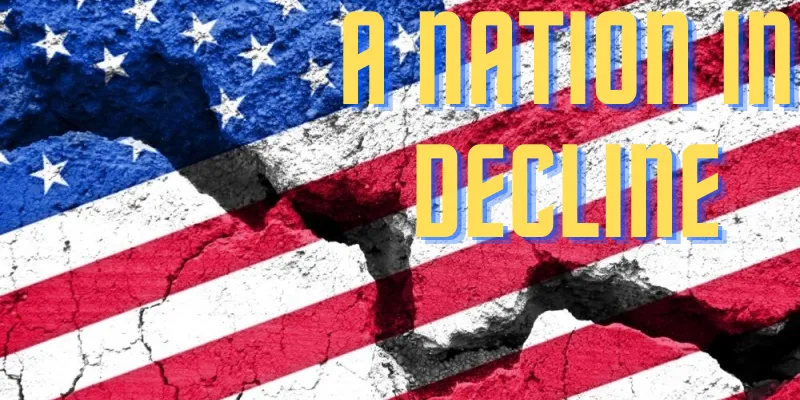
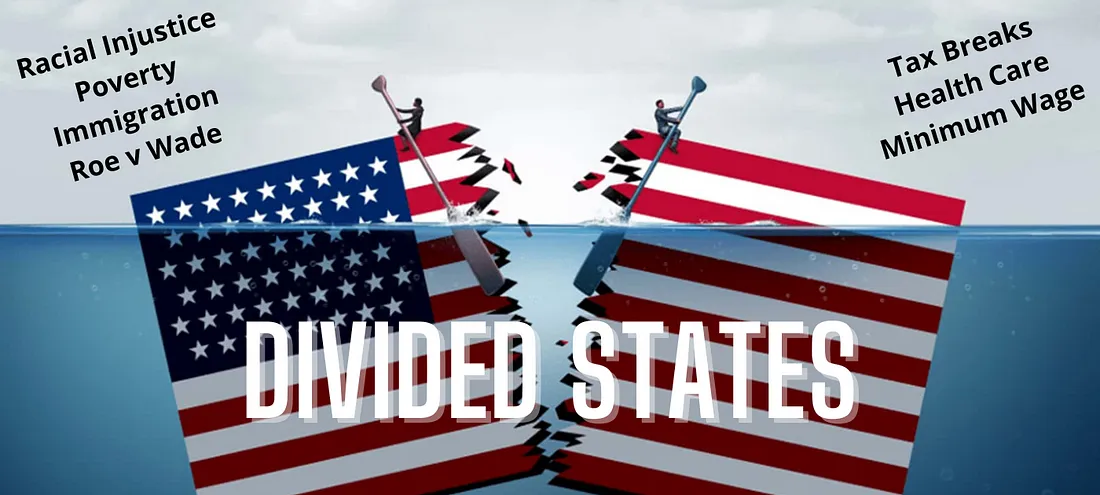


 venom.. therapy group have gotten totally rid of it after trying everything else that didn’t work! We just use regular honeybees that the beekeepers use and sting ourselves 3 times a week. I am not going to go into details, but you find all the information you need for free in the “Healing Lyme with Bee Venom” group on Facebook. Join the group and go under files, and then find the Bee Venom Protocol pdf.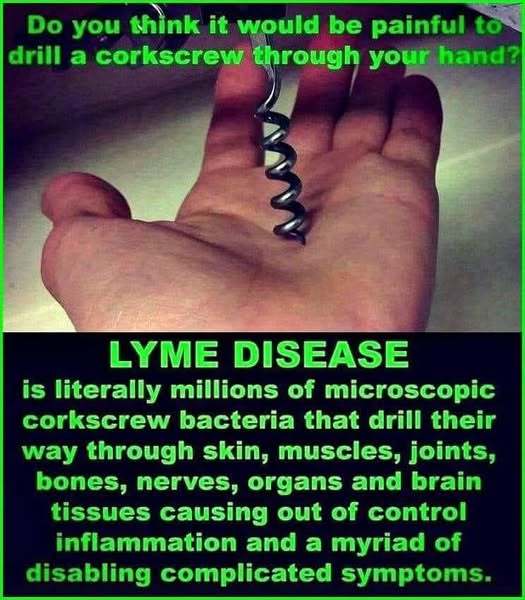

 you are struggling like this. Thank you for having the courage to share your story . I’m going through it hard right now again but finally got a diagnosis 6 months ago. Had been bedridden past three years, and sick in and out of hospital for the past 10 years. Affected my joints, spine, muscles , bones, brain , heart, liver , and spleen . Walking or sitting is out of the question when this flare up hits. Doctors thought I had fibromyalgia, lupus, and Hashimotos and chronic fatigue .
  I thought I was getting better but last week had a hard flare up for 9 days straight with the most insane constant pain. I am feeling WAAAY BETTER today after learning and treating properly. Due to all my bad experiences over a decade with medical doctors, I focused the last 2 years on naturopathic doctors and started using
  cells for 9 months and was feeling better than normal. Then I got Covid and experienced the worst pain of my life for 3 weeks. 2 months later, I had this flare up of bartonella and other coinfections that weren’t initially treated or diagnosed.
 , I found I also needed additional support for my slow mitochondria, inflammation, and immune health . So I started taking adaptogenics like cordyceps, eleuthero root, ashwagandha, lion’s mane , and my energy started getting better and stress went down . I added krill oil day and night with tumeric to help with inflammation.
  ️ one important thing I just learned is that you have to protect and repair the area you are having symptoms because that is where the most damage occurs. So, for me I need collagen for my joints, alpha lipoic to protect my nerves in body and brain, Japanese’s Knotweed or Resveratrol and ubiquinol for heart health and oxygen to the brain.
  . But I highly recommend starting 6 months guided by a doctor with the products because they are powerful and take care of biofilms, parasites, binders, parasites, restoring ATP and cell energy, and removing inflammation. It uses very potent herbal healing to attack and remove the microbial disease
 . By Proscriptions because of their exceptional testing and purity and good taste … This troche or lozenge dissolves in your cheek and gum and works straight for your brain
  ! Restores incredible focused energy and productivity. They advertise it as a brain pharmaceutical but the 4 doctors behind it have a defined interest in Lyme disease and people with chronic fatigue . I’ve used it 3xs and the results are phenomenal!
 .
.







 End ALL Govt UNIONS (including Teachers* ).
 * No federal funding for jurisdictions with Teachers Unions.