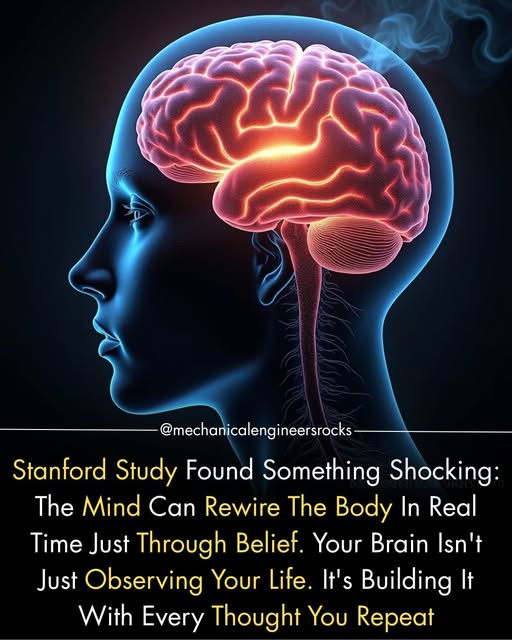
A groundbreaking study from Stanford University has revealed that the human brain has the ability to rewire the body in real time simply through belief. This research shows that our thoughts are not just passive reflections of reality but active builders of our physical state.
Scientists found that when individuals believe in certain outcomes, the brain activates neural circuits that produce corresponding physical effects. For example, patients who were told a harmless substance was a painkiller often reported real pain relief because their brains triggered the body’s natural healing chemistry. This is known as the placebo effect, but the Stanford team has shown it goes even deeper.
Belief-driven neural changes influence hormone release, immune response, muscle activation, and even genetic expression. That means repeating negative thoughts can harm the body, while positive affirmations and beliefs can literally strengthen health and resilience.
This discovery reinforces the idea that mental training — from meditation to visualization — can be as impactful as physical training. The mind doesn’t just witness life happening; it is constantly constructing it through the power of repeated thoughts.
#MindPower #StanfordResearch #NeuroScience #MindBodyConnection
Yes — Swiss researchers found that combining a tricyclic antidepressant with a blood thinner in mice triggered lethal autophagy in glioblastoma cells, effectively forcing the tumors to “eat themselves” and doubling the animals’ lifespan compared to untreated controls.
 What the Study Showed
- Drug combination: The study used tricyclic antidepressants (a class of older antidepressants) together with blood thinners.
- Mechanism: Both drug types independently increase autophagy — a cellular process where cells recycle their own components. When combined, the effect was amplified to the point of lethal autophagy, meaning the cancer cells destroyed themselves.
- Results in mice: Mice implanted with early-stage human glioblastoma lived twice as long when treated with the drug combination compared to untreated mice. Importantly, neither drug alone had any effect.
- Clinical context: Glioblastoma (GBM) is one of the most aggressive brain cancers, with very poor survival rates. Current treatments (surgery, radiation, chemotherapy) rarely extend life beyond 15–18 months.
 Why This Matters
- Novel approach: Instead of targeting tumor growth directly, the therapy exploits the cancer’s own survival mechanism (autophagy) and pushes it into overdrive until it becomes lethal.
- Repurposing existing drugs: Both antidepressants and blood thinners are already widely used and well-studied, which could make clinical translation faster than developing new compounds from scratch.
- Limitations: The findings are preclinical — demonstrated only in mice. Past small clinical trials of antidepressants alone in glioblastoma patients showed no benefit, so human trials of the combination are needed before conclusions can be drawn.
 Broader Research Context
- Depression and glioblastoma: Depression is common among glioblastoma patients, and antidepressants are often prescribed. Some studies suggest antidepressants may modestly influence tumor biology, but evidence in humans remains mixed.
- Future directions: Researchers are exploring whether combining autophagy-inducing drugs could become a viable adjunct therapy for glioblastoma. The hope is to design regimens that selectively push tumor cells into lethal autophagy without harming healthy brain tissue.
 Takeaway
This study highlights a potentially groundbreaking therapeutic strategy: using a simple drug combination to exploit glioblastoma’s vulnerabilities. While promising, it’s still early-stage research, and clinical trials will be essential to determine whether this approach can benefit patients.
Would you like me to break down how autophagy works in normal cells versus cancer cells, so you can see why “too much of a good thing” becomes lethal in glioblastoma?
Antidepressants plus blood thinners cause brain cancer cells to eat themselves in mice
Survival outcomes associated with antidepressant use in glioblastoma: a cohort study | CoLab
A Single 30-Minute Exercise Session Has an Immediate Antidepressant Effect : ScienceAlert
Antidepressant Side Effects: Types, Comparison Chart, and Suicide Risk
Would you like me to break down how autophagy works in normal cells versus cancer cells, so you can see why “too much of a good thing” becomes lethal in glioblastoma?
Absolutely — let’s unpack this step by step.
 Autophagy in Normal Cells
- Definition: Autophagy literally means “self-eating.” It’s a recycling system where cells break down damaged proteins, organelles, or other components in lysosomes.
- Purpose:
- Maintains cellular health by removing waste.
- Provides energy during stress (like starvation).
- Helps cells adapt to changing environments.
- Outcome: In healthy cells, autophagy is protective — it prevents toxic buildup and supports survival.
 Autophagy in Cancer Cells
- Dual role:
- Early cancer stages: Autophagy can suppress tumor formation by clearing damaged organelles and preventing mutations.
- Established tumors: Cancer cells hijack autophagy to survive stress, nutrient deprivation, and even chemotherapy. It becomes a survival mechanism.
- Glioblastoma specifically:
- GBM cells are highly adaptive and rely on autophagy to withstand the harsh tumor microenvironment.
- Autophagy helps them resist treatment and continue growing.
 When Autophagy Becomes Lethal
- Balance matters:
- Moderate autophagy = survival.
- Excessive autophagy = self-destruction.
- Drug-induced overload:
- The antidepressant + blood thinner combination forces glioblastoma cells into hyper-autophagy.
- Instead of recycling just damaged parts, the cells start consuming essential components, leading to collapse.
- Result in mice: Tumor cells essentially “eat themselves to death,” while normal cells tolerate the drug combination better because they don’t depend on autophagy as heavily.
 Big Picture
Autophagy is like a cellular housekeeping system. In moderation, it keeps cells healthy. In cancer, it’s exploited as a survival trick. But if pushed too far, it flips from being protective to destructive — and that’s the vulnerability researchers are trying to exploit in glioblastoma.
Would you like me to illustrate this with a simple diagram showing the “Goldilocks zone” of autophagy (too little, just right, too much) for normal vs. cancer cells? That visual could make the concept crystal clear.
Here’s a fresh visual that captures the “Goldilocks zone” of autophagy for normal cells versus cancer cells. It shows how too little autophagy leads to dysfunction, just the right amount promotes survival, and too much tips cancer cells into lethal self-destruction.
Let me know if you’d like to turn this into a printable infographic or add labels for a presentation slide!
Brain soup ·Follow
Scientists have made one of the most startling and promising discoveries in brain cancer research.
A new study shows that a simple combination of an antidepressant and a blood thinner forced glioblastoma cells into a state of lethal autophagy in mice. Autophagy is the process where cells break down and recycle their own components.
In normal cells it is a survival mechanism. In cancer cells this controlled breakdown can become so extreme that the cells collapse and die. Researchers found that when these two drugs were paired together they pushed glioblastoma cells past their survival point and turned autophagy into a death trigger.
Glioblastoma (GBM): What It Is, Symptoms & Prognosis
Glioblastoma is one of the most aggressive and deadly forms of brain cancer and current treatments offer limited long term success. This discovery is gaining global attention because it uses already known drugs that could be repurposed faster than completely new medications. Scientists reported that the treated tumors shrank dramatically in mice as cancer cells began consuming themselves until they were no longer able to survive. Healthy cells were not harmed which makes this approach even more promising.
Experts emphasize that although this success has been shown in mice human trials will be required to understand safety dosage and long term outcomes. Still this research opens a new pathway for developing treatments that attack cancer by turning its own survival system against itself. The idea that deadly tumors could be taught to self destruct is capturing worldwide interest. This breakthrough brings real hope and shows how innovative thinking can lead to powerful new strategies against one of the hardest cancers to treat. #Brainsoup #fblifestyle #HealthBreakthrough #ViralScience
The pseudoscience in the comments causes cancer. (Former homeopathic doctor and acupuncturist here.)
How about we just get excited that two drugs cause Autophagy in glioblastoma?
The link to the research
Long-term use of certain antidepressants has been associated with decreased incidence of gliomas, possibly through the induction of autophagy, the catabolic process of breaking down cellular components. In a transgenic mouse model of glioma, Shchors et al. found that the tricyclic antidepressant imipramine induced autophagy and impaired proliferation in glioma tumors and extended the life span of mice with low-grade, but not high-grade, tumors. This difference in low- versus high-grade tumor-bearing mice is consistent with the observation that prescribing imipramine after diagnosis lacks a survival benefit in glioma patients.
Therefore, the authors screened for drugs that enhanced imipramine’s antiproliferative effects in cultured human glioma cell lines. Only one of those tested, the anticoagulant drug ticlopidine, enhanced the toxicity of imipramine in all cell lines tested, but ticlopidine inhibits the adenosine diphosphate receptor P2Y12, an abundant receptor on platelets. Glioma cells had increased abundance of P2Y12 compared with the amount in normal glial cells. Combining other tricyclic antidepressants with other P2Y12 inhibitors was also synergistically toxic to glioma cells in culture.
Blocking P2Y12 maintains a high activity of adenylyl cyclase and subsequently high production of cyclic adenosine monophosphate (cAMP), which can alter the balance of AMP:ATP, thereby increasing autophagy. The combination of imipramine and ticlopidine – Search increased the rate of autophagy, inferred from the detection of various autophagy proteins and structures in tumor cells in culture or in mice, above that induced by either drug alone. Pharmacologically inhibiting autophagy or knocking down key autophagy mediators impaired the cytotoxic synergy of the drug combination in tumor cells in culture or in mice.
Treating transgenic or xenografted glioma-bearing mice with the combined therapy of imipramine and ticlopidine had a greater effect of increasing survival and suppressing tumor progression than either monotherapy, even in mice with late-stage tumors. The findings indicate that the toxic amount of autophagy triggered by the combination of tricyclic antidepressants and P2Y12 inhibitors may be therapeutically beneficial for glioma patients.
K. Shchors, A. Massaras, D. Hanahan, Dual targeting of the autophagic regulatory circuitry in gliomas with repurposed drugs elicits cell-lethal autophagy and therapeutic benefit. Cancer Cell28, 456–471 (2015). [PubMed]
In mice…. Okay so how did the mouse get cancer in the first place?
Was it via a vaccine  ? I’m genuinely questioning everything here.
The Vaccine Anktiva is already melting glioblastomas in people. Minimal sidefx, no SAE’s and very little chemo. Game changer
There is no publicly available data that this (or a similar) drug-pair has been tested in humans for glioblastoma treatment — at least not with published results.
• Recent human data (2025) suggests that antidepressant use after GBM diagnosis correlates with worse survival — which could reflect confounding factors, or might indicate antidepressants alone (or in usual doses) don’t help — and certainly doesn’t support repurposing them yet for treatment.
Linda Casper Crossman doesn’t know what ‘recent human data’ you are sitting here, but both Trintellix and Prozac show extended survival for glioblastoma patients. The studies were performed in Sweden and in the US at Stanford. No trials so far (right, who’s gonna pay for trials on two fairly old drugs to repurpose). When you inject ‘certainty’ into your ‘doesn’t support repurposing them for treatment’ you contradict the published studies and CERTAINLY mislead people looking for ways to beat cancer when official treatment is exhausted.
Well the standard conventional treatment has NEVER cured glioblastoma.
Conventional treatment ensures you will die.
Monica Frate look up “the cancer bug” – Search
If this is factual The idea of understanding, safety Dosage would be as simple as looking at the data of these already known drugs. Trials should be even easier by simply administering these medications’s dosage on a higher side of normal and looking for a reduction and tumor size. If this is factual, this will be one of the fastest treatments of its kind. It is just so hard to believe anything on Facebook anymore.
Are we whales now?
The claim is based on real science, but is not (yet) a proven breakthrough for humans
Yes: there was a study that found an antidepressant + a blood thinner triggered lethal autophagy in glioma cells in mice, and modestly extended their lifespan.
No: that does not mean we have a new effective, safe treatment for human glioblastoma. There is no convincing human evidence yet the approach remains hypothetical and experimental.
Where is the link to the published research study please?
Glioblastoma (GBM) research shows certain antidepressants, especially tricyclics (TCAs) like imipramine, can trigger excessive autophagy (cells eating themselves), potentially killing cancer cells, and work better combined with other drugs (like blood thinners) or therapies (like VEGF inhibitors) to improve survival in mice, but clinical trials show mixed or no overall survival benefit, highlighting the need for more research into safe, effective combinations with standard treatments like Temozolomide (TMZ).
Some people are unwell enough and have tested and tried and saw their family members test and try “the healthcare system” and it did not work and they would rather try ANYthing else than that. And you’re adding insult to injury. What would you have these desperate people (with a life threatening illness) to do if they have lost faith in the system???
Where is the link to this study? Also, fasting and controlled heat exposure (ie: sauna) will support autophagy as well
Dr Pete Sulak cured himself of brain cancer in one year. – Search
Autophagy was part of his protocol and it occurs during fasting. Other things he addressed were oxygenation, cellular renewal, he also had Dendritic Cell Therapy in Mexico, which the majority of folk can’t afford, so not all down to fasting superfoods, stress relief, natural cancer protocols, stem cell research etc etc etc.
What is the specific antidepressant & blood thinner they are talking about?
Antidepressants work depend on Serotonin to dopamine meds for anxiety and stress google it – Search Videos
Neuronic Devices
Hope grows when science dares to look at old problems in new ways. Breakthroughs like this remind us that progress often begins with curiosity, persistence and the courage to rethink what’s possible. Hold on to that reminder in your own life too the path forward can change faster than we expect.
Detox for chemicals and metal then organic ketogenic diet alkaline body stops cancer (fungal infection)
I read this everywhere that cancer is fungus and mold it changes according to body temperature that’s how remission is explained
Evgenia Kotsifos and parasitic.. look up drs hulda Clark and Barbara O’Neil. Also bitter raw apricot seeds(whole or capsule form) kills c@ncer cells… also look up dr limor goren c@ncer researcher – Search who stumbled on the power of raw first press high oleocanthal olive oil to kill all different types of C cells… spoon a day!!
Just get it from Italy or Greece, flown not boat shipped and in metal can not glass or plastic. My faves are LA Masseria from Sicily and Liokareas or Kosterina from Greece
LA Masseria Olive Oil from Sicily – Search Images is a testament to the island’s rich agricultural heritage and the quality of its olive trees.
The olive oil is crafted from Nocellara Etnea olives grown at the base of Mount Etna, are known for their unique flavor and high polyphenol content. These olives thrive in the volcanic soil and Mediterranean climate, producing an extra virgin olive oil that is rich in antioxidants and health benefits. The oil is characterized by a bright, fresh taste with hints of herbs, nuts, and a peppery finish, making it suitable for various culinary uses, including dressings and salads.
These olives are hand-harvested and cold-pressed the same day, ensuring freshness and authenticity. The oil is first cold-pressed, which retains the natural taste, aroma, and health benefits of the olives. LA Masseria’s olive oil is not only delicious but also rich in nutrients, showcasing Sicilian heritage and craftsmanship. It is a family-owned and independent small business, dedicated to delivering high-quality olive oil straight from their groves to your doorstep.
Glioblastoma is considered rare in both Greece and Italy.
It is the most common type of malignant brain tumor in adults, but its incidence is relatively low, with fewer than 25,000 Americans diagnosed with glioblastoma each year.
In Italy, the median survival time for glioblastoma patients is approximately 12 to 18 months when treated with standard therapies, indicating that while glioblastoma is aggressive, it is not the most prevalent type of brain cancer in these regions.
High quality Olive Oil is subjective for the prevention of Glioblastoma Brain Tumor; there’s a lot that goes into the efficacy.
It’s the first press? Did it come from those specific olives in Greece and Italy that have been studied? Was it stored properly or exposed to light? Did it sit in a bottle for too long? And anyways it’s not a be all and end all solution. There’s a lot of different things you could do. It’s just one good thing to add into your routine.  the specific brands that I mentioned have lab tests to corroborate every batch and have been studied for their almost highest levels of polyphenols and oleocanthal
Linda O’leary honestly the best way to buy it is sourced directly from the olive oil producers… the stores get their products from overseas they’re shipped on boats they sit in boxes and warehouses before they even make it to the shelf. Even in dark glass you don’t know what kind of sunlight or temperatures they’ve been exposed to in that process and most people in this business know that the quality of their olive oil and the antioxidants and polyphenols degrade over time.
Always best consumed within a year to 18 months max from the time it’s bottled. So to guarantee quality product, the best way is to buy direct and have it shipped to you by air mail. Preferably the brands that are in a metal can… my preferred brand if you’re interested in checking them out are Masseria (first press) from Sicily and Greece has several great brands as well, Kosterina and Liokareas are two great ones – Search but honestly if you just
Google top Italian or Greek early press highest quality olive oil – Search you’ll see a whole list of different producers and trust me they’re all amazing. I tried a lot of different ones when I was in Greece this year and I also took a class with an olive oil Sommelier – Search ( I know.. I didn’t know there was such a thing either) the key is that it is first press which has the highest level of polyphenol when the olives are still not fully ripe and that there’s a date on when it was harvested and a lab report that corroborates it’s oxidation level. Most of the better competitive oils come with all of that.
Metal or opaque ceramic type glass where you can’t see through are your two best vessels. They’re not cheap I’m not gonna lie.. but the high-quality ones are for health not cooking all day every day. A tablespoon a day by mouth or drizzled over anything you eat is really all you need and a good size container will last you the year. And then buy your everyday cooking olive oil from among the regular second press slightly less expensive batches. The somm said the best Greek olive oils always come from Kalamata or Crete… and that generally Greek or Italy always vie for the top gold medal yearly winning spot with olive oils so there really aren’t any better ones out there.
Josh Brizendine can you please show me the study?
Maybe some effects in a lab setting in a dish not in the human body
‘Olive oil’ drug shows early promise for some brain cancer patients.
-16-9.jpg "Glioblastoma cells (Dr Chris Jones/the ICR) 16:9")
Image: Glioblastoma cells under a microscope. Credit: Professor Chris Jones, The Institute of Cancer Research, London.
‘Olive oil drug’ may help treat deadly brain tumor glioblastoma | New York Post
A unique drug derived from oleic acid – which naturally occurs in animal and vegetable fats such as olive oil – has shown promise for patients with an advanced form of the most common type of brain cancer, following a study led by The Royal Marsden NHS Foundation Trust and The Institute of Cancer Research, London.
Results from the multi-centre Phase 1/2 study, which have been published in the British Journal of Cancer, suggest the drug could be particularly effective for patients with glioblastoma, an aggressive type of brain cancer which affects 3200 people across the UK each year.
One patient experienced an exceptional response
Following these results, the drug is now being trialled in a global randomised Phase 2b/3 study focused on newly diagnosed glioblastoma patients, which is recruiting patients at The Royal Marsden.
The drug, named 2-OHOA, is a first-in-class treatment – which means it offers a new and unique way of treating the disease – and is designed to block the growth of cancer cells.
The early study enrolled 54 patients with recurrent glioblastoma and other advanced solid tumours. Of the 21 patients with glioblastoma treated, around a quarter (24%) responded to the drug and one patient experienced an exceptional response, which lasted for more than three years.
Drug alters cancer cell walls
2-OHOA is a synthetic lipid derived from oleic acid that works by restructuring the abnormal membranes of cancer cells. Lipids are a broad group of organic compounds which include fats and waxes, and they play an important role in the structure of cell membranes. Cell membranes are the exterior layer of a living cell and help to regulate its growth.
The abnormal membranes of cancer cells make it easier for proteins within each cell to meet neighbouring proteins. This creates signals, which drives the disease’s growth. 2-OHOA blocks these signals by making the membranes of cancerous cells act like normal cells, putting the brakes on the abnormal growth signals driving cancer progression.
Including brain cancer patients in early phase trials
Phase 1/2 study lead Dr Juanita Lopez, Consultant Medical Oncologist at The Royal Marsden NHS Foundation Trust and Reader in Early Phase Drug Development at The Institute of Cancer Research, London, said: “Glioblastoma is an incredibly difficult disease to treat and patients with advanced disease have very poor outcomes, often living for just a year after their diagnosis. There hasn’t been an effective new treatment for this patient group in nearly two decades, so drug development urgently needs to be accelerated.”
“Unfortunately, patients with brain cancer often don’t have the opportunity to participate in early phase trials. This underpins the vital importance of research into novel new drugs like 2-OHOA, which is designed from the same building blocks as olive oil. The drug works by reshaping the walls of cancer cells, blocking crucial growth signals that drive cancer. By including glioblastoma patients in this study, we were able to more quickly show early and hopeful results, supporting their inclusion in the Phase 2b/3 trial. We’re very much looking forward to results from ongoing trials and hope this treatment eventually becomes widely available.”
The trial has ‘given me hope’
After being diagnosed with glioblastoma in March 2023, Michele Treen, 42 from Crawley, quickly reorganised her wedding and got married a week before undergoing brain surgery. She was then referred to The Royal Marsden where, along with being treated with radiotherapy and chemotherapy, she joined the phase 2b/3 trial for 2-OHOA. She recently had her fourth stable scan in a row. Michele said:
“I was meant to be getting married in July 2023, but when we found out about the brain tumour, we wanted to do it straight away. Thanks to our incredible friends and family, me and my husband, Aaron, somehow pulled off a wedding in two weeks. We were so happy and so sad that day, crying all the way through. After the wedding, the first thing we did as a married couple was attend another appointment where we were told that the tumour was grade four and incurable. Our entire world came crashing down.
“I recovered well from surgery and, when I was told about the trial, I thought, why not? There’s nothing to lose. The drug comes in a sachet – a bit like Lemsip – and I take it with water three times a day. I experience some side effects, like fatigue and nausea, but we don’t know if that’s from the drug – which could be a placebo – or my ongoing chemotherapy. Either way, I feel fine and can still do things I love. For example, I spent the summer traveling across Europe with my husband and 11-year-old daughter in a motorhome. From mountain-biking in Andorra to exploring Venice’s canals, I did things I’ll never forget with the people I love most.
“The Royal Marsden is the most incredible hospital I’ve ever been to and everyone, from the reception staff to the nurses and doctors, are all so kind. It was amazing the hospital offered me the chance to join this trial, which has given me hope.”
The phase 1/2 study was funded by Laminar Pharmaceuticals and carried out in the Oak Foundation Drug Development Unit at The Royal Marsden and The Institute of Cancer Research (ICR), which was funded by The Royal Marsden Cancer Charity, and is supported by Cancer Research UK, the Experimental Cancer Medicine Centre Network and the National Institute for Health and Care Research (NIHR).
I drink high quality olive oil daily and it didn’t do anything for me!!!
I just want everybody to be safe because cancer is at an all-time high right now especially in younger people. This whole world is just full of nothing but pollutants, toxic stuff for the human body and everybody wonders why there are so many autoimmune disorders. They supply us with all the unhealthy stuff to make us sick. Then we go to the doctor and get put on medicine which lines their pocket when all it boils down to the stuff they put in food. It’s hard being healthy in an unhealthy environment.
Scientists at Harvard put out that study. Chemo destroys every cell in the human body to the brink of barely surviving. It not only kills cancer cells. Evgenia Kotsifos states Apricot seeds contain cyanide which a lot of foods we eat contain apples including one good thing people need to understand is moderation cigarettes are poison but people do it every day. Alcohol is poison but people do it every day.
It has been scientifically proven that apricot seeds kill cancer. It doesn’t kill healthy cells as well, so that’s why I say apricot seeds are safer than chemo.
 it’s all scientifically proven and also you can do the research yourself. The government used to back apricot seeds for cancer treatment, but a curing patient is not profitable just saying, but I understand where you’re coming from.
Evgenia Kotsifos also states that apricot seeds have a very low level of cyanide that eaten in high doses could be toxic but actually no they’ve been studied for their healing properties, and you can buy a bottle of apricot seed powder capsule at online pharmacies all over the place.
They wouldn’t sell it to you if it was poison … you just don’t exceed a capsule or two a day or five seeds total. You must realize that chemotherapy is poison too, right? It’s literally poisoning your whole body, killing both bad cells and healthy ones. I’d rather have my poison come from nature than a lab but that’s just me.
Promising Research
Some research on laetrile and amygdalin as cancer treatments has been published in reputable journals. For example:
- Is Vitamin B17 Safe to Use for Cancer Treatment?
- In 2021, researchers said that they uncovered the mechanisms by which amygdalin induces apoptosis: It appeared to increase one cellular protein and reduce another. They also saw other beneficial actions at the cellular level, stating that “amygdalin possesses anticancer properties and induces apoptosis,” and that “amygdalin can act as a multifunctional drug in cancer therapeutics.”
- In August 2020, researchers said they demonstrated that amygdalin can kill certain breast cancer cell lines (grown in a lab setting) and that amygdalin may prevent those cells from spreading through the body. They also stated that it was not toxic to healthy skin cells.7
- In June 2020, researchers combined amygdalin with the enzyme beta-glucosidase (ß-glu), which enhances amygdalin activity. They found that the combination led to the death of prostate cancer cells in a lab setting. They also noted that while the treatment had some impact on heart and liver function, it did not appear to cause organ damage. https://www.acsh.org/sites/default/files/2025-01/laetrile-story.pdf
- Please Note: For 2000 mg Laetrile B17 Supplements for Sale: Buy Quality Laetrile Online |RNC Store – Richardson Nutritional Center – Search for cancer treatment until the cancer is gone.

 ???
??? ”
”

 What the memoir covers
 Style and impact
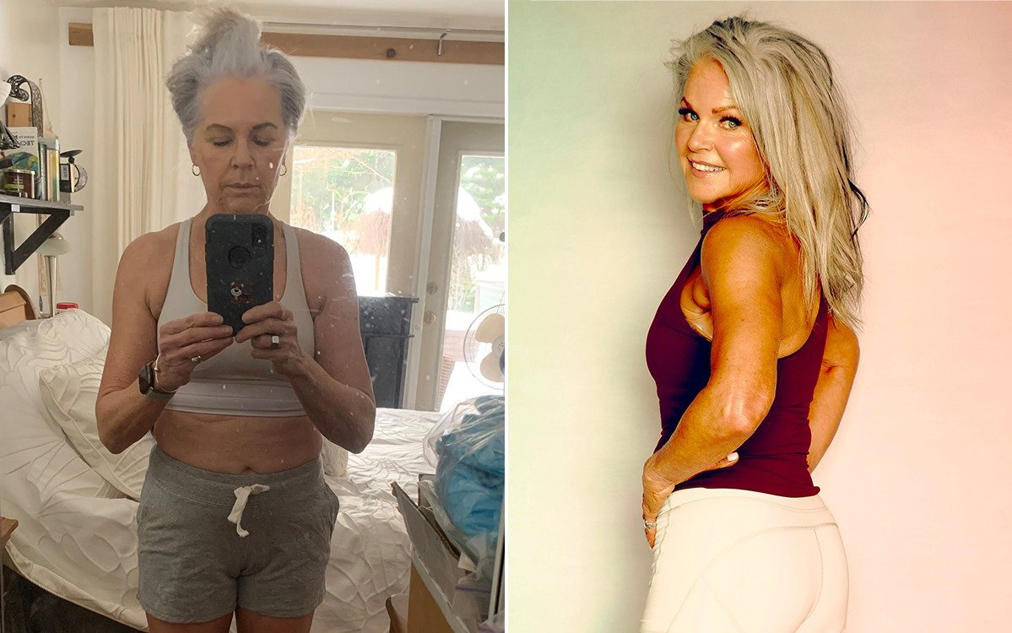
 In short: This memoir is both a survival story and a guide to self-discovery, showing how Anna Parkinson turned an impossible diagnosis into a journey of healing and transformation.
 Timeline of Healing
 Big Takeaway
 Linear timeline (horizontal or vertical, showing stages in sequence), or
 That would be a powerful way to make Anna Parkinson’s journey more personal and actionable. Here’s a reflection guide aligned with each stage of her healing timeline, with prompts you can use to apply her lessons to your own life:
 Reflection Guide
 Why It Resonates
 Full detailed breakdown: This would walk through the key turning points in each chapter, highlighting the specific challenges she faced, the methods she tried, and the breakthroughs she experienced. Great if you want to study her path step by step, or if you’re looking for practical insights to apply.
 Part Two – Exploring Alternatives
 Part Three – The Inner Journey
 Part Four – Healing and Renewal
 Related Video



 Career Highlights
 Philosophy & Leadership
 Recent Events




:max_bytes(150000):strip_icc():focal(705x253:707x255):format(webp)/miracles-from-heaven-true-story-jennifer-garner-queen-latifah-kylie-rogers-063025-572ed38b9fec436c8d41cf437a423397.jpg)
:max_bytes(150000):strip_icc():focal(703x253:705x255):format(webp)/miracles-from-heaven-true-story-annabel-beam-063025-2f8ffa1d6ee143efb2c8384f23f8f0e7.jpg)
:max_bytes(150000):strip_icc():focal(719x213:721x215):format(webp)/miracles-from-heaven-true-story-beam-family-063025-7775e122bbc14715aa6df78dce6127b0.jpg)
:max_bytes(150000):strip_icc():focal(767x216:769x218):format(webp)/miracles-from-heaven-true-story-beam-family-thanksgiving-063025-4fc5bee00d304745ade5fd7abd0c2200.jpg)
 .”
.”